Newsletters




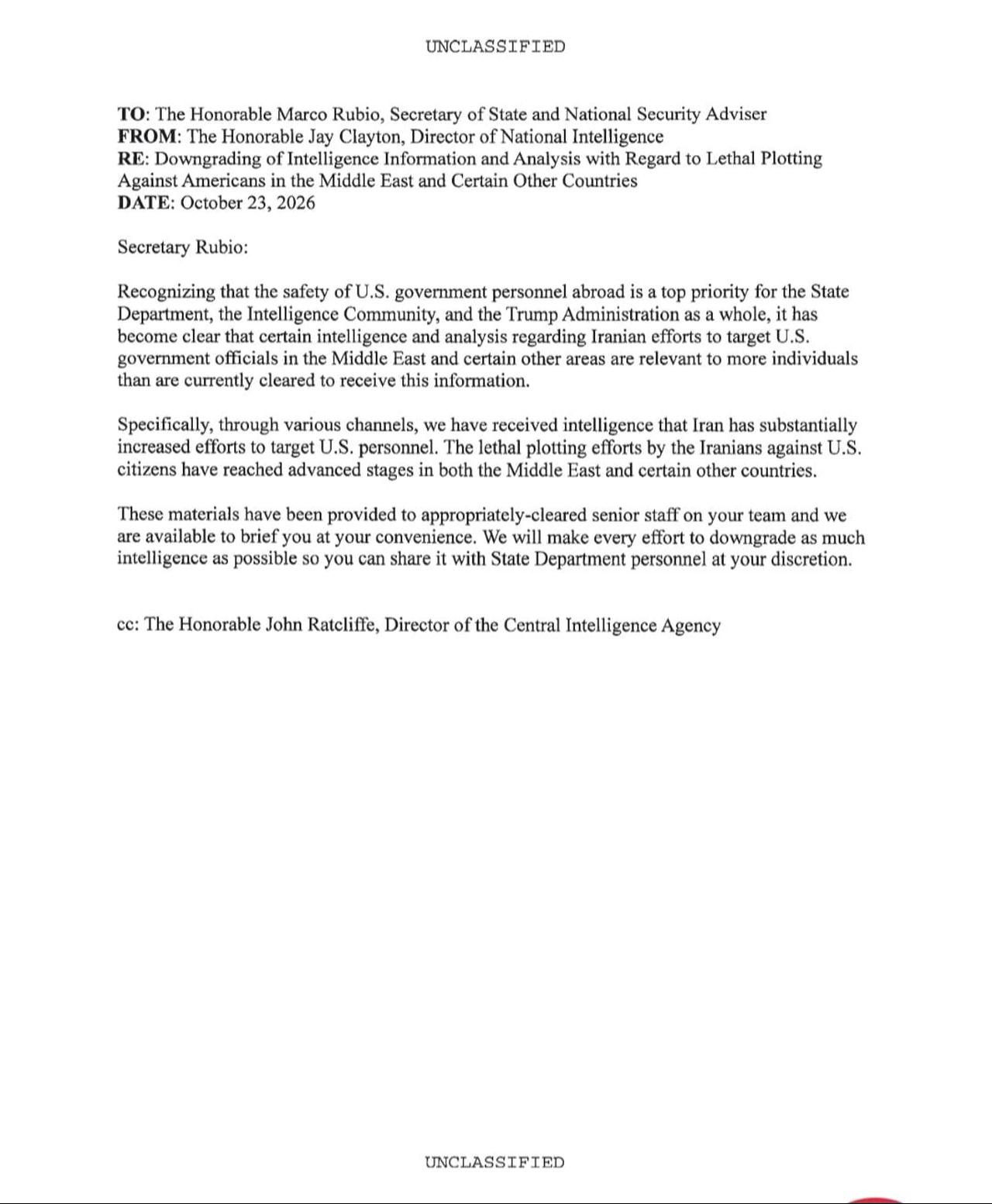
Lethal Iranian plots against U.S. citizens have reached "advanced stages" in the Middle East and other countries, Director of National Intelligence Jay Clayton warned Secretary of State Marco Rubio in a Friday memo.
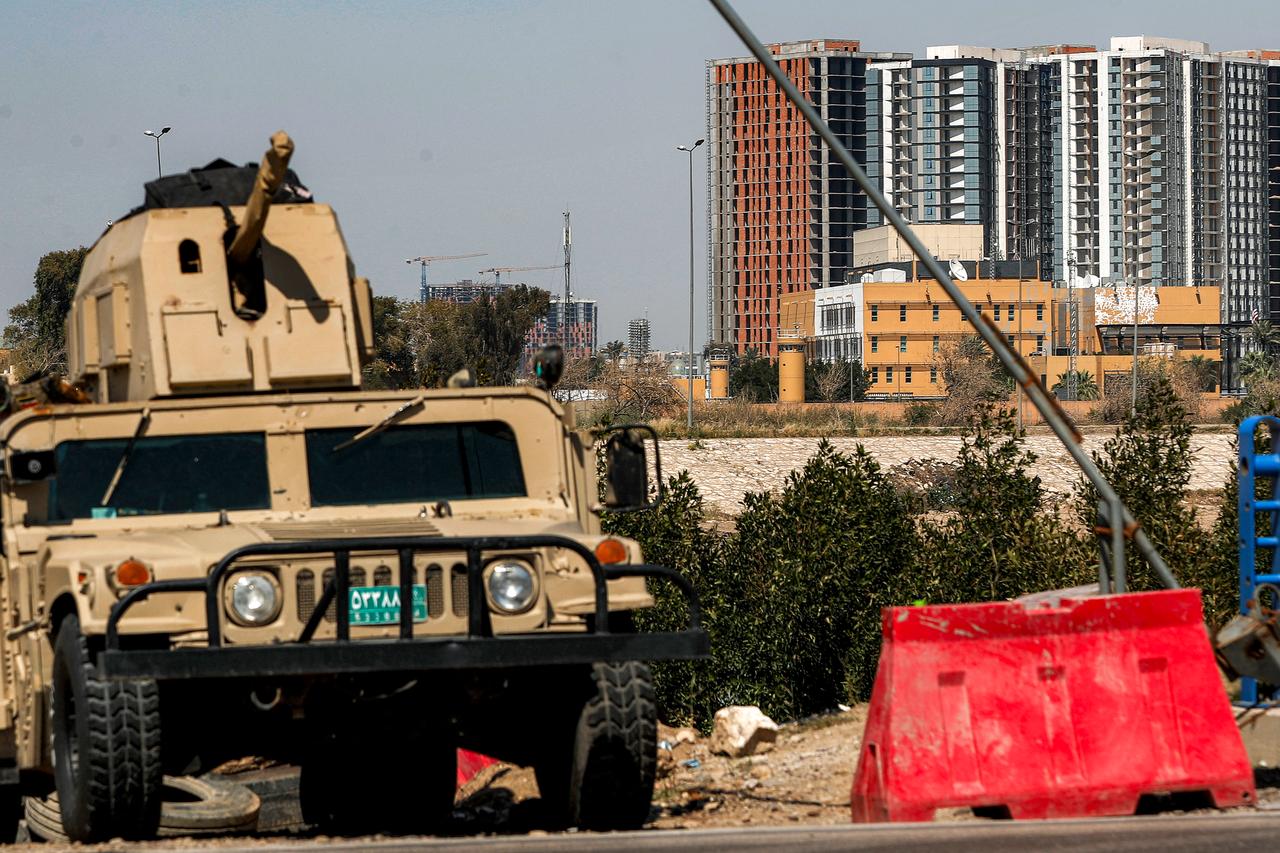
U.S. officials said the intelligence is one reason the State Department is drawing down personnel at several American embassies across the Middle East, amid mounting fears of a broader regional conflict, according to Axios, which first reported the memo.
The one-page, unclassified memo, dated Oct. 23, was addressed to Rubio, who also serves as national security adviser. CIA Director John Ratcliffe was copied on it.
"Specifically, through various channels, we have received intelligence that Iran has substantially increased efforts to target U.S. personnel," Clayton wrote.
"The lethal plotting efforts by the Iranians against U.S. citizens have reached advanced stages in both the Middle East and certain other countries," he added.
Clayton wrote that "certain intelligence and analysis regarding Iranian efforts to target U.S. government officials in the Middle East and certain other areas are relevant to more individuals than are currently cleared to receive this information."
"These materials have been provided to appropriately-cleared senior staff on your team and we are available to brief you at your convenience," the memo said, adding, "We will make every effort to downgrade as much intelligence as possible so you can share it with State Department personnel at your discretion."
The memo’s subject line referred to "Lethal Plotting Against Americans in the Middle East and Certain Other Countries." It does not identify specific targets, countries outside the Middle East, or the nature of the plots.
It also does not indicate whether attacks may be imminent.
The Trump administration confirmed the memo Friday night through a U.S. official, The New York Times (NYT) reported.

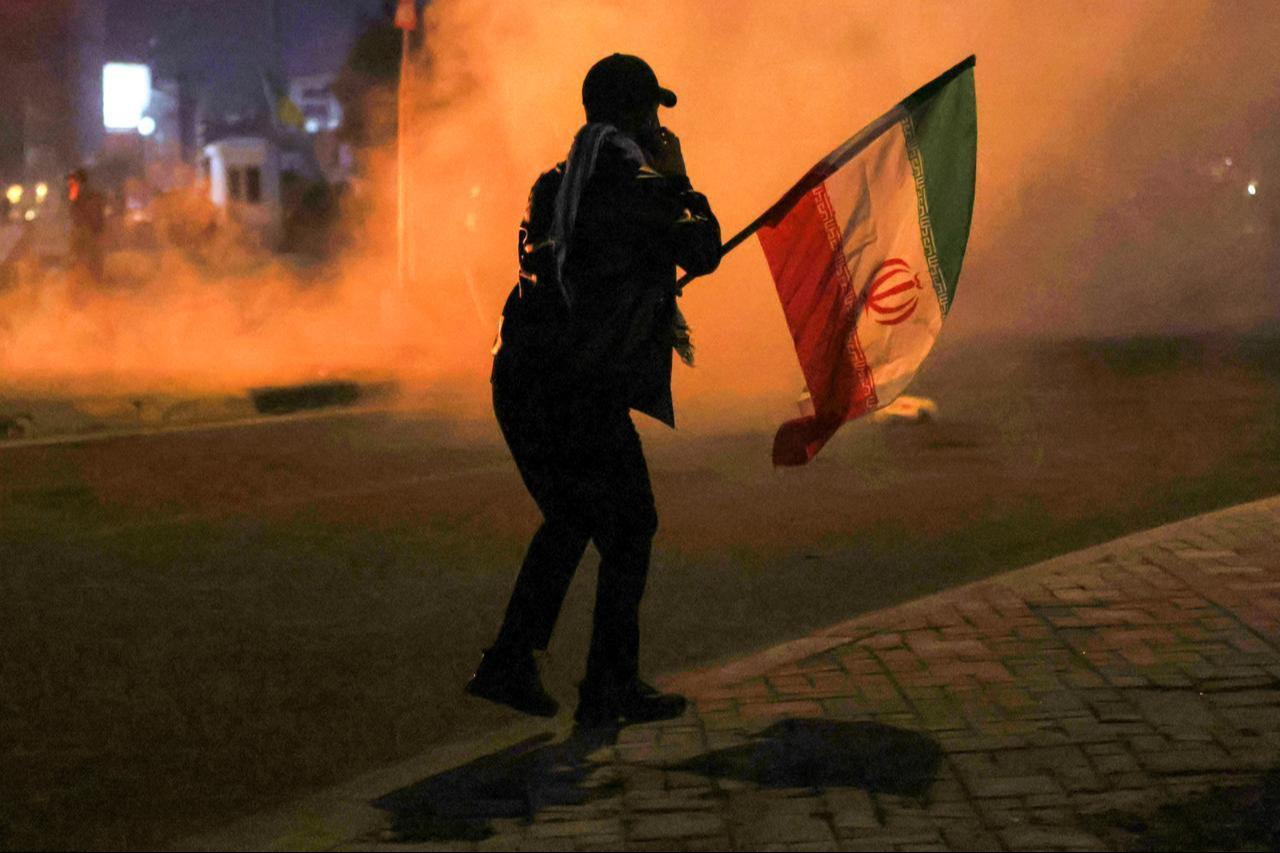
U.S. agencies assess that the threat against Americans in the Middle East and several other countries is at the highest level since the start of the war in February, U.S. officials told The New York Times.
U.S. President Donald Trump and top aides have received regular briefings on the rising threats, which go beyond the Middle East, one official said. Analysts have examined intelligence on threats to U.S. officials, including ambassadors, over the past three weeks, the official said.
Some material indicates Iran may have operatives in the United States, the official told the NYT. The Iranian plans also include potential targets in Europe, U.S. officials said.
Another official cautioned that Iran's ability to carry out attacks in the United States and other territories overseas is limited, and its ambitions to strike are greater than its capability.
In early October, the U.S. military withdrew all 12 B-1 Air Force bombers from Royal Air Force (RAF) Fairford in southern England after commanders received information about Iranian threats to the base.
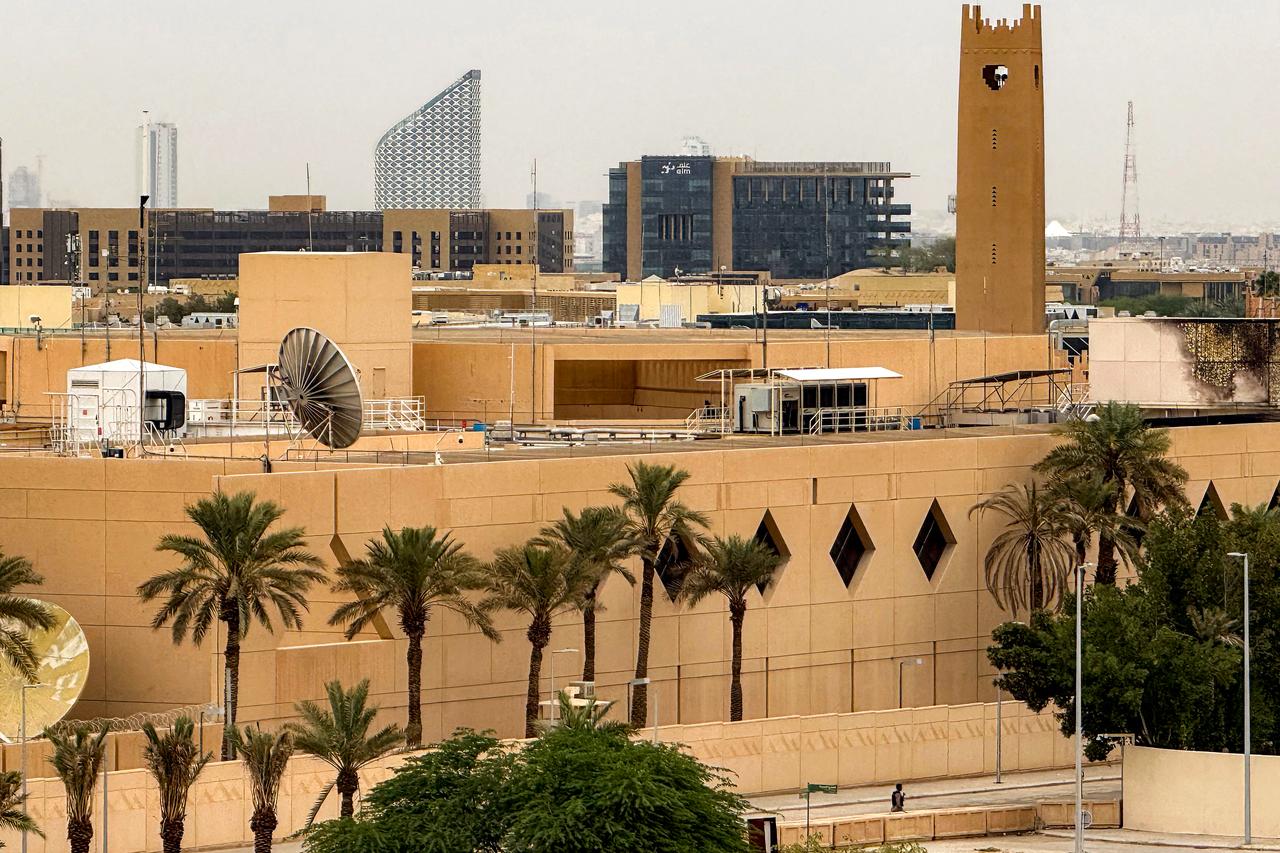
On Wednesday, the U.S. State Department ordered the departure of nonessential employees and their families from Saudi Arabia, department spokesman Tommy Pigott said in a statement on X.
The order covered the U.S. Embassy in Riyadh and consulates in Jeddah and Dhahran.
Officials said the order responded to Houthi escalations.
On Friday, the department also ordered personnel reductions at embassies in the United Arab Emirates, Lebanon, Qatar and Jordan, a U.S. official told Axios.
CNN first reported the staffing cuts at the four embassies.
"We decided that due to the threat of Houthi attacks and Iranian terror plots we need to reduce our footprint and keep only essential staff," the official said.
A U.S. official told CNN and CBS News: "When it comes to our staffing at embassies, we constantly evaluate new information about the security environment."
"The threat of Houthi attacks and of Iranian terror plots targeting U.S. officials are informing our decisions on staffing adjustments for embassies on RO Status in the region," the official said.
A State Department official confirmed to CNN that Lebanon, the United Arab Emirates, Qatar and Jordan "will see temporary changes to staffing levels under restricted operations." The official said there are no personnel changes in Kuwait or Bahrain, although sources told CNN staffing caps were being adjusted at embassies, including those two.
"Under Restricted Operations Status, staffing levels are constantly evaluated and adjusted," the official said.
Unlike the Saudi order, those movements have not been publicly announced. The department has designated almost all U.S. missions in the Middle East as being on restricted operating status, which allows staffing changes without notifications.
The drawdown is a direct result of the recent intelligence on Iranian attack plans, U.S. officials told the NYT.
The U.S. military has also been quietly reducing its footprint at posts in the Middle East due to ongoing threats, a U.S. official and a senior U.S. military official told CBS News.
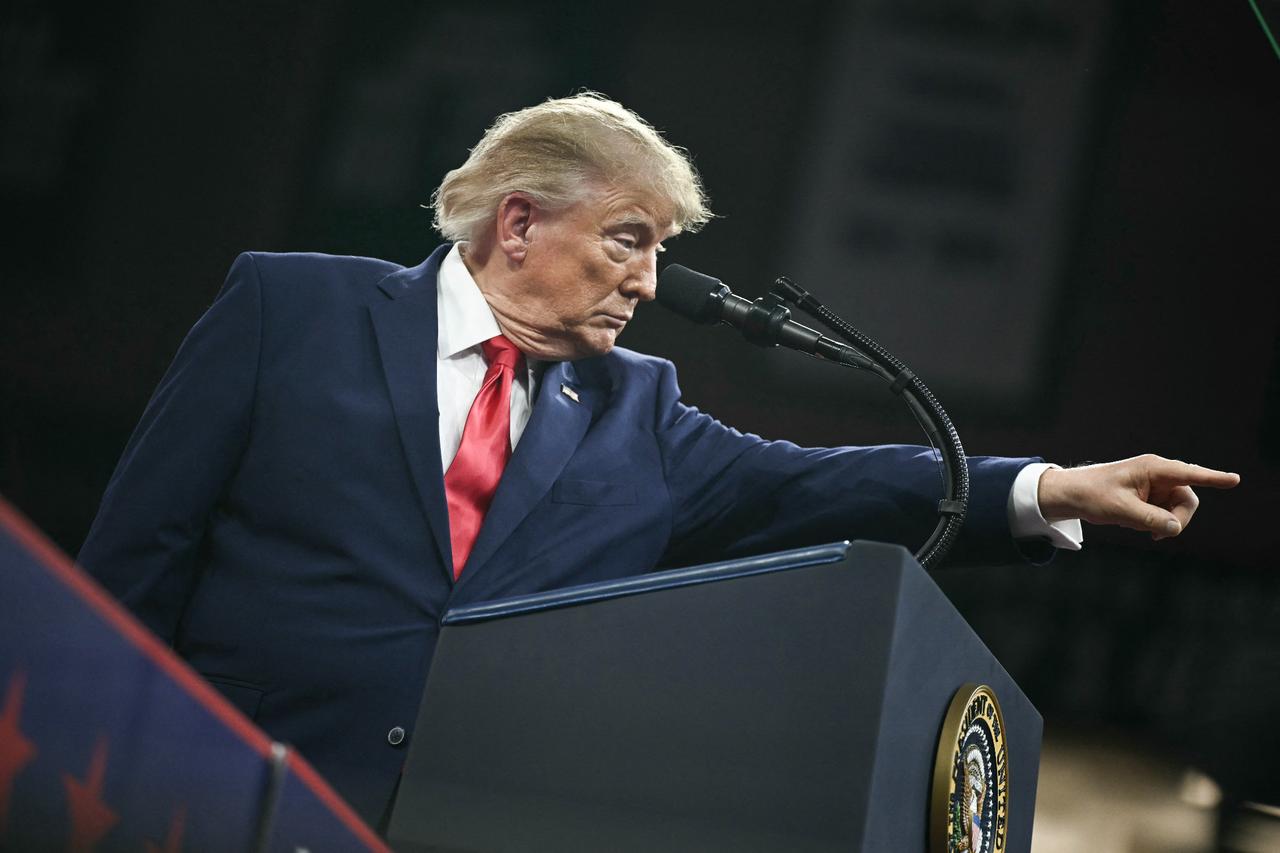
At a rally in Florida on Friday, Trump suggested the U.S. could launch another operation against Iran if Tehran failed to reach an agreement.
"We may do another little Operation Epic Fury, or (the Iranians) will agree (to a deal),” Trump said. "If they’re smart, they will just say, ‘Let’s get down to business,’ but I doubt they will do that because perhaps they’re not smart."
The United States and Israel have drawn up plans for a new wave of strikes on Iran after the U.S. midterm elections, though Trump has not made a final decision, the NYT earlier reported.
Israel has lobbied unsuccessfully, for now, for more immediate action, sources told CNN.
The U.S. military has carried out a blockade of Iranian ports to keep Iran from selling oil and other energy products.
Iran has continued to take responsibility for attacks on oil tankers in the Strait of Hormuz.
The war began Feb. 28, when the United States and Israel struck Iran. Iran retaliated with drones and missiles fired at Arab nations across the Middle East and at Israel.
On March 2, the State Department issued a mandatory departure for nonessential employees in Iraq, Jordan and Bahrain. Around that time, it also ordered nonessential personnel and families in Saudi Arabia to leave after Iran attacked the embassy in Riyadh.
During periods this summer when violence ebbed, some diplomats were allowed to return. The department faced intense criticism for not urging U.S. citizens in the region to leave before the war and for providing limited evacuation help.


 Set as preferred source
 Set as preferred source


 1 min read

 1 min read