Newsletters


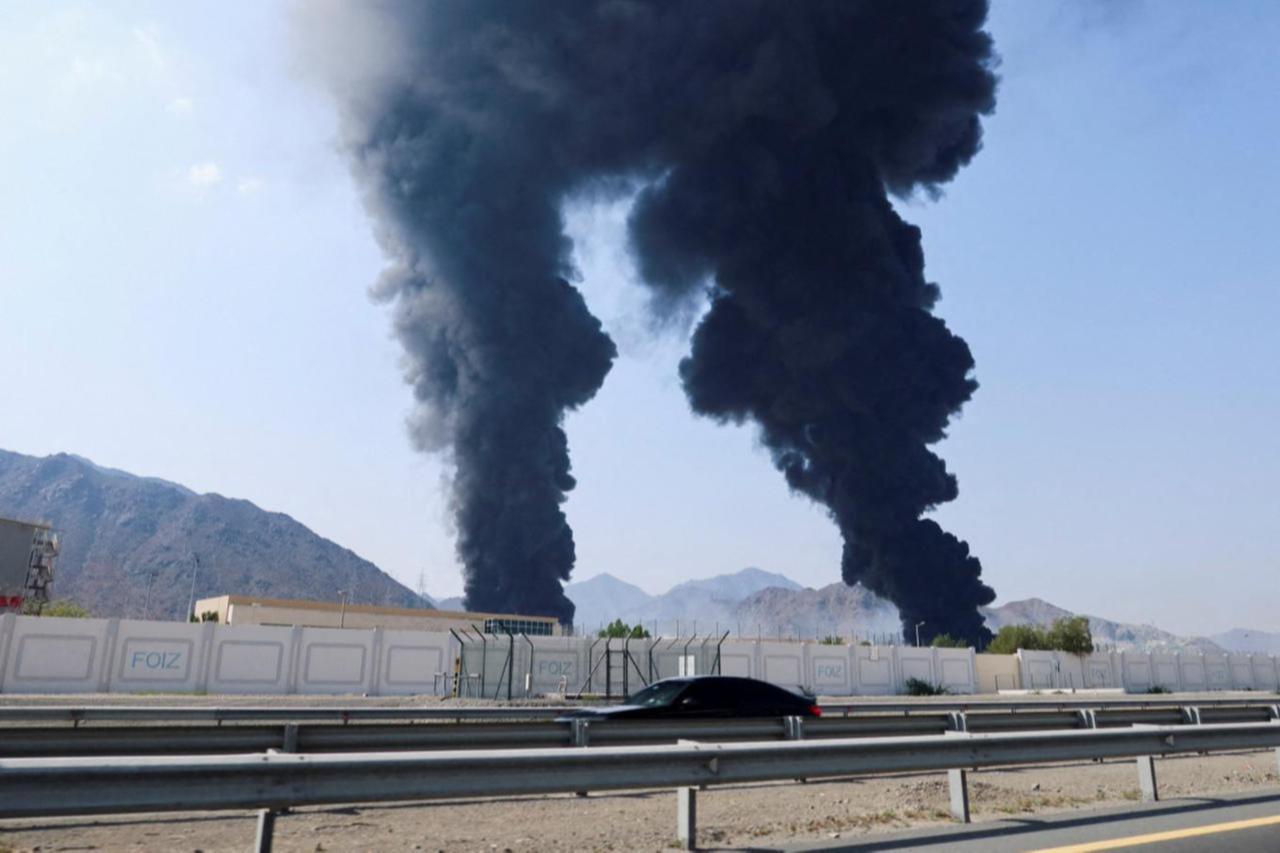


A now-deleted social media post from the official X account of Iran's embassy in Afghanistan sparked widespread ridicule and concern this week after it claimed that an Iranian military strike on a secret United Arab Emirates facility had dramatically altered weather patterns across the Middle East, triggering weeks of heavy rainfall and a five-degree temperature drop in Iraq and Iran.
The post, written in Farsi, was shared from what is described as a diplomatic account before being taken down, crossing a line that observers noted as unusual even by the standards of regional information warfare.
The since-deleted post stated that following what it described as Iran's destruction of a "secret cloud seeding and climate change center" operated by the UAE, weather patterns across the region transformed "overnight." Iraq and Iran, the post claimed, were now experiencing weekly heavy precipitation and significant temperature drops as a direct consequence.
In a rhetorical flourish that drew particular attention before the post disappeared, the account included a meteorological map based on the GFS forecasting model showing dense precipitation systems stretching from Türkiye's western and southern coastlines across to the Middle East. A red circle was drawn around rain masses passing over Syria and Iraq. The account described the cloud formations on the map as curving in the style of legendary Brazilian footballer Ronaldo Nazario, a comparison that amplified the post's viral spread for its surreal tone.
A secondary source attributed the framing to an American-operated secret facility in the UAE, characterizing Iran's alleged strike as a defensive response to attempts to "destroy Iran's climate."
 1 min read
Meteorologists and climate scientists pushed back firmly against the narrative. Experts emphasized that large-scale weather events of the kind described, covering an area stretching from Anatolia through the Levant and into Iraq, are driven by macro-level atmospheric forces: jet stream behavior, and periodic ocean-atmosphere phenomena such as El Nino and La Nina cycles.
No cloud seeding installation, scientists noted, possesses the capacity to reshape climate patterns across an entire subregion, generate weeks of sustained heavy rainfall, or produce a lasting five-degree temperature reduction. Cloud seeding, a real and practiced technology, works at a local and limited scale, typically enhancing precipitation in areas where moisture already exists in the atmosphere. It cannot manufacture weather systems from nothing or redirect continental airflows.
Researchers characterized the claim that bombing a facility could restructure regional climate as "completely detached from meteorological and physical reality," describing it as a textbook example of wartime psychological propaganda designed to impress and disorient mass audiences. The current wet season, they stressed, reflects natural atmospheric variability and periodic shifts within global climate systems, nothing more.
The episode, punctuated by the post's quiet deletion, is the latest instance of climate and weather phenomena being drawn into the information battles of the Middle East, where both natural disasters and unusual seasonal patterns have increasingly become raw material for competing narratives among state and non-state actors alike.


 Set as preferred source
 Set as preferred source



 1 min read