Newsletters


Iraq’s oil ministry has denied U.S. allegations against its deputy minister, Ali Maarij al-Bahadli, following new sanctions by the State and Treasury departments. The U.S. accused al-Bahadli of diverting Iraqi oil to benefit Iran and its proxy militias. The move is seen as part of a wider pressure campaign on Baghdad to sever ties with Tehran.
The U.S. Treasury Department's Office of Foreign Assets Control (OFAC) accused al-Bahadli of abusing his position to facilitate the sale of oil for the benefit of the Iranian regime and its proxy militias.
The department said the Iraqi official enabled an Iran-affiliated smuggler to mix Iranian crude with Iraqi oil before shipment, falsified documents to disguise the blend as purely Iraqi. He also authorized the trucking of oil worth millions of dollars daily from the Qayyarah field through Iranian-linked networks.
"Like a rogue gang, the Iranian regime is pillaging resources that rightfully belong to the Iraqi people. The Treasury will not stand idly by as Iran's military exploits Iraqi oil to fund terrorism against the United States and our partners," U.S. Treasury Secretary Scott Bessent said.
Iraq's oil ministry rejected the allegations, saying al-Bahadli's mandate does not cover the operations cited by Washington.
"Crude oil export operations, marketing, loading onto tankers, and related procedures" were not part of al-Bahadli's job, the ministry said, according to Iraq's state news agency INA.
The ministry expressed readiness to cooperate in the conduct of a fair investigation and said it would believe in evidence and facts rather than unilateral assertions. It also expressed its confidence in Iraq's judiciary and the Anti-Corruption Commission.
Iraq's state oil marketing company SOMO had previously denied that any oil mixing operations were taking place in the country's ports or territorial waters following earlier U.S. sanctions against entities linked to an Iraqi businessman on the same allegations.
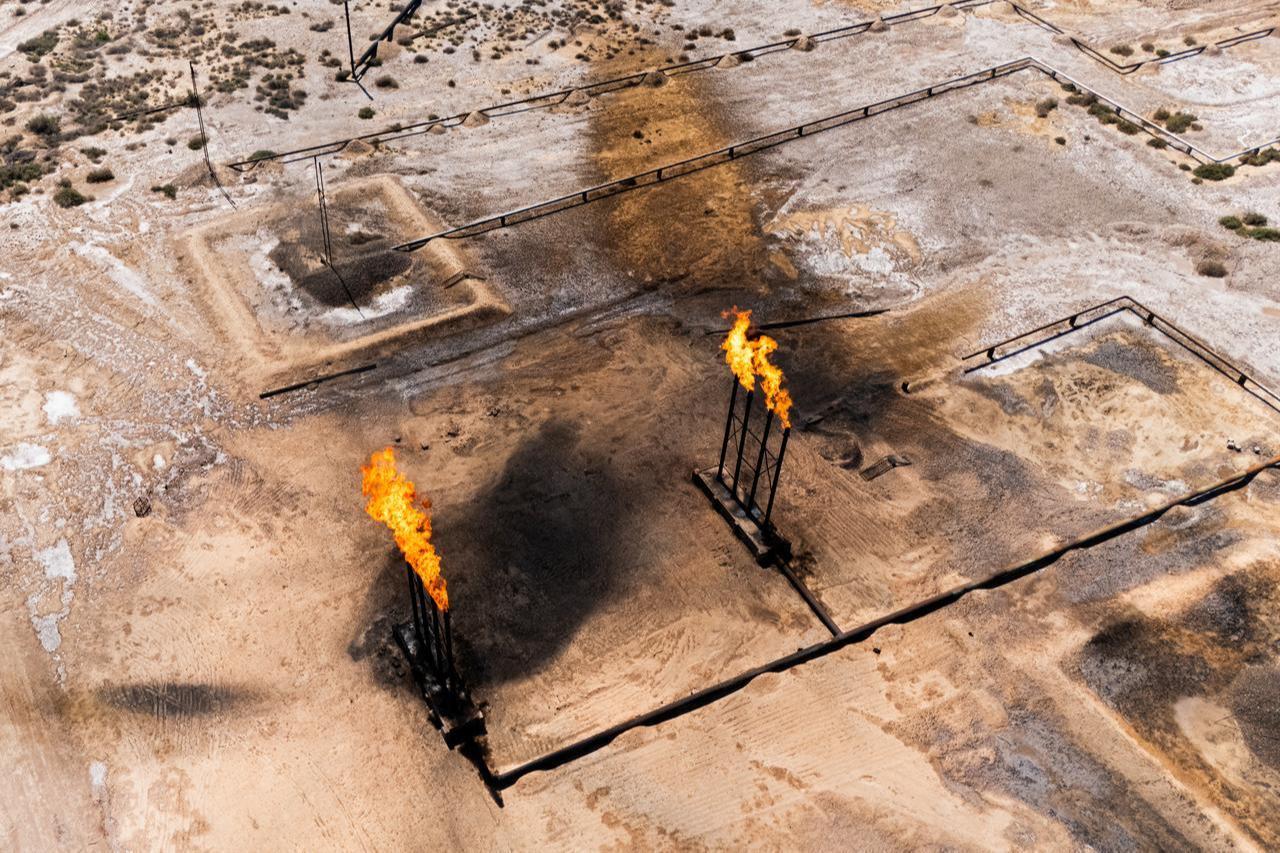

The same Treasury action designated Mustafa Hashim Lazim al-Behadili, described as a senior financial official for the Iranian-aligned Asa'ib Ahl al-Haq, who allegedly oversaw oil smuggling operations across southern Iraq.
Four Iraqi companies linked to him were blacklisted.
Two senior officials from Kata'ib Sayyid al-Shuhada, another Iranian-backed group, were also sanctioned. One of them was accused of funneling millions of dollars to Lebanon's Hezbollah to purchase weapons shipped into Iraq.
Following the U.S.-Israel attacks on Iran on Feb. 28, Iran-aligned groups in Iraq struck U.S. facilities in the country more than 600 times before a ceasefire was announced, according to a U.S. official cited by Agence France-Presse (AFP).


 Set as preferred source
 Set as preferred source


 1 min read
 1 min read