Newsletters


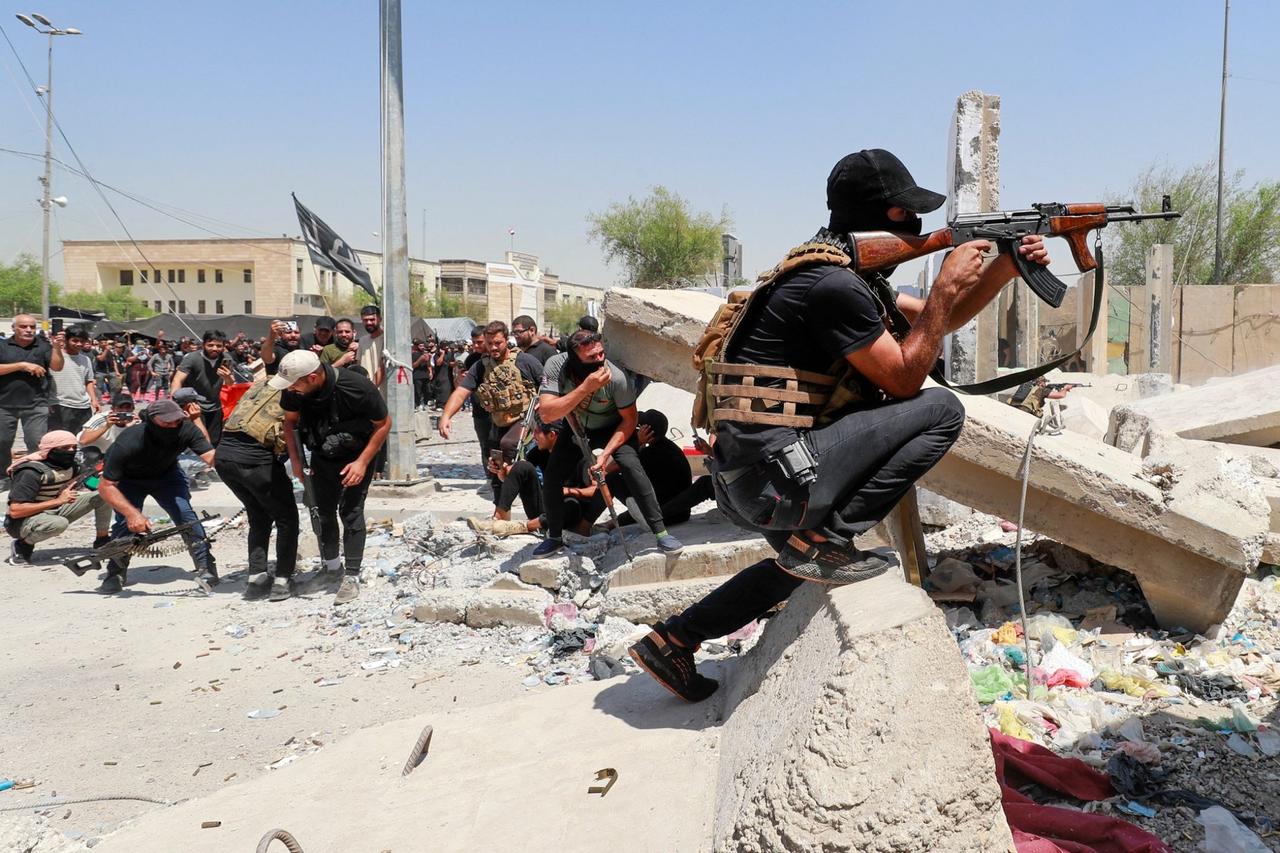


Asaib Ahl al-Haq, one of Iraq's most powerful Iran-backed Shiite factions, announced Tuesday it would disengage from the Popular Mobilization Forces (PMF) and place its weapons under state control, becoming the second such group to do so in weeks.
Kataib Hezbollah, another influential armed faction, declared it would continue its activity regardless of what others decided.
The announcement came as Washington formally endorsed Iraq's disarmament drive, with U.S. Charge d'Affaires Joshua Harris meeting with National Security Adviser Qasim al-Araji and expressing support for Baghdad's push to consolidate all weapons under state authority.
Asaib Ahl al-Haq said it had formed a committee to manage the transition, tasking it with "completing all requirements and procedures related to implementing this decision, including inventorying all personnel, weapons, vehicles, equipment, and logistical means, and linking up with the Commander-in-Chief of the Armed Forces, in line with state requirements and its security institutions."
The committee is headed by Jawad al-Talibawi, with Rafid Saleh Ali, Abdullah Shaker Kamel, and Ali Hamza Kadhim as members.
The move follows a similar announcement by Sadrist movement leader Muqtada al-Sadr, who dissolved his "Peace Brigades" and integrated them into the Iraqi state, a step Prime Minister Ali al-Zaidi welcomed.
Asaib Ahl al-Haq, founded in 2006 when it split from the Mahdi Army under the leadership of Qais al-Khazali, is now the second faction to do so.
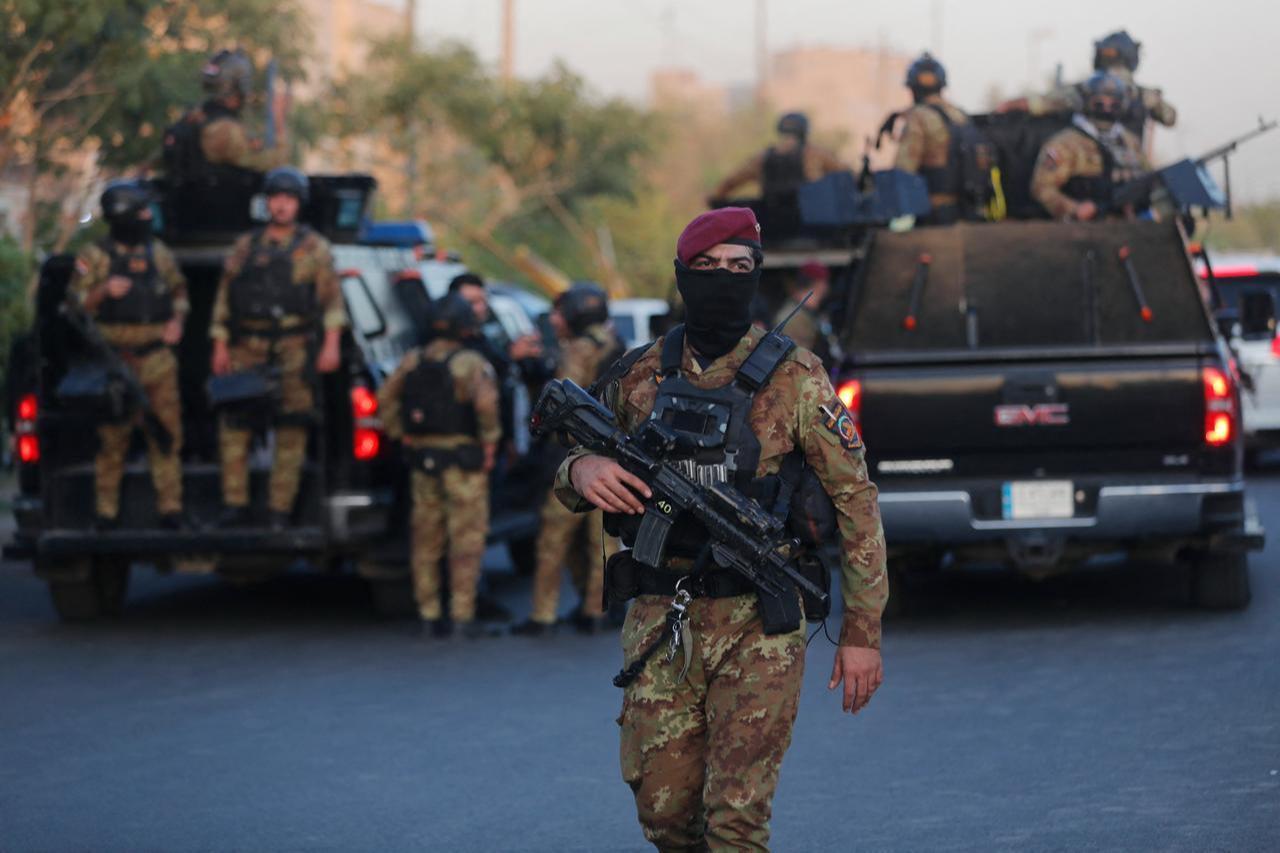

The Harris-Araji meeting on Tuesday signaled continued American investment in the disarmament process.
A statement from Araji's office said the U.S. described the Coordination Framework's backing for the weapons consolidation initiative, announced when the parliamentary bloc authorized PM al-Zaidi to take whatever measures were needed to safeguard Iraq's national interests, as "a qualitative shift toward consolidating independence and sovereignty."
The bloc's statement, the office said, "represents a roadmap for the country's stability and for avoiding anything that undermines Iraq's security and stability."
Earlier this month, a senior U.S. State Department official had demanded that Iraq take "concrete actions" on pro-Iran armed groups and made renewed American support conditional on "expelling terrorist militias from any state institution" and cutting off their funding.
Kataib Hezbollah drew a sharp line in the other direction. In a statement issued last week by its security chief, Abu Mujahid al-Assaf, the group made clear it would not follow the others into state structures.
"Action is today a collective duty, and we will carry it out on behalf of the brothers who have decided to abandon it," Assaf said.
He suggested the group was willing to play a practical role in the transition, offering to acquire weapons that disarming factions no longer wanted, and describing itself as ready "to cooperate and play a constructive role" by supervising the transfer and storage of weapons, including specialized systems such as cruise missiles for which, he argued, state agencies lacked qualified personnel.
Kataib Hezbollah said it would not discuss disarmament as long as foreign forces remained deployed in northern Iraq under the U.S.-led coalition formed in 2014 to combat extremists.
The disarmament push has been shaped by broader regional pressures. Since the U.S.-Israeli war on Iran erupted at the end of February, factions operating under the banner of the Islamic Resistance in Iraq (IRI) launched repeated drone and rocket attacks on U.S. interests in the country. Washington responded with strikes on their facilities, including Kataib Hezbollah bases, killing dozens of members.
Zaidi, who took office in mid-May, has made weapons consolidation a defining commitment of his government.


 Set as preferred source
 Set as preferred source


 3 min read