Newsletters




As Washington and Tel Aviv accelerate efforts to recruit the Kurdish for a ground offensive against Iran, Iraq's First Lady Shanaz Ibrahim Ahmed issued a sharp public rebuke on Thursday, declaring that Kurds will not serve as disposable proxies for foreign powers.
"Leave the Kurds alone. We are not guns for hire," Ahmed said in a formal press statement released from her office in Sulaymaniyah. The message amounted to the most prominent public objection from within Iraq's political establishment to the growing international pressure on Kurdish communities to take up arms in a war not of their making.
Ahmed is no peripheral figure in this drama. She is the wife of Iraqi President Abdul Latif Rashid and a member of one of the most prominent Kurdish political families in Iraq. Trump spoke to both Talabani and Masoud Barzani to discuss the U.S.-Israeli war with Iran and what might come next.
The calls were described as "sensitive."
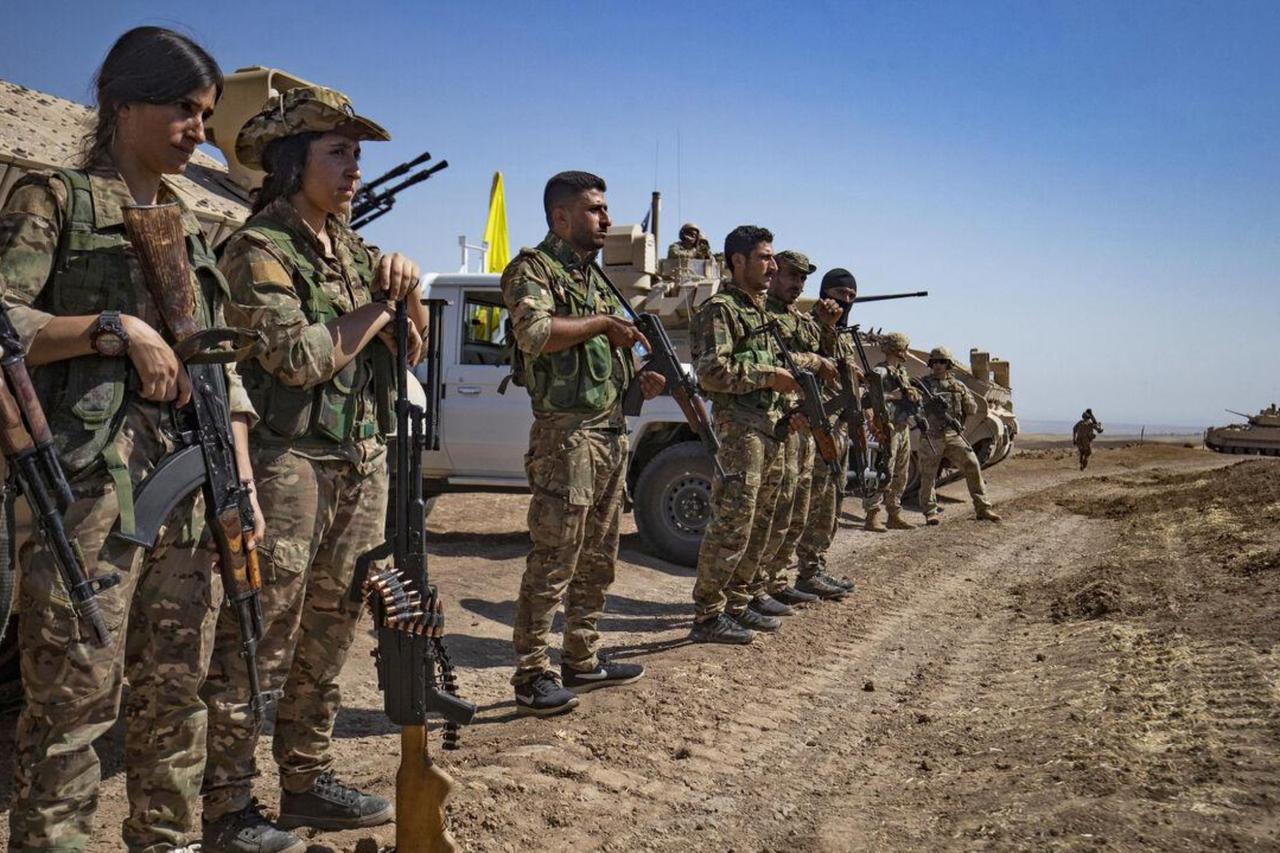
Ahmed's statement landed on the same day multiple reports confirmed that the CIA is working to arm the Kurdish with the aim of fomenting a popular uprising in Iran, with the Trump administration in active discussions with Iranian opposition groups and Kurdish groups in Iraq about providing military support. The initiative reportedly originated with Israeli Prime Minister Benjamin Netanyahu and the Mossad, with the CIA joining the effort at a later stage.
In her statement, Ahmed invoked the 1991 Kurdish uprising against Saddam Hussein's regime, known as Raparin, which began exactly 35 years ago to the day. Kurds were urged to revolt, she wrote, "only to be abandoned when priorities changed. No one came to our defense when the regime deployed helicopter gunships and tanks to crush the uprising."
U.S. intelligence assessments have consistently indicated that Iranian Kurds do not currently have the influence or resources to sustain a successful uprising. Iranian Kurdish parties are also seeking political assurances from the Trump administration before committing to any resistance effort, and some Trump officials involved in the discussions have raised concerns about whether the dynamic could jeopardize a working relationship. One administration official told CNN that it "may not be as simple as Americans convincing a proxy force to fight on its behalf."
Regional analysts have raised similar alarms. Neil Quilliam of Chatham House told Al Jazeera the plan "feels like a bad move," warning that it was "an afterthought" that reveals the war against Iran "has been poorly thought out." He added that arming Kurdish groups would be a major concern for Washington's regional partners, most notably Türkiye and Syria, and a headache for Iraq.
Meanwhile, Kurdish Iranian dissident groups based in northern Iraq are preparing for a potential cross-border military operation, and the U.S. has asked Iraqi Kurds to support them. One official said Trump had asked Iraqi Kurds to militarily support the Iranian Kurdish groups and to open the border to allow them to move freely back and forth. White House press secretary Karoline Leavitt confirmed that Trump spoke to Kurdish groups "with respect to our base that we have in northern Iraq" but denied that the president had agreed to a specific plan.
Iraqi Kurdish officials expressed concern that getting directly involved would draw a harsh Iranian response. Notrhern Iraq has already been hit by a string of Iranian drone and missile strikes in recent days targeting U.S. military installations, the U.S. Consulate in Erbil, and Kurdish opposition bases.
Ahmed's statement did not name any government or leader directly. But her appeal, addressed to "all sides involved in this conflict," carried an unmistakable message to both Washington and the Kurdish factions weighing whether to join the fight. "The experiences are there. The empty promises are there," she wrote. "Too often, the Kurds are remembered only when their strength or sacrifice is needed."


 Set as preferred source
 Set as preferred source


 1 min read

 1 min read