

 Newsletters


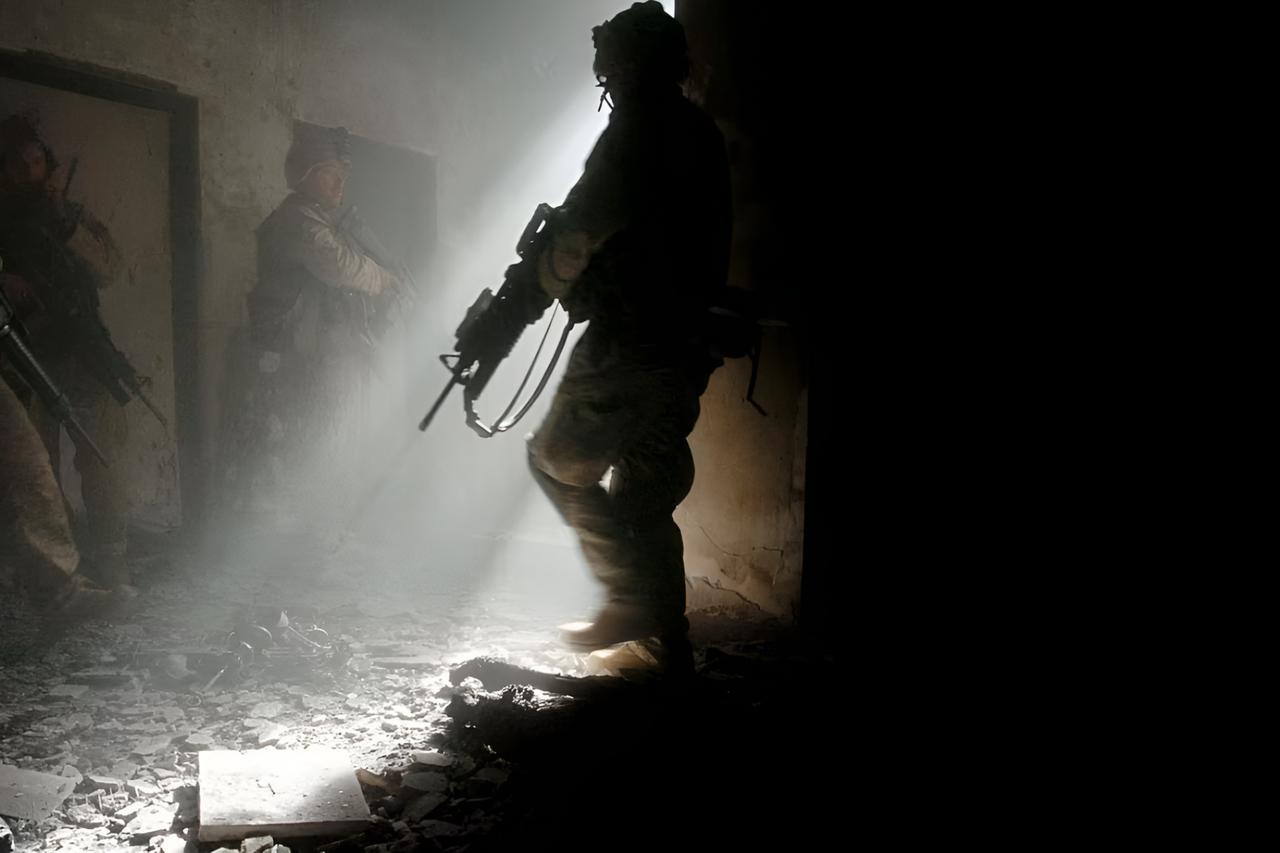


The ghosts of Iraq arrived before the smoke had cleared in Iran.
Within hours of the United States and Israel launching joint military strikes against Iran on Saturday morning, the Democratic Party did something it failed to do in 2003: it said no, almost in unison, almost immediately, and with the kind of force that only comes from a wound that never fully healed.
The Iraq War, two decades old and long since declared a catastrophic mistake by most of the political establishment, came flooding back into the national debate as if it had never left. Senator after senator, representative after representative, reached for the same analogy, invoked the same regrets, and drew the same line. They had watched their predecessors vote for a war built on false pretenses. They had inherited a party scarred by that decision. And on Saturday, with American bombs falling on Tehran, they made clear they would not let it happen again.
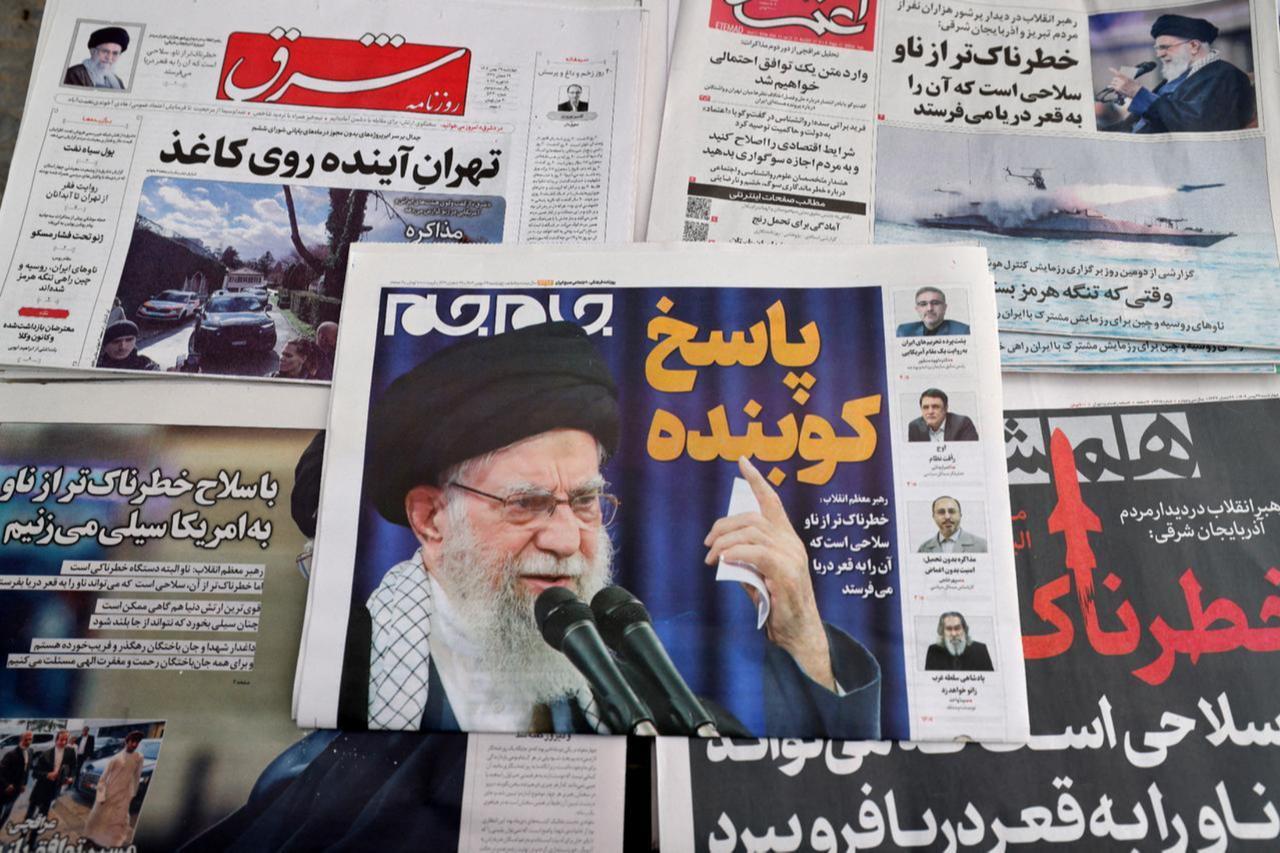
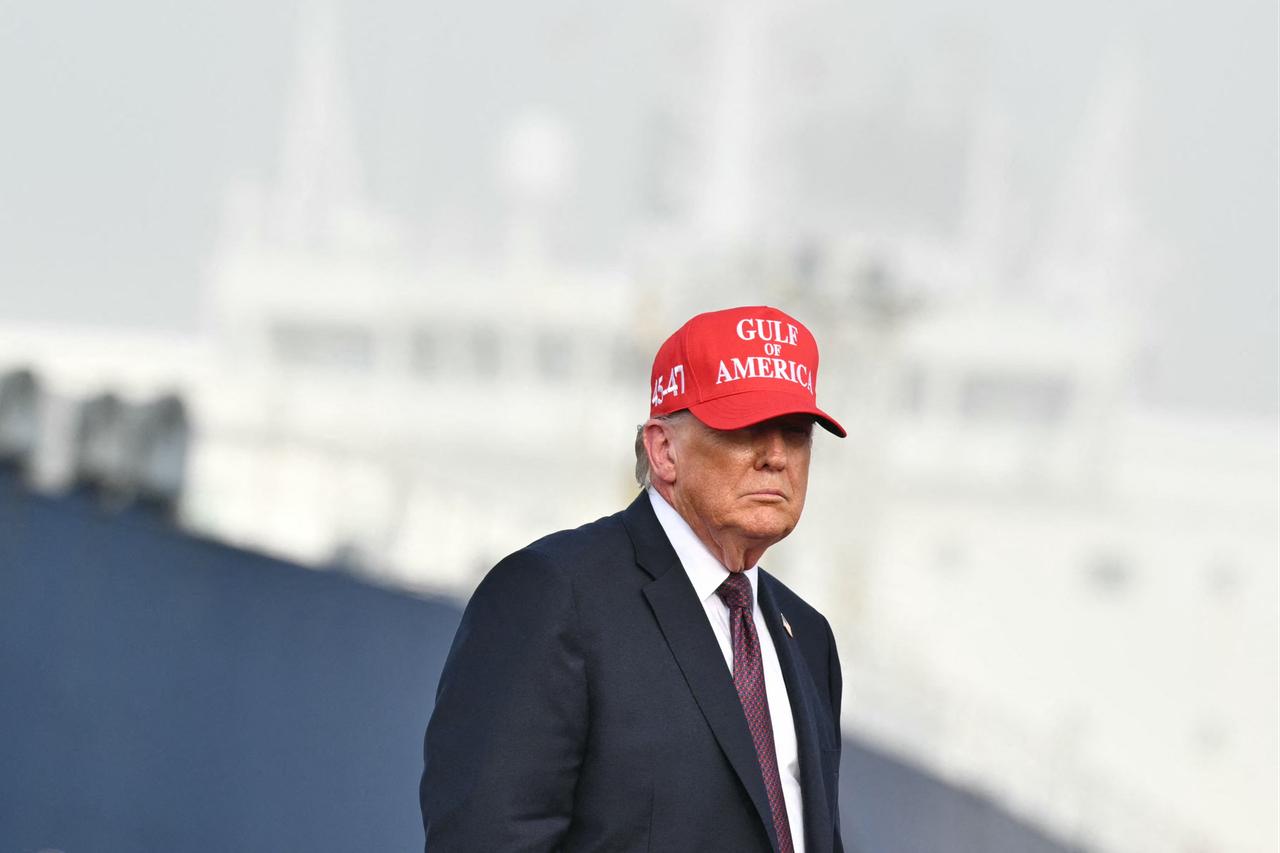
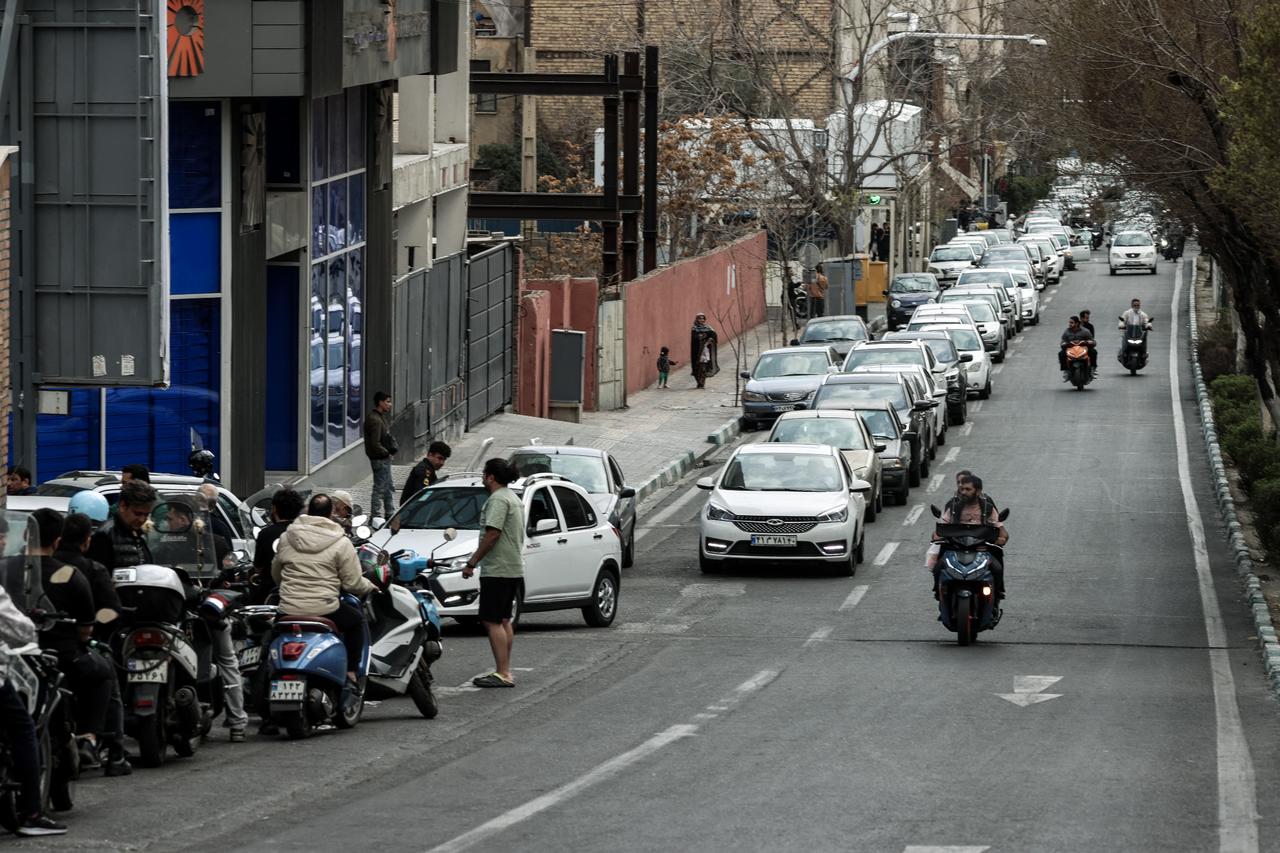
The operation, codenamed "Epic Fury" by the Pentagon and "Roaring Lion" by Israel, targeted Iranian leadership, military installations, and nuclear sites across multiple cities. President Donald Trump framed it as the beginning of "major combat operations" and called openly for regime change in Tehran. Iran retaliated against U.S. bases in the region before the day was out.
Democratic leaders responded by demanding Congress return to Washington this weekend to vote on a War Powers resolution, setting up what could become the most significant constitutional confrontation over war-making authority since the passage of the War Powers Resolution itself in 1973.
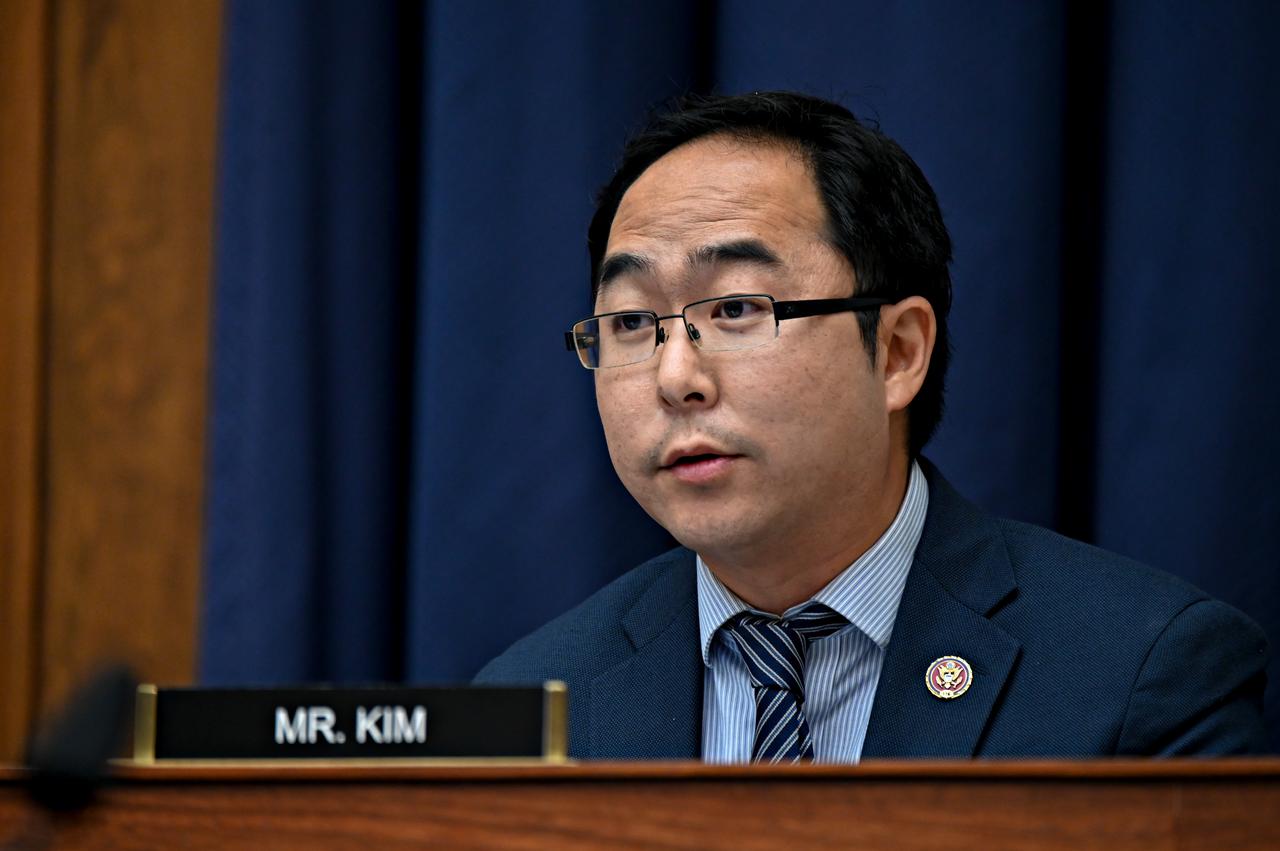

Sen. Andy Kim of New Jersey was among the first to break through. Appearing on NBC News with Kristen Welker, the senator called the strikes "appalling" and demanded an emergency session of Congress, not next week, but this weekend.
"I believe that we need to have Congress reassemble as soon as possible this weekend to be able to vote on the war powers resolution to show that this is not something that the American people want," Kim said. He accused the president of launching "a protracted, open-ended conflict ... with the objective of regime change," and then reached for the words that would come to define the day: "This is giving us nightmares and flashbacks" to Iraq.
"Right now, the American people do not buy and do not support what this president is doing," he added.
Senate Minority Leader Chuck Schumer released a statement shortly after that made clear the party's leadership was moving in lockstep. Schumer demanded an immediate classified briefing for all senators, public testimony from the administration, and a rapid return to session. "The Senate should quickly return to session and reassert its constitutional duty by passing our resolution to enforce the War Powers Act," he said, accusing the administration of failing to provide "critical details about the scope and immediacy of the threat."
House Minority Leader Hakeem Jeffries matched Schumer's urgency from the other chamber. "Donald Trump failed to seek Congressional authorization prior to striking Iran," Jeffries said. "Instead, the President's decision to abandon diplomacy and launch a massive military attack has left American troops vulnerable to Iran's retaliatory actions." He pledged that House Democrats would force a War Powers vote, invoking the Constitution's assignment of war-declaring power to Congress alone.
Former House Speaker Nancy Pelosi kept her message brief and sharp on social media: Trump's "decision to initiate military hostilities into Iran starts another unnecessary war which endangers our servicemembers and destabilizes an already fragile region."
Rep. Rashida Tlaib of Michigan issued one of the day's most searing statements, accusing Trump of "acting on the violent fantasies of the American political elite and the Israeli apartheid government." She said the strikes had "already killed dozens of children" and warned of a "catastrophic regional war that will make no one safer while unleashing unconscionable suffering."
Tlaib dismissed any pretense that the operation was about democracy. "You cannot 'free' people by killing them and destroying their country," she said, calling on Congress to "immediately reconvene to exert its war powers and stop this deranged president." In a pointed departure from most of her colleagues, she directed criticism at both parties, saying "warmongering politicians from both parties support this illegal war."
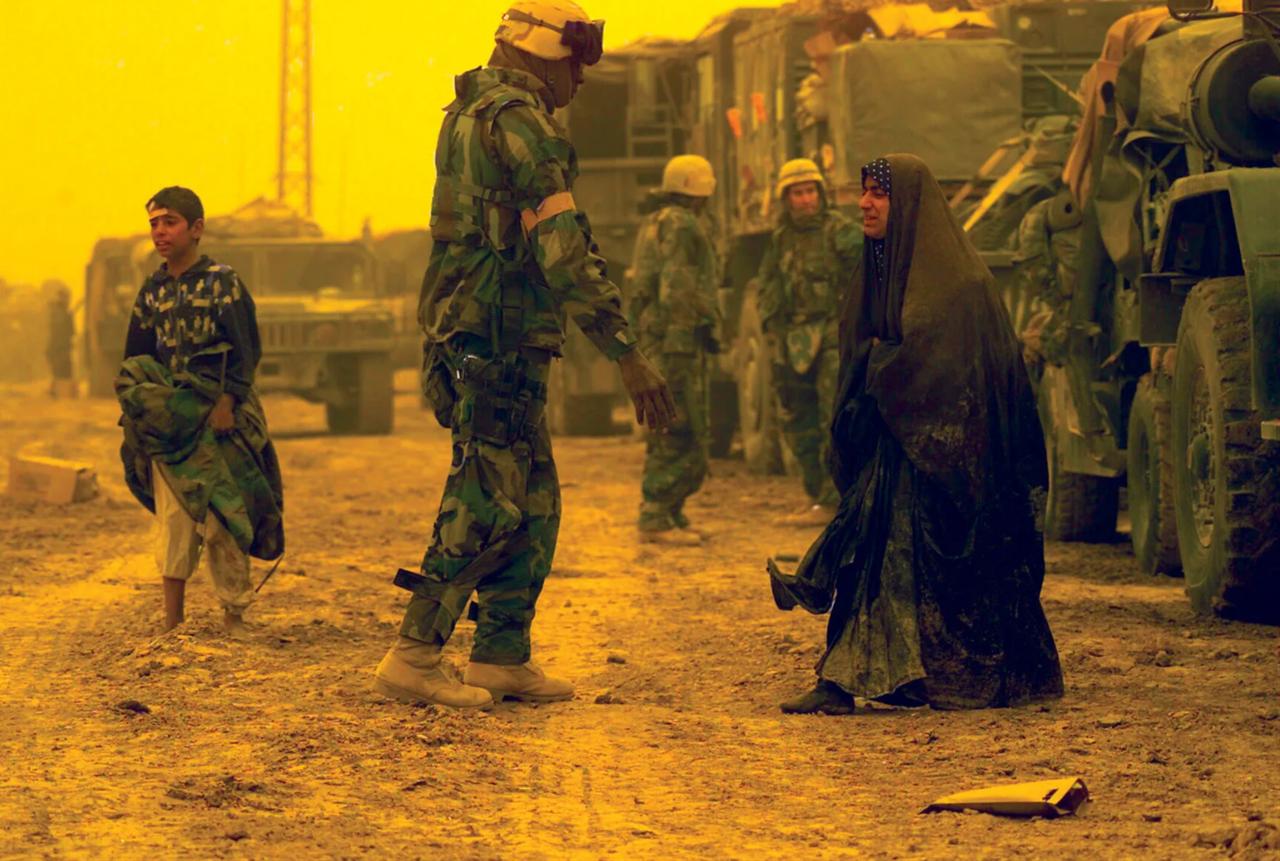
The ghosts of Iraq did not just hover over Saturday's Democratic revolt. They possessed it entirely.
In October 2002, 29 of the Senate's 50 Democrats voted to authorize the use of military force against Iraq, including some of the party's most prominent figures at the time: Joe Biden, Hillary Clinton, John Kerry, Tom Daschle. The resolution passed the House 296 to 133, with 81 Democrats joining the Republican majority. The party was divided, cautious, and afraid of looking weak in the shadow of Sept. 11.
The war that followed, launched on intelligence about weapons of mass destruction that turned out to be false, cost hundreds of thousands of lives, destabilized an entire region, and left a political scar across the Democratic coalition that many now regard as one of Congress's biggest mistakes.
That scar shaped careers, ended others, and fundamentally reordered the party's relationship to military force. Barack Obama built his 2008 presidential campaign in part on the fact that he had opposed the war as an Illinois state legislator.
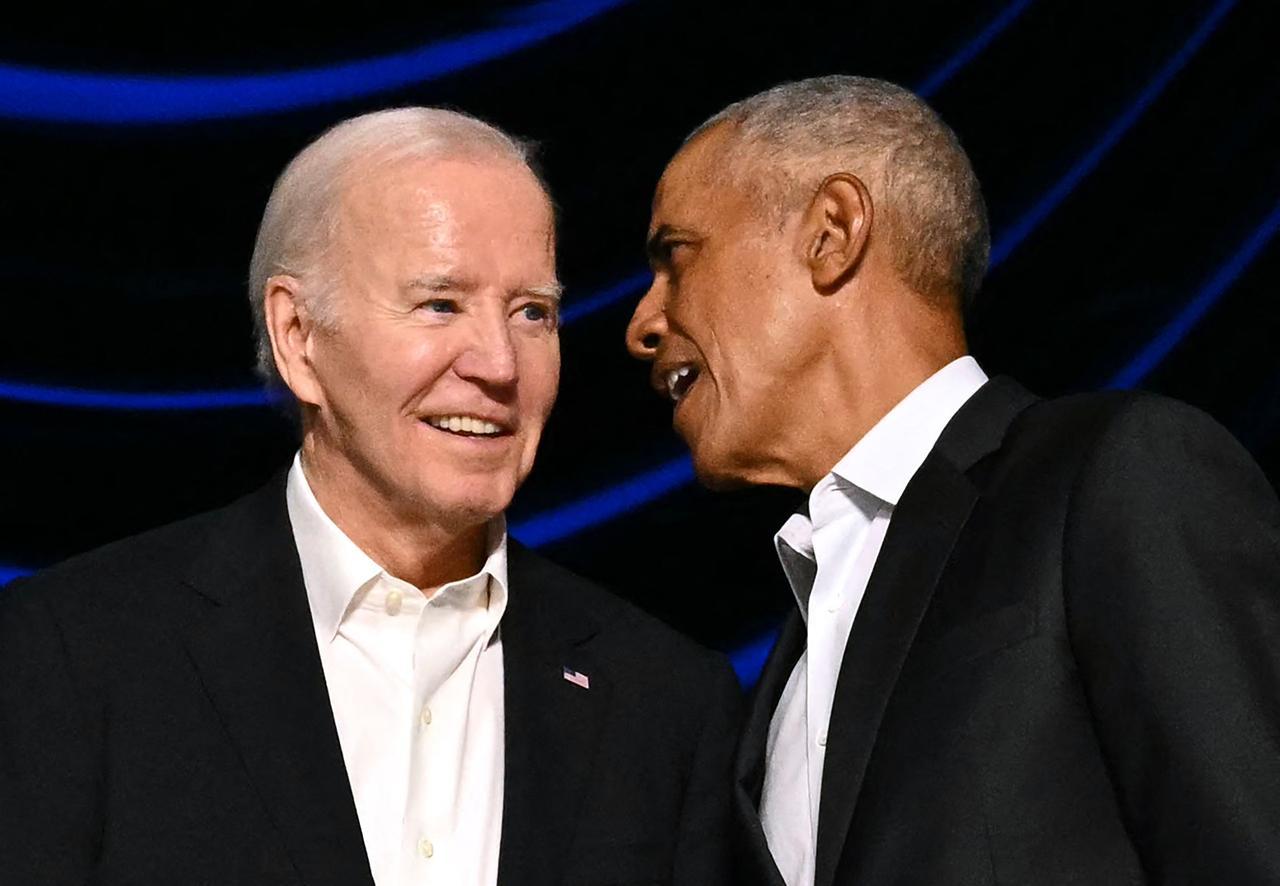
Hillary Clinton's vote for it followed her through two presidential runs. The party spent two decades trying to prove it had learned the lesson. On Saturday, the test arrived.
Sen. Dick Durbin of Illinois was among those 23 senators who voted against the Iraq AUMF, and he drew on that history with the authority of someone who had been right the first time around. "I was one of 23 Senators who voted against the war in Iraq," Durbin said.
"A war in Iran with the goal of regime change could be another long-term military commitment with deadly consequences for thousands of American troops. The rash and unpredictable conduct of President Trump is a well-established worry in many ways but an impulsive commander in chief is a deadly combination."
Sen. Tim Kaine of Virginia, who has spent years pushing legislation to reassert Congress's war-making authority, delivered what may have been the most blistering statement of the day.
"Has President Trump learned nothing from decades of U.S. meddling in Iran and forever wars in the Middle East?" Kaine said. "These strikes are a colossal mistake, and I pray they do not cost our sons and daughters in uniform and at embassies throughout the region their lives." He demanded the Senate return immediately and said every senator needed "to go on the record about this dangerous, unnecessary, and idiotic action."
Sen. Mark Warner of Virginia, the ranking member of the Senate Intelligence Committee and a lawmaker better known for measured bipartisan pragmatism than fiery rhetoric, was unusually blunt. "The American people have seen this playbook before, claims of urgency, misrepresented intelligence, and military action that pulls the United States into regime change and prolonged, costly nation-building," Warner said. "And how does this make Americans safer?"
Sen. Ruben Gallego of Arizona, a Marine combat veteran who served in Iraq, made the stakes personal in a way few others could. "I lost friends in Iraq to an illegal war," Gallego said. "Young working-class kids should not pay the ultimate price for regime change and a war that hasn't been explained or justified to the American people." He argued the U.S. could "support the democracy movement and the Iranian people without sending our troops to die."
Rep. Chuy Garcia of Illinois framed it as a generational betrayal. "A U.S. president is once again sending other people's children to die for a regime change fantasy built on lies, with devastating, destabilizing effects for all involved," Garcia said.
Sen. Richard Blumenthal of Connecticut called the operation "a war of choice that rejects opportunities for diplomacy," warning it risked becoming "another forever war." Rep. Jim Himes, also of Connecticut and the ranking member of the House Intelligence Committee, kept his assessment spare: "The president had failed to learn the lessons of history."
Illinois Gov. J.B. Pritzker went after the constitutional question directly, accusing Trump of "sidestepping the Constitution and once again failing to explain why he's taking us into another war."
The near-unanimity of the Democratic response made the handful of exceptions all the more conspicuous.
Sen. John Fetterman of Pennsylvania, who has carved out a distinct and sometimes lonely lane on Middle East policy, broke cleanly with his party's leadership.
"President Trump has been willing to do what's right and necessary to produce real peace in the region," Fetterman said, a statement that would have been unremarkable from a Republican but that landed with considerable force on a day when his entire caucus was reaching for the word "unconstitutional."
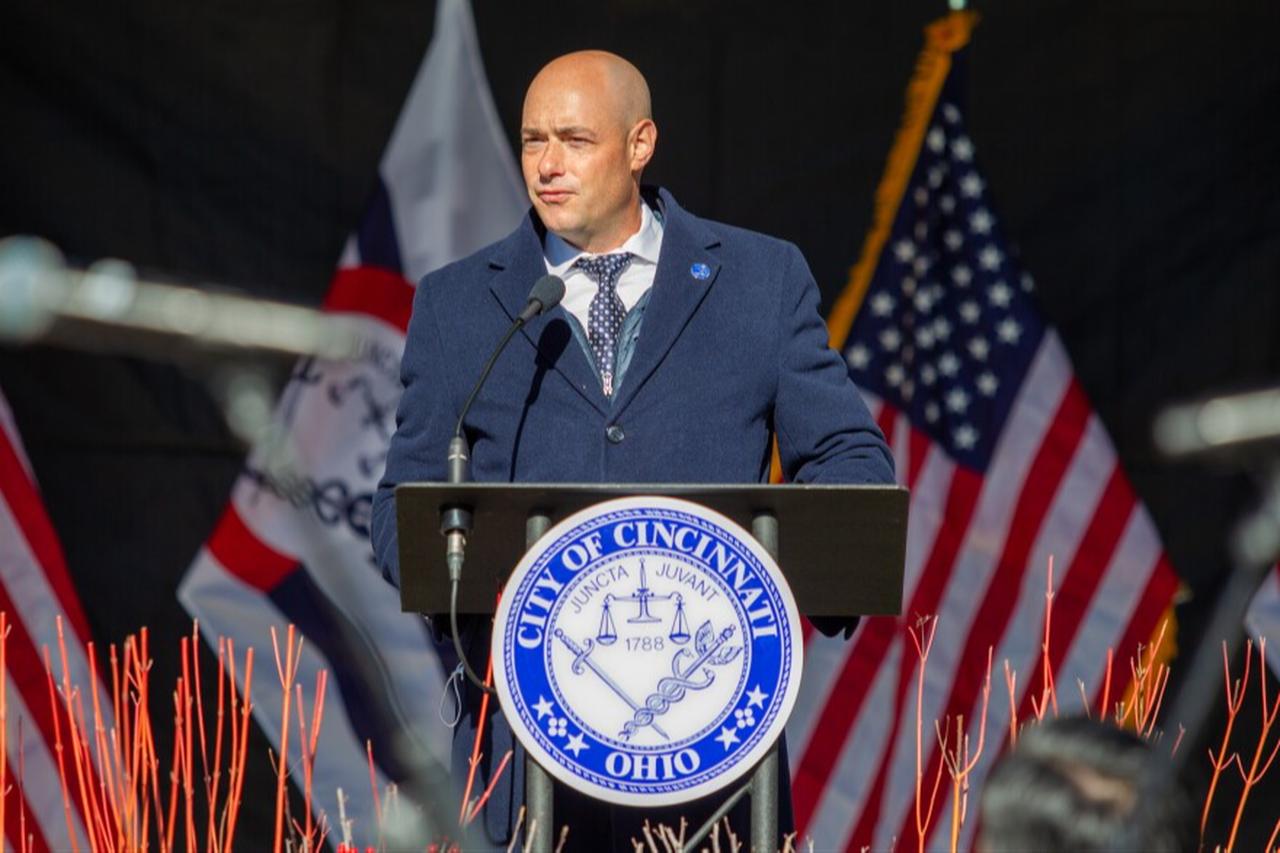
Rep. Greg Landsman of Ohio went further still. He expressed support for the strikes, saying he hoped "these targeted strikes on the Iranian regime's military assets end the regime's mayhem and bloodshed and makes way for this lasting peace in the region," and then announced he would vote against the very War Powers resolution his own party's leadership was fighting to bring to the floor.
He argued the operation was focused on military infrastructure and noted that warnings had been issued to Iranian civilians. "If it wasn't for the regime, the region may very well know peace," Landsman added.
Sen. Jacky Rosen of Nevada threaded a finer needle, expressing solidarity with the Iranian people and acknowledging Iran's "malign activities" while simultaneously calling for briefings, warning against protracted conflict, and questioning the absence of congressional authorization. It was the kind of carefully calibrated statement that suggested a lawmaker still working out where the political ground would settle.
Rep. Jared Moskowitz of Florida also stopped short of taking a definitive position, calling it "a serious moment that demands full transparency and congressional oversight" and requesting immediate briefings from the State Department and Pentagon.
The fractures were real. They were also narrow. Fetterman and Landsman stood largely alone among elected Democrats willing to offer anything resembling an endorsement of the operation. The overwhelming weight of the party fell on the other side.
Beyond the leadership suites and committee hearing rooms, the Democratic rank and file delivered a remarkably consistent message on Saturday: the president had no authority to do what he did, and Congress needed to act.
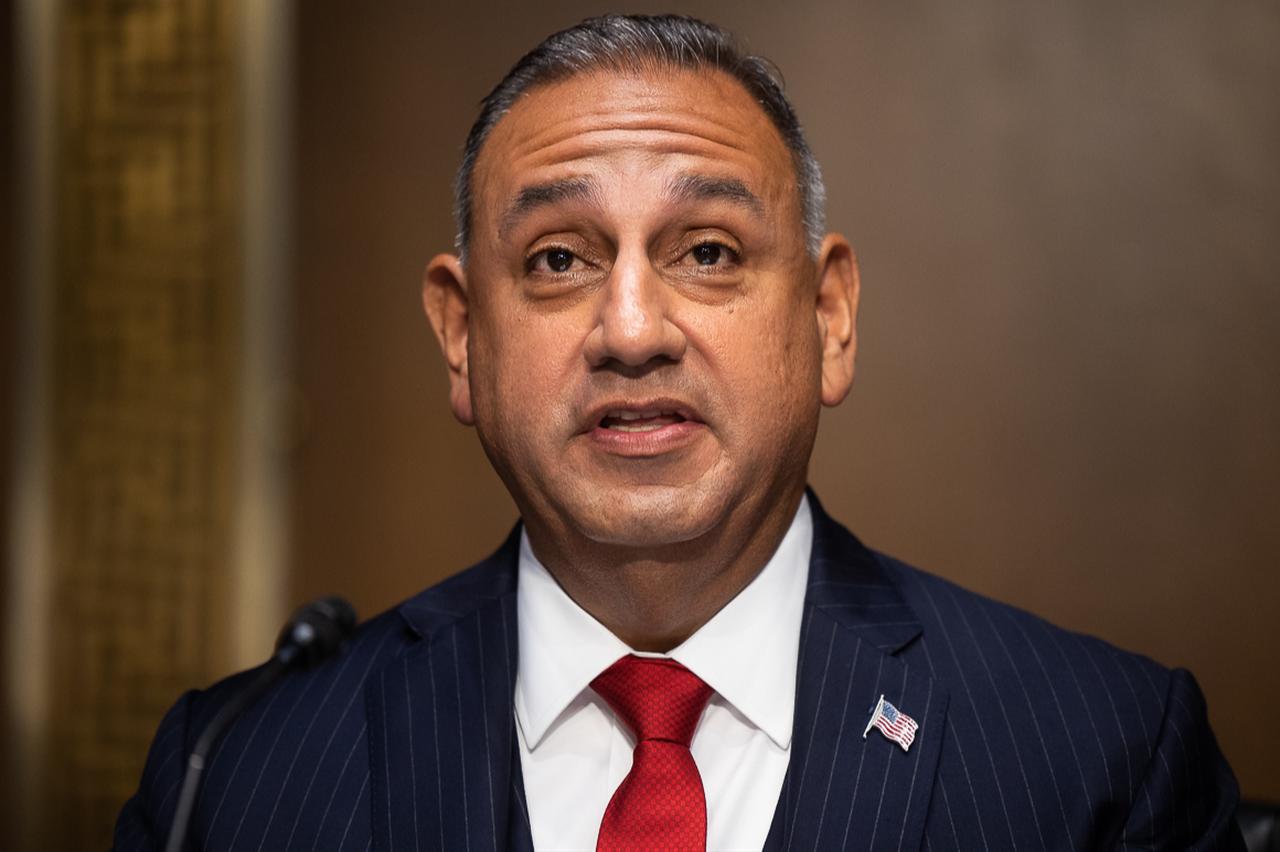
Rep. Gil Cisneros of California, a member of the New Democrat Coalition's leadership, demanded that House Speaker Mike Johnson "immediately reconvene the House so that we may vote on a war powers resolution," insisting the Constitution gives Congress alone "the authority and heavy responsibility to send our nation to war."
Rep. Jasmine Crockett of Texas struck a sardonic note, observing that "the self-proclaimed 'President of peace' is once again starting illegal wars without Congressional authorization."
Rep. Marc Veasey, also of Texas, said Trump lacked "the authority to drag the United States into another war without a clear strategy, defined objectives, or the authorization required by the Constitution." He added: "Donald Trump promised the American people there would be no more endless wars. Now he has broken that promise."
Rep. Ro Khanna of California joined with a Republican colleague in describing the strikes as "acts of war unauthorized by Congress" and calling for an emergency War Powers vote, a rare bipartisan pairing that underscored the constitutional dimensions of the debate.
Several Illinois Democrats issued detailed, granular statements that reflected just how deeply the caucus was engaged with the issue. Rep. Sean Casten acknowledged Iran's repressive nature and then pivoted sharply, highlighting what he called the president's own admission "that U.S. troops may be killed as a result of this unlawful war." He called for diplomacy to lead and announced his support for the War Powers resolution.
Rep. Raja Krishnamoorthi said Trump was "risking the lives of Americans in an unauthorized war with no end in sight" and pledged to vote for the resolution "to rein in this unaccountable President."
Rep. Jan Schakowsky called for a return to the kind of multilateral diplomacy embodied by the Joint Comprehensive Plan of Action, the 2015 nuclear agreement with Iran brokered under President Barack Obama with the United Kingdom, France, Germany, China, and Russia.
The JCPOA had placed significant constraints on Iran's nuclear program in exchange for sanctions relief. Trump withdrew the United States from the deal in May 2018 during his first term, setting the stage for years of escalating tensions between Washington and Tehran.
Rep. Brad Schneider called the moment one "of peril and opportunity," demanded comprehensive classified briefings, and announced his support for the War Powers resolution, citing what he described as the administration's "failure to engage Congress."
Rep. Eric Sorensen expressed "deep worry" about the president circumventing Congress "without an articulated plan to protect our national security."
Rep. Emilia Sykes of Ohio acknowledged Iran's brutality and called the strikes "reckless and unconstitutional," arguing that "at a time when American families are facing economic challenges at home, we should not be asked to bear the costs of another open-ended conflict."
The War Powers Resolution, formally the War Powers Resolution of 1973, was enacted after the Vietnam War to check presidential authority to commit U.S. forces to armed conflict without congressional consent.
It requires the president to notify Congress within 48 hours of deploying troops and limits military engagement to 60 days without explicit authorization, with a 30-day withdrawal window. Congress passed the resolution by overriding President Richard Nixon's veto in November 1973. Every president since has questioned its constitutionality. None has been forced to fully comply with it.
Whether this time would be different remained an open question Saturday night. But for the first time in a generation, the ghosts of Iraq had done what two decades of foreign policy debates could not: they had unified a Democratic caucus around a single word, and that word was no.


 Set as preferred source
 Set as preferred source


 1 min read
 1 min read


