Newsletters


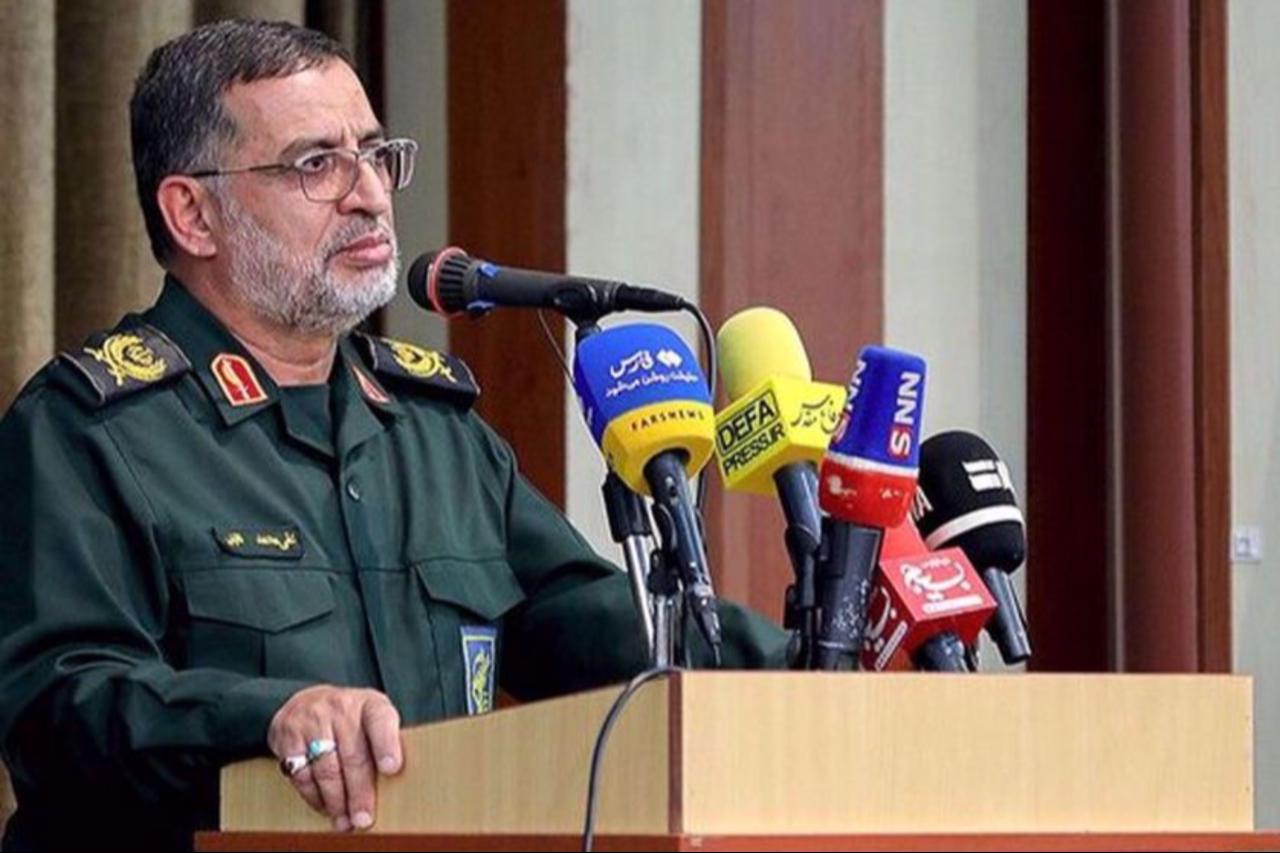


Iranian Revolutionary Guard Corps (IRGC) spokesman General Ali Mohammad Naeini was killed in an aerial strike on Friday, Iranian state-run Mehr News Agency reported.
"The spokesman of the Islamic Revolutionary Guards Corps, General Ali Mohammad Naeini, was martyred in an aerial aggression on Friday," Mehr News reported.
Naini "was martyred in the criminal cowardly terrorist attack by the American-Zionist side at dawn", the IRGC said in a statement on their Sepah News website.
 Breaking News, Direct to You.
 Follow Türkiye Today on WhatsApp
for real-time updates and key insights from Türkiye and beyond.
Follow Türkiye Today on WhatsApp
for real-time updates and key insights from Türkiye and beyond.
The Israeli army confirms killing the spokesman for Iran's Islamic Revolutionary Guard Corps, Ali Mohammad Naeini, in an airstrike in Iran.
Israeli army spokesman Avichay Adraee said in a statement on X that, "The Air Force, directed by the Military Intelligence Directorate, attacked last night and eliminated the so-called Ali Mohammad Naeini, spokesperson and head of the propaganda system in the Iranian Revolutionary Guard."
"Over the years, Naini held several positions in the fields of propaganda and media, and in the last two years, he worked as the main propaganda promoter for the Revolutionary Guard under the Iranian Terrorist Regime," he added.
Before his death, Gen. Ali Mohammad Naeini issued a statement insisting Tehran was still able to build missiles despite the attacks coming from Israel and the United States.
He also said the war would go on.
"These people expect the war to continue until the enemy is completely exhausted," the general said of the Iranian public, adding that, "This war must end when the shadow of war is lifted from the country."
Ali Mohammad Naeini served in the IRGC for four decades and has acted as the spokesperson for the past two years, reports the IRGC-affiliated Fars news agency.
Regional tensions in the Middle East have escalated since Israel and the U.S. launched a joint offensive on Iran on Feb. 28, killing so far more than 1,300 people, including then-Supreme Leader Ali Khamenei.
Iran has retaliated with drone and missile attacks across the region and has effectively closed for most ships the Strait of Hormuz, a key oil transit route that normally handles about 20 million barrels per day, and roughly 20% of global liquefied natural gas trade.


 Set as preferred source
 Set as preferred source


 1 min read
 1 min read