Newsletters


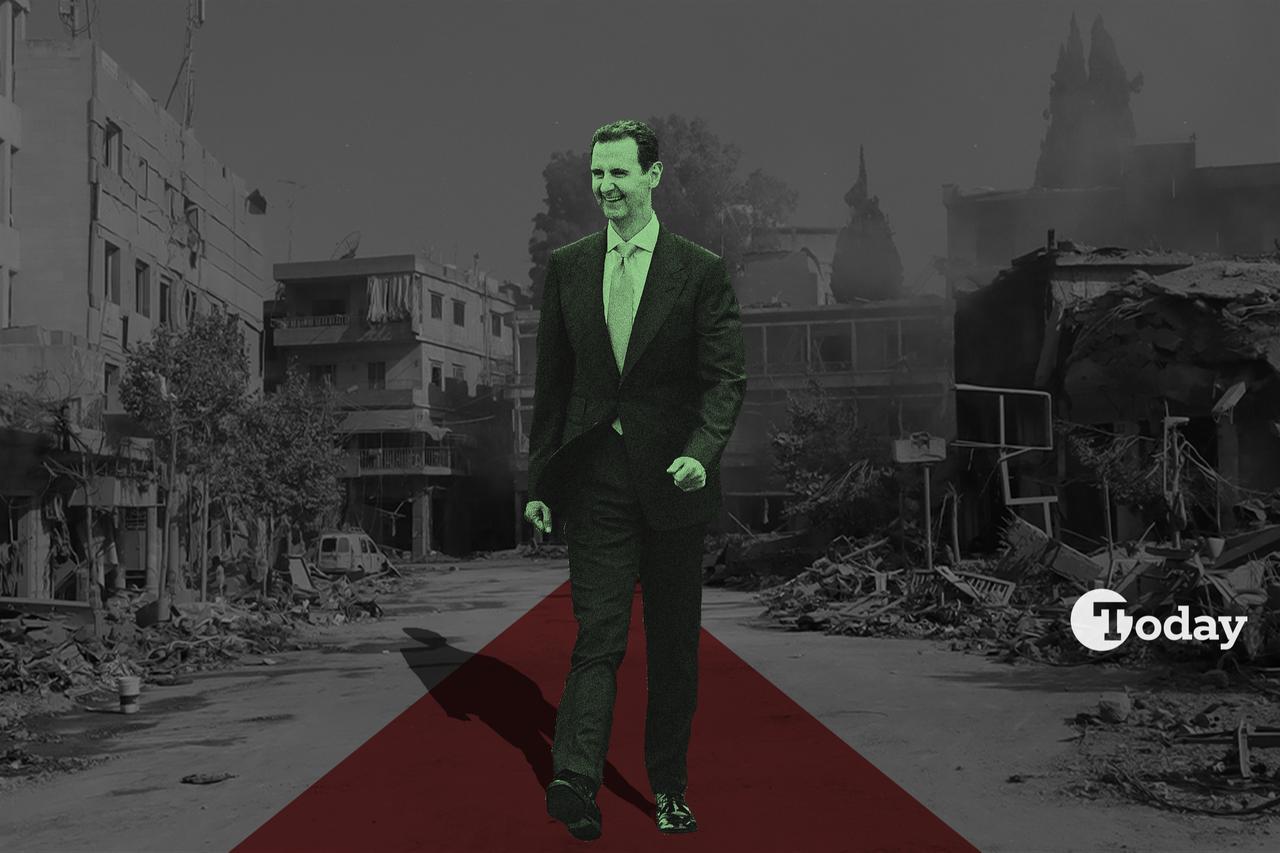


The year 2025 marked a historic rupture for both Syria and Lebanon, yet neither country translated political change into stability. Syria entered its first year since 1970 without the Assad family in power, while Lebanon experienced a visible erosion of Hezbollah’s dominance over state institutions.
Despite these shifts, both states remained trapped in transitional insecurity. Mehmet Emin Cengiz, a researcher at the Istanbul-based Al Sharq Strategic Research, describes the current Lebanese political climate as "extremely fragile."
He warns that despite a new government in Beirut, the country remains at risk of "being dragged into a civil war" if the process of disarming Hezbollah leads to a direct confrontation.
This dual fragility shaped how Damascus and Beirut began to perceive one another. Instead of opening a clean slate, the transition exposed unresolved threats embedded in the post-war order.
For Syria’s new leadership, the overriding priority has been preserving territorial unity and preventing the emergence of parallel power centers. The most acute danger lies in the potential coordination between the SDF, Israel, opposition factions within the Druze community, and remnants of the former regime.
Cengiz notes that there is a "high probability" that recent destabilizing events in Syria's coastal regions were coordinated with "old regime remnants" currently hiding in Lebanon. He argues that this presence creates a significant "crisis of trust" between the two neighboring capitals.
In this context, Syria has pursued a cautious security posture. The leadership has sought to neutralize threats without triggering cycles of violence whose consequences could spiral beyond control.

Damascus’s view of Lebanon must be understood within this broader framework. While issues such as Syrian detainees in Lebanese prisons remain sensitive, they do not rise to the level of an existential challenge.
What alarms Syrian officials more is the possibility that Lebanon could function as a logistical rear base for former regime networks. Cengiz emphasizes that for the sake of regional stability, "it is essential for Lebanese officials to go after these Assad remnants more boldly," regardless of how many individuals are actually involved.
That skepticism intensified after Al Jazeera released hours of leaked audio recordings in late December. The tapes featured prominent figures from the former Assad regime, some reportedly residing in Lebanon, discussing plans to destabilize Syria and explore possible coordination with Israel.
Regarding the timing and nature of these leaks, Cengiz points out that "how these recordings were hacked and why they are being released to the media now" remains a central point of contention and debate.
CNN’s Clarissa Ward recently tracked former Syrian General Bassam al-Hassan to Beirut, where the high-ranking figure is reportedly in hiding. Al-Hassan, once a core member of Bashar al-Assad’s inner circle and a top military advisor, was located in the Lebanese capital following the collapse of the Syrian regime, further fueling Damascus's fears.
According to Cengiz, the recordings show a "search for a leadership role" among displaced actors like Rami Makhlouf and Ghazal Ghazal, rather than a functional military command.
The recordings showed former regime figures discussing outreach to Israel. Rather than indicating deep coordination, the exchanges suggested tentative and rudimentary contact-building.
Cengiz observes that these figures "clearly express a desire to cooperate with Israel," even praising Israeli military tactics, out of a desperate attempt to regain relevance.
Syrian skepticism was reinforced by voices within Lebanon aligned with Damascus. Dar al-Fatwa in Rachayya issued a statement claiming it had informed Lebanese officials of the locations of former Assad figures.
The statement alleged that these individuals were housed in rented apartments and villas, supported by Lebanese, Arab, and international associations. Municipalities in northern Lebanon echoed these concerns, calling for state intervention. A member of parliament publicly urged the adoption of heightened security measures and arrests.
"Damascus is looking for more than just diplomatic words," Cengiz suggests. He concludes that for a new era to begin, "Hezbollah must make a strategic decision and stop being a barrier" to the normalization of ties between the two nations.
In response, Lebanon sought to contain the fallout. Officials signaled that the leaks were being taken seriously, both through public statements and limited security measures by the army.
However, the situation remains complicated by the killing of former Assad officer Ghassan Naassan al-Sakhni in a Lebanese mountain village, which raised fears of vigilantism. While President Aoun is treading a narrow path to mollify Syrian concerns, he finds himself without the necessary leverage to manage the domestic process of Hezbollah disarmament.


 Set as preferred source
 Set as preferred source


 1 min read