Newsletters





Israel's far-right National Security Minister Itamar Ben-Gvir publicly rejected the U.S.-Iran peace agreement on Sunday, declaring that it "does not bind us" and that Israel is "an independent and sovereign country" not subordinate to the United States.
Israeli Defense Minister Israel Katz delivered a parallel warning that Israeli forces would remain in Lebanon, Syria, and Gaza "without time limit" regardless of U.S. pressure, and that any Iranian attack on Israel over events in Lebanon would be met "with full force."
The statements placed Israel in open defiance of central provisions of the framework agreement announced by U.S. President Donald Trump and Pakistani Prime Minister Shehbaz Sharif, which called for "the immediate and permanent termination of military operations on all fronts, including in Lebanon."
Separately, Yedioth Ahronot reported, citing unnamed Israeli officials, that Netanyahu told Trump during a phone call Sunday that the agreement's Lebanon clauses are not binding on Israel and that Israeli forces would continue operations and would not withdraw from occupied Lebanese territory.
A majority of ministers in Israel's security cabinet meeting on Sunday backed Netanyahu's position on Lebanon, according to the report.
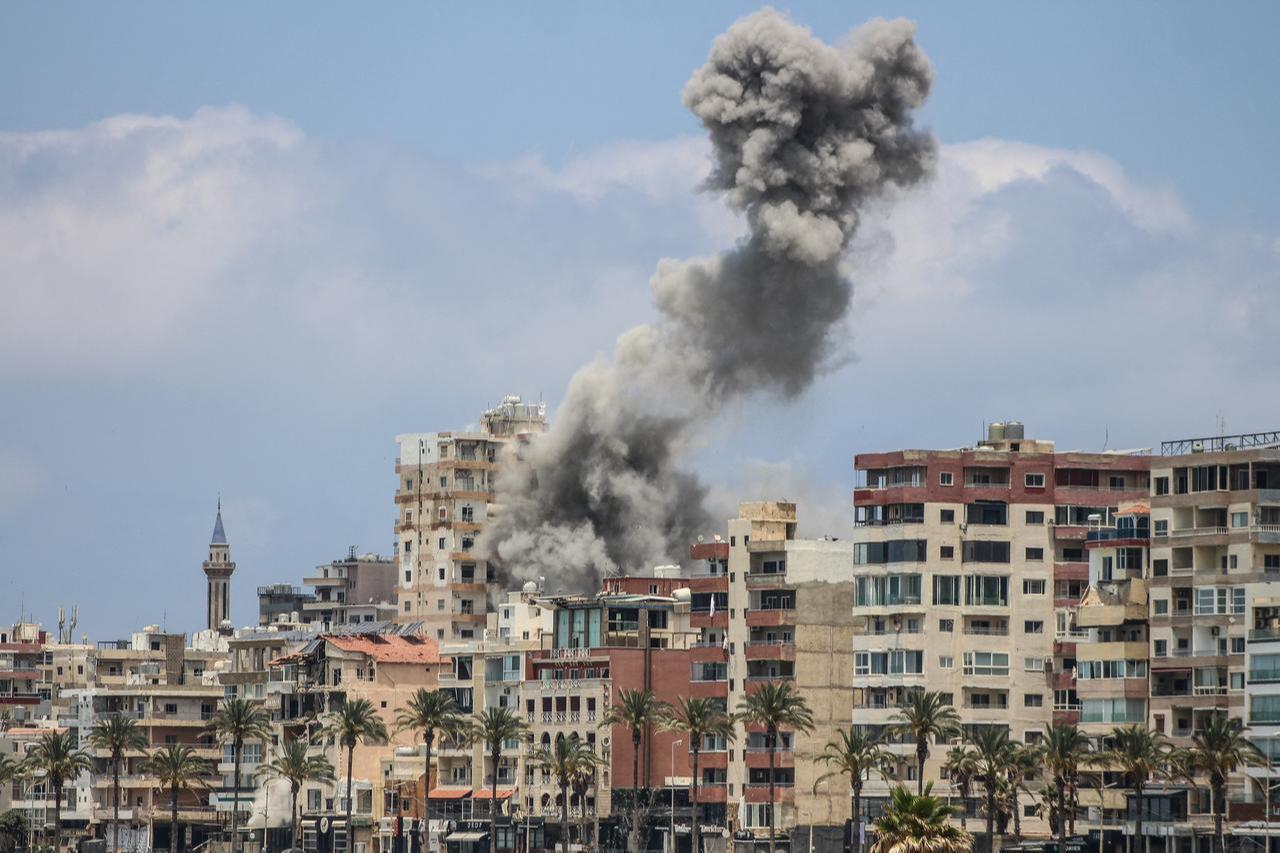

Ben-Gvir, posting on X, framed Israel's rejection in maximalist terms. "Trump's agreement does not bind us. Israel is obligated to defend its citizens and soldiers. Israel is not subordinate to the United States, we are an independent and sovereign country," he wrote.
"My position is clear: we are not partners to this agreement, which does not ensure our security, and it is not binding upon us in any way," he added.
Ben-Gvir demanded complete Hezbollah disarmament as Israel's minimum condition, opposed any withdrawal from territory captured and cleared by Israeli forces, and warned that Israel must not "remain silent in the face of any fire directed at the State of Israel."
He stated that every drone or missile fired from Lebanon toward Israel would result in "an Israeli strike on the Dahiyeh district of Beirut, the capital of Lebanon."
Katz, in a formal statement, said he and Netanyahu were "leading a clear policy that determines that the Israeli army will remain in the security zones in Lebanon, Syria, and Gaza, without a time limit, in order to protect the border and Israeli communities from extremist elements."
He said security zones would be "cleared of local residents, and all terrorist infrastructures, both above and below ground, including houses in the contact villages that served as terrorist outposts, will be destroyed."
Katz said Netanyahu had communicated this position directly to Trump and that he himself had conveyed it to U.S. Secretary of Defense Pete Hegseth the previous day.
He said the Israeli army validated the position on professional and security grounds. "We will not compromise on Israel's supreme security interest and the protection of our citizens, and we will not withdraw from the security zones," Katz said.
Unnamed Israeli officials cited by Yedioth Ahronot warned that Israel could face a direct confrontation with U.S. pressure if Washington formally demands a withdrawal or operational restrictions following the agreement.

Israeli political commentators offered a withering assessment of the agreement's strategic implications for Israel before and after its announcement, with several describing the outcome as a political defeat for Netanyahu despite Israel's military gains.
Writing in Maariv, analyst Ben Caspit said Netanyahu had led Israel into "a serious political defeat," arguing that the political setback outweighed the military achievements against Hamas, Hezbollah and Iran. "The political defeat is greater than the military victories," Caspit wrote.
"Netanyahu had made himself hostage to Trump and had dragged Israel along with him," he said, adding that Tehran had "no intention of giving up its nuclear project or uranium" and that "the danger posed by the Iranian regime now is far greater than it was a year ago."
Also in Maariv, analyst Avi Ashkenazi was more categorical: "The failure is enormous, the collapse is real, and Iran is the biggest winner."
Ashkenazi argued that Israel had failed because its political leadership was unable to influence the agreement's content, that Iran's nuclear project had not ended, and that enriched uranium would remain "partly or wholly in Iranian hands."
He also warned that Hezbollah, Hamas and the Houthis could receive "resuscitation doses" as large amounts of frozen Iranian funds are released.
In Israel Hayom, Ben-Dror Yemini wrote that any agreement would amount to U.S. recognition of "a stronger and more radical Iranian regime." He argued that Iran's ballistic missile program remained unaddressed and that Tehran's network of regional allies, Hezbollah, the Houthis, Shia militias in Iraq and Hamas, would continue to operate with Iranian funding.
"Hamas was not defeated after a war that lasted two years, and Iran was not defeated after 40 days of bombing," Yemini wrote.
In Haaretz, analyst Zvi Bar'el warned under the headline "Iran is not satisfied with survival and seeks superpower status" that "it would be better to have no agreement than to sign a bad one."
Bar'el noted that the document under discussion is a working paper of principles, not a final deal, and that Iran's ballistic missile program, described as a central issue in commitments made by Trump and Secretary of State Marco Rubio, is not expected to be discussed at any negotiating stage.
The same applied to Iran's ties with and support for its allies in Iraq, Lebanon, and Yemen.
Trump had earlier described Netanyahu as "a very difficult guy" in a New York Times interview and said the Israeli leader should thank him for preventing a nuclear-armed Iran.


 Set as preferred source
 Set as preferred source


 1 min read


 1 min read