Newsletters


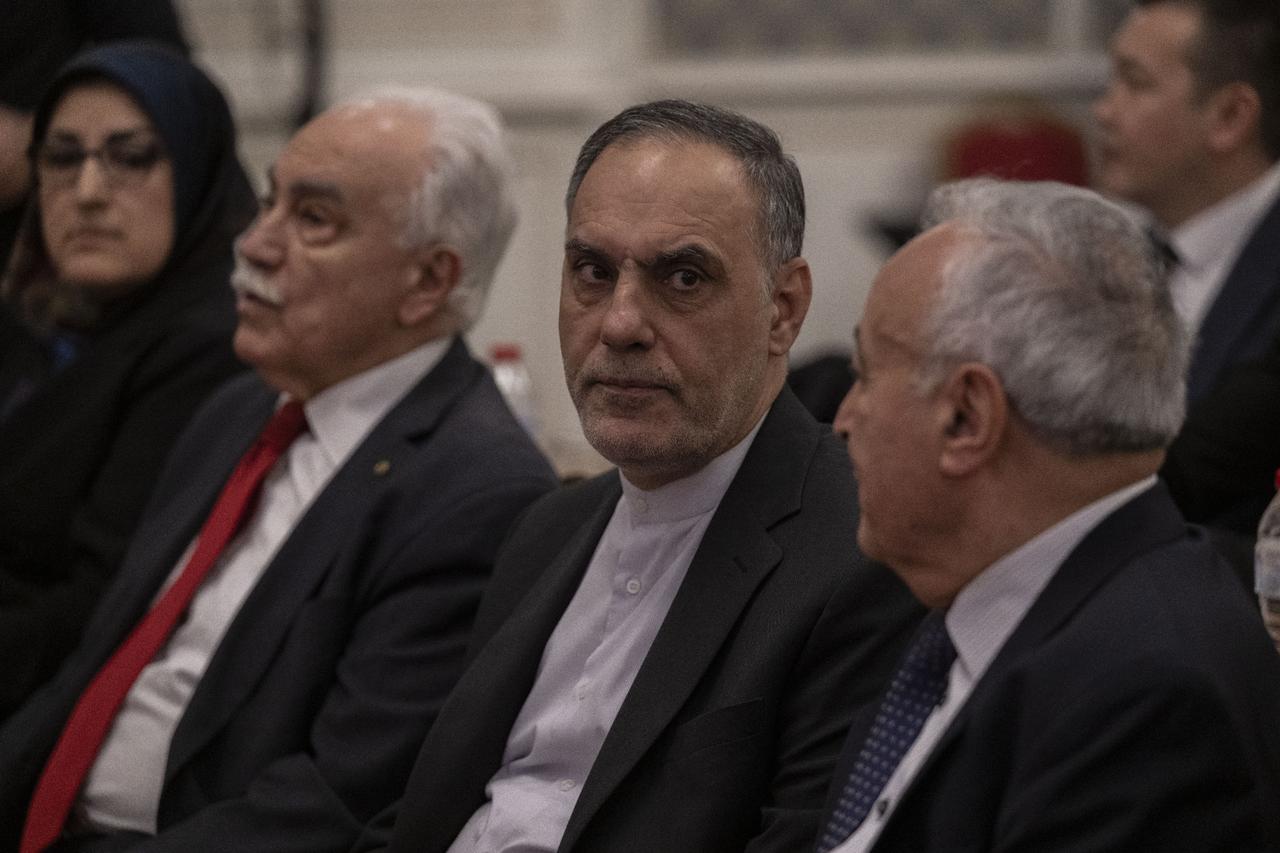


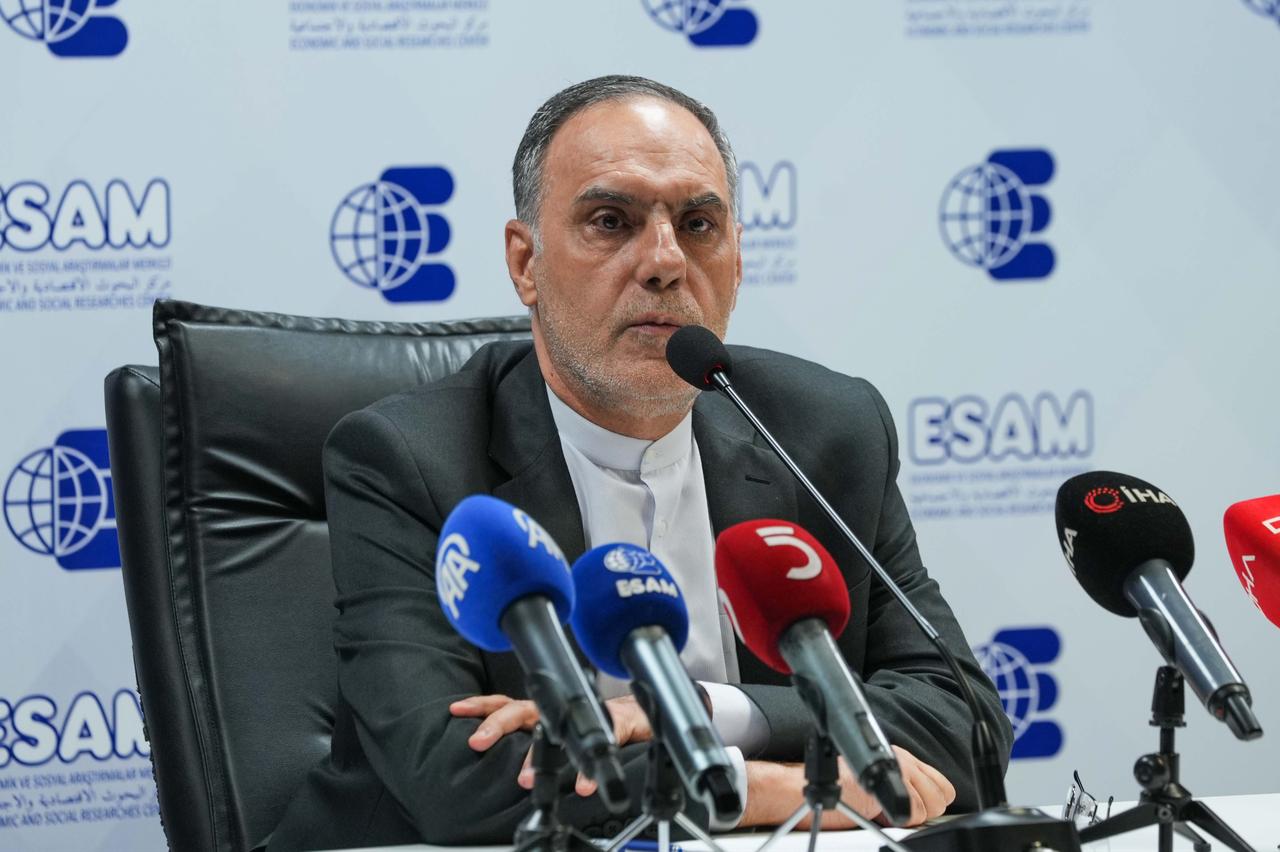
Iran's Ambassador to Ankara, Mohammad Hassan Habibollahzadeh, stated on Wednesday that the war waged by the U.S. and Israel against Tehran is "not merely a military conflict but a symptom of deep crises in the regional security architecture and the international system."
He warned that the Iran war had shown how instability could spread rapidly as he called on regional countries to pursue cooperation before becoming an "arena of competition between major powers."
Speaking at the Economic and Social Research Center, Habibollahzadeh was direct in his framing.
"The recent imposed war waged by the U.S. and the Zionist regime against Iran is not merely a military conflict; it is a symptom of deep crises in the regional security architecture and the international system," he said.
He emphasized that Iran had not initiated the war, saying, "Iran is the party responding to an actual threat," he said, adding that Israel was attempting to "limit or weaken" independent regional powers to preserve its own strategic dominance.

Habibollahzadeh issued a stark assessment of external security models in the region.
"Security in the Middle East cannot be imported. Decades of external interventions in the region have not provided lasting security; they have most often deepened crises," he said.
He described the war as "a serious warning to the countries of the region," saying it demonstrated how instability could spread rapidly.
The Iranian ambassador stated that if regional countries took steps toward cooperation, the region could be prevented from becoming an arena of competition between major powers.
Speaking separately at the South Caucasus Security Conference organized by the National Strategy Center in Ankara, Habibollahzadeh developed the same theme in the context of the 3+3 Platform, the regional cooperation mechanism involving Azerbaijan, Armenia, Georgia, Türkiye, Russia and Iran.
He said Iran's view was that one of the fundamental problems in the South Caucasus was "security understanding being determined by external actors," which would ultimately lead to "dependency and continued regional instability."
He described the 3+3 Platform as "an effort to transition from externally imposed security to region-specific security building" and said Iran respected the territorial integrity and sovereignty of all South Caucasus states.
"The South Caucasus faces a strategic choice: either continue along the path of external interventions and imposed security arrangements, or move toward a model based on regional cooperation and region-specific security. Historical experience and current realities clearly show that sustainable stability is only possible through the second path," he said.
He also said Iran opposed any change to internationally recognized borders and any attempt to transform the geopolitical structure of the South Caucasus, including through "imposed corridors," as carrying the risk of disturbing delicate balances.
The South Caucasus conference also heard from Russia's Ankara Embassy First Secretary Radmir Gaynanov, who said Russia had "warm feelings" for the South Caucasus region, emphasizing that strengthening economic ties and transport corridors was critical.
Hostilities in the region have escalated since the U.S. and Israel launched joint strikes on Iran on Feb. 28.
In response, Tehran retaliated with strikes on Israel and other regional countries hosting U.S. assets.
Pakistan hosted talks between Washington and Tehran on April 11–12 after brokering the ceasefire on April 8. Efforts for another round of negotiations are underway, though uncertainty remains.


 Set as preferred source
 Set as preferred source


 1 min read