Newsletters


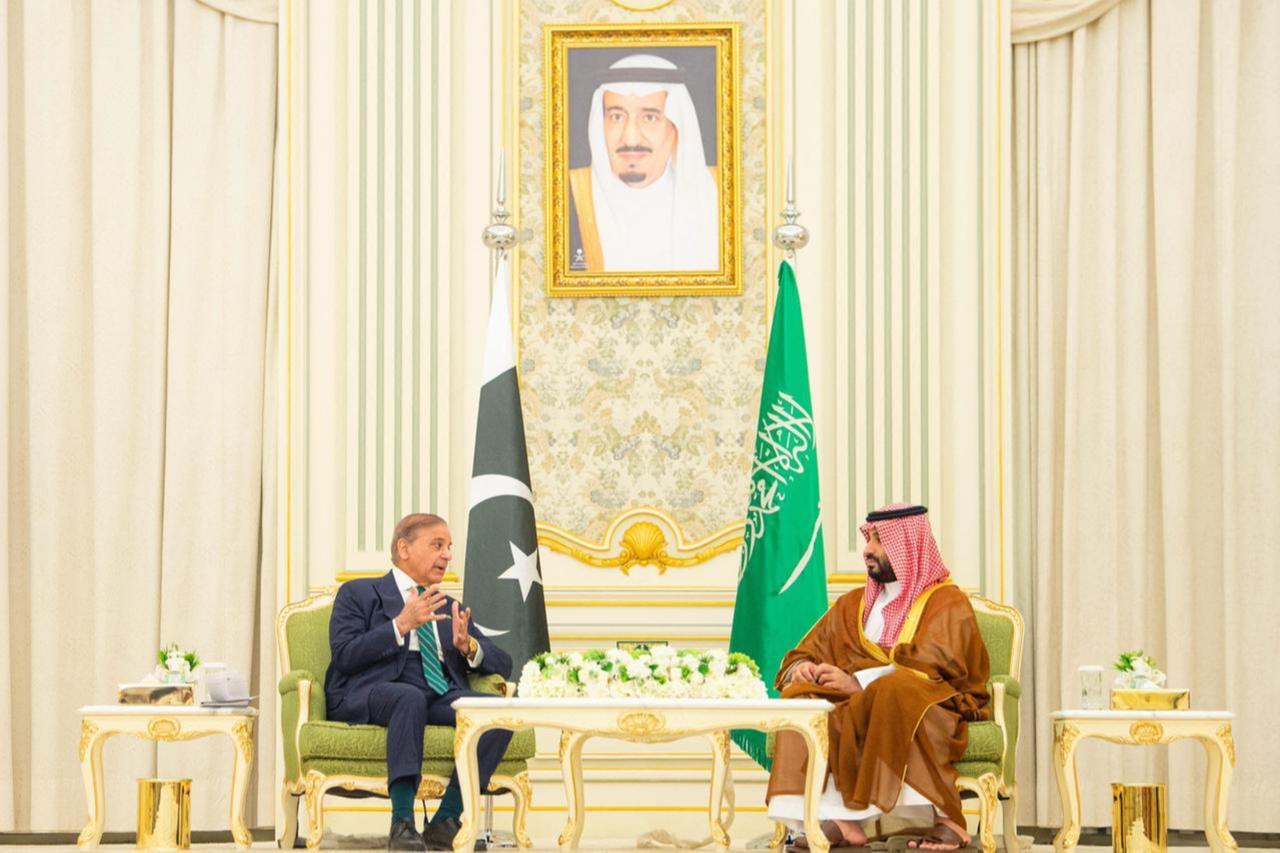


“Any aggression against either country shall be considered an aggression against both.”
What had long been managed through diplomatic coordination was now unfolding in the language of military positioning.
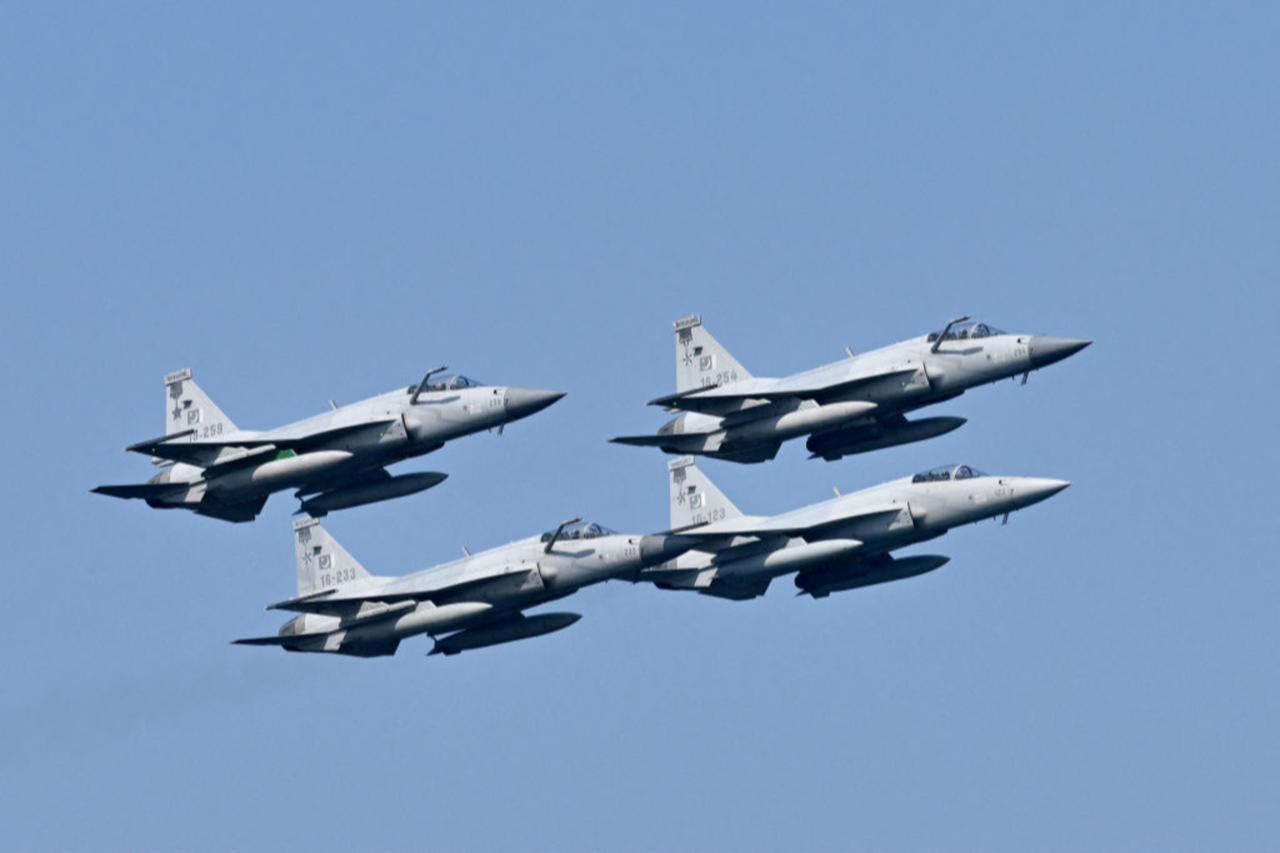
The arrival began with a spectacle that left little room for ambiguity. A formation of Pakistani fighter jets descended onto the King Abdulaziz Air Base, their engines cutting across the stillness of Dhahran, Saudi Arabia’s eastern province. The deployment was not framed as routine cooperation but as a deliberate and highly visible projection of force.
Within days, approximately 13,000 Pakistani troops had established a presence on Saudi soil. Officials described the move as operationally necessary, yet the scale and speed pointed to a deeper recalibration of regional security priorities.
The scale of that shift is drawing immediate comparisons. As of early April 2026, the United States maintains over 50,000 troops across the Middle East—spread in Kuwait, Qatar and Bahrain, as well as naval deployments—following a surge tied to tensions with Iran. Pakistan’s initial deployment does not yet match that footprint, but reports suggest a potential expansion of the total number of troops could exceed 50,000.
What follows is no longer just about a bilateral agreement.
As the deployment unfolds, three questions are beginning to define its significance. Against whom is this expanding military posture ultimately directed? How far is it likely to grow? Lastly, is Pakistan positioning itself as a central security actor in a region long dominated by external powers?
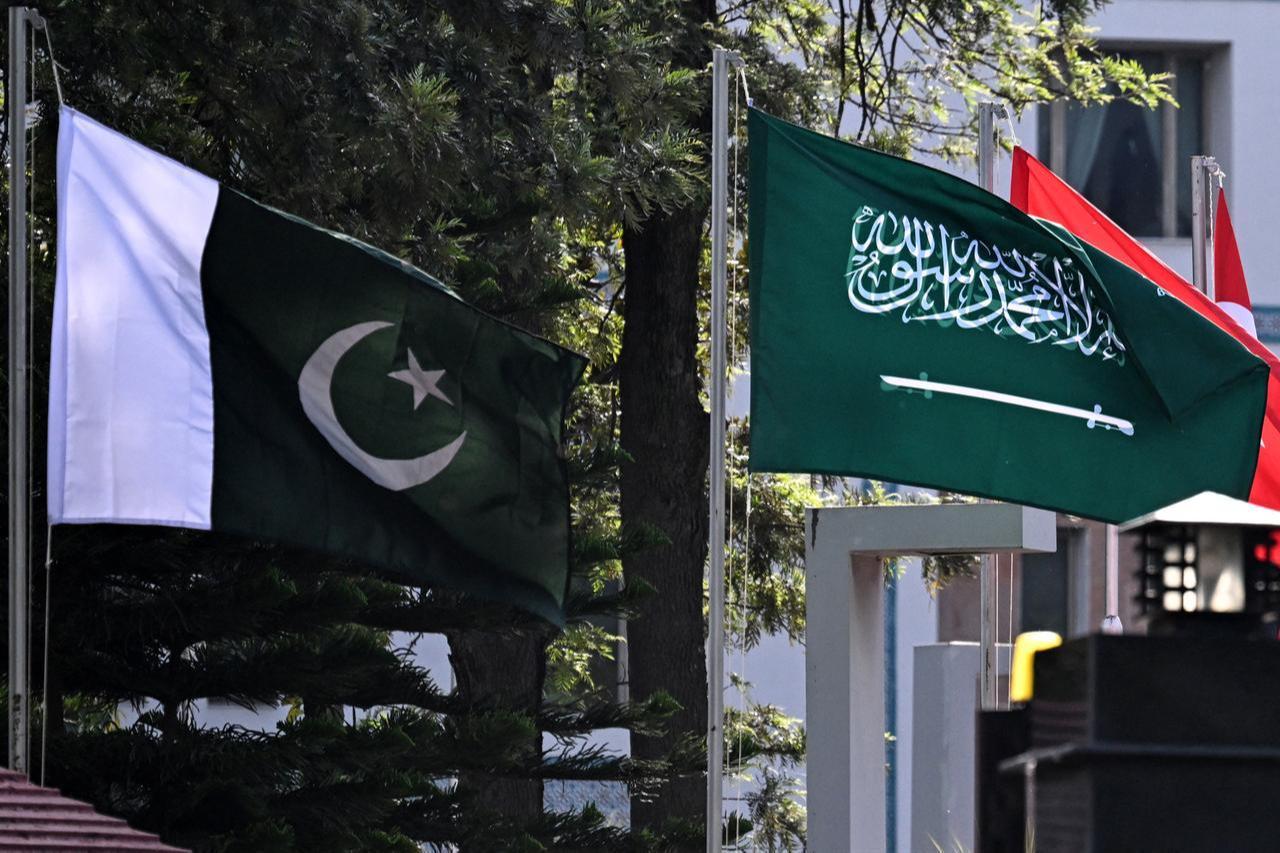
At the center of the deployment is the Strategic Mutual Defense Agreement signed between Pakistan and Saudi Arabia in September 2025. The pact formalizes a long-standing partnership but introduces a clearer security framework, anchored in the principle that an attack on one country would be treated as an attack on both.
Yet, the agreement stops short of constituting an automatic war guarantee. Analysts have described it as a “political sign of solidarity and strategic cooperation,” designed to reinforce deterrence without locking either side into unconditional military escalation.
As noted by Eleonora Ardemagni, a senior associate research fellow at the Italian Institute for International Political Studies (ISPI), the agreement “aims to develop aspects of defense cooperation between the two countries and strengthen joint deterrence against any aggression.”
Its scope extends beyond troop deployments to include intelligence sharing, training, and long-term collaboration with the defense industry. The current military presence should therefore be understood as an initial, visible reinforcement of a broader and more flexible framework.

Though it has become more visible, urgent and needed through the Iran war, the question of who this posture is directed against does not yield a single answer. Instead, the deployment seems designed to be read differently by different audiences.
The deployment operates across multiple strategic layers, each shaped by ongoing regional tensions. One immediate and primary dimension relates to Iran, particularly as ceasefire talks remain fragile. The presence of Pakistani forces can be read as a subtle signal urging restraint, while still leaving room for diplomatic engagement.
Yemen forms another critical layer. Saudi Arabia continues to face threats from the Houthi forces, including drone and missile attacks on key infrastructure. Although unconfirmed reports suggest the possibility of additional Pakistani deployments near the Saudi-Yemen border, no official figures have been released.
At the same time, the move reflects broader security concerns within the Gulf. The agreement itself was signed in the aftermath of Israeli airstrikes on Qatar, an event that heightened threat perceptions among Gulf states.
While the deployment is not explicitly directed at Israel, its timing contributes to a wider effort to reinforce regional deterrence.
The military dimension of the relationship cannot be separated from its economic foundations. Pakistan is currently navigating a prolonged financial crisis and remains heavily dependent on external support, with Saudi Arabia playing a central role through loans, deposits, and investments.
This dependency shapes the broader strategic alignment. The presence of over 2.5 million Pakistani expatriates in Saudi Arabia, whose remittances are vital to Pakistan’s economy, reinforces the depth of the relationship beyond formal agreements.
In this context, the deployment can also be interpreted as a form of strategic reciprocity. While not officially framed as such, the exchange of military support for financial stability reflects a longstanding pattern in bilateral ties between the countries.
The question of how large this presence might become remains deliberately unanswered. The initial deployment of roughly 13,000 troops is significant, but it is the speculation around expansion that is drawing attention.
That ambiguity is not accidental. Speaking to American media, Mosharraf Zaidi, the Pakistani prime minister’s spokesperson for foreign media, cautioned against drawing firm conclusions about future military steps. “That would be speculative and irresponsible for anyone in any position,” he said when asked how far Pakistan would go in supporting Saudi Arabia.
Yet the restraint in language is paired with clarity in commitment. “There’s no question if and when—whatever is needed from Pakistan vis-a-vis Saudi Arabia, Pakistan will be there before it’s needed,” Zaidi added. The formulation avoids specifics but removes doubt about political intent.
He went further, framing the relationship as structurally reciprocal rather than situational. Saudi Arabia, he noted, has already taken steps to support Pakistan’s economic stability, including arrangements related to oil, diesel, and broader supply chains.
“Both countries are tied to each other, formally and informally,” he said, dismissing the idea that support would depend on circumstances. “There’s no question of whether there would be any kind of ‘if’.”
A more sensitive dimension of the relationship lies in its potential nuclear implications. Saudi officials have previously indicated that in the event Iran is freed from its bounds to enrich uranium, Pakistan could provide the Kingdom with comparable capabilities.
Such statements remain hypothetical, but they contribute to Saudi Arabia’s broader deterrence posture. Pakistan’s status as a nuclear-armed state adds a layer of strategic depth to the partnership, even without any formal transfer of capabilities.
Ardemagni highlights that the agreement “encompasses all military means,” pointing to the breadth of cooperation under consideration. While nuclear coordination remains undefined, its presence in the strategic discourse signals how far Riyadh is willing to go in diversifying its security options.
The deployment reflects a wider shift in how Gulf states approach security. For decades, the United States has served as the primary external guarantor, and it remains Saudi Arabia’s leading arms supplier. However, recent regional developments have exposed the limits of relying on a single partner.
As Ardemagni observes, the pact with Pakistan highlights an evolving strategic calculus in Riyadh. Rather than replacing existing alliances, Saudi Arabia is building additional layers of security through diversified partnerships.
This approach may not remain limited to Pakistan. The introduction of a new defense framework between a Gulf state and an Asian power could set a precedent for similar agreements, potentially involving countries such as the United Arab Emirates and India.
In that sense, Pakistan’s deployment is not just a bilateral development. It is part of a broader reconfiguration of regional security, where ambiguity, flexibility, and multiple alignments are becoming the defining features of the emerging order.


 Set as preferred source
 Set as preferred source


 1 min read
 1 min read