Newsletters





Israel's cabinet voted unanimously on Sunday to defy a Supreme Court ruling for the first time in the country's history, plunging the country into an unprecedented constitutional crisis weeks ahead of the October elections.
The government declared it will not recognize any decisions made by the Second Authority for Television and Radio (SATR) council, a commercial broadcast regulatory body, after the High Court of Justice issued an order last month allowing the council to continue operating despite what the government says is a lack of the legally required quorum.
Communications Minister Shlomo Karhi and Justice Minister Yariv Levin signed the declaration, which states the court has "no authority to trample the law.
Any ruling that contradicts the law will not be recognized, and any decisions made on its basis will be null and void."
Prime Minister Benjamin Netanyahu backed the decision in the cabinet vote, making the defiance an official government position rather than an individual ministerial stance.
"The government determined that the rule of law binds all branches of government, including the court," the declaration states.
"A ruling that directly contradicts the clear language of the law cannot grant authority that does not exist in law, and therefore the government will not recognize actions taken under it."
The government said it would also reject any future claims by media-market actors based on reliance on decisions made by the council, or arguing that actions taken under those decisions had become irreversible.


The dispute centers on the Second Authority council, which oversees commercial television and radio stations. In June, the High Court froze government decisions from March 24 and March 31 that dealt with appointing a new council, ruling that the existing council would remain in place.
The court issued the ruling in response to five petitions filed by the Union of Journalists, Channel 12 News, the Movement for Quality Government in Israel, the Israel Press Council and an association dedicated to preserving legal values. Chief Justice Yitzhak Amit, Justice Alex Stein and Justice Ruth Ronen pointed to a "puzzling proximity in time" between council member resignations and requests made by Karhi, suggesting the resignations were deliberate attempts to obstruct the council's operations.
The ruling may affect, among other matters, the possible approval of the sale of Reshet 13, one of Israel's major commercial television networks, to a group of high-tech entrepreneurs, according to Ynet.
In March, Karhi had effectively shut down the Second Authority Council and appointed an alternative council with a new director, Yifat Ben Hai Segev, who is a key witness in Netanyahu's corruption trials. Deputy Attorney General Gil Limon said Netanyahu was in a conflict of interest that should have barred him from any involvement in her appointment.
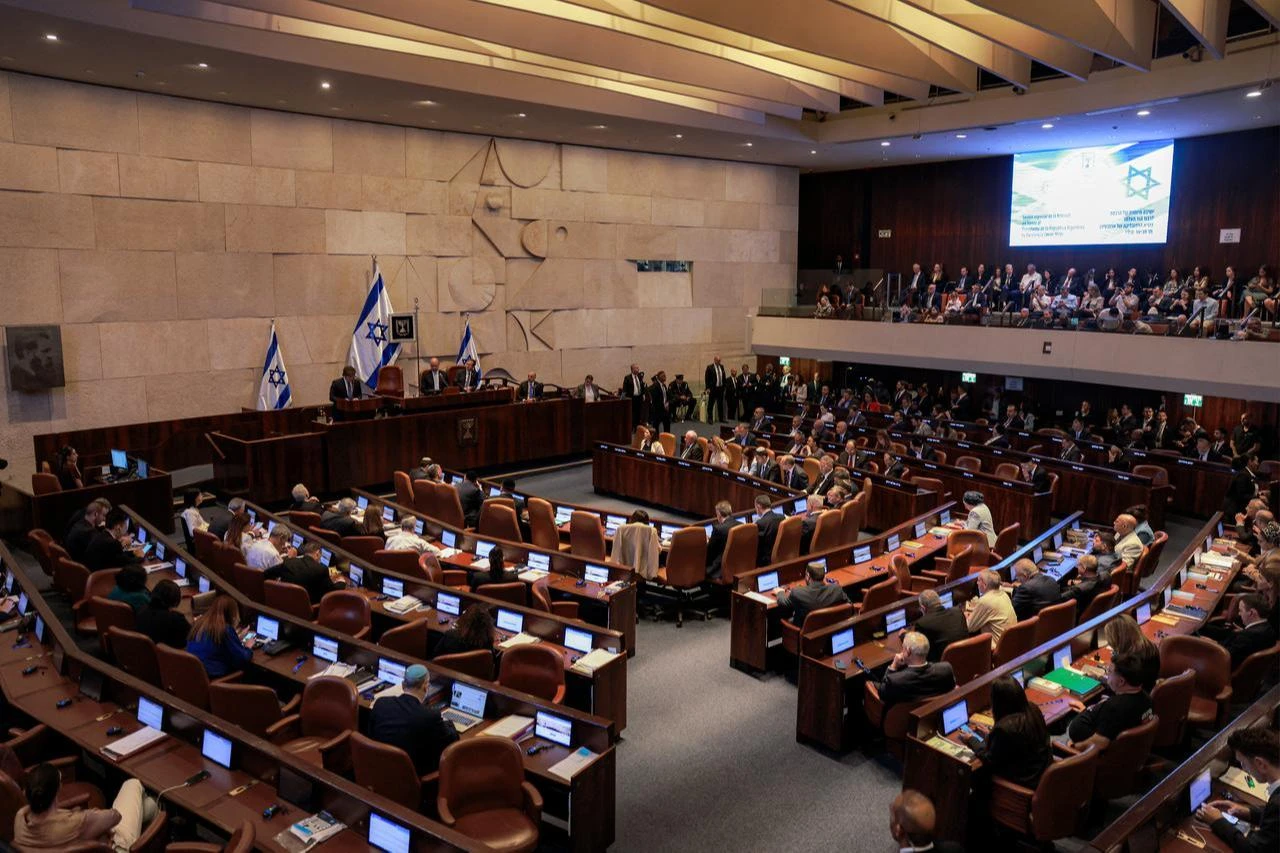
The legal establishment strongly opposed the move. During the cabinet meeting, Limon warned the government it was "preparing to adopt a decision directly contradicting the legal advice it had received."
"Whenever there is a legal opinion or ruling that the government does not like," Limon said, the result would be "to normalize systematic violation of the law."
Former Prime Minister Naftali Bennett issued a sharp warning. "Defying a court ruling leads to anarchy in the streets and the dismantling of our country," Bennett said.
Yair Golan, leader of the Democrats party, described Sunday's vote as "the opening move" ahead of election day. "This government knows it has no chance of winning the next election, and that is why it is waging a war against the rule of law," Golan said.
According to Golan, the move serves to "normalize and rehearse the defiance of the court, so it can later refuse to accept the election results and relinquish power after being defeated at the polls."
Knesset member Gilad Kariv called on Second Authority members to "completely disregard the government's decision and carry out their duties in accordance with the law and the High Court's ruling."
Kariv added: "A government that decides not to comply with court rulings does not deserve to have public servants and public officials act in accordance with its decisions and directives."
The Movement for Quality Government, one of the original petitioners, said the government was "trampling the rule of law" and threatened to petition the High Court to seek sanctions against the responsible ministers if they fail to comply.
The Union of Journalists in Israel said the move was aimed at blocking the Reshet 13 sale and represented an unprecedented assault on the Supreme Court. "The government of Israel is dismantling the media and democracy," the union said.
"The government is announcing that it will not obey the rule of law, for foreign political considerations. This is an emergency: those who do not shout now will not be able to speak later."
The move comes days after another major confrontation between Netanyahu's coalition and the judiciary, when the High Court voided the election of Netanyahu's former attorney Michael Rabello to the post of state comptroller.
Knesset members are set this week to debate Karhi's Broadcasting Bill, which would dismantle existing media regulators and replace them with a new authority whose members are appointed by the government, according to Haaretz.


 Set as preferred source
 Set as preferred source



 3 min read