Newsletters


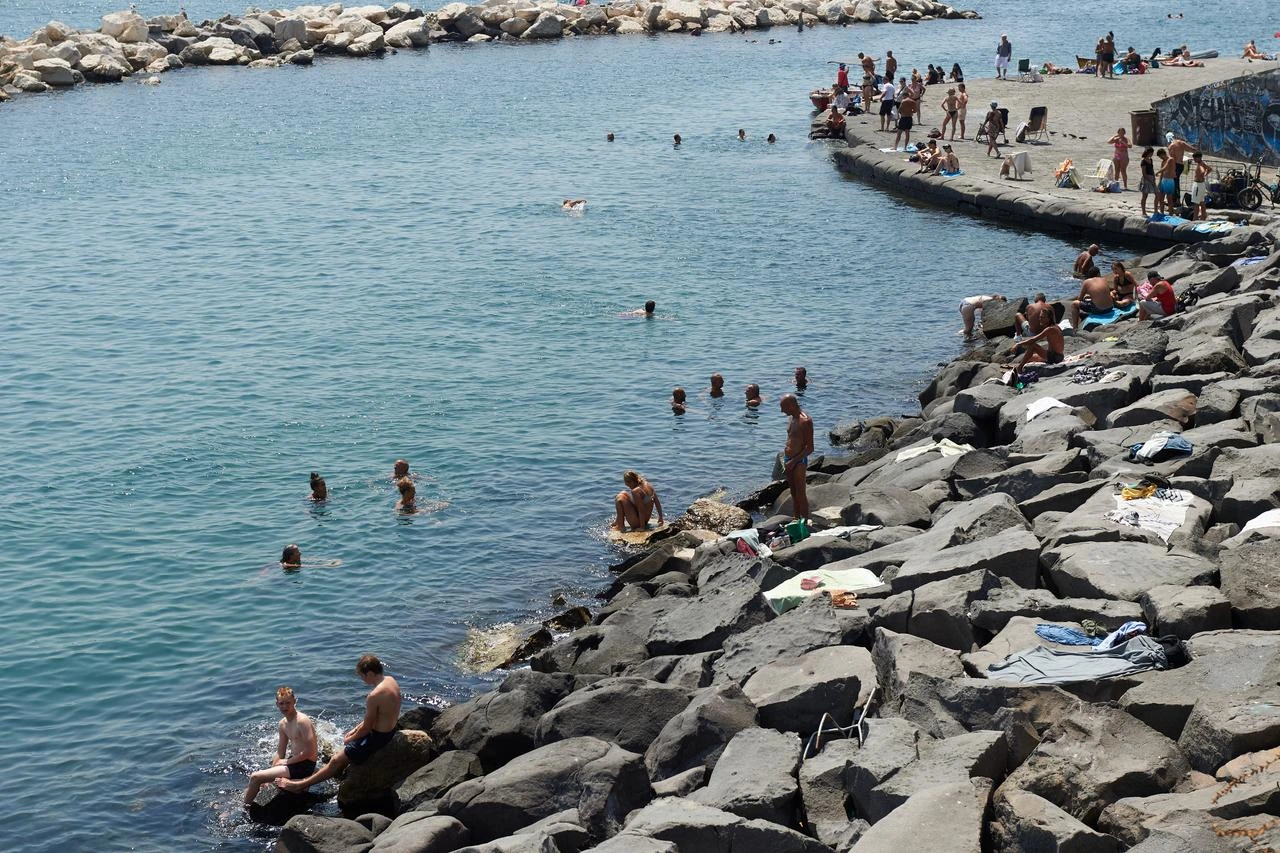


Western Europe recorded its hottest June-July period on record, the World Meteorological Organization (WMO) said, citing data from the European Union's Copernicus Climate Change Service.
WMO spokesperson Clare Nullis made the assessment during the United Nations (UN) Geneva Office's weekly press briefing.
Nullis noted that August marks the busiest holiday season across Europe and other parts of the Northern Hemisphere, yet many national meteorological and hydrological services, along with emergency management, response teams, and health workers, have had to work intensively due to extreme weather.
“According to the European Union's Earth observation program Copernicus, Western Europe experienced its hottest June-July period on record,” Nullis said. “Globally, average surface air temperature was 1.47 degrees Celsius (2.65 degrees Fahrenheit) above the preindustrial baseline, the 1850-1900 average, making it the second-hottest July on record.”


Separate data released by Copernicus put the region's combined June-July average temperature at 21.62 degrees Celsius (70.9 degrees Fahrenheit), 2.79 degrees Celsius (5.02 degrees Fahrenheit) above the 1991-2020 average and higher than the previous record set in 2022.
The climate monitor's strategic lead for climate said the trend reflects how climate change is intensifying heat extremes, with heat and drought increasingly reinforcing one another.
Very dry conditions were observed across Ireland, France, Spain, Austria, Hungary, the United Kingdom, and parts of Iceland, with river flows on the Seine, Rhine, and Danube unusually low, affecting transport, irrigation, and energy production in several countries.
Copernicus also recorded the highest global sea surface temperatures for a second consecutive month in July, at 20.96 degrees Celsius (69.7 degrees Fahrenheit), surpassing the previous record set in 2023.
Scientists linked the marine warming partly to a developing El Nino in the Pacific, describing conditions as a very large event, possibly unprecedented in amplitude.
Nullis said sea surface temperatures reached their highest level ever recorded for the month of July, adding that some Western European countries are now facing the fourth heatwave of the summer.
“Intense and prolonged drought is having a devastating impact on agriculture, river levels, transport and energy, in addition to increasing fire risk,” Nullis said.
She recalled that Japan and South Korea experienced extraordinary and record-breaking temperatures last week, similar to other regions across Asia, the Middle East and Latin America. Nullis added that parts of West Africa have been affected by severe monsoon rains and flooding.
“The WMO's weekly Global Hydrometeorological Hazard Outlook, prepared for humanitarian organizations, warned this week of severe and locally very severe rainfall across Northeast and West India, East Pakistan, Nepal, Bangladesh, Bhutan, Myanmar and parts of Southeast Asia, raising the risk of flash floods and landslides,” Nullis said.
Nullis said extreme weather conditions have once again underscored the need for reliable, timely forecasts and early warning systems. She stressed that the Early Warnings for All initiative remains the top priority for the WMO and its member states.

Separate analysis of Copernicus data found that regions home to about 900 million people worldwide experienced their hottest July on record in 2026, including areas in the Sahel, Central America, France, and Spain.
Around 120 million people in Europe live in areas where July 2026 was the hottest ever recorded, with the sharpest records concentrated in southern Britain, western France, and northern and eastern Spain. In France, average temperatures for the month ran 3.8 degrees Celsius (6.8 degrees Fahrenheit) above the 1991-2020 norm.
Western Europe has now recorded four heatwaves since May, an unusually high number for the region, according to Copernicus.
The prolonged heat and dryness fuelled wildfires in Albania and Spain over the summer, while soil moisture levels ran significantly lower than during the last severe drought recorded in July 2022.
In France, more than 85% of the country was under drought warning or alert conditions in mid-July, up from about 65% at the same point in 2025.
Separately, the French national weather agency reported that June 23 was the hottest day recorded in the country since measurements began in 1947, while Spain's national weather service issued red alerts for above-average temperatures in several northern regions during the same period.


 Set as preferred source
 Set as preferred source


 2 min read