Newsletters


Israel's Central Elections Committee voted Wednesday to bar the country's two main Arab political lists, Ra'am and the Joint List, from next month's parliamentary election, following petitions filed by members of Israeli Prime Minister Benjamin Netanyahu's far-right coalition.
The decisions are not final and must be approved by Israel's Supreme Court, which has historically set a high bar for excluding parties and has overturned similar bans in 2019 and 2022.
The committee, composed mainly of Knesset members and dominated by politicians from Netanyahu's coalition, voted 18-5 to disqualify Ra'am, led by Mansour Abbas, which became the first Arab-Israeli party to join an Israeli governing coalition when it entered Naftali Bennett's government in 2021.
The panel then voted by the same margin to bar the Joint List, an alliance of the Hadash, Ta'al and Balad factions.
In a separate vote, the committee also disqualified individual Joint List candidates Ofer Cassif and Balad leader Sami Abu Shehadeh.
The petitions invoked Section 7A of Israel's Basic Law: The Knesset, which allows the exclusion of a party or candidate for denying Israel's existence as a "Jewish and democratic state," inciting racism, or supporting armed struggle against Israel by an enemy state or a designated terrorist organization.
The petitions against Ra'am were brought by Netanyahu's Likud party, Itamar Ben-Gvir's Jewish Power party, and the Choose Life Forum, a group representing victims of militant attacks; they alleged ties between Ra'am, the Southern Branch of the Islamic Movement, and the Muslim Brotherhood, and cited nonprofit groups petitioners claimed had transferred funds to organizations affiliated with Hamas.
Likud also filed the petition against the Joint List, alleging it negated Israel's existence as a Jewish and democratic state and supported armed struggle against Israel.
Attorney General Gali Baharav-Miara's office opposed both disqualifications.
A representative told the committee, "We explained in our written submission that the quotations cited in the petitions themselves demonstrate that MK Mansour Abbas recognizes Israel's Jewish character," adding that allegations against the Joint List rested on a petition that was "very thin" and failed to meet the evidentiary threshold for disqualification.
Rights group Adalah, which represents the parties, said the case against Ra'am presented no evidence supporting armed struggle and that the Joint List petition relied heavily on old material, including bills proposed in previous Knesset sessions.

Ra'am's exclusion follows a series of steps by Abbas aimed at facilitating cooperation with Jewish Israeli-led parties.
This month, he added former police commander Yoav Segalovich, a Jewish politician, to Ra'am's list in second place, the first time the party has done so.
Earlier this year, Abbas separated Ra'am from the Islamic council that had traditionally helped shape the party's policies, saying Ra'am was seeking to become a "completely civic" party.
Ra'am currently holds five seats in the Knesset and has long called for equal civil rights and government support for Arab Israelis, who make up roughly a fifth of Israel's population and often self-identify as Palestinians with Israeli citizenship.
Ra'am called Wednesday's decision "unacceptable" and part of an "ongoing campaign to delegitimize" the party, saying it was intended to prevent Ra'am from influencing the balance of power and potentially changing the government.
The Joint List called the decision "political, racist and anti-democratic."
Hadash accused the committee of "trampling on the most basic rules of democracy" and said the move reflected the government's "desire to undermine voter turnout among Arab citizens in a desperate attempt to cling to power."
Joint List leader Yousef Jabareen questioned how the committee could bar parties representing more than 1.25 million voters, while the party separately said in a statement that opposition parties supporting some of the disqualification petitions were "falling into the racist trap set by Netanyahu and Ben Gvir."
Abu Shehadeh's disqualification, approved by a vote of roughly 30-4 (reported elsewhere as 31-4), drew notably broader political and legal backing than the other petitions.
It was the only disqualification request supported by Attorney General Baharav-Miara, who wrote an opinion the day before the vote concluding that the other petitions lacked sufficient grounds but that Abu Shehadeh's case warranted serious examination.
All major opposition parties, including Gadi Eisenkot's Yashar, Naftali Bennett's B'Yachad, Yair Golan's Democrats, Avigdor Liberman's Yisrael Beytenu and Benny Gantz's Blue and White, voted in favor of barring him, as did Supreme Court Justice Noam Sohlberg, who chairs the committee and took part in the vote for the first time in decades.
The petition against Abu Shehadeh, filed by Ben-Gvir's Otzma Yehudit party, centered on an Arabic-language article he published on Oct. 8, 2023, a day after the Hamas-led attack on Israel, describing the assault as "an important historic event" militarily, politically and strategically, and suggesting others could learn from Hamas's success in surprising Israel.
Abu Shehadeh told the committee he wrote the article before understanding the full scale of the attack's atrocities and regretted its publication.
"I have never called for violence or terrorism. I oppose armed struggle, and remain committed to political and civil struggle for peace, justice and equality," he said, calling the move to disqualify him an attempt to "silence" Arab society's political voice.
In a video statement, he added: "This development will not scare us. Racists are afraid of equality, and Ben Gvir and Netanyahu are afraid of the Arab vote in this electoral battle."
Adalah's general director, Hassan Jabareen, who represented Abu Shehadeh, said, "The article contains no direct call for violence, nor any statements that could amount to grounds for disqualification."
He accused the attorney general of applying a double standard by not opposing candidacies of far-right figures including Ben-Gvir, convicted in 2007 of incitement to racism and supporting a terrorist organization, and Religious Zionism leader Bezalel Smotrich, who has previously made public remarks about Gaza's destruction and Palestinian suffering that Jabareen cited as comparably inflammatory.
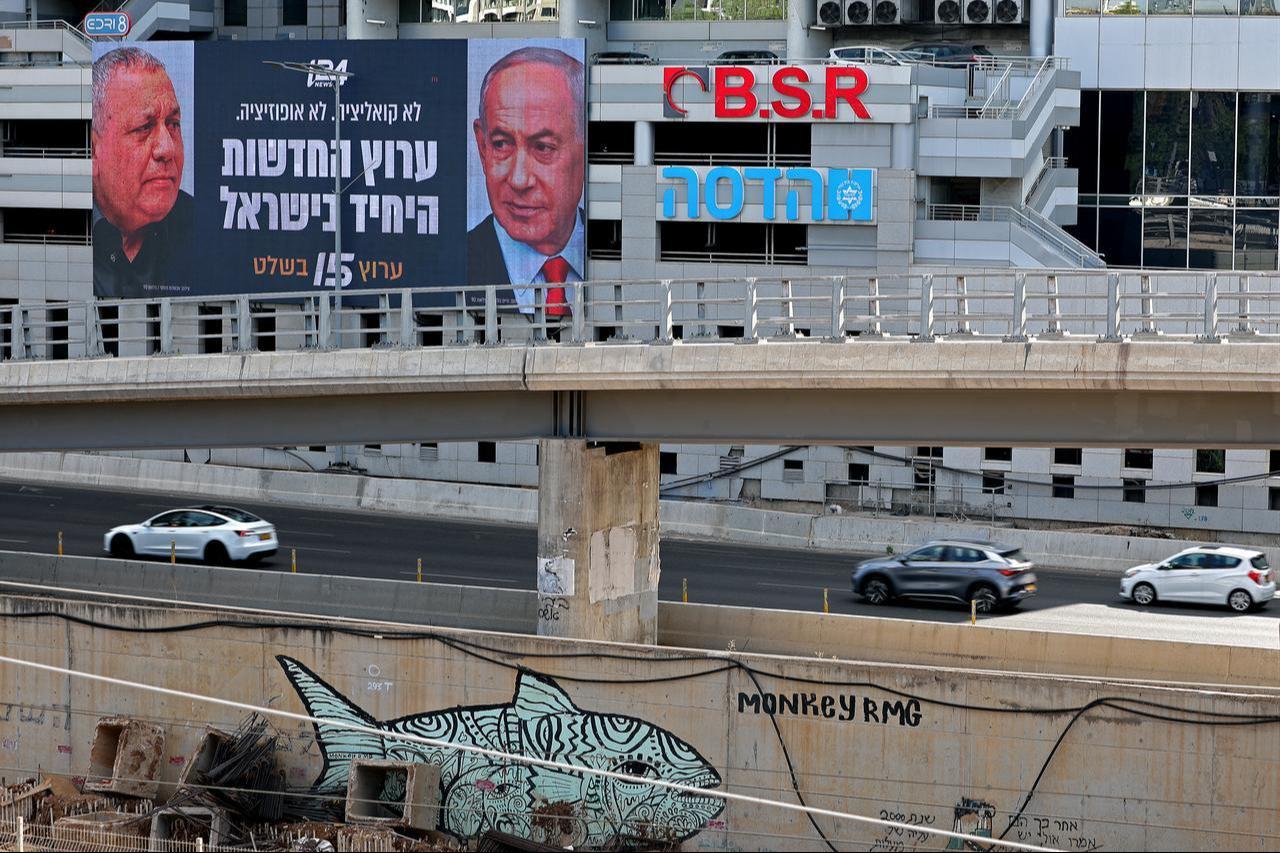
Polls currently suggest neither Netanyahu's coalition nor the opposition bloc will reach the 61 seats needed for a Knesset majority on their own, meaning Israel's Arab parties could play a decisive role in determining who is able to form the next government.
A Channel 12 poll published this week projected the opposition at 54 seats, and Netanyahu's bloc at 50, with the Joint List and Ra'am together projected to win 12 seats.
Opposition leaders have said they do not intend to include Arab parties in a future government, but removing both lists from the ballot would still materially change the arithmetic of possible governing coalitions.
Adalah said it would appeal all the disqualifications to the Supreme Court, which is scheduled to hear the cases next week and has historically struck down most such committee decisions, including a previous exclusion of Balad in 2022.
The involvement of both the attorney general and committee chairman Sohlberg in supporting Abu Shehadeh's disqualification specifically raises the possibility of a less predictable outcome in his case than is typical.
Adalah described the committee's overall proceedings as an "illegitimate political process aimed at persecuting ideas the majority does not accept" that "ended with the disqualification of all Palestinian representation in the Israeli Knesset."
The committee was scheduled to consider separate petitions Thursday seeking to bar Ben-Gvir's Jewish Power, Smotrich's Religious Zionism party, and Yair Golan's left-wing Democrats.


 Set as preferred source
 Set as preferred source


 1 min read
 1 min read