Newsletters


Israeli ministers on Wednesday treated the emergency landing of a Tel Aviv-bound flydubai flight in Saudi Arabia as an attempted terrorist attack, even though authorities had yet to publicly establish the motive behind the cockpit incident, which came days before the third anniversary of the Oct. 7 attacks.
Far-right National Security Minister Itamar Ben-Gvir said the incident was caused by a “terrorist” who intended to crash the aircraft and kill Israelis.
“The naive notion that our enemies cherish life and that we should pity them received another reminder this morning in the form of a terrorist who planned to crash a plane and murder the 180 Israelis on board,” Ben-Gvir said in a statement.
Ben-Gvir said Israel should respond by escalating its military campaigns across the region, saying the country “must continue until achieving total victory” in Iran, Lebanon, Gaza and the occupied West Bank.
Finance Minister Bezalel Smotrich also described the incident as a deliberate attempt to kill Israelis and called for those he said were responsible to be treated as though the attempt had succeeded.
“The State of Israel must address the intent and not the results,” Smotrich said on X. “Whoever tried to crash a plane and murder 180 Israelis must pay as if he murdered. He and every state or terrorist organization that sent him.”
In a video from inside the plane that was reposted by Israeli social media users, one passenger, blood dripping from an open wound on his head, pleaded for assistance and said they were descending into Saudi Arabia, with which Israel has no diplomatic relations.
“We are here during an attack on the plane. We just subdued the terrorists and are preparing to land,” the man said in Hebrew.
“Anyone who can hear me, we need help. We are about to land in Tabuk, apparently in Saudi Arabia. An unknown area. All the passengers are safe and well, except for the pilot. We need help,” he said.
Yasmin Abukasis, the mother of passenger Ohayon, said her daughter was on the flight to attend a service for her brother, who was killed in the Oct. 7, 2023, Hamas attack.
Her daughter “thought they were going to die,” Abukasis told AFP, adding that one woman “went to the cockpit and saw a lot of blood.”
She said two other pilots were on the plane and took charge, diverting it to Saudi Arabia.

The statements came as Israeli officials increasingly raised the possibility of a deliberate attack, despite conflicting accounts earlier in the day about what occurred aboard the aircraft.
Meanwhile, two Israeli officials told Reuters that authorities believed the co-pilot may have deliberately attempted to bring down the plane after attacking the captain and that the incident was being assessed as a possible attempted “terror attack.”
No public finding establishing the motive has been announced.
The assessment followed an earlier statement from Doron Spielman, a spokesman for the Israeli Prime Minister’s Office, who told Reuters shortly after the aircraft landed that the incident was not believed to have been a hijacking, describing it instead as a “different incident.”
According to Reuters, Israeli officials believe the co-pilot stabbed the captain before members of the cabin crew intervened and regained control of the aircraft.
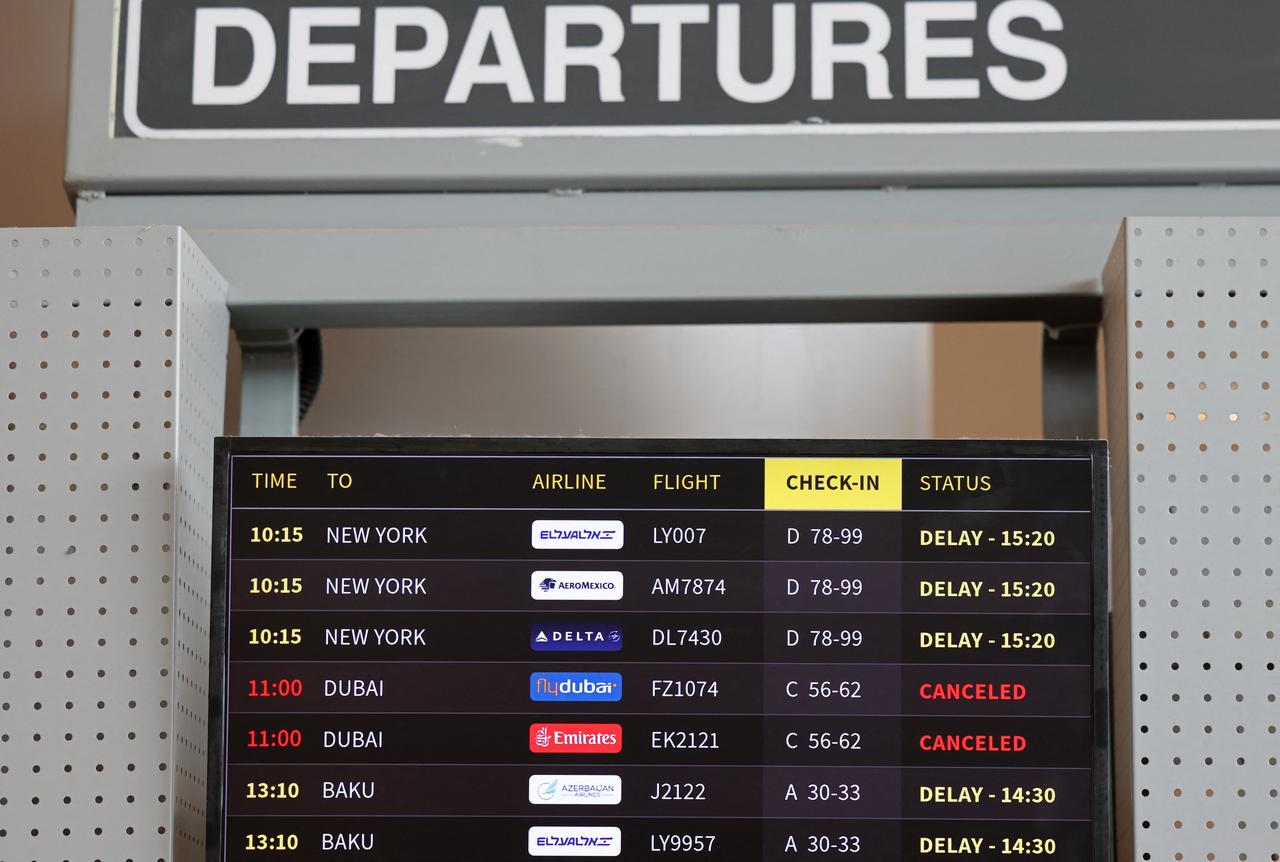
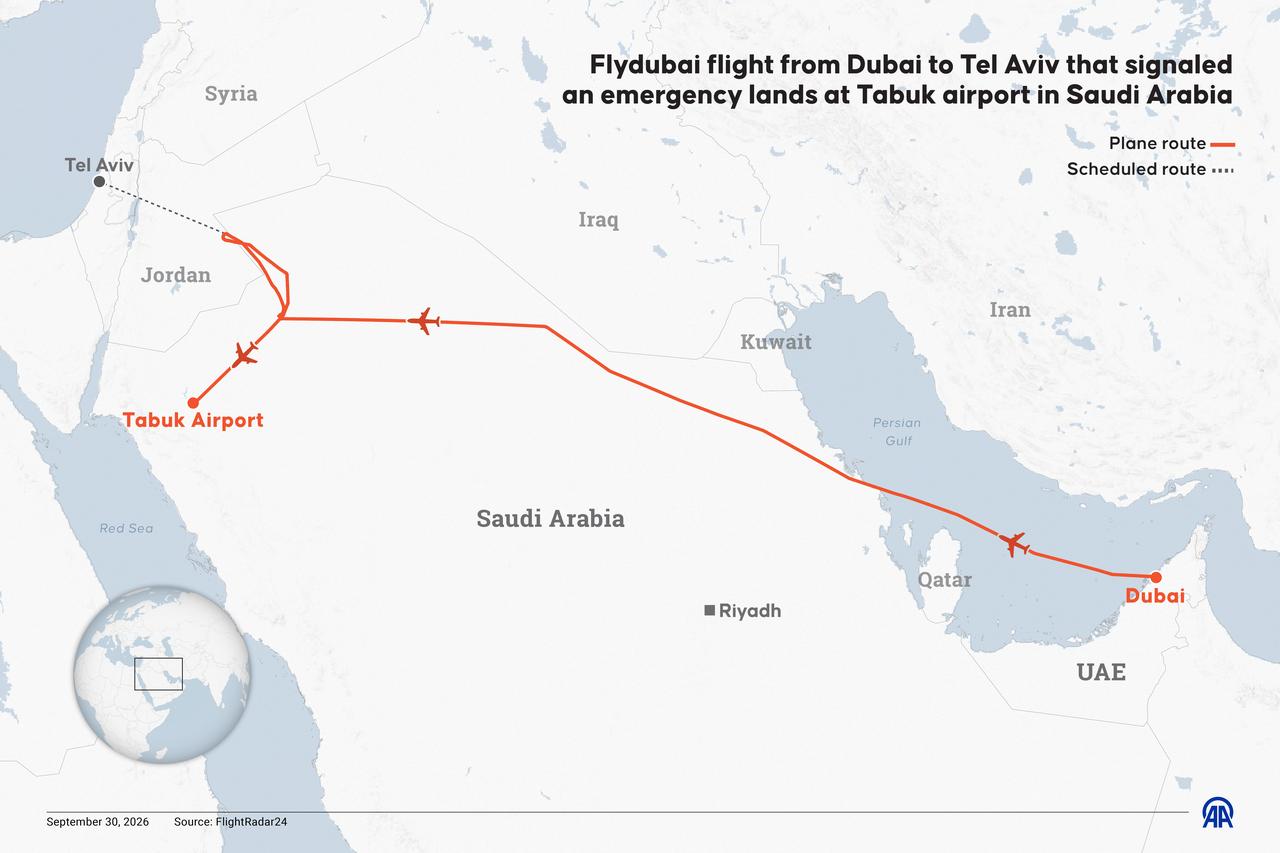
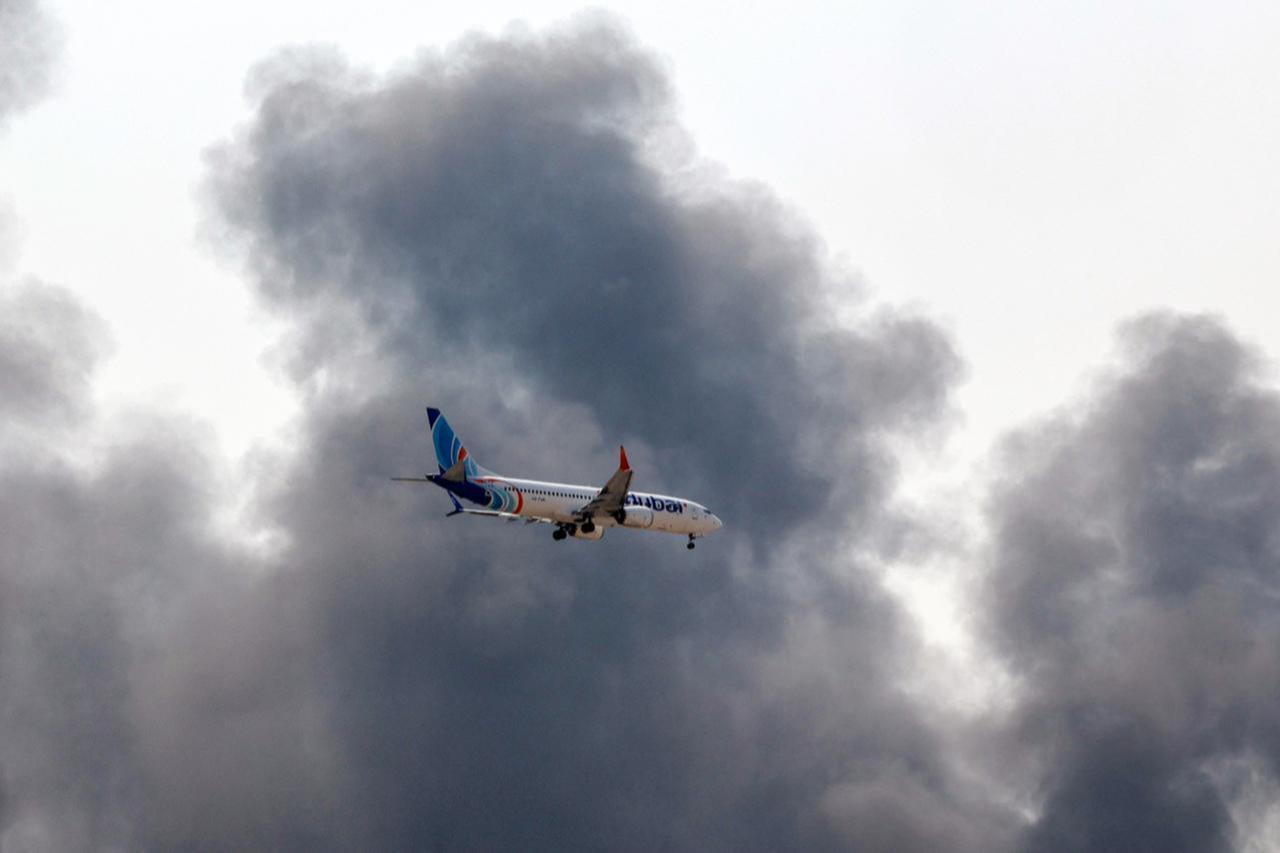
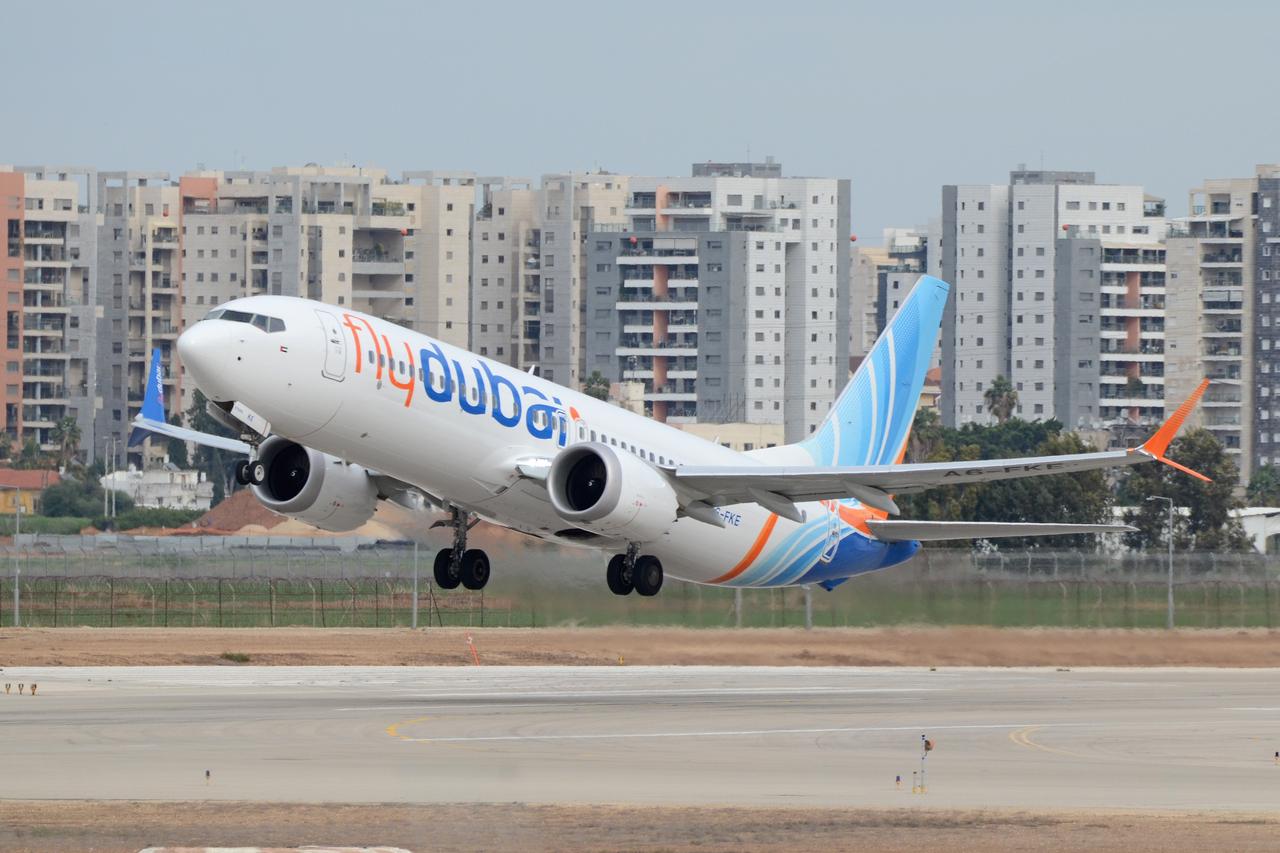
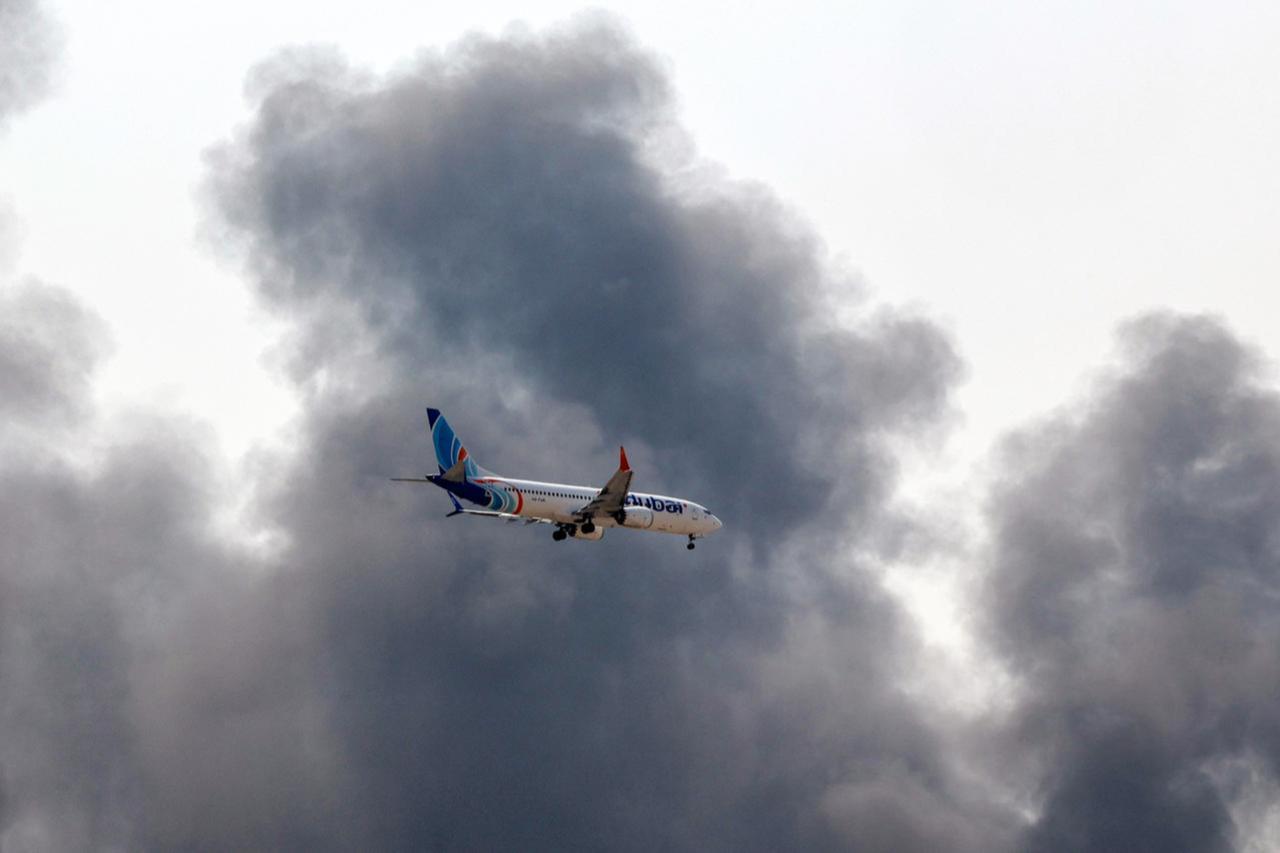
The Boeing 737 MAX 8, operating as flydubai flight FZ1073, was traveling from Dubai to Tel Aviv when it diverted to Tabuk in northwestern Saudi Arabia on Wednesday.
The flight was carrying 174 passengers, according to Israeli media.
Around 90 minutes after takeoff, while entering Jordanian airspace, the aircraft transmitted code 7700, the international signal for a general emergency, according to Israeli daily Ynet.
It subsequently transmitted code 7500, which is used to indicate unlawful interference with an aircraft, including a possible hijacking.
At around the same time, the aircraft changed course, returned to Saudi airspace, and began flying at a lower altitude before eventually landing in Tabuk.
Prince Sultan bin Abdulaziz International Airport said its air traffic control center received a distress call from FZ1073 at 8:44 a.m. and declared an emergency ahead of the landing.
The airport said the aircraft landed safely and that both the captain and first officer had suffered injuries and were taken to a hospital for treatment.
Flydubai said FZ1073 had “experienced an incident while en route” and said all passengers were safe and accounted for.
Reports about what happened inside the cockpit differed significantly during the hours following the landing.
Israeli Channel 12 initially reported that the incident appeared not to be security-related and that authorities were examining whether the distress signal had been activated during an altercation between the pilot and co-pilot.
Senior Israeli aviation officials later said suspicion of a security incident had not been ruled out, according to Ynet.
An Israeli official separately told The Jerusalem Post that a “major disaster was narrowly avoided,” claiming that one of the pilots had attempted to take control of the aircraft with the intention of crashing it.
Additional crew members, aided by Israelis aboard the flight, subdued the pilot, the official told the newspaper. That account has not been independently confirmed.
The incident triggered a security response in Israel after the aircraft transmitted the 7500 code.
Israeli media reported that fighter jets were scrambled during the initial uncertainty over the flight.
Prime Minister Benjamin Netanyahu and Defense Minister Israel Katz also ordered military aircraft to be prepared to travel to Saudi Arabia to bring back the Israeli passengers.
Flydubai later informed Israeli authorities that a replacement aircraft would instead be sent from Dubai to Saudi Arabia to return the passengers, according to Ynet.
The Israeli Prime Minister’s Office said the situation was “under control” and that measures were being taken to safely return the passengers to Israel.


 Set as preferred source
 Set as preferred source


 1 min read
 1 min read