

 Newsletters


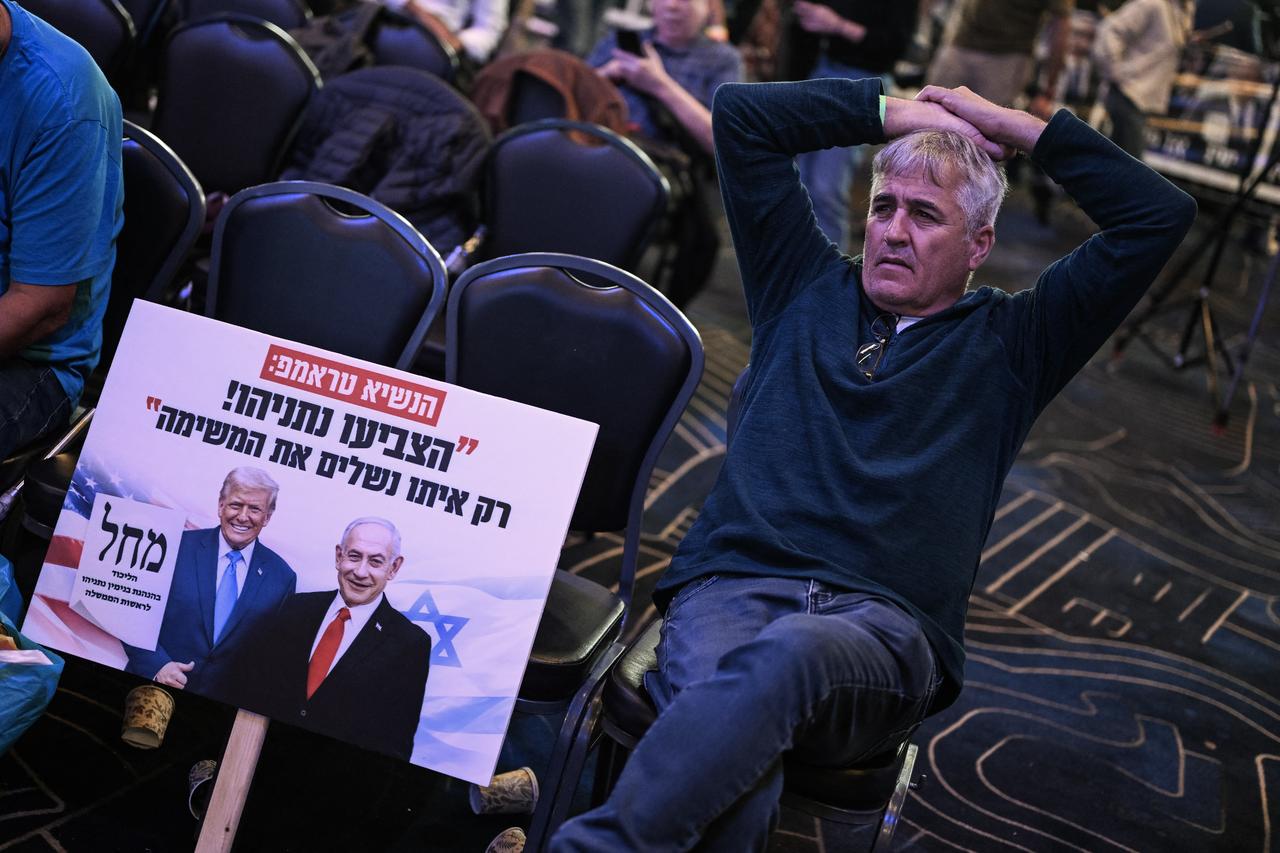


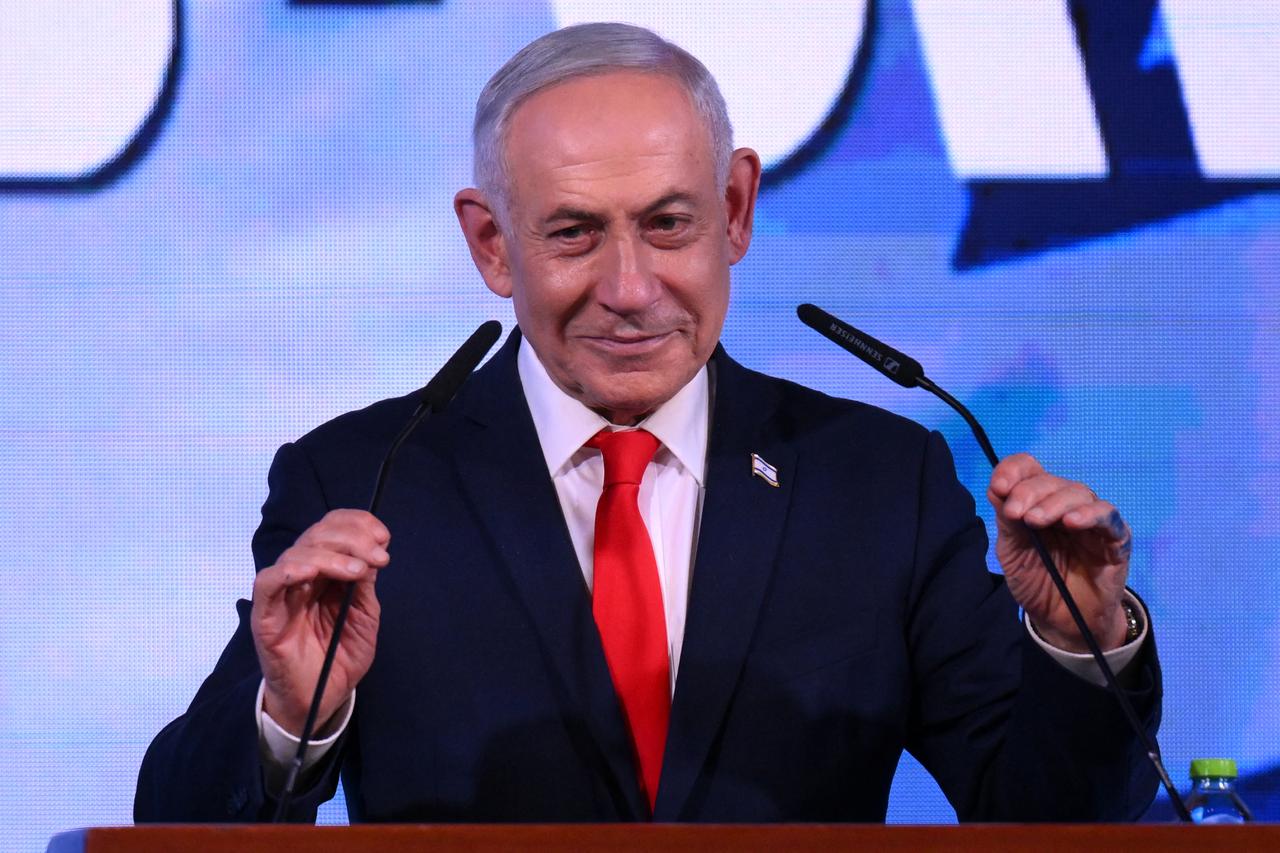
Israeli Prime Minister Benjamin Netanyahu's political bloc took the lead in the country's parliamentary election Wednesday, overtaking the opposition after initially trailing in exit polls, but neither side appeared to have secured the majority needed to form a government.
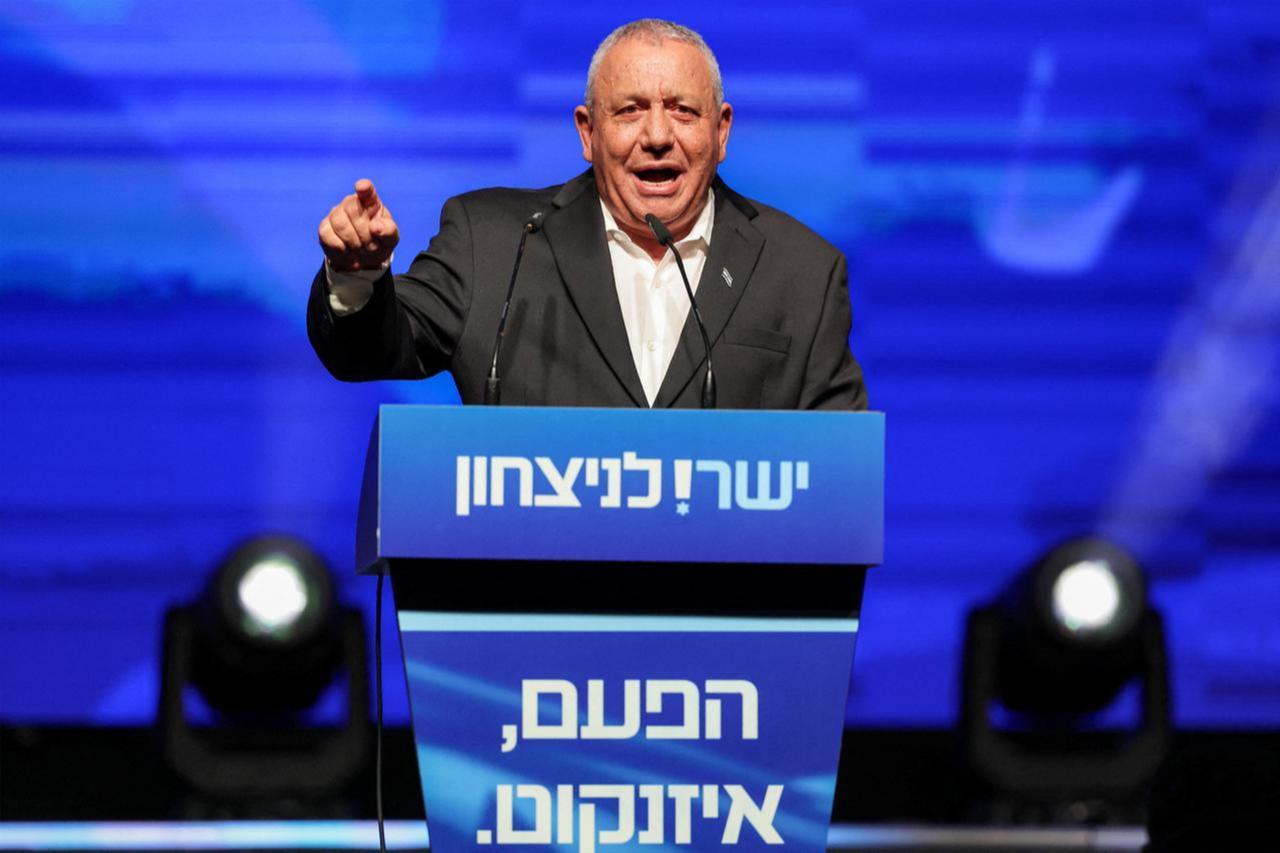
With 50.1% of ballots counted, Netanyahu's right-wing and religious bloc was projected to win 56 seats in the 120-member Knesset, compared with 49 for the opposition led by former military chief Gadi Eisenkot and 15 for Palestinian-led parties, according to figures from Israel's Central Elections Committee.
The preliminary results marked a shift from exit polls released after voting ended Tuesday, when Israel's three main television networks projected the two major blocs winning around 51 seats each, following earlier estimates that had given the opposition a narrow advantage.
Palestinian-led parties also made significant gains, with exit polls initially projecting a combined 17 or 18 seats.
Tuesday's election saw Israel's highest voter turnout in decades, reflecting intense competition over Netanyahu's political future.
However, with neither major bloc reaching the 61 seats required for a parliamentary majority, the election could lead to difficult coalition negotiations or another period of political deadlock.
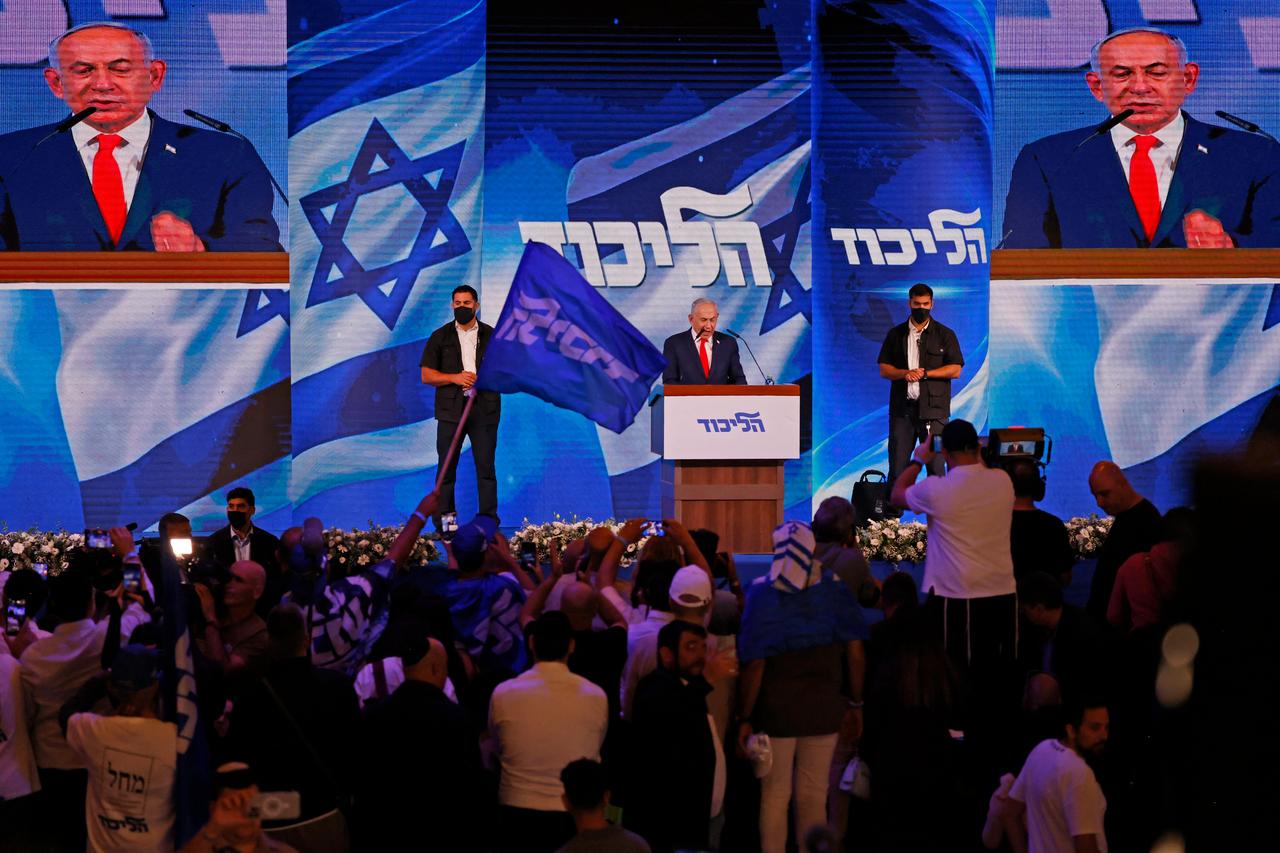

Among individual parties, Netanyahu's Likud was leading with a projected 28 seats, followed by Eisenkot's centrist Yashar party with 21.
The predominantly Palestinian-led Joint List was projected to secure 12 seats, while the B'Yachad (Together) alliance was expected to win 11.
United Torah Judaism and Avigdor Lieberman's Yisrael Beytenu were each projected to receive eight seats.
The Democrats, the Religious Zionism-Zehut alliance, Otzma Yehudit and Shas were each expected to win seven seats, while Ra'am was projected to secure four.
The figures remain provisional and could change as additional ballots are counted.
The outcome is particularly significant for Palestinian-led parties, whose parliamentary representation could determine whether either major bloc can assemble a governing majority.
Under Israel's political system, the president assigns the task of forming a government to the lawmaker considered most likely to command a parliamentary majority, rather than automatically choosing the leader of the largest party.
Israeli President Isaac Herzog is expected to consult the elected parties before deciding whom to nominate.
1. Coalition government
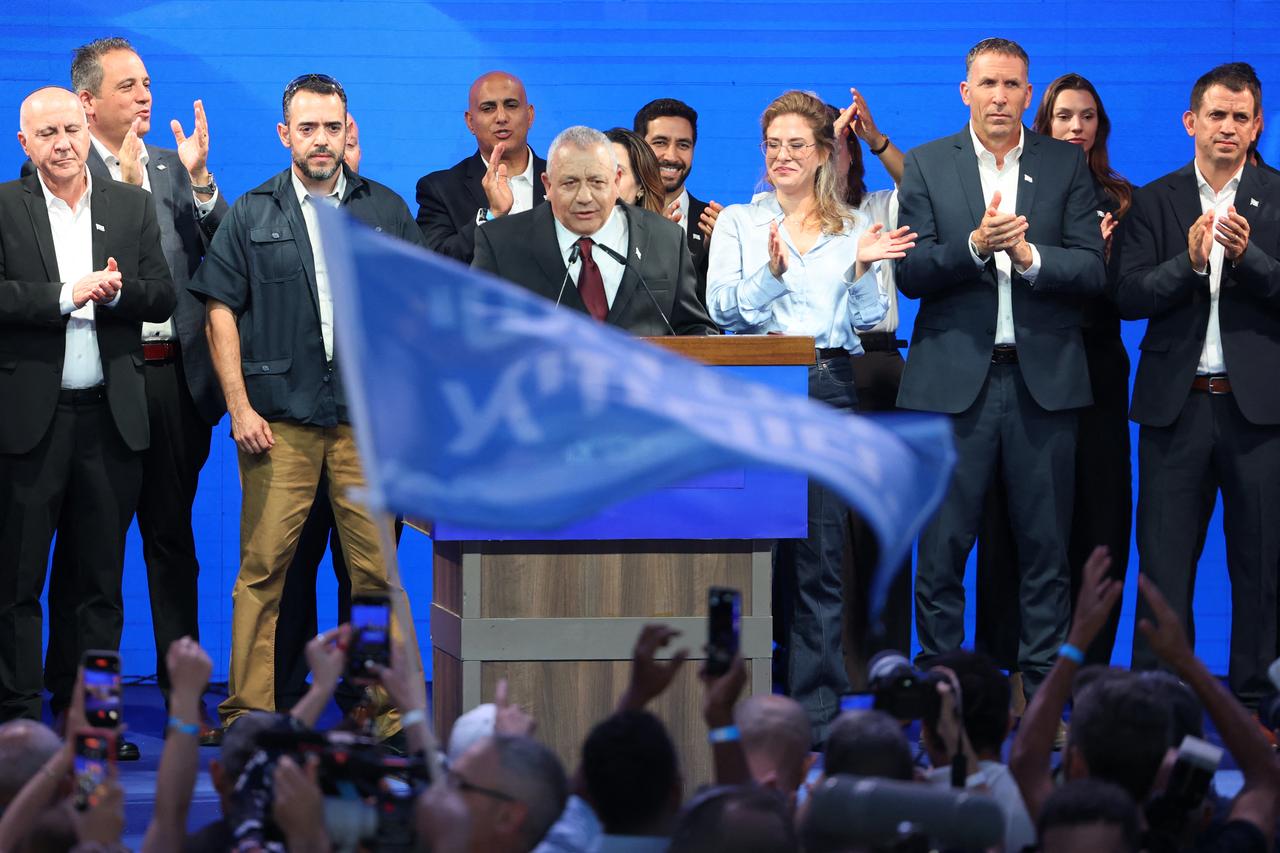
The first possibility is that Netanyahu or Eisenkot succeeds in assembling a coalition with at least 61 lawmakers through negotiations with smaller parties.
However, neither bloc currently has a clear path to a majority.
Palestinian-led parties, particularly Ra'am, have expressed openness to cooperating with Eisenkot's bloc, although opposition leaders largely kept them at a distance during the campaign, viewing their support as a potential political liability.
For Netanyahu, the challenge could be even greater after several smaller right-wing parties failed to cross the electoral threshold needed to enter parliament.
Coalition negotiations in Israel have historically involved difficult compromises among parties with competing political and religious priorities, sometimes resulting in unstable governments.
Following the November 2022 election, Netanyahu needed 58 days to assemble his governing coalition.
2. Minority government backed by Palestinian-led parties
If neither bloc secures 61 seats, another possibility would be a minority government that relies on support from lawmakers outside the governing coalition on a case-by-case basis.
Such an arrangement could give Palestinian-led parties significant influence over the formation and survival of the next government.
Palestinian citizens of Israel account for approximately 20% of the country's population, and their political representatives could become crucial to efforts to replace Netanyahu.
Ra'am, led by Mansour Abbas, previously played a decisive role in Israeli politics when it became the first Palestinian-led party to join a governing coalition in 2021.
That government, led by Naftali Bennett and Yair Lapid, remained in power until 2022.
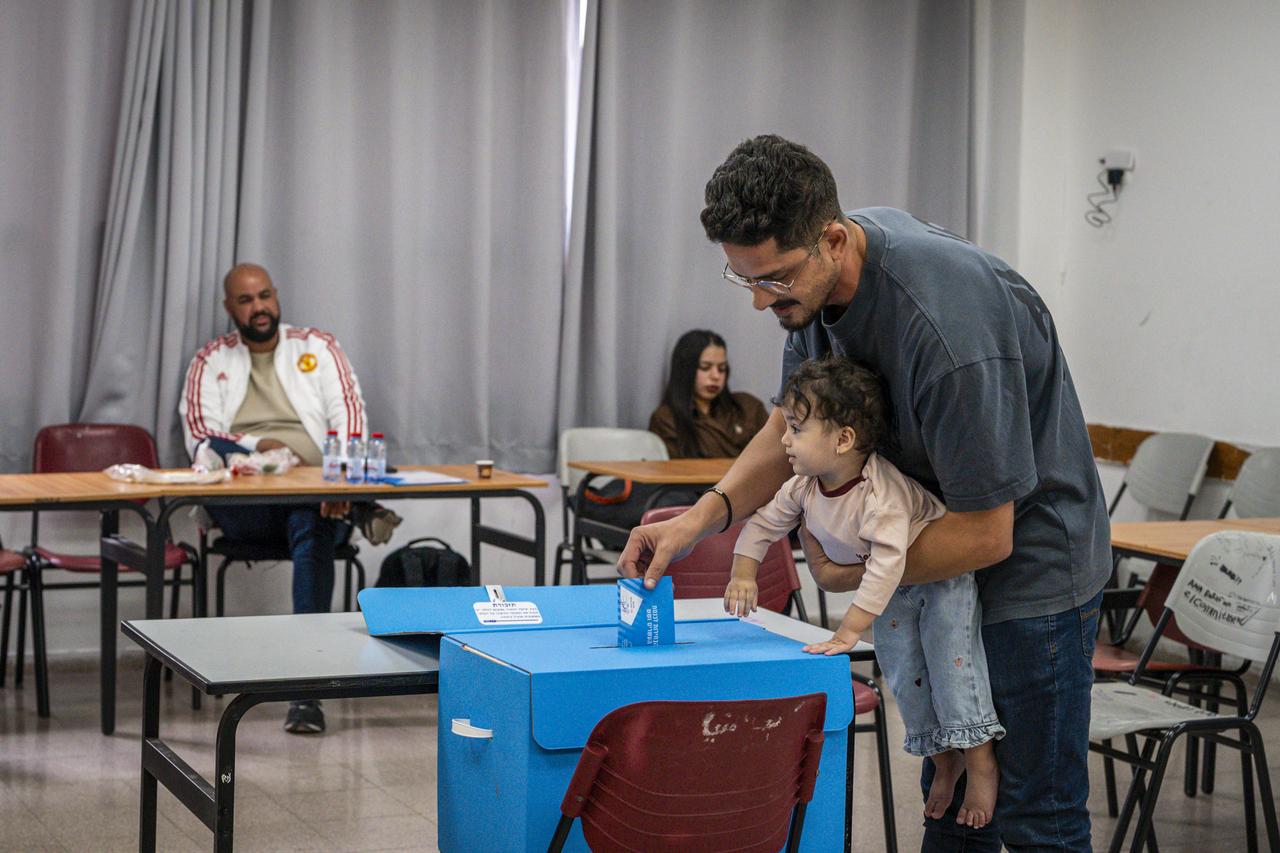
The Joint List, meanwhile, has indicated that it would be unlikely to join a coalition outright but could provide a parliamentary "safety net" for a government that removes Netanyahu from office.
Political commentator Tal Elovitz said the particularly high turnout among Palestinian citizens of Israel "indicates a strong desire for partnership."
However, Eisenkot has not publicly committed to forming a government dependent on Palestinian-led parties.
Netanyahu repeatedly warned Jewish voters during the campaign that supporting the opposition could allow Palestinian-led parties to influence the next government.
"Bottom line, at the moment, it appears there is a possibility of forming a minority government headed by Eisenkot, but this could still shift depending on the final results," Elovitz said.
3. National unity government
A third scenario would involve a national unity government bringing together Likud and major opposition parties.
Although Israel's deep political polarization makes such an arrangement difficult, it could provide an alternative to prolonged coalition negotiations or another election.
Israeli political commentators have repeatedly discussed the possibility of Netanyahu forming a coalition with Eisenkot while excluding his far-right and ultra-Orthodox allies.
Eisenkot, a former military chief, shares several of Netanyahu's positions on national security, despite their differences over political leadership and governance.
A broad unity coalition would also likely exclude Palestinian-led parties.
A poll published Oct. 16 found that 55% of Israelis preferred a national unity government over another election if Tuesday's vote failed to produce a clear majority.
Israel has previously experimented with such an arrangement.
In 2020, Netanyahu and Benny Gantz, another retired military chief who appealed to centrist voters, reached a power-sharing agreement after three elections in less than a year.
The agreement included a rotation of the premiership, but the coalition collapsed after about a year, triggering another election.
A similar arrangement today would face considerable resistance, particularly from opposition parties that campaigned on removing Netanyahu from power and argued that he was unfit to continue governing.
 1 min read

4. Political deadlock and another election
If neither Netanyahu nor Eisenkot manages to form a government, Israel could face another election.
The country held four elections between April 2019 and March 2021 as political parties repeatedly failed to establish a stable governing coalition.
Under Israel's government formation procedures, the candidate nominated by the president generally receives 28 days to assemble a coalition, with the possibility of a 14-day extension.
Additional parliamentary procedures could delay the dissolution of the Knesset and the calling of another election.
However, failure to reach a governing agreement could ultimately send Israelis back to the polls, prolonging political uncertainty despite Tuesday's high voter turnout.


 Set as preferred source
 Set as preferred source


 1 min read


