Newsletters


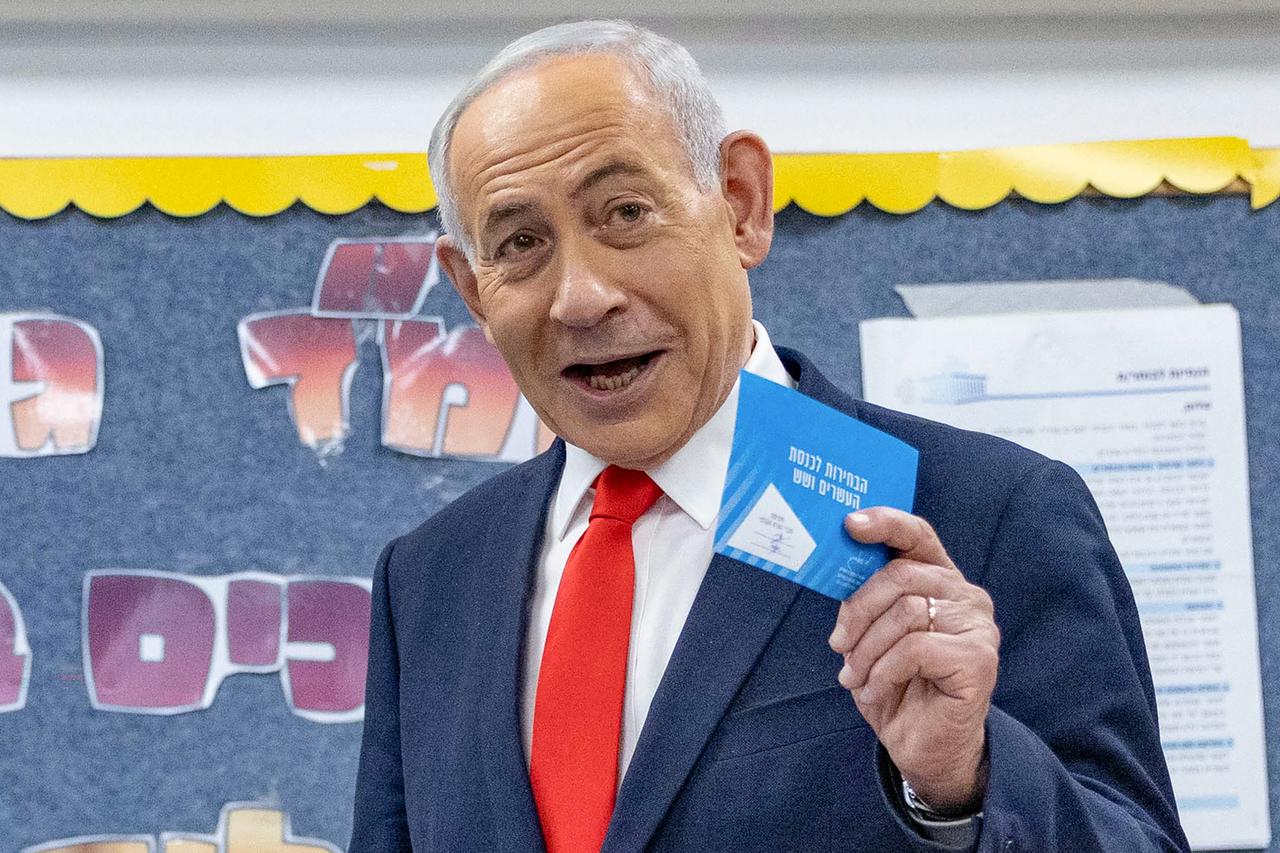


Israeli Prime Minister Benjamin Netanyahu’s political bloc took the lead in the country’s general election, overtaking the opposition bloc after initially trailing it, with more than half of the votes counted on Wednesday, according to figures from the Central Elections Committee.
With 50.1% of ballots counted, Netanyahu’s bloc was projected to win 56 of the 120 seats in parliament, compared with 49 for the opposition bloc and 15 for Arab parties.
Nevertheless, neither major bloc was projected to reach the 61 seats needed for a parliamentary majority, leaving the next government’s formation uncertain as counting continues.
The 15 seats projected for Arab parties could give opposition leader Gadi Eisenkot a potential route to power. If the parties agreed to support his bloc, its projected total would rise to 64 seats, enough to command a majority in the Knesset.
However, the preliminary figures do not establish whether such an arrangement will emerge, and the final seat distribution could change as more ballots are counted.
Netanyahu’s Likud was projected to secure 27 seats, making it the largest individual party, while Eisenkot’s Yashar was expected to win 21.
The Together alliance and the predominantly Arab Joint List were each projected to take 11 seats. The Democrats and United Torah Judaism were forecast to win nine seats apiece, followed by Yisrael Beiteinu with eight.
Shas and Otzma Yehudit were each projected to secure seven seats, while Religious Zionism was expected to win six. The United Arab List, known as Ra’am, was projected to take four seats.
The results remain provisional, with the final balance of power dependent on the completion of the vote count.


 Set as preferred source
 Set as preferred source


 1 min read
 1 min read