Newsletters


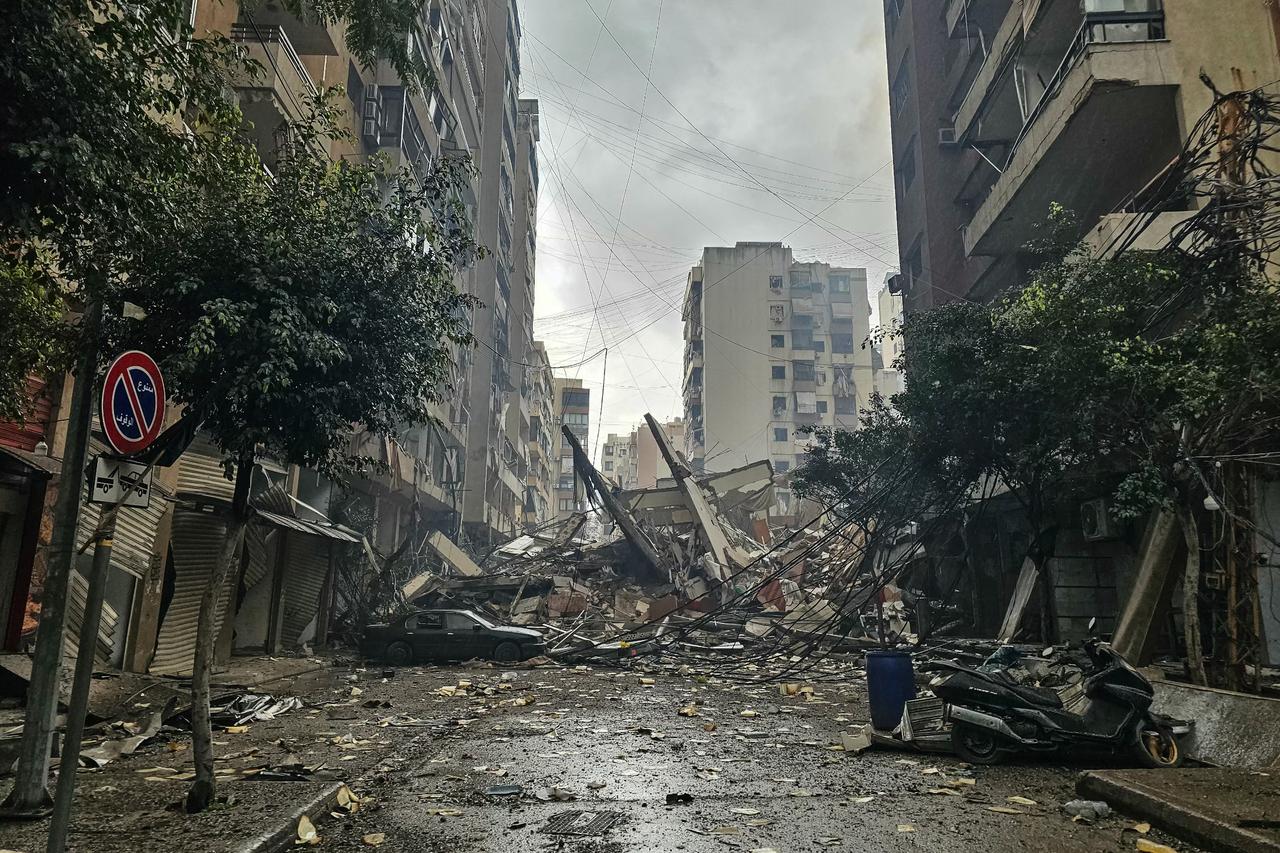


Lebanese Christians who lost relatives and acquaintances in Israeli strikes have called for the attacks to come to an end, urging the international community to listen to their voices as the conflict continues to take a heavy toll on civilians across Lebanon.
Their appeals came as Pope Leo XIV also addressed the moral responsibility of Christians involved in armed conflicts, calling on them to examine their consciences and seek reconciliation.
A condolence gathering and memorial service took place at the Sayyide Necat Church in the town of Roumieh, located north of Beirut, where mourners commemorated five Christians killed in Israeli attacks. Among the victims was a Maronite priest.
The individuals lost their lives in strikes targeting the southern Lebanese areas of Kalia and Ain Ibil in the Nabatieh province, as well as the coastal city of Tyre.
Participants described the event as a moment of collective grief while also voicing concern about the broader impact of the ongoing violence on local communities.
Ranya Huri, a member of the Ain Ibil municipal council, told Anadolu Agency that the attacks in southern Lebanon had caused deep sorrow among residents who had lost loved ones.
Speaking about the broader situation in the region, she said that people had long felt neglected by state institutions. She suggested that since the outbreak of the Lebanese Civil War in 1975, many residents had experienced a sense of abandonment.
According to Huri, the current escalation has forced some families to leave their homes, yet many residents remain determined to stay. She described the land as a place tied closely to their freedom and identity, adding that no one should take that away from them.
Huri also called on the international community to pay closer attention to the situation in Lebanon and to take action in response to what she described as a massacre.
Relatives of Maronite priest Pierre El-Rahi also spoke about the circumstances surrounding his death. The priest was killed during an Israeli strike on March 9 in the town of Kalia in southern Lebanon.
A relative explained that when armed infiltration occurred in the village, civilians came under fire. The priest reportedly rushed to help wounded residents and tried to evacuate them, but was struck and fatally injured during the rescue attempt.
Family members described him as someone who often ran toward danger to assist injured villagers, particularly young people who had been wounded.
They also called for the Lebanese army to be deployed in villages described as resisting attacks, saying that the presence of national forces would help prevent further problems in the region.
Clergy members attending the ceremony stressed the need for peace and coexistence among different communities in Lebanon.
Abu Antoni Haj Musa, one of the religious figures present, said the country was passing through a very difficult period. He pointed out that wars continue to cause deaths not only among civilians but also among healthcare workers and religious leaders.
According to Haj Musa, people across different faiths share the same desire to live together peacefully. He said communities had grown weary of conflicts that destroy countries and undermine national economies, expressing hope that leaders would be guided toward peaceful solutions.
Israel’s military announced on March 2 that sirens had sounded in northern Israel after rockets were launched from Lebanon.
Shortly afterward, Israeli forces began carrying out widespread air strikes across Lebanon, including attacks targeting Beirut. Military operations were conducted both from the air and from the sea, and Israel later decided to expand a ground offensive.
Lebanon’s Health Ministry said on March 14 that Israeli attacks since March 2 had killed 826 people and injured more than 2,000 others.
Lebanese authorities responsible for disaster management also reported that the ongoing attacks and occupation had forced more than 830,000 people to leave their homes.
As the violence continues, Pope Leo XIV addressed the role of Christians who hold responsibility in armed conflicts.
Speaking during a reception for trainees preparing to serve as confessors in the Catholic Church’s sacrament of confession and penance, the pope urged those involved in warfare to reflect seriously on their actions.
According to Vatican News, the official publication of the Vatican, the pontiff asked whether Christians who carry serious responsibility in armed conflicts have the humility and courage to conduct a sincere examination of conscience and to go to confession.
He suggested that such reflection could help people learn how to live in unity, adding that the “dynamism of unity” is a necessary foundation for peace among individuals and nations.


 Set as preferred source
 Set as preferred source


 3 min read