Newsletters


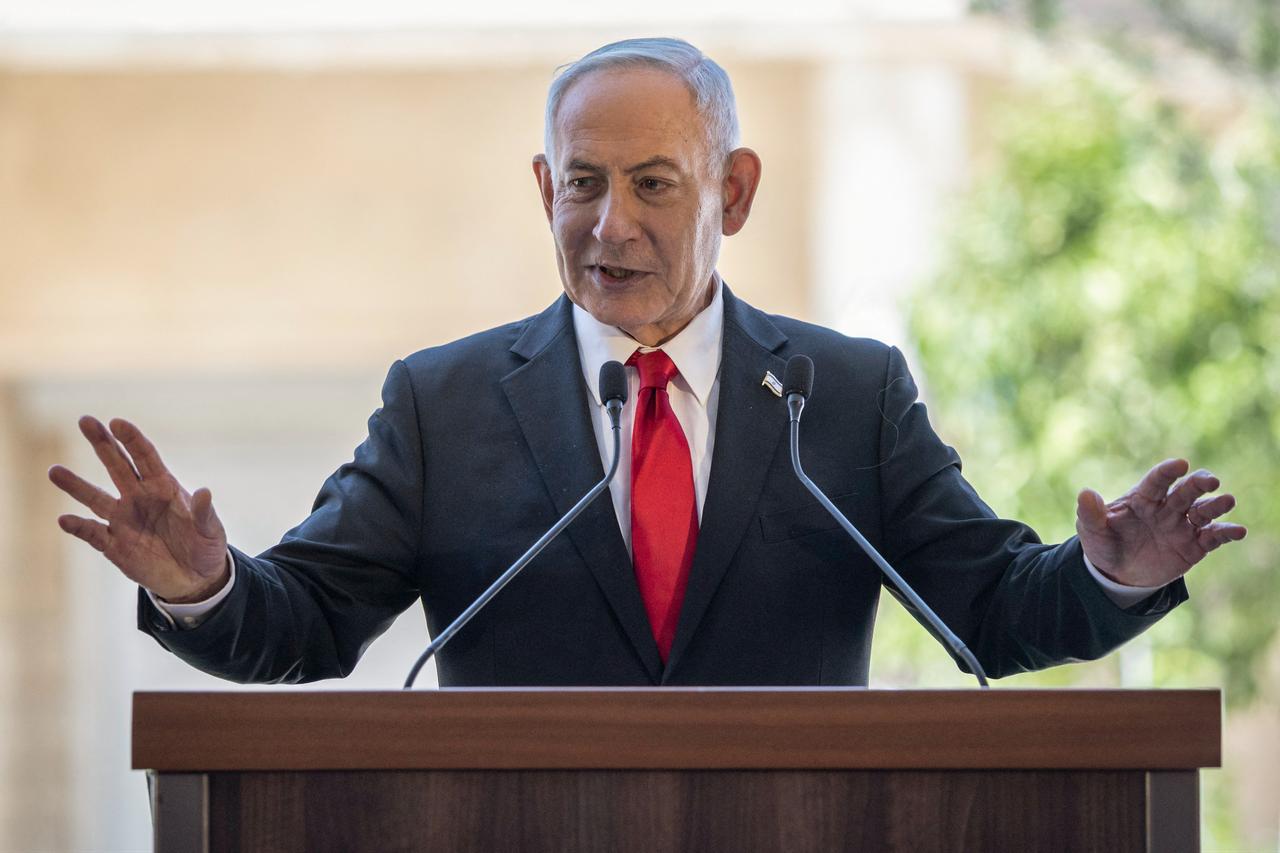


Israeli Prime Minister Benjamin Netanyahu's government is racing to pass a series of bills before parliament dissolves in the coming days, as he seeks to secure coalition alliances ahead of national elections expected in late October.
Seven pieces of legislation are currently on the agenda of the Knesset, Israel's 120-seat parliament, with each bill representing a priority for one or more parties in Netanyahu's ruling coalition.
By striking political bargains around the bills, Netanyahu hopes to strengthen his alliances before the election, despite opinion polls suggesting he could struggle to return to office.
The veteran prime minister, who has held office for nearly two decades across multiple terms, is facing public anger over a series of failures, particularly those that led to Hamas' unprecedented Oct. 7, 2023, attack, which triggered the war in Gaza.
"While they're busy with their coalition's survival, we're fighting for the country and for the interests of Israel's citizens," opposition leader Yair Lapid wrote on X.
The most controversial bill concerns exemptions from military service for students engaged in religious studies, a longstanding demand of ultra-Orthodox parties.
Those parties have repeatedly threatened in the past to bring down the government if their constituents were not granted such exemptions.
The bill, approved in a preliminary reading in June, states that "the State of Israel shall recognise individuals who commit themselves to long-term Torah study as performing meaningful service for the benefit of the State and the Jewish people."
For months, the proposed "Basic Law: Torah Study" has brought thousands of Israelis onto the streets and fueled debate on political television programs.
"The government is exploiting the final days of the Knesset's session to pass laws against the army," Gadi Eisenkot, a former military chief who has emerged as Netanyahu's main rival in the upcoming election, wrote on X.
Eisenkot argued that only his newly formed Yashar, or Straight, party would be capable of forming the next government.
According to Eisenkot, the legislative "marathon" is aimed solely at passing laws that would no longer be possible once he comes to power.
In exchange for supporting the military exemption bill, lawmakers from the two ultra-Orthodox parties are expected to back legislation proposed by Netanyahu's Likud party.
Those measures include a reform of the broadcasting sector aimed at overhauling the regulatory framework governing television, radio and streaming platforms.
Supporters present the reform as a measure designed to open the market to competition. Critics, however, have condemned it as an attempt to exert political control over the media, undermine the independence of news organizations and provide economic benefits to outlets considered close to the government.
Another bill under consideration would reform the status of the state attorney general, who currently also serves as the government's legal adviser.
Netanyahu's Likud party seeks to weaken the position, currently held by his vocal critic Gali Baharav-Miara, by stipulating that the legal adviser's opinions would no longer be binding on the government.
The opposition has accused the government of trying to eliminate an independent check on its power and politicize criminal prosecutions.

At the urging of religious parties, the government is also seeking to repeal a reform introduced by the previous administration that ended the religious authority's monopoly over issuing kosher certification by opening the sector to competition.
Critics say the bill appears tailored to the demands of ultra-Orthodox parties, particularly Shas, which has pushed for it to protect the religious institution's interests at the expense of consumers.
The original kosher reform was expected to reduce costs for restaurant owners.
Additional bills are still being debated in parliamentary committees, but heated disagreements, including within the governing coalition itself, make it difficult for all measures to pass before the end of the legislative term.
The Knesset is due to dissolve automatically on July 15, marking the end of its summer session, with parliamentary elections scheduled for no later than Oct. 27.
However, lawmakers can extend the session by up to 12 days to complete ongoing legislative proceedings, giving Netanyahu and his allies additional time to secure passage of the bills.


 Set as preferred source
 Set as preferred source


 1 min read
 1 min read