Newsletters


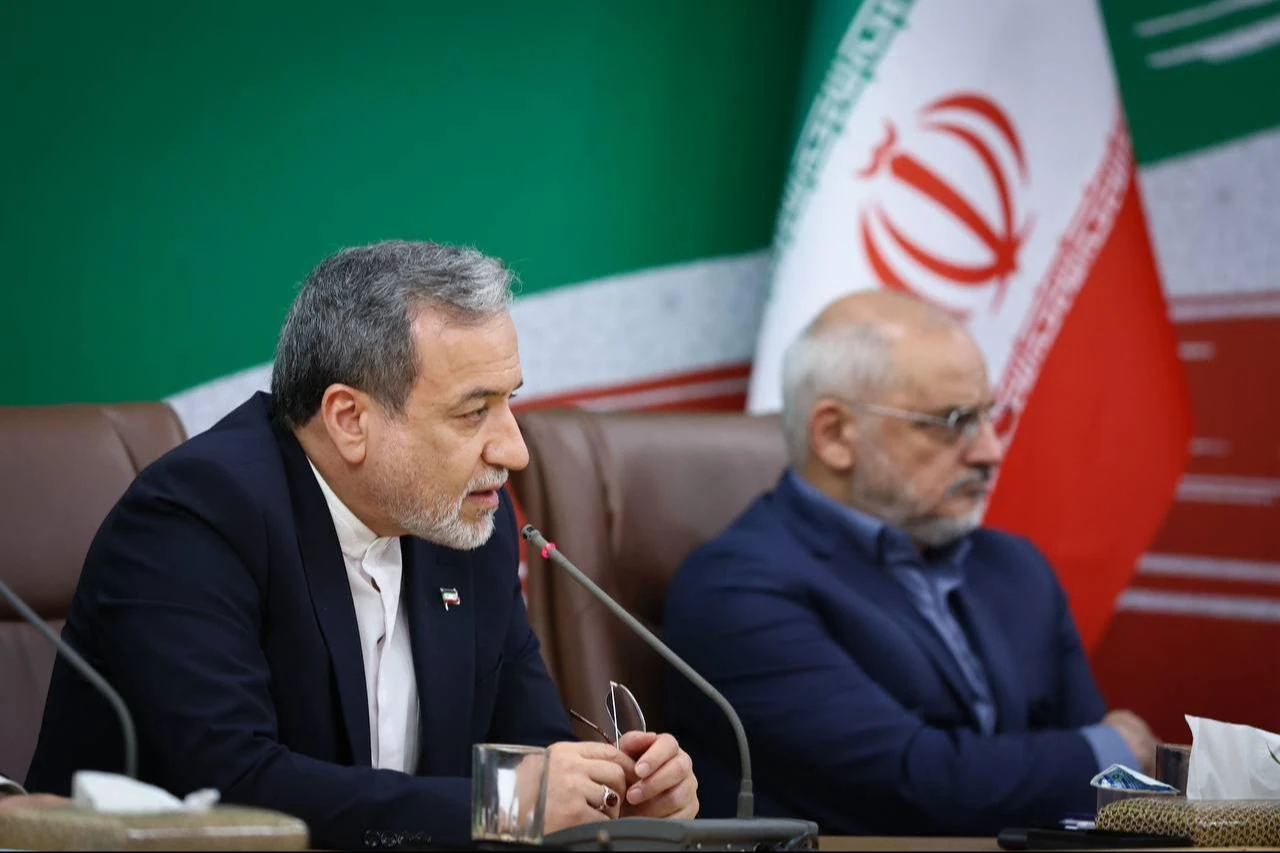
Iranian Foreign Minister Abbas Araghchi said talks with Oman over shipping routes through the Strait of Hormuz and the question of reopening the waterway are "two separate issues," in comments to Shahrara News.
"Our negotiations with Oman are ongoing. That is a completely separate matter. It is a technical issue concerning the designation of maritime routes in the Strait of Hormuz for the passage of ships," Araghchi said.
"The routes that existed previously are no longer functional, so a new route needs to be defined," he said.
"For now, we are designing a temporary route, which can then, at a later stage, be turned into a final route," the top Iranian diplomat noted.
"We may reach an outcome soon, but I want to emphasize that these negotiations and the reopening of the Strait of Hormuz are two separate issues. This is a technical negotiation concerning the designation of a maritime route," Araghchi said.
"Once this route has been determined, whether the Strait will be reopened or not will depend on the fulfillment of other conditions to which the United States must adhere," he noted.

The talks are part of technical negotiations launched under the Iran-U.S. Memorandum of Understanding (MoU), which tasked Tehran and Muscat with developing a new navigation framework for the Strait of Hormuz.
While Iran and Oman have continued discussions on shipping routes, Tehran has repeatedly said any decision to reopen the strategic waterway remains contingent on the U.S. fulfilling its obligations under the memorandum.
Separately, Araghchi met Saturday evening with Tajikistan's Energy and Water Resources Minister Daler Juma, Transport Minister Azim Ibrohim, Deputy Foreign Minister Farrukh Sharifzoda and a group of Tajik business representatives, according to a post on Araghchi's Telegram channel.
The Tajik officials had traveled to Tehran for talks and consultations with their Iranian counterparts.
Araghchi thanked the Tajik government and people for what he called their valuable support during "the American-Zionist military aggression against Iran," as well as for Tajik President Emomali Rahmon's attendance at the funeral of Iran's slain supreme leader and his expression of condolences to Iran's leadership, government and people.
Araghchi said Iran and Tajikistan, as heirs to ancient Persian civilization, "have always stood by one another, through both difficult and good days."
Referring to reciprocal visits by the two countries' presidents and agreements reached during those trips, Araghchi stressed the need to make use of the diverse capacities in both countries to develop and elevate relations, particularly in economic and trade areas.
The Tajik energy and transport ministers, with Deputy Foreign Minister Sharifzoda also in attendance, expressed satisfaction with the high level of relations between the two countries and stressed what they described as the serious will of Tajikistan's senior officials to further expand cooperation, including in the energy and transport sectors.
The Tajik ministers also expressed hope that a joint working group and agreed mechanisms would be established to help implement the understandings reached, particularly in the energy and transport fields.
Separately, the commander of U.S. Central Command (CENTCOM), Adm. Brad Cooper, completed a 10-day trip to the Middle East on Saturday, visiting six countries and the aircraft carrier USS Abraham Lincoln in the Arabian Sea, according to a CENTCOM statement on X.
Cooper met with military leaders and officials in Bahrain, Iraq, Israel, Jordan, Saudi Arabia and the UAE.
He also met with deployed U.S. service members, part of the more than 50,000 American troops operating across the Middle East.
During his second visit to the Lincoln, Cooper thanked the crew "for their tremendous dedication and courage."
"The Lincoln Carrier Strike Group is a strong team of high-achieving Americans standing tall with immense, justified pride in everything they accomplished," he said, adding, "History will record this deployment as one of the most operationally intense and consequential of the modern era."
Cooper had previously visited the carrier in February alongside U.S. special envoy Steve Witkoff and presidential son-in-law Jared Kushner.
The San Diego-based carrier left for deployment in November and arrived in the Middle East in January.


 Set as preferred source
 Set as preferred source


 1 min read
 1 min read