Newsletters




Homer's Cyclops had one eye and one idea, and it cost him his sheep and his sight. Washington has its own version in Larnaca: CYCLOPS, the Cyprus Center for Land, Open Seas and Port Security.
Its foundations were laid at the end of Trump's first term, in 2020. The Biden administration funded and opened it. The State Department pays for American specialists to teach border security, port security, and nuclear and chemical inspection to Greek Cypriot personnel.
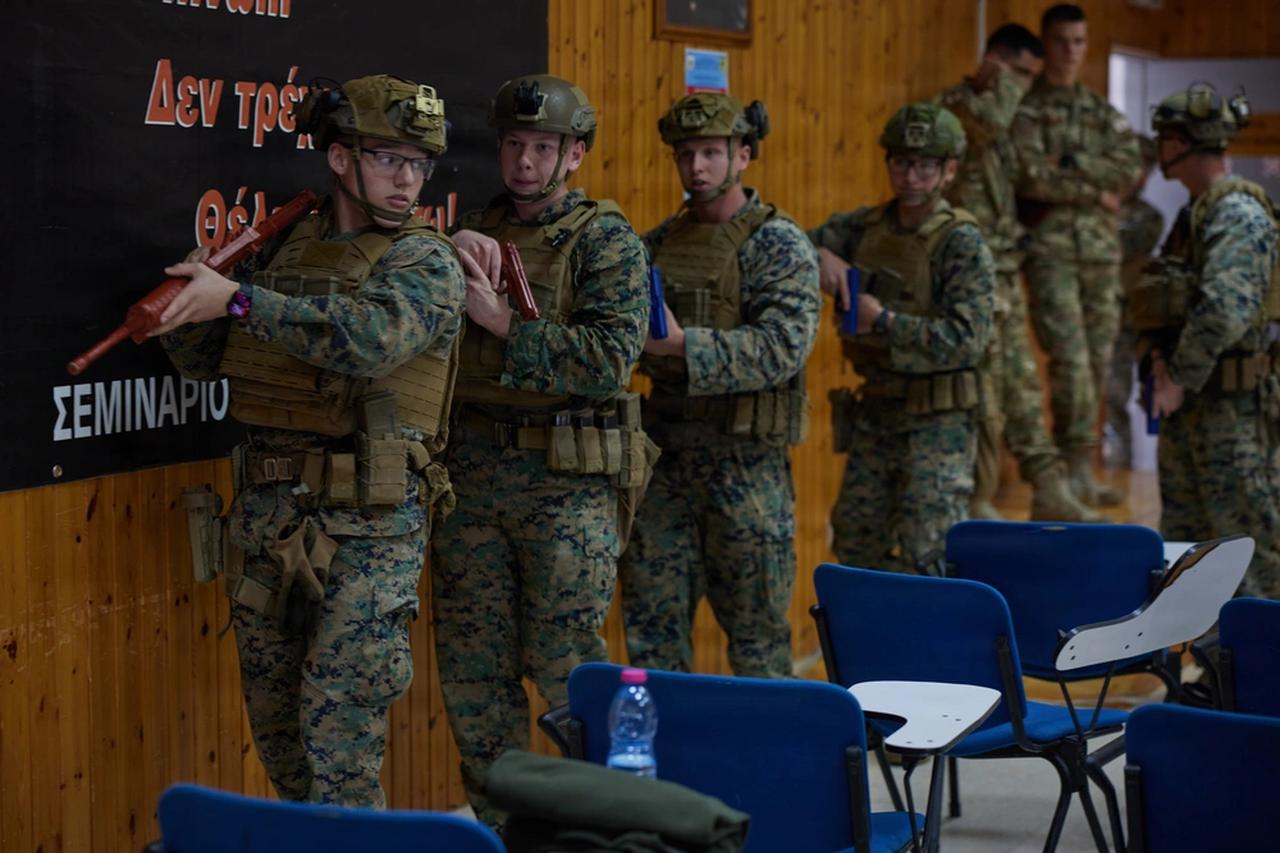
This Thursday, on Oct. 1, U.S. Marines march through Nicosia beside Greek Cypriot troops in the annual Independence Day parade. American and other foreign units have never joined it before. The crowd sees boots in step. Washington sees a continuation of the same routine.
Pundits spend a lot of energy on what separates Biden from Trump, and the differences are too many to count. Yet on this island, the answer so far is nothing. American policy in the Eastern Mediterranean has settled into an institutional rhythm that remains undisturbed by either the recent U.S.-EU tensions or the invasion of Ukraine.

The trajectory wasn't forged in the Oval Office; it was drafted on Capitol Hill. In 2019, Congress quietly laid down the tracks with the bipartisan Eastern Mediterranean Security and Energy Partnership Act, handing successive administrations a legal playbook they haven't veered from since.
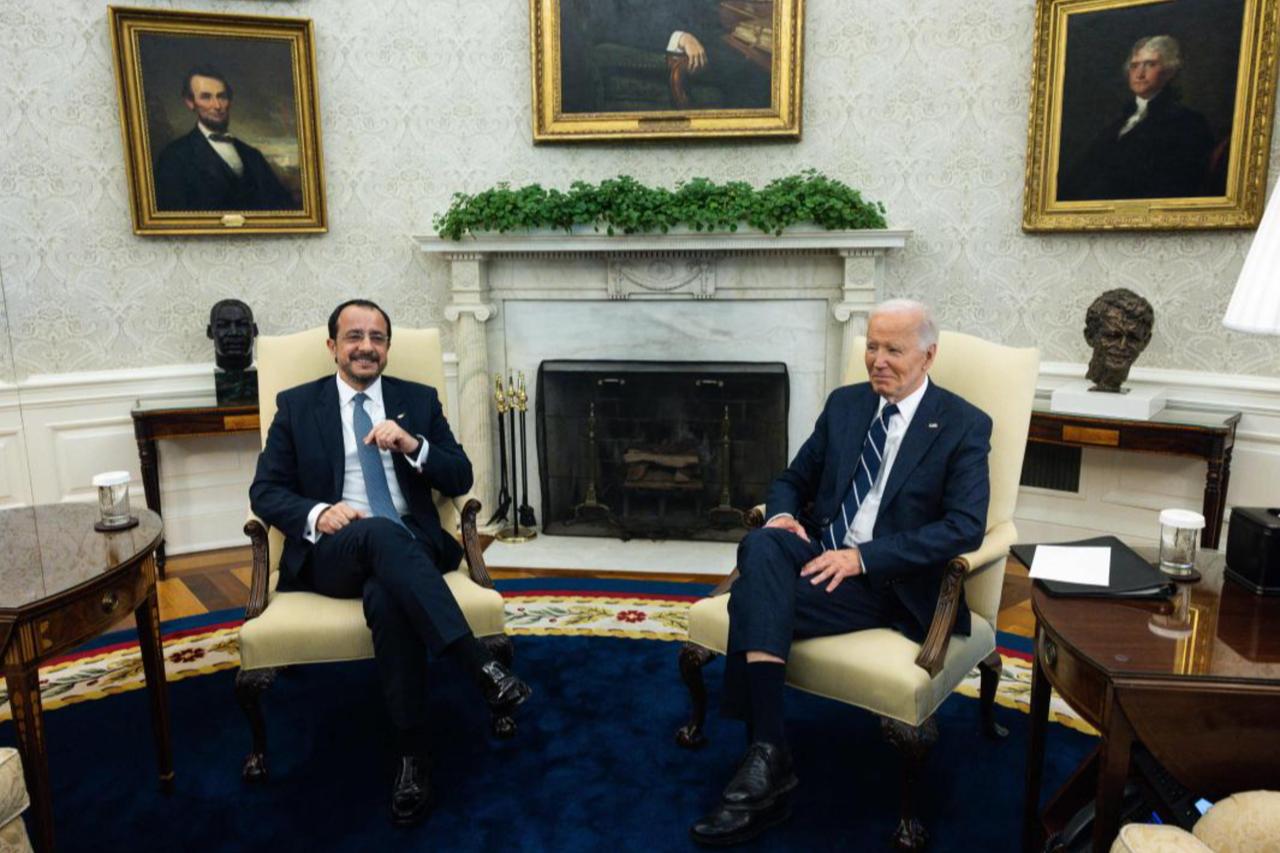
Nothing illustrates this seamless handoff better than the arms embargo. In September 2020, Trump's first team cracked the door open by lifting restrictions on non-lethal military gear for the Greek Cypriot administration. Two years later, Biden's team blew the door off its hinges by removing the embargo entirely, a waiver Washington now renews on reflex every single year.
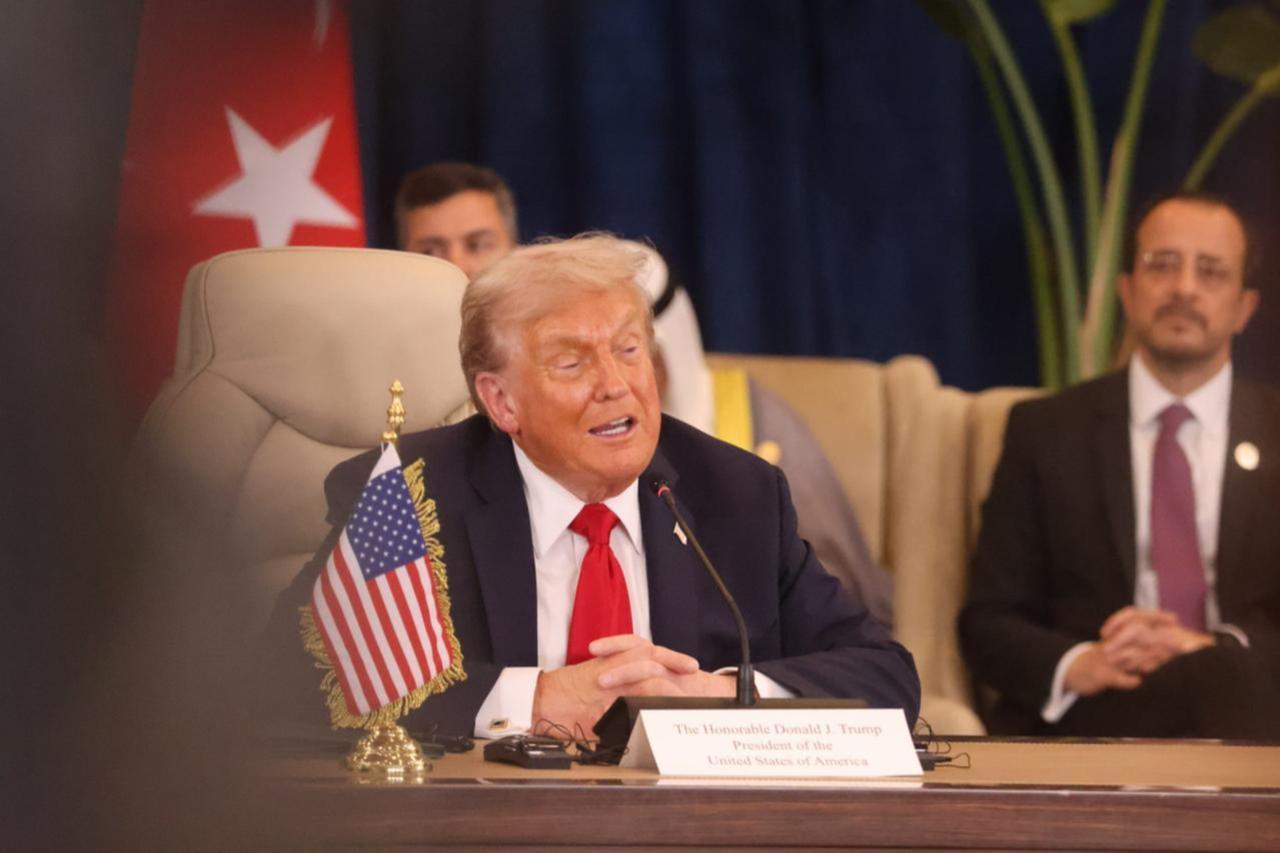
The diplomatic machinery runs on the same rhythm. Take the "3+1" forum, which pairs Greece, Israel, and the Greek Cypriot administration with the United States as the anchor. Trump built the scaffolding, Biden enthusiastically moved in, and Trump's second term has only reinforced the foundation.
By mid-June, Energy Secretary Chris Wright was sitting down with Greek Cypriot Energy Minister Michael Damianos, Greek Energy Minister Stavros Papastavrou, and Israeli Ambassador Yechiel Leiter to sign a new declaration of intent, setting the stage for a flagship Eastern Mediterranean Energy Center anchored all the way in Houston at Rice University.
As political headlines focus on the White House, the real engine room lives inside the bureaucracy of the State Department and the Pentagon, where policy is cemented into permanent architecture.
In 2022, the Greek Cypriot National Guard was quietly paired with the New Jersey National Guard through the State Partnership Program, establishing a self-sustaining pipeline for joint drills, troop exchanges, and technical training that operates completely immune to election cycles.
Adding a layer of unintended irony, New Jersey happens to host one of the largest Turkish-American communities in the United States.
In the waning months of the Biden administration, defense officials locked in a five-year road map for bilateral cooperation. On paper, it targets crisis management, regional security, and evacuations. In practice, it hands the Pentagon a ready protocol to access Paphos Air Base, Zygi Naval Base, and Andreas Papandreou Air Base. When Trump's second administration took over, it inherited the blueprint and didn't miss a beat.
Parallel to the military ties, the State Department launched a formal Strategic Dialogue with the Greek Cypriot side in June 2024, institutionalizing annual ministerial summits on energy, law enforcement, and defense. Modeled directly on Washington's long-standing dialogue with Athens, the process has locked-in dates, a set agenda, and gears that keep grinding forward.
Just after the clock struck midnight in D.C., the secretary of state rolled out a rehashed version of the annual statement: Washington claims it supports a settlement within U.N. parameters leading to "a bicommunal federation."
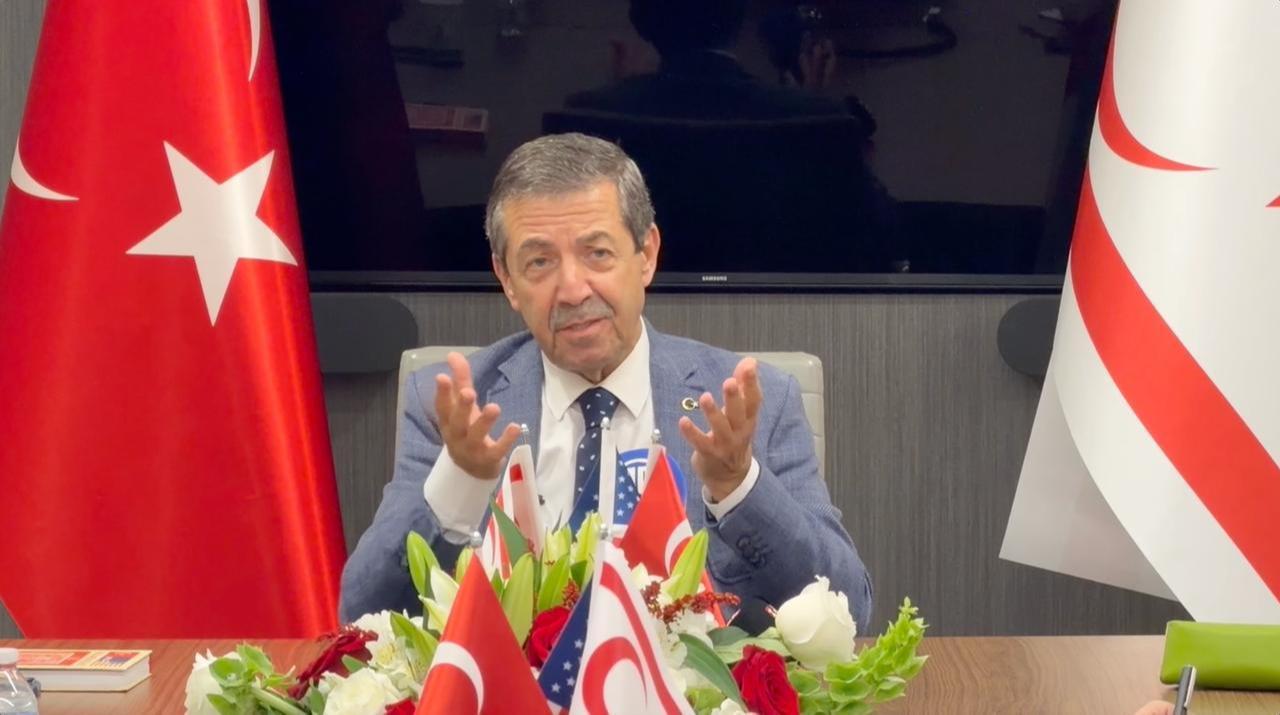
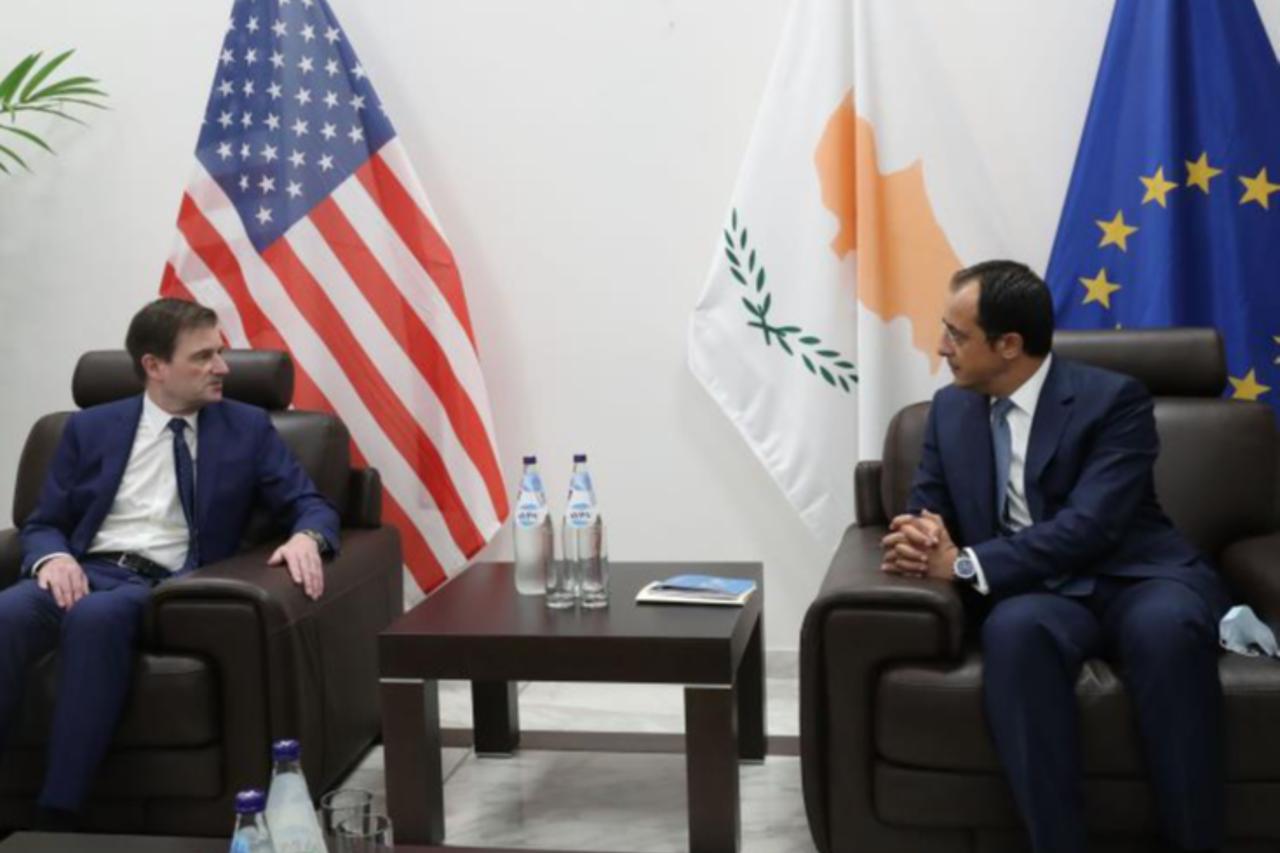
This message is far from new; in fact, it has been on a loop for years. So, just hours before this year's statement dropped, I put a direct question to Tahsin Ertugruloglu, foreign minister of the Turkish Republic of Northern Cyprus (TRNC), who was in Washington for a round of high-level meetings on September 30: Given all of this, is the United States still viewed as a neutral power in Lefkosa's eyes, or has it become an active party to the dispute?
His answer starts with Ankara. The relationship between Washington and the TRNC, he said, is more than a bilateral matter. It is the relationship between Türkiye and the United States, and Turkish Cypriots live inside its effects.
"We are an inseparable part of the Turkish nation," he said, describing Turkish Cypriots as "people who happen to live on Cyprus, not people who arrived from the moon," in a reference to the Homeland.
He dryly called the United States an "interesting" strategic partner of Türkiye, pointing out that much of what transpires on the ground flies in the face of that label. On the hill, he pulled no punches regarding influence, explicitly highlighting the muscle of Greek and allied lobbies in Washington.
Yet he stressed that none of this makes America an outright enemy in Lefkosa's book. According to him, Turkish Cypriots simply stand their ground, backed squarely by the motherland.
The only actor Lefkosa trusts, he said, is Türkiye, on a basis of security, kinship, and shared history. He added that there are always actors trying to pull Turkish Cypriots elsewhere, and that vigilance is required.
The minister thus made it clear that how Turkish Cypriots and their leadership gauge Washington is inextricably tied to how Türkiye itself reads the room.
Back on the parade route, the Cyclops returns. In Lefkosa's reading, Washington's Eastern Mediterranean doctrine has one eye, and it is fixed on Cyprus as a forward military node taking over its role from the United Kingdom. The other side of the island, with its own government and its own claim to sovereign equality, sits mostly outside the field of view.
Washington would describe it differently, and its official statements still speak of neutrality. But the documents are signed, the waivers renewed, and the exercises scheduled, whatever the party of the person in the Oval Office.
Yet the ground has shifted beneath our feet since the last presidency: America has transformed, Cyprus has evolved, Washington's Mediterranean script has been rewritten, and the global order itself has been reshaped in their wake.


 Set as preferred source
 Set as preferred source


 1 min read
 1 min read