Newsletters


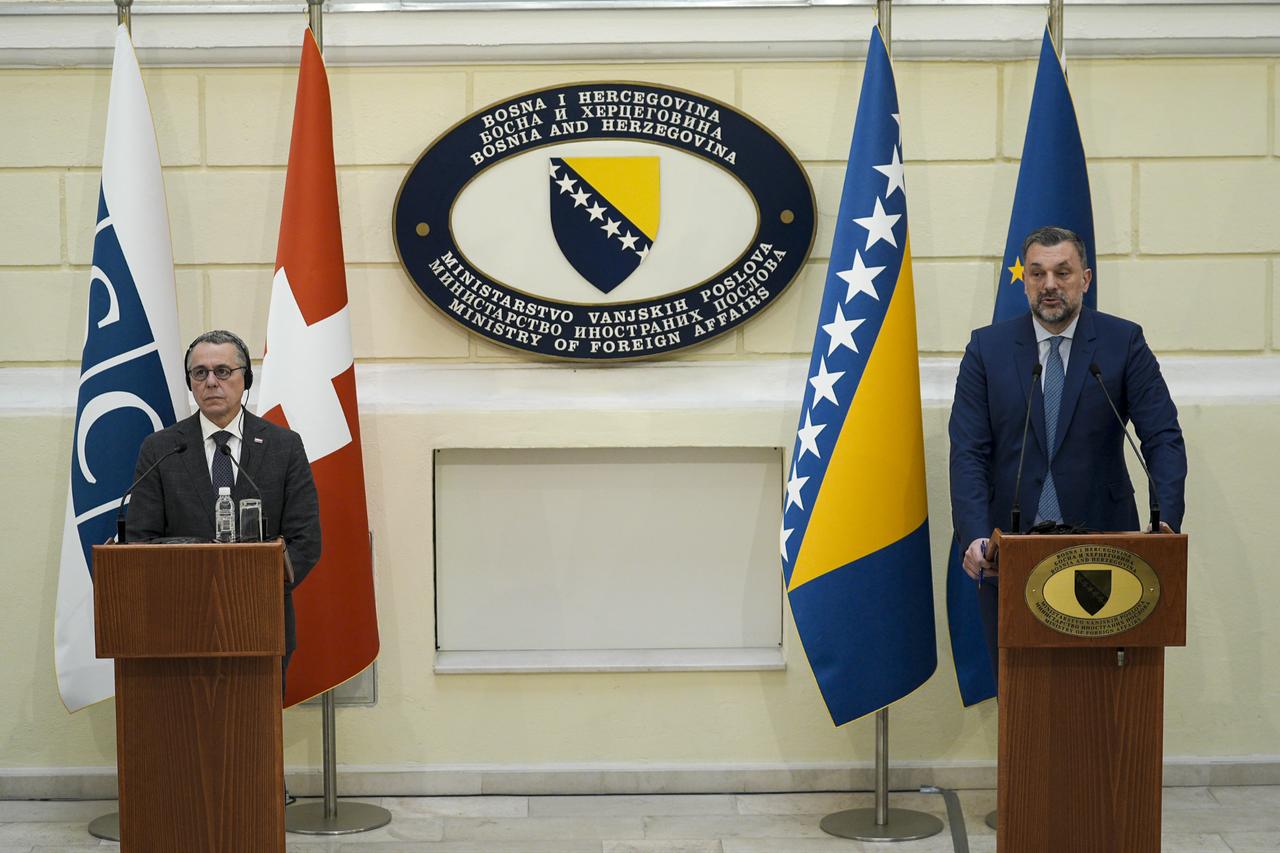


Organization for Security and Co-operation in Europe (OSCE) Chairperson-in-Office and Swiss Foreign Minister Ignazio Cassis said the OSCE strongly supports Bosnia and Herzegovina’s sovereignty, political independence, and territorial integrity, stressing that preserving stability in the country remains one of the organization’s core priorities.
Cassis made the remarks after meeting Bosnia and Herzegovina’s Foreign Minister Elmedin Konakovic in Sarajevo during an official visit.
Speaking at a joint press conference, Cassis said Bosnia’s general elections scheduled for October were among the main topics discussed, emphasizing that the vote must be transparent and fair.
He said appropriate technology is essential to ensure the credibility of the electoral process, adding that the OSCE could provide financial support if necessary.
“The OSCE continues to strongly support the sovereignty, territorial integrity and political independence of Bosnia and Herzegovina,” Cassis said.
“This is clearly reflected in the ongoing efforts carried out by our mission. The OSCE has been cooperating with Bosnia and Herzegovina for more than 30 years and supports peace and stability together with local authorities, civil society and international partners. Within the framework of this partnership, we will continue our work,” he added.
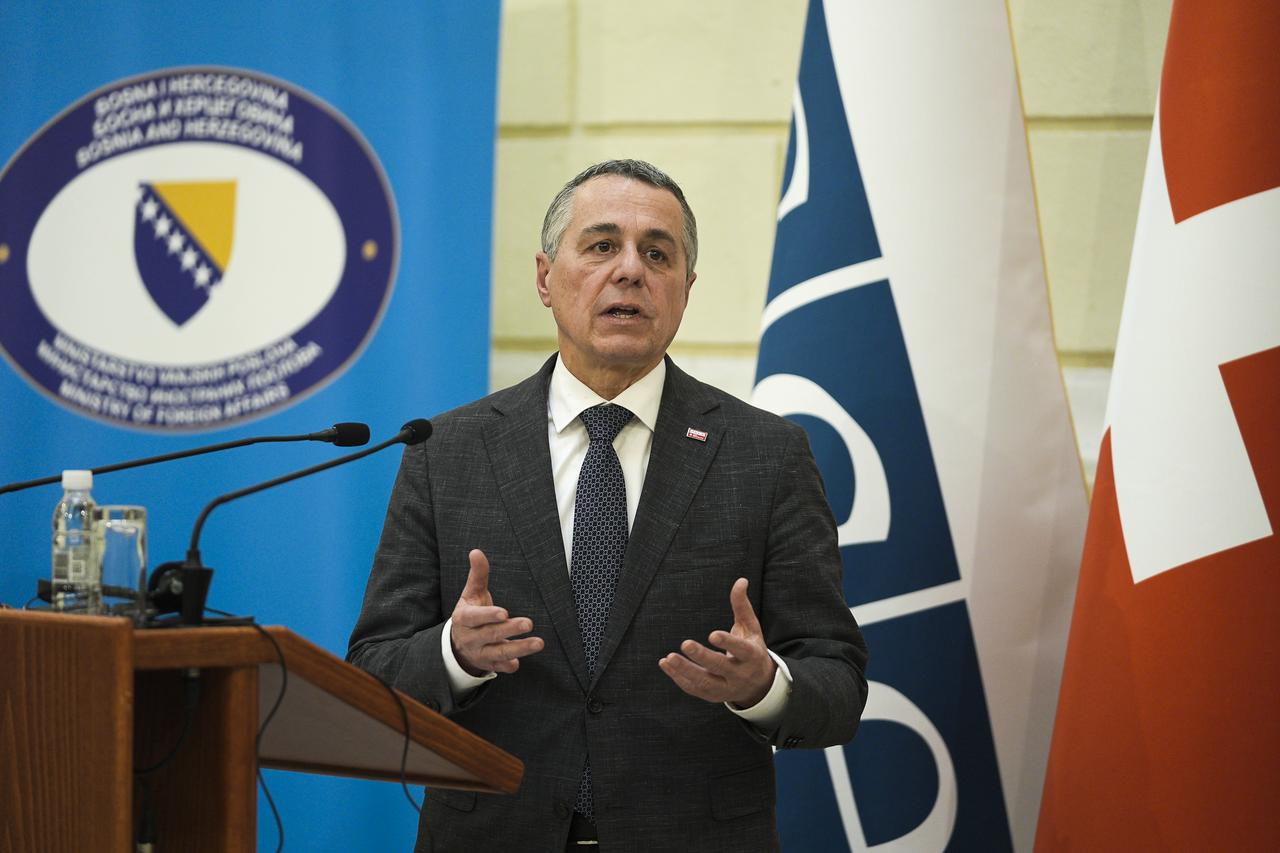

Cassis also said European integration in the Western Balkans must be accelerated.
Konakovic said the visit underscored Bosnia’s importance on the international stage, noting that high-level diplomatic engagement with Sarajevo continues.
He said the October elections were a central issue in the talks and confirmed close cooperation with the OSCE.
“We are conducting excellent cooperation with the OSCE and are trying to complete the procurement process for the necessary equipment to ensure fair and proper elections. We hope the Council of Ministers will remove the financing obstacle,” Konakovic said.
He added that he briefed Cassis on Bosnia’s current political situation, saying the country faces serious challenges alongside significant opportunities.
 1 min read
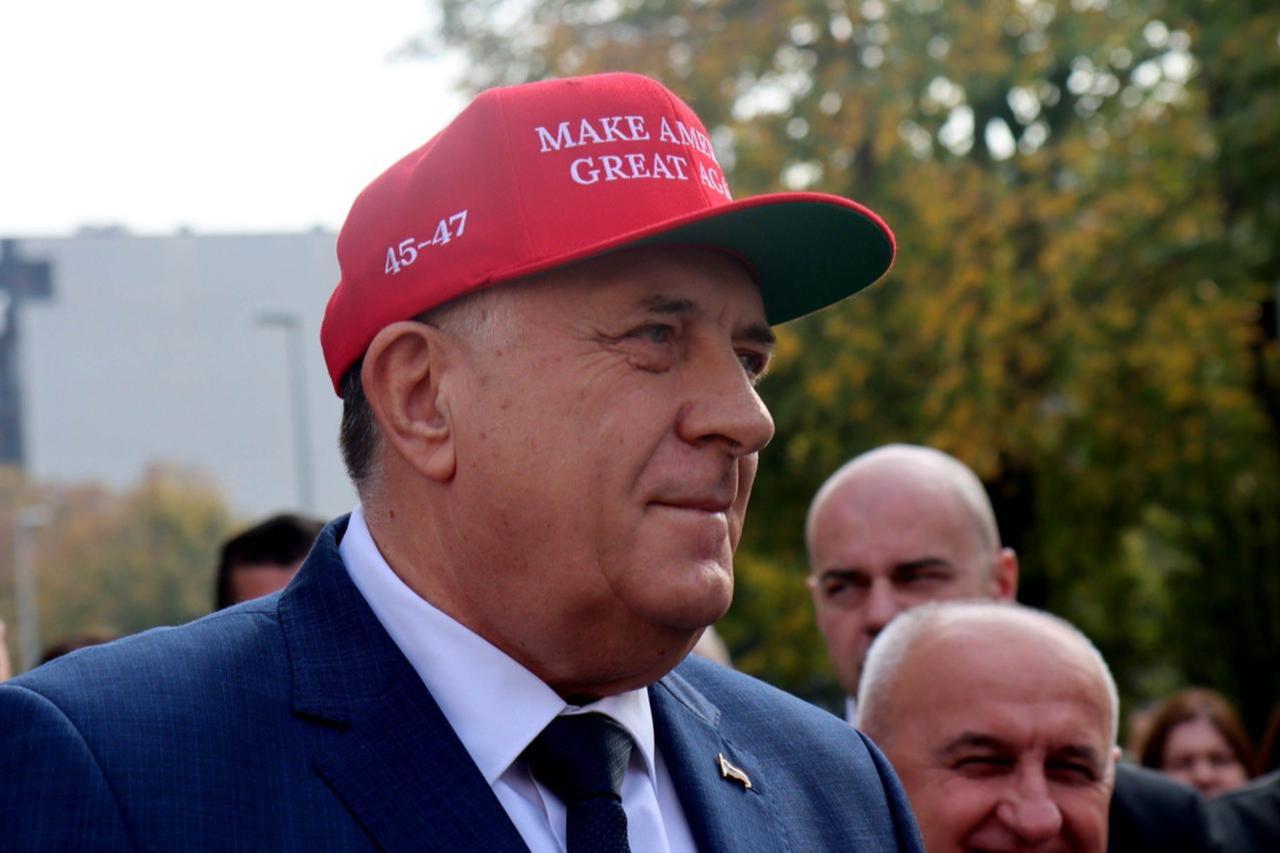
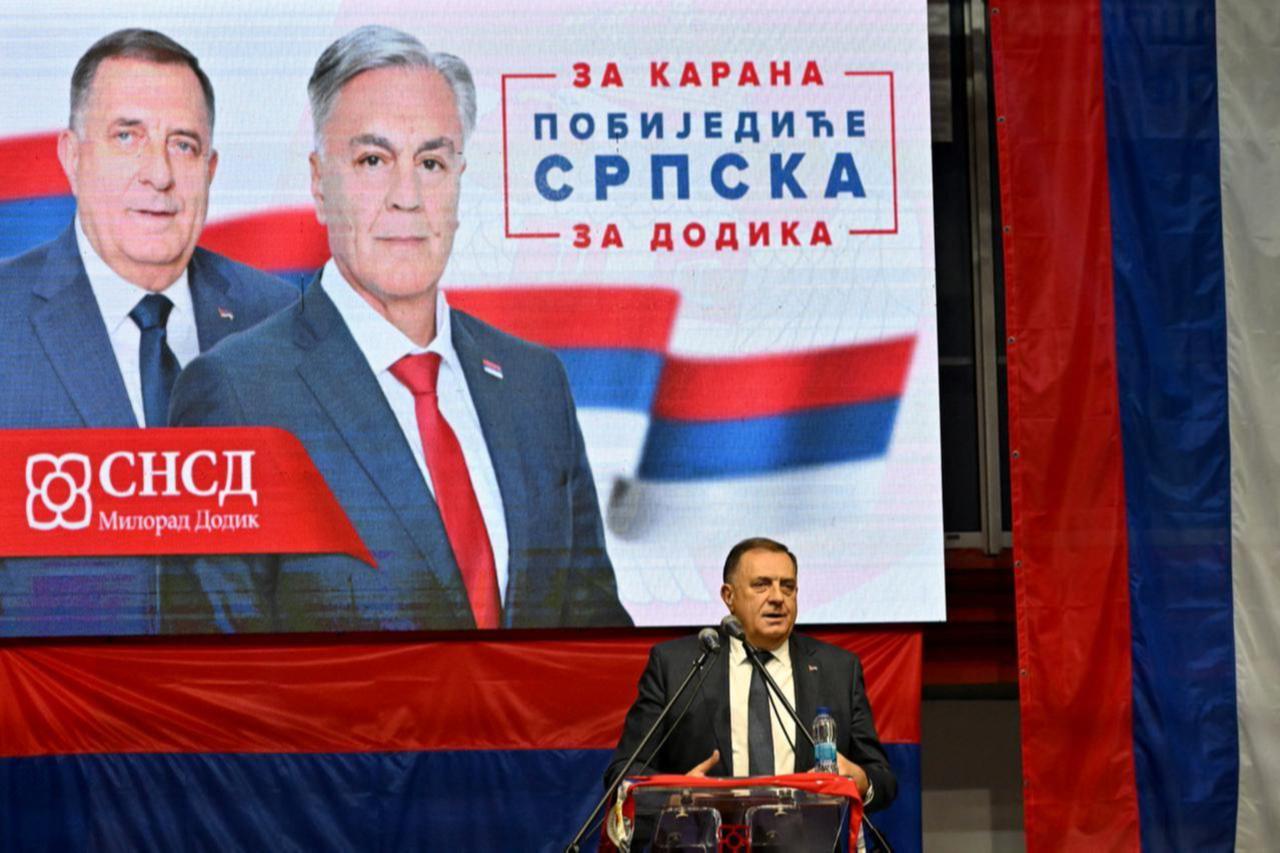
The meeting comes as Milorad Dodik, former president of Republika Srpska (RS), visited Washington with other RS officials, including Acting President Ana Trisic-Babic and Bosnia’s Presidency member Zeljka Cvijanovic.
During the visit, Dodik renewed calls for RS independence, arguing that separation from Bosnia and Herzegovina would ensure greater stability.
Speaking to the Financial Times, Dodik said he had “high expectations” of U.S. President Donald Trump, adding: “When he says America First, that encourages us to say Republika Srpska first.”
Dodik was sanctioned by the United States in 2017 and again in 2022 over what U.S. administrations described as corrupt activities and threats to Bosnia’s stability and territorial integrity. He was removed from the sanctions list by the Trump administration late last year.
In 2024, Dodik was sentenced to one year in prison and banned from politics for six years for defying the decisions of the international High Representative. The prison sentence was later converted into a fine.
Critics, including US Senator Jeanne Shaheen, the top Democrat on the Senate Foreign Relations Committee, have called for sanctions to be reinstated, arguing that Dodik continues to undermine the Dayton framework and fuel instability.
The 1995 Dayton Peace Agreement ended Bosnia’s 1992–1995 war and established the country as two entities: the Federation of Bosnia and Herzegovina and Republika Srpska. Disputes over its implementation remain a persistent source of political tension.


 Set as preferred source
 Set as preferred source



 1 min read