Newsletters


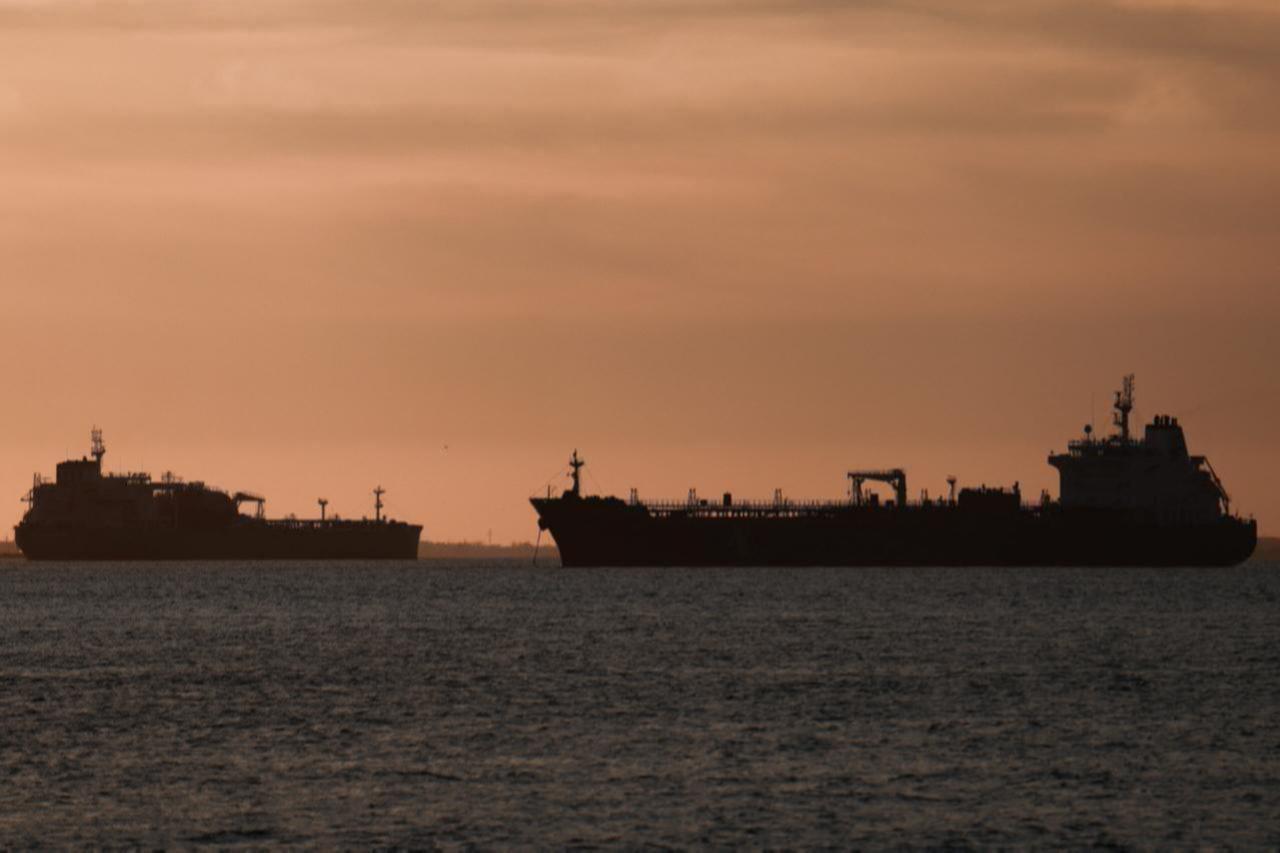


At least seven Iran-linked vessels crossed the Strait of Hormuz after Washington's blockade of Iranian ports took effect Monday, with maritime tracking data contradicting U.S. military claims that no ships had broken through, even as several of the vessels subsequently turned back.
The crossings, documented by maritime data provider Kpler, occurred in the hours following the blockade's activation at 1400 GMT on Monday, two days after peace talks between Washington and Tehran collapsed and the U.S. announced the measure. The U.S. Central Command said Tuesday its blockade had held, stating that six merchant vessels had been turned around during the first 24 hours, but tracking data pointed to a more complicated picture on the water.
The Liberia-flagged bulk carrier Christianna passed Iran's Larak Island in the strait around 1600 GMT Monday, shortly after unloading 74,000 tonnes of corn at the Iranian port of Bandar Imam Khomeini. A second vessel, the Comoros-flagged tanker Elpis, cleared the strait around the same time, carrying 31,000 tonnes of methanol after departing the Iranian port of Bushehr on March 31. A third ship, the Argo Maris, also crossed after sailing from Iran.
A Chinese tanker, the Rich Starry, crossed overnight via an Iranian-approved vetting route south of Larak Island. It was carrying 31,500 tonnes of methanol and was bound for Sohar, Oman, according to transponder data, before reversing course in the Gulf of Oman around 1100 GMT Tuesday and heading back toward the strait, its new destination unknown.
Both the Rich Starry and the Elpis are listed by the U.S. Office of Foreign Assets Control as sanctioned for ties to Iran. Among the other vessels that crossed were the bulk carrier Manali, which has traded with Iran in the past, as well as two Iran-flagged ships: the container carrier Kashan, which is under U.S. sanctions, and the Moshtari, a cargo ship that subsequently returned to an Iranian port on the strait.
Despite the tracking data, CENTCOM maintained Tuesday that its blockade had held. "No ships made it past the US blockade and six merchant vessels complied with direction from US forces to turn around to re-enter an Iranian port on the Gulf of Oman," the command said in a post on X. The blockade, it added, was being enforced against vessels of all nations entering or departing Iranian ports and coastal areas, including ports on both the Arabian Gulf and the Gulf of Oman.
The discrepancy between CENTCOM's account and the Kpler data could not immediately be resolved. Maritime analysts have cautioned in recent weeks that ship transponder signals in the region have been disrupted and manipulated, making precise tracking difficult. The Elpis's AIS transponder signal went dark at 2300 GMT Monday after its crossing, and the vessel's location on Tuesday was unknown.
The Strait of Hormuz, a narrow waterway between Iran and Oman through which roughly a fifth of the world's traded oil passes, became a flashpoint after Iranian forces effectively closed it following U.S. and Israeli strikes on Iran on February 28. Washington announced its own blockade on Sunday after diplomacy failed to resolve the standoff.
The Christianna, which had turned around off the coast of Oman around 1500 GMT Tuesday, also had no confirmed new destination. The convergence of rival blockades, sanctioned vessels, and unreliable tracking data has left the passage's status deeply uncertain, with global shipping markets closely monitoring developments in one of the world's most strategically critical maritime corridors.


 Set as preferred source
 Set as preferred source


 2 min read

 1 min read