

 Sign in
 Newsletters


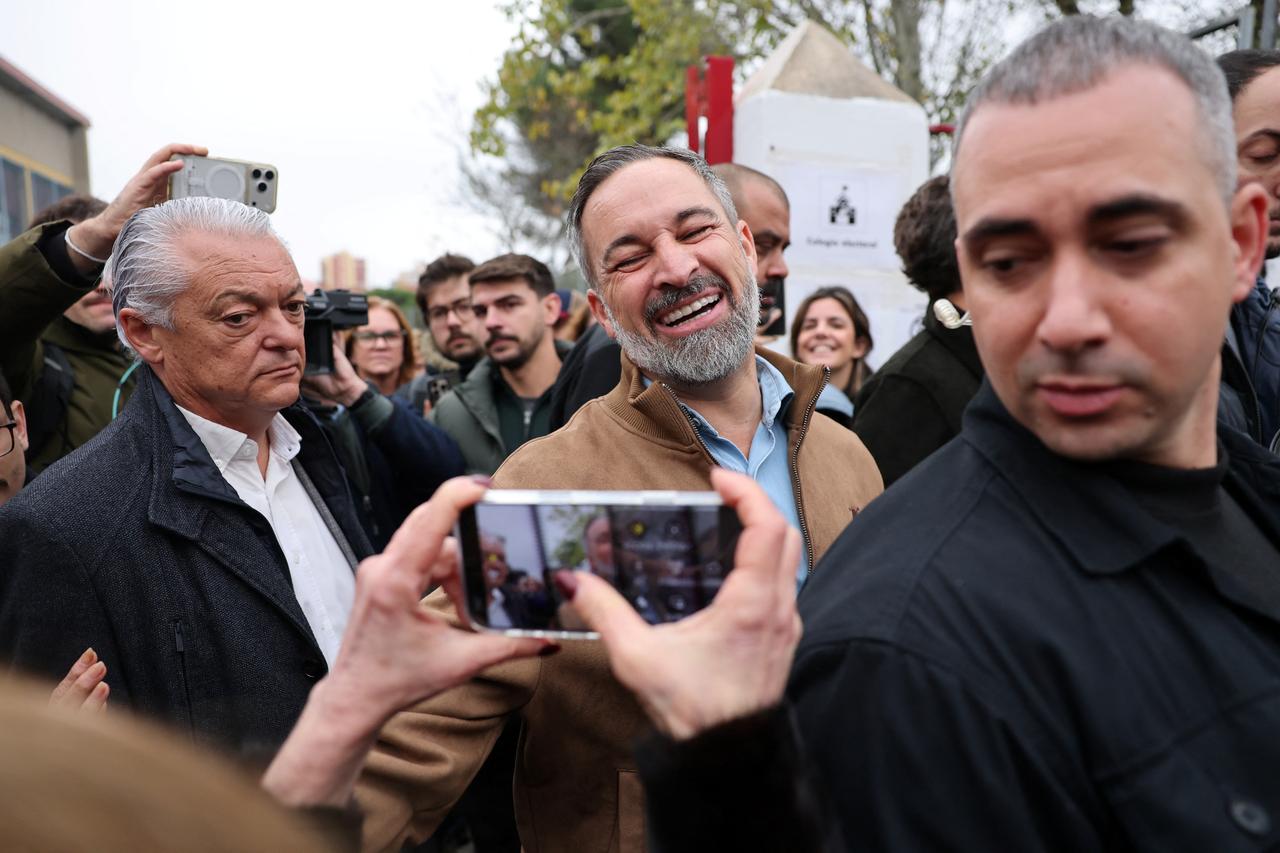


Spain's conservative People's Party is projected to win the most seats in Sunday's general election but is likely to need the far-right Vox party to govern. An exit poll and a survey for public broadcaster RTVE both pointed to the end of Prime Minister Pedro Sanchez's eight years in power.
The RTVE survey, based on 19,500 interviews over the past two weeks, put the People's Party at 131 to 136 seats in the 350-seat lower house. It gave Vox 44 to 48 seats, a combined 175 to 184 seats against the 176 needed for a majority. The Socialists were projected at 119 to 124 seats and the hard-left Broad Front at about 10, with regional parties taking most of the rest.
The broadcaster's exit poll estimated the People's Party at 32.2 percent of the vote, the Socialists at 28.8 percent, Vox at 16.2 percent and the Broad Front at less than 6 percent.
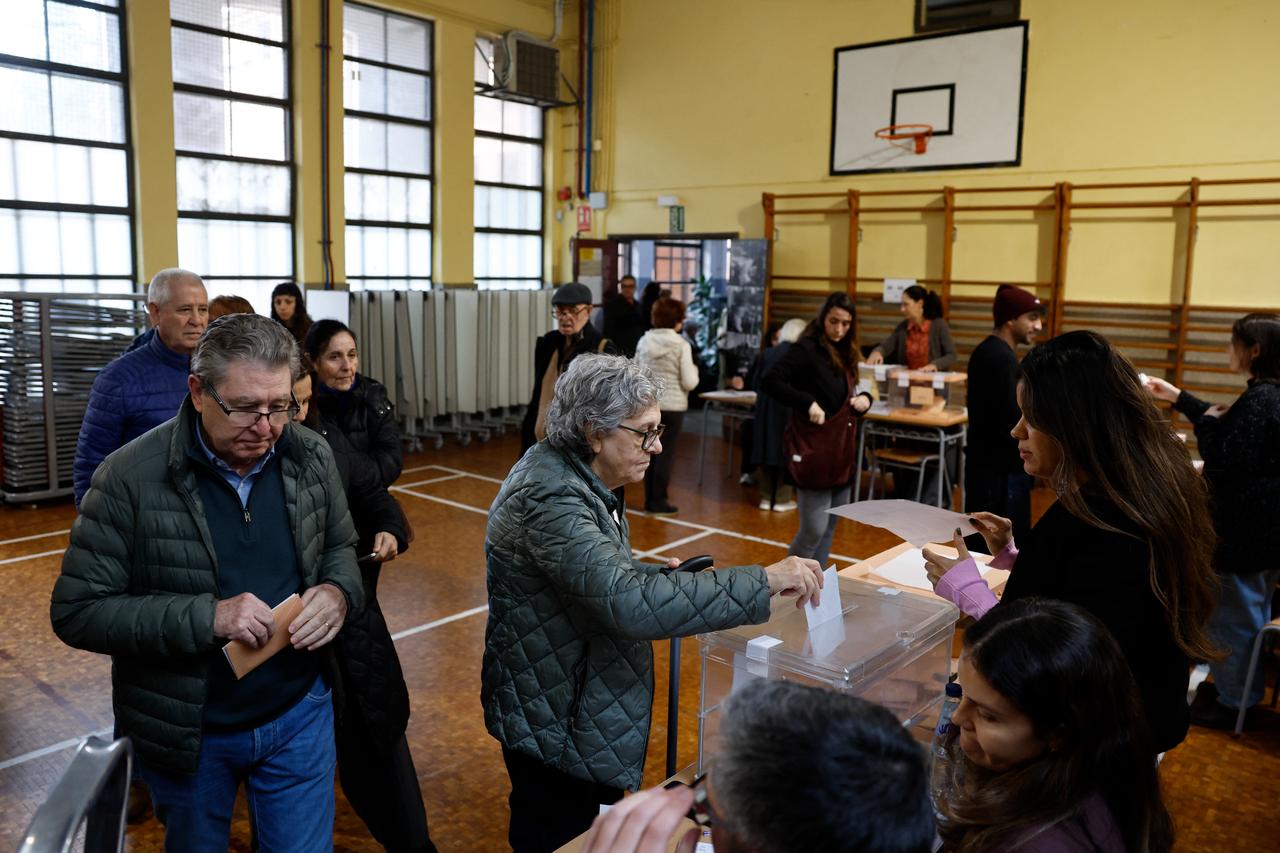
Polls closed at 8 p.m. local time everywhere except the Canary Islands, which stayed open an hour longer. The government was due to begin releasing official results from 9 p.m., with a news conference on provisional figures about an hour later. Spanish vote counts are usually fast, and the outcome is often largely clear by 11 p.m.
The result is not settled. At the low end of the RTVE survey's range, the right-wing bloc would fall one seat short of a majority. A tie between a right-wing coalition and the Socialists and their allied small parties is also possible. That could mean weeks of negotiations and potentially new elections.
Sanchez has survived such arithmetic before. In 2023 he stayed in power with the backing of hard-left and regional parties. Even so, nearly all pre-election polls pointed to the People's Party and Vox together reaching the threshold.
If Vox joined a People's Party-led government, it would mark the first time a far-right party has held power in Spain since the death of dictator Francisco Franco in 1975.
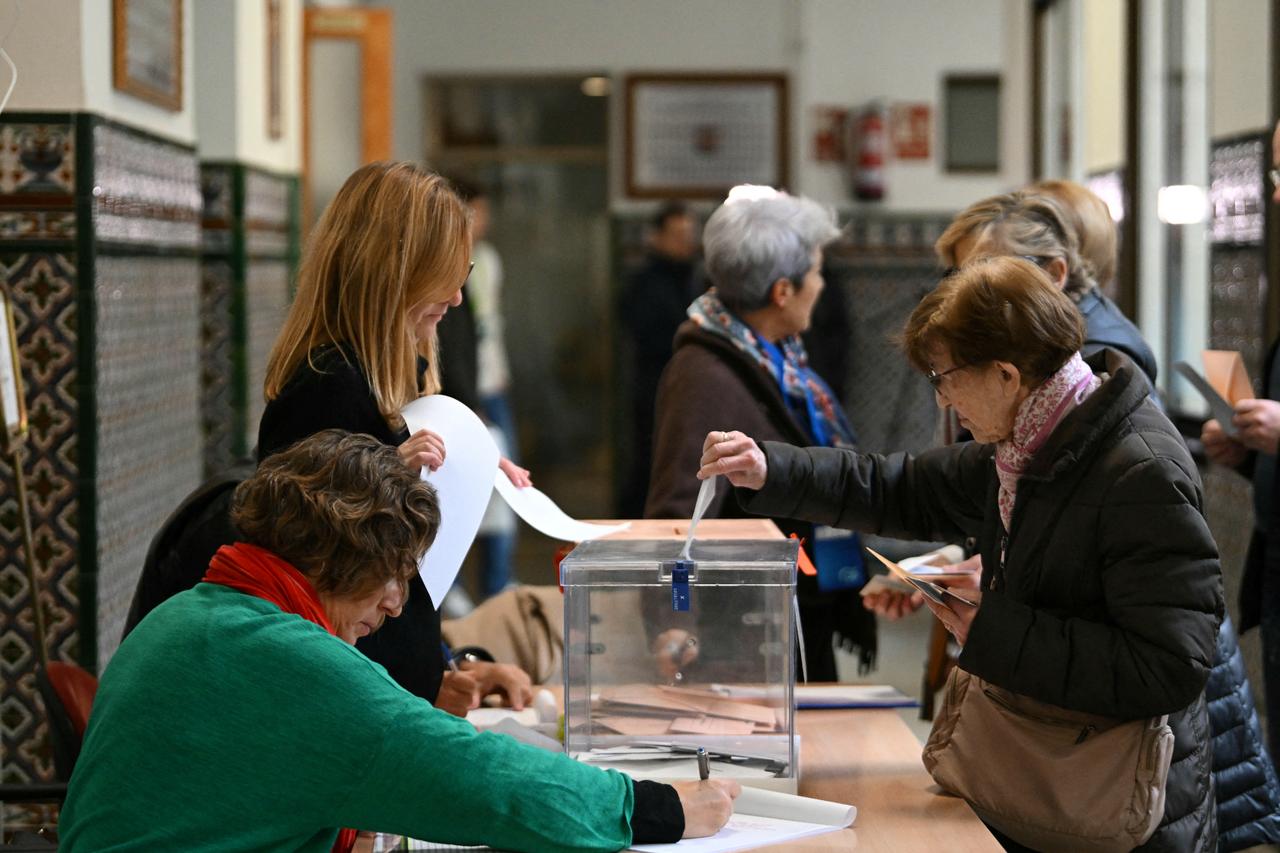
More than 38 million people were eligible to vote for all 350 seats in the Congress of Deputies and 209 of the 267 Senate seats. The government reported turnout of 68 percent as of 6 p.m., the highest for that point in the day in any election since democracy was restored in the 1970s. High turnout has historically favored the Spanish left, but analysts say it is unclear whether that will hold this year.
Long lines formed outside polling stations in Madrid. Some voters described the stakes in sweeping terms. Former prime minister and People's Party leader Jose Maria Aznar called the vote "existential" days before the election.
Sanchez called the early election in October, seeking to seize the initiative after nationwide protests over a housing crisis. The protests were sparked by the eviction of an 87-year-old woman in Madrid. He said he needed a mandate after parliament rejected decrees meant to address the issue.
Housing is the top concern for Spaniards. A YouGov poll published Oct. 30 found 53 percent named it one of the country's two most pressing problems, followed by immigration at 35 percent. Rents and home prices have risen much faster than salaries.
The Bank of Spain estimates the country is short 755,000 homes, as foreign investors, immigrants and tourists have absorbed housing stock while construction slowed because of higher costs and delays in urban planning approvals.
Immigration has been a fault line. Sanchez has welcomed about four million immigrants since taking office in 2018, and the Bank of Spain says they accounted for half of the country's economic growth from 2022 to 2025. Some economists argue the influx has added taxpayers without making Spain more productive, and real salaries have been broadly stagnant. Vox has promised to deport all undocumented migrants and give Spanish citizens priority access to welfare benefits.
Corruption has also weighed on the government. Jose Luis Abalos, Sanchez's former transport minister, was sentenced to 24 years in prison in June. Last month's train crash, which killed 69 people, led to the resignation of Transport Minister Oscar Puente. The Socialists have also suffered setbacks in several regional elections this year.
Many analysts have described the campaign as among the most polarized since Spain's return to democracy. Sanchez filmed himself in front of Picasso's "Guernica," which depicts scenes from the civil war that brought Franco to power, and warned against a return to Spain's dark past.
People's Party leader Alberto Nunez Feijoo cast doubt on the integrity of mail-in voting. Vox leader Santiago Abascal repeatedly suggested, without evidence, that the left-wing government could steal the election. Abascal has also downplayed the Franco dictatorship and called the current cabinet Spain's worst in 80 years.
Feijoo, a former regional president of Galicia who has spent much of his career in public administration, has described himself as a "predictable politician." His allies portray him as a competent, unflashy leader who can ease tensions and tackle the housing crisis. His critics say he lacks charisma and has yielded to the far right. The right-wing parties offered few detailed policy proposals, instead framing the vote as a referendum on Sanchez.
A government led by the right would likely tighten immigration rules and cut taxes. A stronger Vox could mean more closed doors for immigrants and a focus on cultural battles, while a dominant People's Party would likely prioritize pocketbook issues.
Voters interviewed in Madrid reflected the divide. Antonio Zurita, a Vox voter, said "we have to get rid of Sanchez," citing corruption scandals around the prime minister's circle, the train accidents and high immigration. Cilia Vega, 34, who works in artificial intelligence, said "the fiscal pressure in this country is insane" and accused the government of funding handouts that discourage work.
On the other side, Paloma Llorente, a 30-year-old engineer, said "Pedro Sanchez is the one who can best guarantee my rights." She added that she worried a right-wing government would cut public health care. Ana Miguez, a 47-year-old teacher, voted for the Broad Front, whose support Sanchez would need to form a new government. "I don't want to go back to the past," she said.
Sanchez leads a minority coalition of the Socialists and the left-wing Sumar alliance. He has become a vocal critic of the Trump administration's Middle East policies and of the power of US social media companies.


 Set as preferred source
 Set as preferred source


 1 min read
 1 min read


