Newsletters


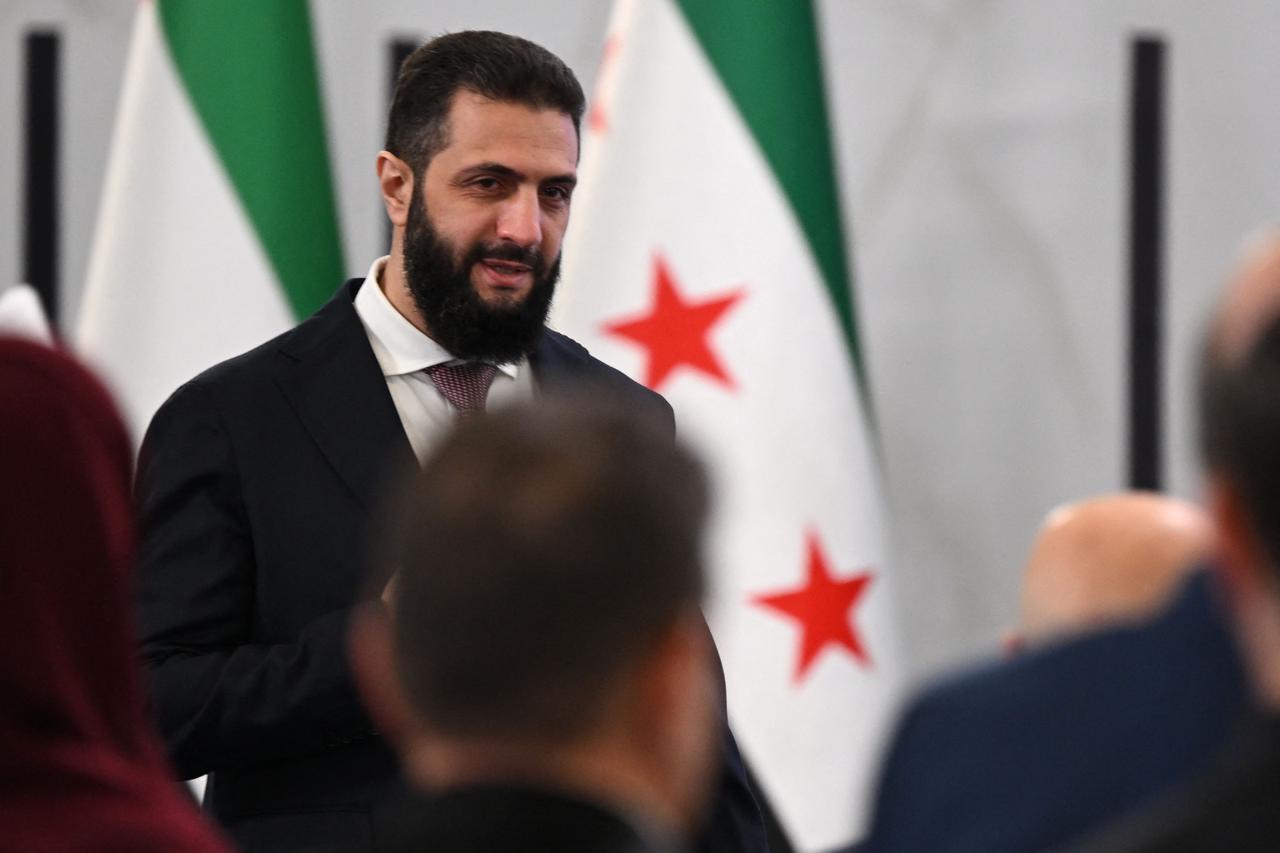


Syrian President Ahmad al-Sharaa said on Monday that Syria is committed to closing the displacement camps by 2027 as part of the country’s recovery efforts, according to remarks delivered to the 79th session of the World Health Assembly, the top decision-making body of the World Health Organization.
Speaking via video link from Damascus, Sharaa said Syria was entering a new phase focused on reconstruction, sustainability and human security.
“I address you today from Damascus at a moment when the world faces challenges that require a shared international will that places human health at the forefront of priorities and lays the foundation for a safer and more just future,” Sharaa said, according to state news agency SANA.
“Our participation in the 79th session confirms that Syria, as it moves confidently along the path of recovery, is playing a central and effective role in shaping sustainable regional and global health security,” he added.
Sharaa said Damascus had made a national commitment to end the camp chapter by 2027.
“Because human stability is at the heart of sustainability, we have made a national commitment to close the chapter of the camps by 2027,” he said.
He described the objective as part of broader climate and public health efforts.
“The main path to protecting people from climate-related repercussions lies in ensuring their return from fragile environments to stability, safe life and human dignity,” Sharaa said.
He argued that the initiative represented “a practical embodiment of the global action plan on climate and health.”
According to field data, roughly 1 million displaced Syrians remain in camps across northern Syria, spread across approximately 1,150 sites, including 801 camps in Idlib and 349 in Aleppo province.
Sharaa said Syria’s reconstruction process was creating conditions for long-term environmental and health stability.
“As your assembly places the close link between climate change and health at the top of its priorities, Syria’s reconstruction process is laying the groundwork for a sustainable environmental and health reality that protects the security of our future generations,” he said.
He also called for stronger international cooperation.
“Syria is here today to strengthen constructive partnerships based on the exchange of expertise and resources to serve human health,” he said.
“The major challenges we faced, and which we are now steadily overcoming, have given our country resilience that makes it a key pillar in protecting global health security.”
Millions of Syrians were displaced internally and externally during the country’s uprising and civil war between 2011 and 2024 under former President Bashar Assad.
Assad fled to Russia in December 2024, ending decades of Baath Party rule. A transitional administration led by Sharaa took office in January 2025.


 Set as preferred source
 Set as preferred source


 1 min read

 1 min read