Newsletters


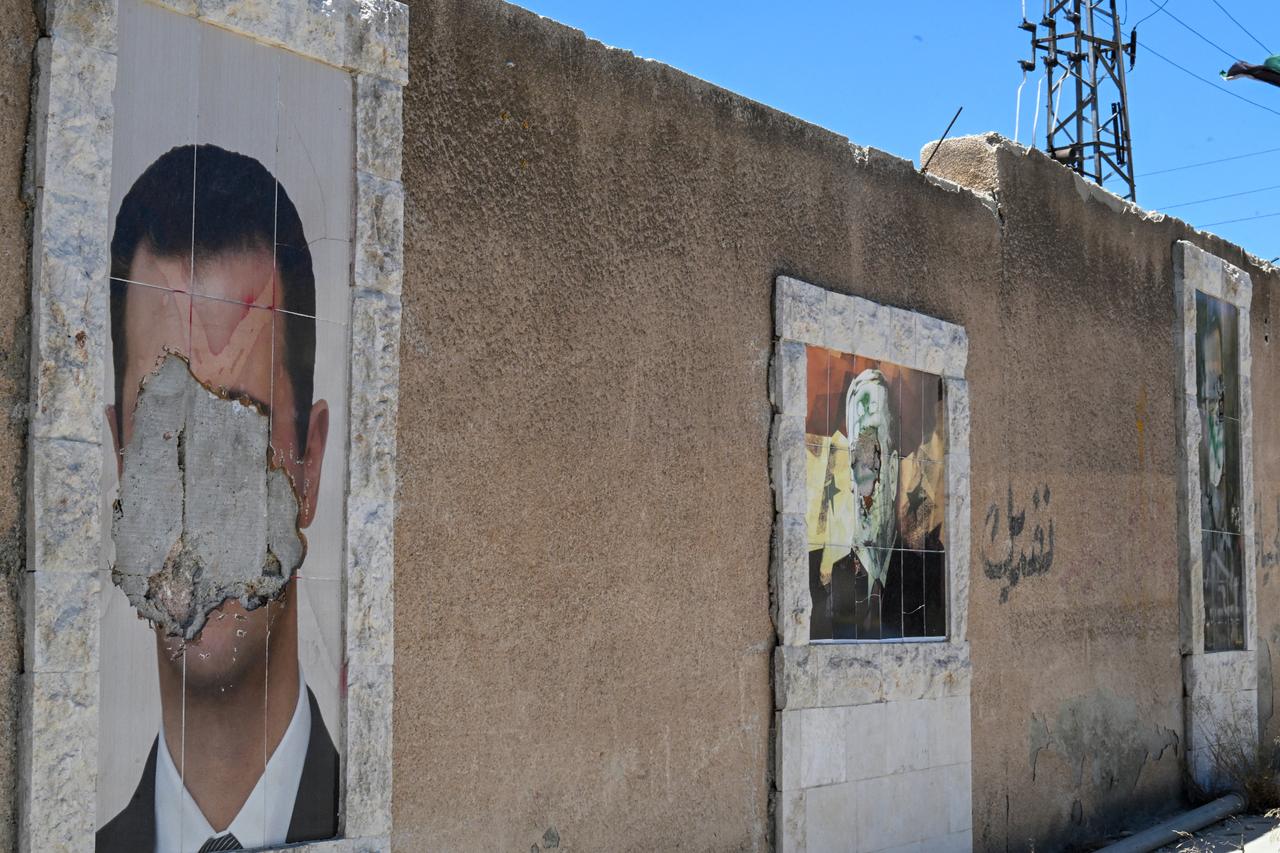


Syria’s new school textbooks show Hatay as part of Türkiye, abandoning the Assad-era claim to the province, according to a report by education watchdog IMPACT-se.
The 2025-2026 textbooks prepared under President Ahmed al-Sharaa’s government also drop terms such as "Ottoman occupation" and "Turkish oppression," presenting Türkiye and the Ottoman Empire more favorably than before, the report said.
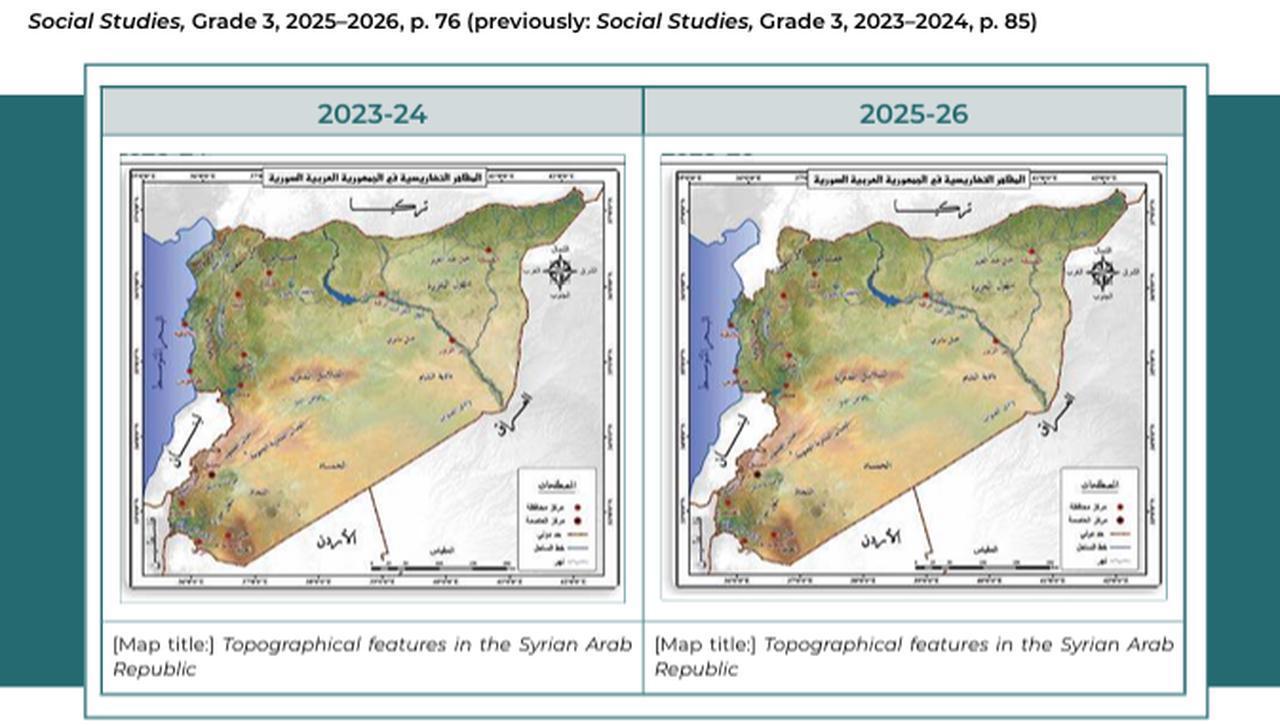
Virtually all maps of Syria in the Grade 3 Social Studies textbook were amended to carve out the Hatay region and merge it with Türkiye, IMPACT-se said. Even cartoon outlines of Syria’s shape were changed.
The report described the map changes as a sign that Syria is moving away from its historical territorial claim to Hatay.
Until recently, Syrian textbooks depicted the region on most maps as Syrian territory, according to IMPACT-se. The modifications are widespread and show "a clear systemic effort," though a small number of maps remain unchanged, it said.
The Grade 9 History textbook previously described the region’s 1939 transfer to Türkiye as a "conspiracy" and accused France of rigging the referendum that preceded it. The current edition removes the section entirely, the report said.
Historical maps of Mandatory Syria now show the region as part of Türkiye as early as the 1920s, IMPACT-se said, describing it as a position "that may improve relations" with Ankara.

Assad-era textbooks portrayed Ottoman rule as an entirely negative period. The new History textbooks regularly use the more neutral "Ottoman rule” instead of “occupation," reserving the latter mostly for European colonial powers, the U.S. and Israel, the report said.
A Grade 8 lesson once titled "Fragmentation of the Arab Motherland paves the way for Ottoman occupation" now reads "Ottoman rule," according to the report.
Content describing the empire’s promotion of Turkish at the expense of Arabic was removed, as was criticism of Sultan Abdul Hamid II as "autocratic."
In the old textbooks, the aim of the war in the East during World War I was described as freeing peoples "from the oppression of the Turks." The new edition says the aim was to "drive the Ottomans out of the region."
IMPACT-se said possible reasons include a desire to mend ties with Türkiye, break with Assad-era Arab nationalism and elevate the last Islamic empire as part of a pan-Islamic reorientation.
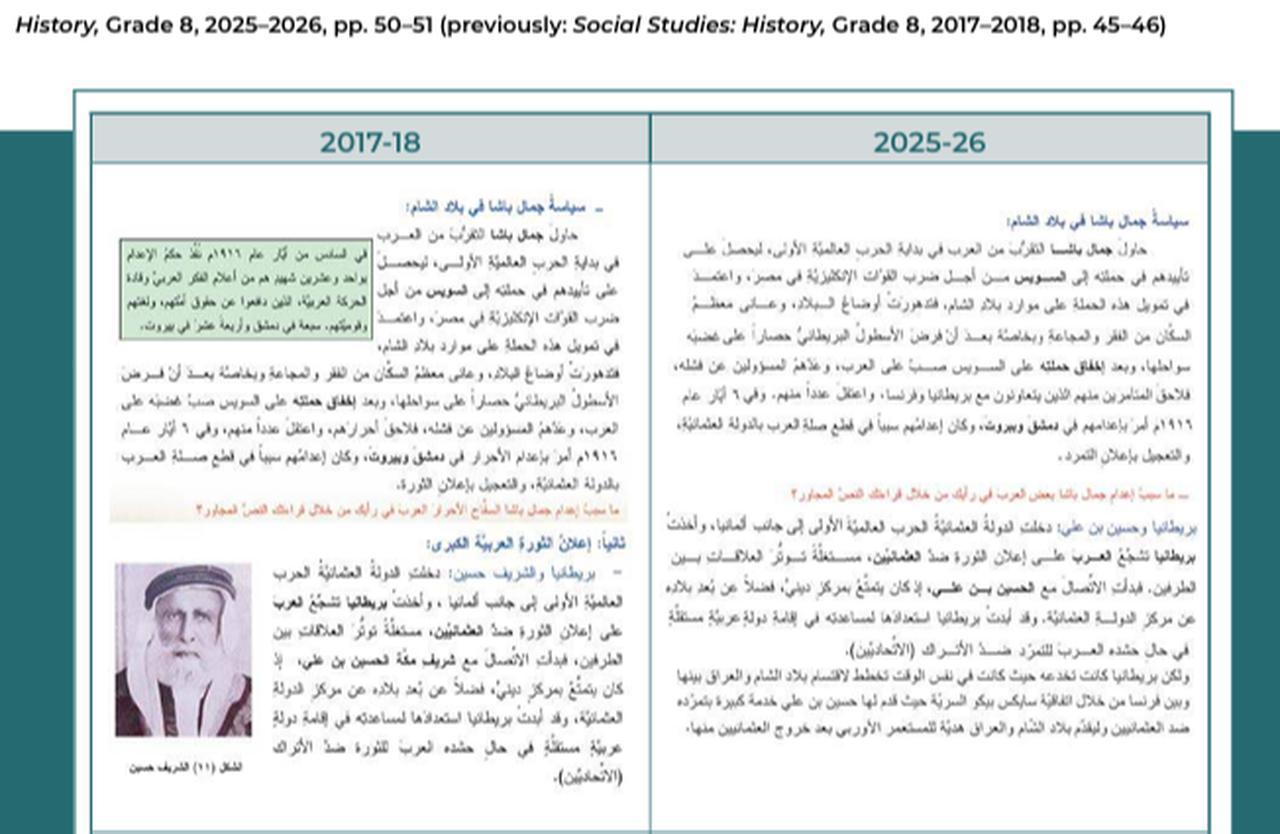
The 2017-2018 textbooks described the 1916-1918 uprising as the "Great Arab Revolt," aimed at freeing Arab lands from "Ottoman occupation." The new edition calls it "Hussein’s 1916 rebellion against the Ottomans," according to the report.
The Assad-era version called Ottoman official Djemal Pasha "the Butcher" for executing Arab liberals in May 1916. The new textbook says he cracked down on “conspirators” collaborating with Britain and France, IMPACT-se said.
The new edition also strips Hussein bin Ali of his title as Sharif of Mecca, removes his portrait and says Britain deceived him, the report said.


 Set as preferred source
 Set as preferred source



 1 min read