Newsletters


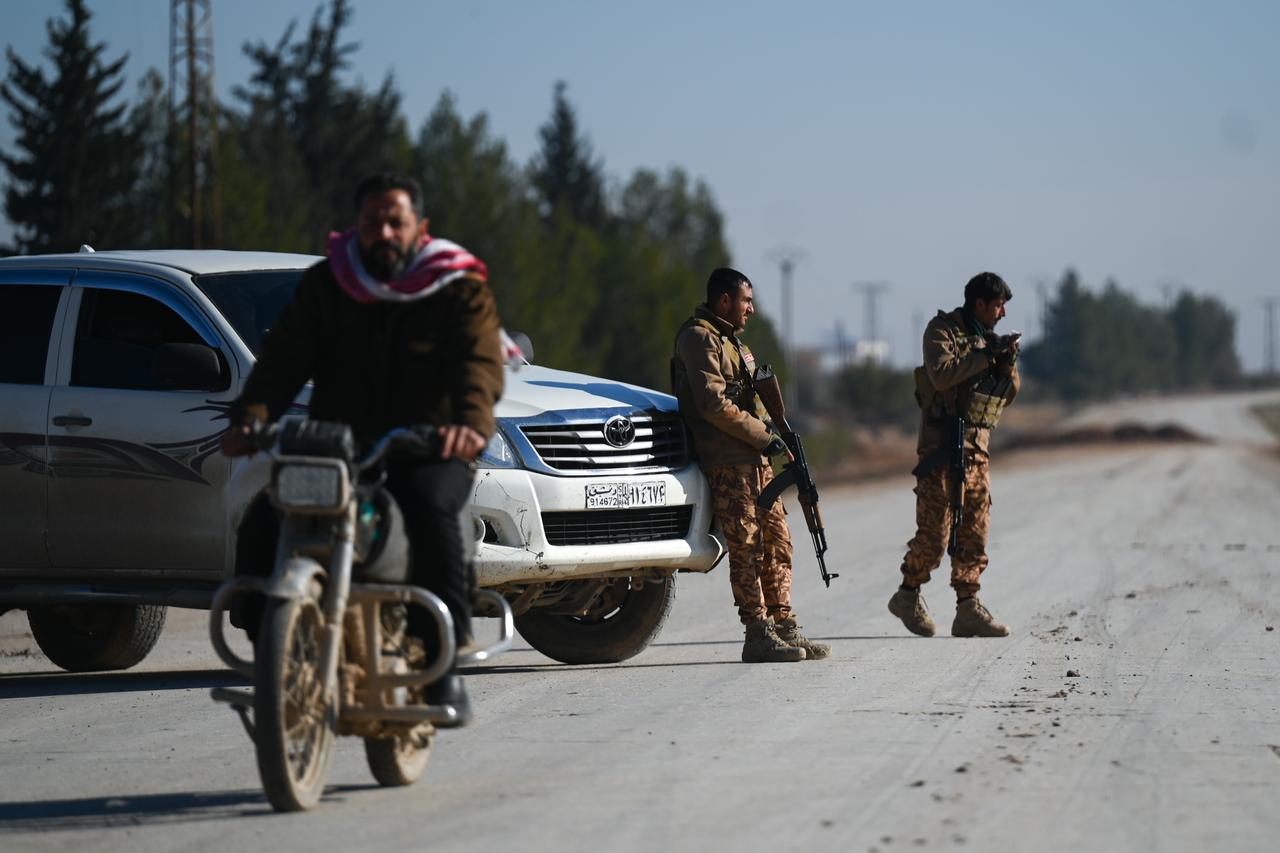


The Turkish Defense Ministry said Thursday that it does not view Syria’s security as separate from its own and reiterated that it would support Syria’s fight against terrorist organizations upon request, in line with the principle of “one state, one army.”
“We would like to reiterate that we do not view Syria’s security as separate from our own, and that, in line with the principle of ‘one state, one army,’ we will provide support upon request to Syria’s fight against terrorist organizations on the basis of the country’s unity and territorial integrity,” the ministry said at its weekly press briefing.
The ministry said the Syrian government had successfully carried out a counterterrorism operation in Aleppo aimed at restoring public order and ensuring civilian safety, adding that the operation was conducted with respect for Syria’s unity and the equality of all ethnic groups.
The statement came as Metin Tokel, commander of Türkiye’s Land Forces, carried out inspections along the Syrian border amid preparations by the Syrian army for a possible operation against the YPG.
In a post on the ministry’s official X account, it said Tokel inspected the 6th Corps Command Main Command Post in Cildir Obasi, Kilis, and the Soylu Base Area in Karkamis, Gaziantep.
Last week, the ministry said an operation carried out in Aleppo against the SDF was conducted entirely by the Syrian army, adding that Türkiye was closely monitoring developments.
“Syria’s security is our security,” the ministry said at the time.
The SDF is dominated by the terrorist group YPG, which Türkiye considers the Syrian branch of the terrorist PKK.
Syrian President Ahmad al-Sharaa said the state had not demanded the dismantling of the SDF but had instead called for its integration into state institutions, according to excerpts from a televised interview aired Wednesday by Al-Ikhbariya.
Sharaa said trust could not be built overnight, citing what he described as the group’s conduct during Syria’s uprising. He said the SDF had maintained contacts with the former government during much of the conflict and did not play an organizational role in the uprising, despite individual Kurdish participation.
He said SDF advances into areas including Deir ez-Zor and parts of Aleppo during the liberation phase hindered the broader process, adding that the group declined to participate in the national conference, government formation and constitutional declaration, despite not being excluded.
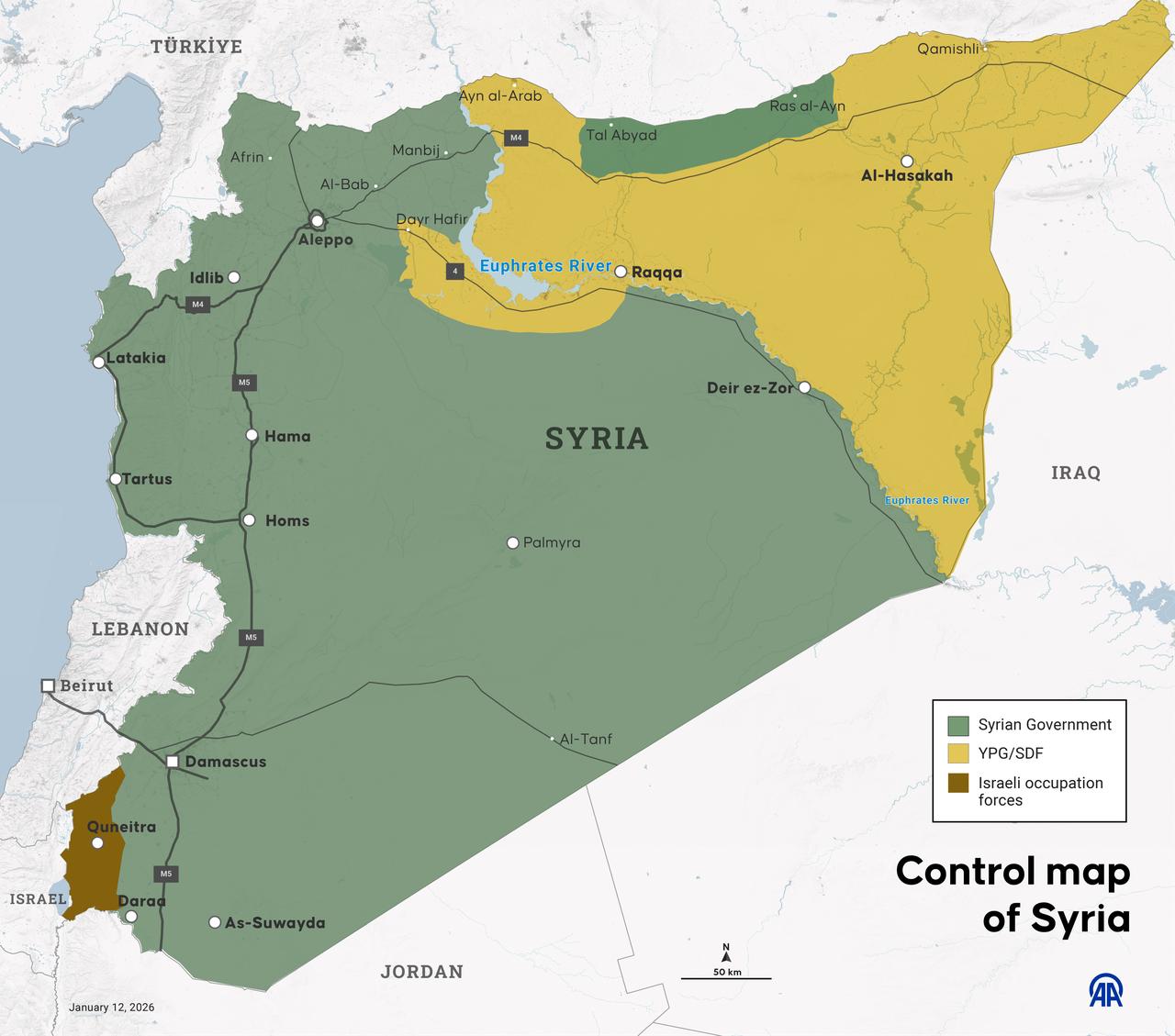

Sharaa said the state granted the SDF nine months to build trust and accused the group of failing to comply with an April 1, 2025 agreement requiring its withdrawal from Sheikh Maqsoud, leaving only limited Interior Ministry security personnel to manage services due to the area’s social composition.
Although the SDF announced at the time that its withdrawal had been completed, clashes resumed about two months later, he said, with shelling targeting residential neighborhoods including Sheikh Maqsoud, Ashrafieh and Bani Zaid.
He said shells struck markets and civilian districts, undermining security across Aleppo and damaging efforts to promote the city as an economic hub.
“The state cannot attract global investment while shells are fired from a residential neighborhood every few months,” Sharaa said, stressing that Aleppo’s stability remains a national priority.
In March 2025, the Syrian presidency announced an agreement to integrate the SDF into state institutions, reaffirming Syria’s territorial unity. A separate April 2025 agreement on Sheikh Maqsoud and Ashrafieh kept both neighborhoods administratively part of Aleppo while banning armed presence and requiring SDF forces to withdraw east of the Euphrates.
Syrian authorities said the SDF has failed to meet the terms of both agreements.
Syrian media have reported that the army has recently deployed additional reinforcements to eastern Aleppo amid rising tensions with the YPG/SDF and remnants of the former regime.
The Syrian government has intensified security efforts nationwide since the ouster of Bashar al-Assad in December 2024, ending his 24-year rule.


 Set as preferred source
 Set as preferred source


 1 min read
 1 min read