Newsletters


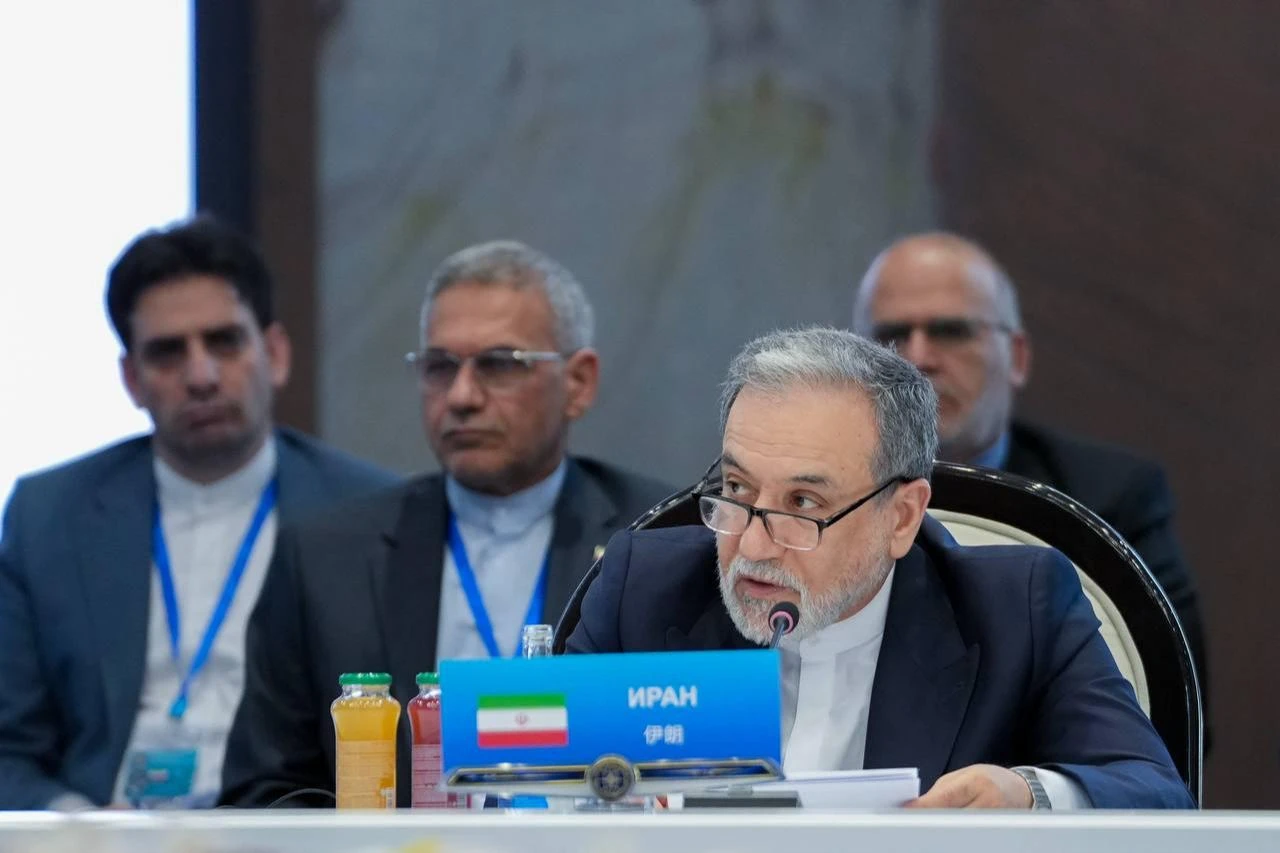
Any country assisting U.S. attacks on Iran will bear international responsibility, Iranian Foreign Minister Abbas Araghchi warned Friday. Addressing the Shanghai Cooperation Organization, he also detailed Iran's account of the war's opening day and criticized what he described as continued U.S. violations of the June ceasefire agreement.
"Any participation, cooperation or assistance in committing aggression against Iran will create international responsibility for the relevant parties," Araghchi said.
He said Iran "reserves its right to take all necessary measures within the framework of self-defense" under international law, and said Iran would treat the source of any aggression against it as a legitimate target for its armed forces' defensive actions.
In his address, Araghchi described Feb. 28, 2026, as one of the bitterest days in Iranian history, saying the country's supreme leader was killed alongside family members while in his office, during a joint U.S.-Israeli attack.
He said a school in the city of Minab was struck the same day, saying "168 students, school staff and their family members were massacred" in what he called a criminal act.
Araghchi also stated that a sports facility in Lamerd, Fars province, was hit the same day. He noted that technical evidence and munition fragments prove the attack utilized weapons "whose use is contrary to the fundamental principles of international humanitarian law," and that this was the first time such weaponry targeted civilians—specifically, young women participating in athletic activities.
Araghchi argued that when attacks on educational, medical, and peaceful nuclear facilities under International Atomic Energy Agency (IAEA) oversight go unanswered by the international community, no country can be confident it will not become a similar target in the future.
He said the attacks came while Iran had chosen the path of diplomacy and negotiations were ongoing, arguing that responding to diplomacy with military attack undermines trust in diplomatic processes generally.

Araghchi said that despite only weeks having passed since the signing of the Islamabad memorandum to end the war, the U.S. had again shown it does not honor its commitments, citing what he described as attacks on transportation infrastructure, drinking water facilities, fishing boats, local commercial vessels, meteorological centers and other civilian infrastructure as clear violations of international and humanitarian law.
He said direct U.S. intervention in Strait of Hormuz security arrangements and the renewed imposition of what he called a naval blockade had endangered one of the world's most important strategic waterways and disrupted normal international commercial shipping.
Iran's top diplomat also argued that Gulf and Hormuz security can be guaranteed only through cooperation among regional states rather than the presence of non-regional forces.
Araghchi condemned the continued Israeli violations of Lebanese sovereignty and territorial integrity, as well as what he called U.S. and Israeli violations of the Islamabad memorandum's terms.
He also addressed the situation in Gaza, calling the continuation of occupation, civilian casualties, infrastructure destruction and deprivation of basic rights "one of the deepest crises of human conscience," and stressed an immediate end to military actions against civilians, full lifting of the blockade, unimpeded humanitarian access, opposition to forced displacement of Palestinians, and support for Palestinian self-determination.
On Afghanistan, Araghchi said stability there remains a shared regional security and development priority, calling for continued cooperation against terrorism, extremism, transnational organized crime, drug trafficking and irregular migration through SCO mechanisms.
He said Iran supports any initiative leading to a secure, stable, developed Afghanistan free of terrorism with an inclusive government, and specifically called for an end to tensions between Afghanistan and Pakistan.


 Set as preferred source
 Set as preferred source


 1 min read


 1 min read