Newsletters





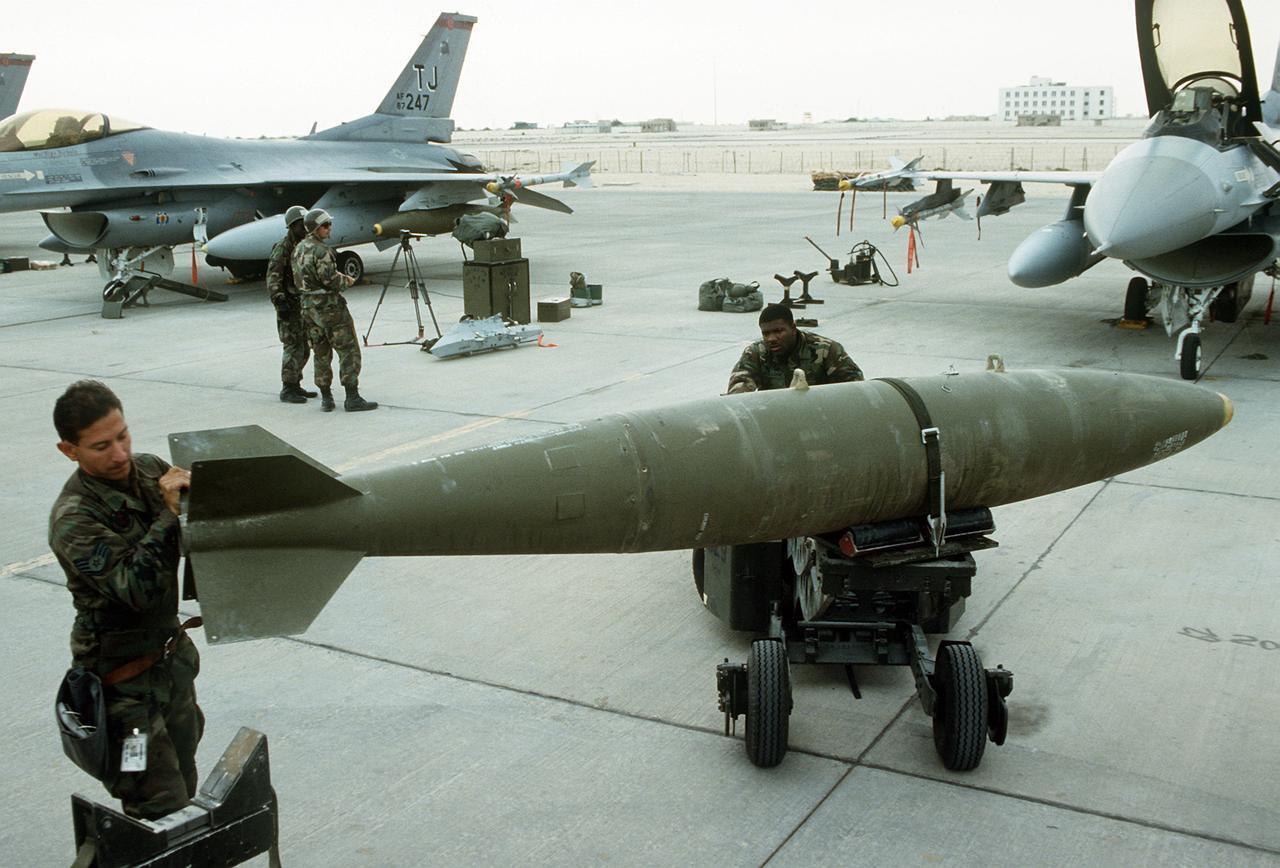
American pilots over Iraq in 1991 called it the hammer. The Mark 84 was the bomb you sent when you wanted a building gone, not damaged, and the nickname stuck through three decades of wars because the bomb never really changed.
It still weighs 2,000 pounds. It still buries 429 kilograms of Tritonal inside a steel casing built by one company, at one plant, in Garland, Texas.
On Tuesday, the Washington Post reported that the Trump administration is preparing to send Israel 40,000 of them, alongside 20,000 BLU-117 and 20,000 I-2000 penetrator warheads built to punch through bunkers before they detonate.
It started with backlash from think-tank experts and analysts, grew as social media influencers began asking questions, and exploded into online outrage once popular media figure Tucker Carlson called for resistance, all in under two hours.
Sixty thousand individual munitions, worth $2.8 billion, paid for by American taxpayers through the Foreign Military Financing program.
To put the number somewhere a reader can actually picture it: an F-16 can carry two Mark 84s on a mission. Sixty thousand bombs is roughly 20,000 fully loaded sorties worth of ordnance, more than the combined strike output of a medium-sized air force over a full year of war.


Türkiye operates NATO's second-largest air force, a mixed fleet of F-16s and modernized F-4E 2020s, and is one of the few countries in the world that builds its own precision-guidance kits, the HGK and NEB families, for 2,000-pound-class bombs through Roketsan and TUBITAK SAGE, a.k.a. Turkish DARPA.
Even so, credible estimates of Türkiye's total peacetime stock of Mark 84-class ordnance run somewhere between 3,000 and 6,000 units.
Widen the aperture to the rest of the region, Saudi Arabia, Egypt, the UAE, Jordan, Qatar, and the combined heavy-bomb inventory of every air force in the Middle East still tops out somewhere around 15,000 to 20,000, by the same class of estimate.
In short, this single transfer would give Israel several times more "dumb bombs" than the rest of the entire region combined has ever held.
Put those figures next to Washington's proposed transfer and the comparison stops being interesting and starts being strange. One country would receive more 2,000-pound bombs in a single package than the rest of the Middle East holds in its collective inventory, combined, several times over.
Garland, Texas, is the U.S. government's sole authorized source for Mark 80-series bomb bodies, a fact that alone explains why a deal this size takes years to fill. Outside of major wartime surges, total U.S. production sits at roughly 10,000 to 15,000 MK-84 casings per year, meaning a single order of this scale effectively eats up multiple years of full-capacity American output.
The reaction has scrambled the usual partisan lines. Tucker Carlson ran the numbers against history and did not like what he found: he calculated the shipment's total explosive yield at more than 13 times the Allied bombing of Berlin, 25 times the Tokyo firebombing, and over three times Hiroshima.
"There is no precedent for what the Trump administration is doing," he told his audience in a post on X, arguing that neither Gaza nor southern Lebanon presents anything resembling a conflict that requires bombs built to level city blocks.
At The American Conservative, senior editor Andrew Day has spent the better part of the past year chronicling what he sees as a widening gap between the administration's rhetoric on restraint and its actual conduct toward Israel, including his own public skepticism about how transparent Israel has been with Washington about its own arsenal.
He posted, "THIS is radical and unacceptable."
His magazine's coverage sits at the center of a broader rift on the right over whether unconditional backing of Israel still serves American interests, a rift that predates this sale and will outlast it.
On the other side of the aisle, the person best positioned to actually slow this down is Senator Jeanne Shaheen, ranking member of the Senate Foreign Relations Committee, one of the panels informally notified of the package according to the reports.
Shaheen voted last year to block an earlier weapons transfer, and in a recent interview she was blunt about her frustration: "I share the frustration with the indiscriminate bombing that we're seeing from Israel," she said.
Her committee's informal review is one of the only points in the process where a sale this size could, in theory, be slowed. In practice, past resolutions to block similar packages have failed on the Senate floor, and there is no obvious reason this one ends differently.
Call it a sale and the transaction sounds like ordinary commerce, one government buying weapons from another. It isn't.
Under Foreign Military Financing, Congress appropriates the money, the executive branch transfers it to Israel, and Israel uses it to buy bombs from American manufacturers, General Dynamics chief among them.
The dollars never really leave the country; they move from the Treasury to a defense contractor's balance sheet, with Israel's government serving as the pass-through and American taxpayers footing the entire bill.
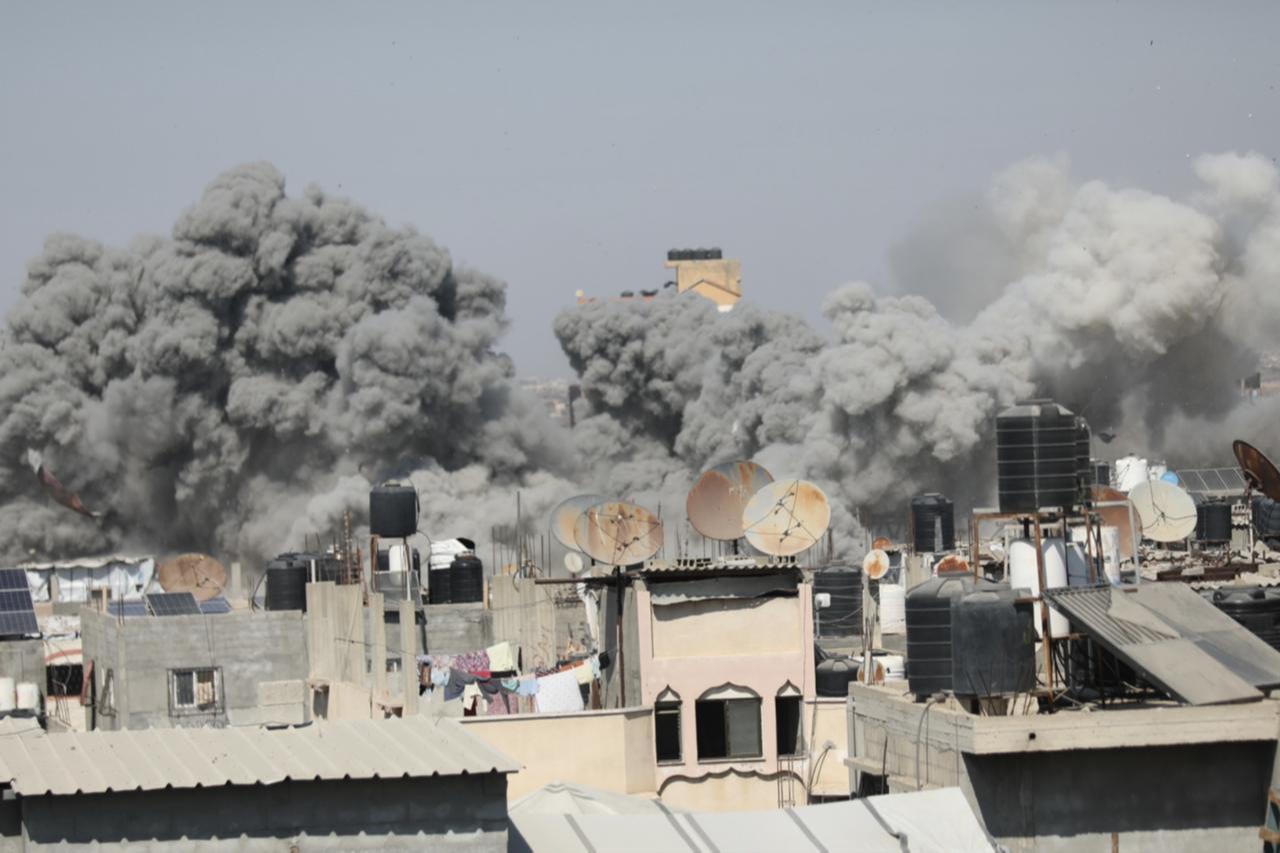
The bombs themselves have a track record that makes the framing harder to sit with. The Mark 84 was the only munition Joe Biden ever suspended from delivery to Israel, a hold imposed in 2024 after mounting civilian casualties in Rafah.
Trump lifted it within weeks of returning to office. The same year in September, Israeli aircraft dropped three Mark 84s on a tent camp in Al Mawasi, a strip of coastline the Israeli military had itself designated a humanitarian zone.
The Euro-Mediterranean Human Rights Monitor documented craters 9 meters deep where the bombs landed while people slept. At least 40 were killed, more than 60 injured, and families buried under a shelter they had been told was safe. The bombs that did that were smaller Mark 84s than the ones now heading their way in bulk.
Meanwhile, social media accounts that are in favor of the package are discussing that Carlson's numbers are inflated and that an MK-84 doesn't actually vaporize human bodies within a 100-foot radius, but rather a smaller area.


 Set as preferred source
 Set as preferred source



 2 min read