Newsletters


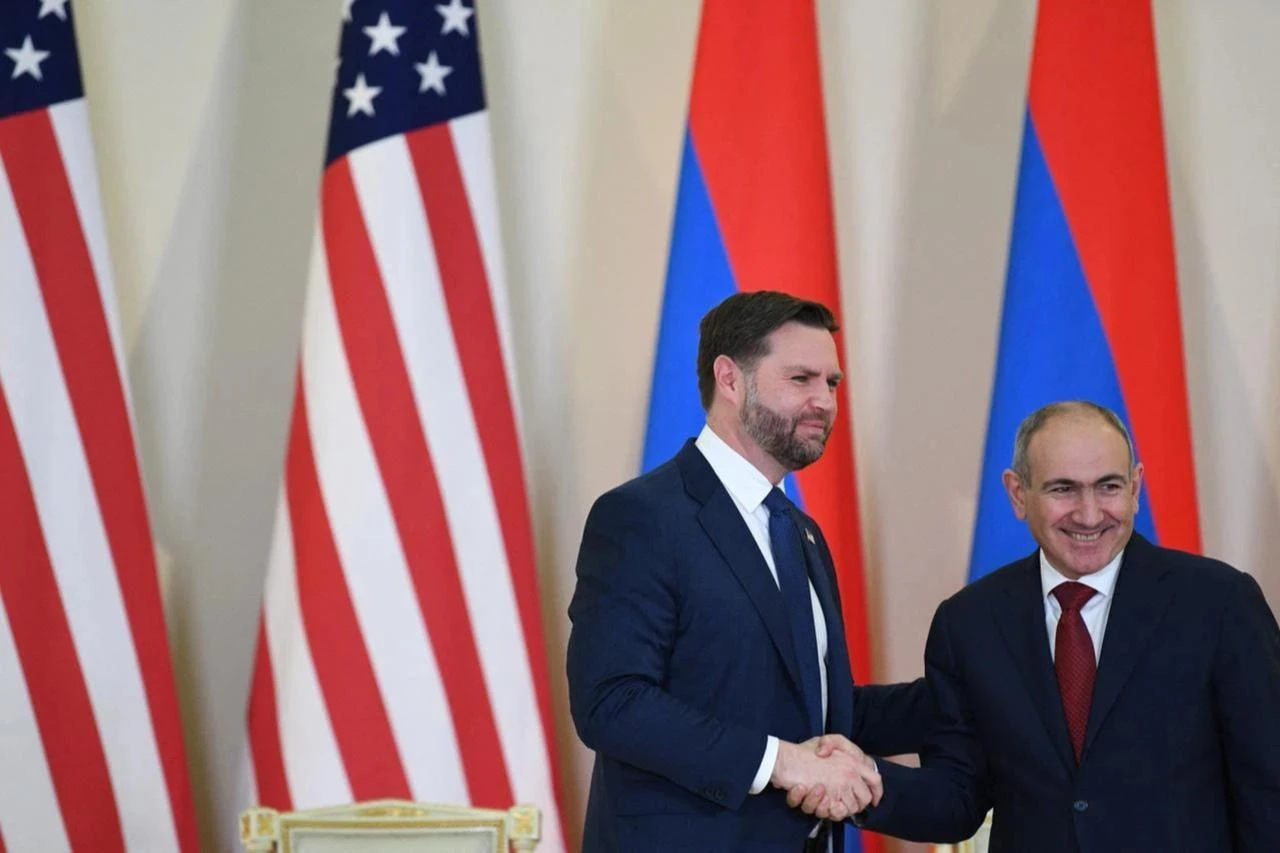


Ask most Americans where Armenia is, and depending on which part of the country you're in, you're just as likely to hear "Los Angeles" instead of "South Caucasus." That answer wouldn't be entirely wrong—roughly a quarter of a million Armenians call the West Coast city home, one of the largest diaspora communities anywhere outside Armenia itself.
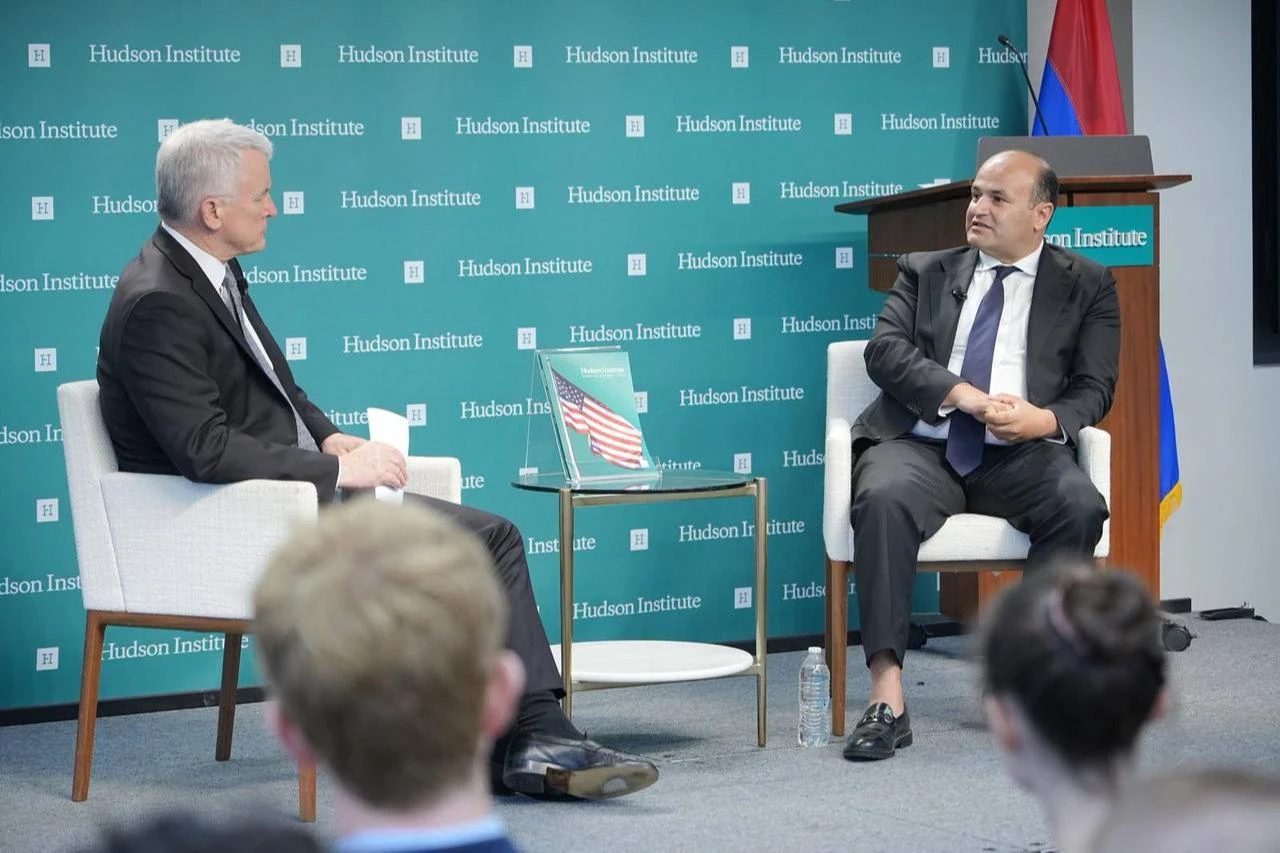
But this week, Armenia's ambassador to the United States, Narek Mkrtchyan, sat down with Michael Doran at the Hudson Institute for a conversation on U.S.-Armenia relations—much of it centered on what the ambassador called the "real Armenia."
That phrase isn't a geography lesson, and it doesn't point to some second, imaginary Armenia hiding elsewhere. It refers to the governing ideology now in power in Yerevan, and it matters for two reasons: it explains the shape of Armenia's new relationship with Washington, and it signals where the country is headed with its neighbors.

The "Real Armenia" ideology, associated with Prime Minister Nikol Pashinyan, prioritizes the country's internationally recognized borders and state institutions over what Mkrtchyan called "historical or utopian aspirations."
This approach is central to the current administration's vision for national development and regional stability.
Since the 2018 Velvet Revolution, Yerevan has pursued diversification in both foreign and economic policy, without breaking from Moscow but building parallel ties to transatlantic partners: civil nuclear energy, semiconductors, artificial intelligence, and now a comprehensive strategic partnership with Washington.
This includes a new "comprehensive strategic partnership" with the U.S., evidenced by cooperation in fields like civil nuclear energy, semiconductors, and artificial intelligence, notably the establishment of a major AI factory in Armenia.
Pashinyan didn't announce this shift from a podium. He toured the country, village by village, making the case directly to citizens rather than to the diaspora abroad. Mkrtchyan described it as a deliberate choice: "he should start that historic conversation with the fellow Armenians." The transformation is significant enough that officials in Yerevan sometimes call it "the fourth republic of Armenia."
Diplomats will frame it however they like, but the pivot from "historical" to "real" Armenia followed defeat, not epiphany. The 2020 war and the loss of Nagorno-Karabakh forced Yerevan to abandon a foreign policy built on unresolved territorial claims, and build a new one around the borders it actually controls.
Yet not everyone in Yerevan is buying pragmatism. The Armenian diaspora, the Apostolic Church, and opposition parties have accused the government of trading national memory for a peace signed under duress, and of compromising identity for a treaty Baku effectively dictated.
The normalization process with Azerbaijan and Türkiye rests on a slogan Mkrtchyan repeated more than once: "there is no prosperity without peace." The underlying initiative, Crossroads of Peace, aims to turn Armenia from a battlefield into a transit hub for trade and communication between Central Asia, the South Caucasus, and Europe.
What makes the process unusual is who's missing from it. Both Pashinyan and Azerbaijani President Ilham Aliyev chose direct, bilateral negotiations over international mediation, holding rounds in Moscow, Brussels, and Washington on a rotating basis, culminating in the Washington Declaration of August 2025, co-signed at the White House and witnessed by President Trump.
Both governments have since appointed special envoys to negotiate normalization and the reopening of the Türkiye-Armenia border, a process Mkrtchyan says continues alongside, not instead of, the Azerbaijan track.
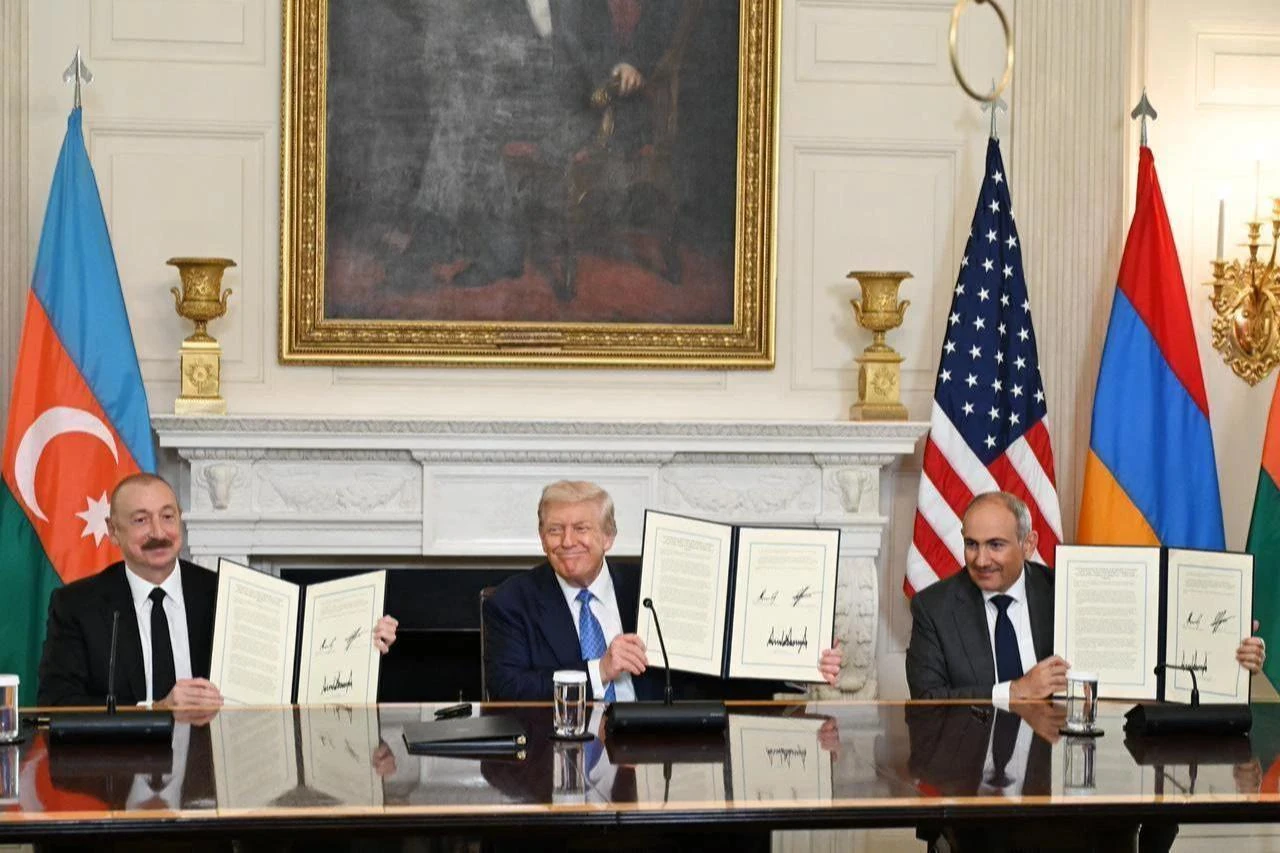
TRIP, the Trump Route for International Peace and Prosperity, is the bilateral vehicle carrying most of this forward. It's a connectivity corridor linking mainland Azerbaijan to its Nakhchivan exclave through Armenian territory, framed by Yerevan as part of a wider supply chain running from Central Asia through the South Caucasus to Europe.
The commitment is built to outlast any single administration. As Mkrtchyan put it, the TRIP Development Company, the joint venture managing the project, "it's for 49 years." Armenia retains jurisdiction over customs, policing, and emergency response along the corridor, with Washington as a partner rather than an operator.
The State Department has since stood up a TRIP Enterprise Fund with $200 million in initial capital, meant to draw private investment into the corridor and adjacent projects across Central Asia.
The same day the Washington Declaration was signed, both governments also signed a memorandum on AI and semiconductor cooperation.
Weeks later, Firebird AI, an Armenian-American company, received U.S. Commerce Department approval to build one of the region's largest AI data centers: a second-phase investment worth $4 billion, running on tens of thousands of Nvidia GPUs. The opening ceremony is scheduled for Aug. 8.
Though the same company has since signed a separate $10 billion agreement with Kazakhstan, also built around Nvidia chips, suggesting Yerevan's deal was a template rather than a one-off.
The partnership extends past chips: a civil nuclear energy agreement with an eye toward small modular reactors, a critical minerals partnership, and an upgraded Strategic Partnership Charter that formally moves the relationship from assistance to something closer to a joint venture.
Asked why American officials were surprised Armenia signed on to semiconductor cooperation at all, Mkrtchyan had a one-line answer, delivered with a straight face: "Armenians have big brains."
That confidence walks on a tightrope next to Armenia's other commitments. The TRIP corridor runs a few meters from the Iranian border, Yerevan remains inside the Russian-led Eurasian Economic Union, and Russian troops still sit on Armenian soil. Mkrtchyan insists none of this is directed against Moscow or Tehran, just diversification. Whether Moscow reads it the same way is a separate question.
Pashinyan's party won reelection in June, campaigning on a promise to "take care of the peace and protect the peace." An election win is proof Armenians will tolerate the "real Armenia" strategy.
Whether it delivers the security and prosperity it promises, while Yerevan keeps one foot in Washington's orbit and the other in Moscow's, is still a bet in progress.


 Set as preferred source
 Set as preferred source


 1 min read
 1 min read