Newsletters


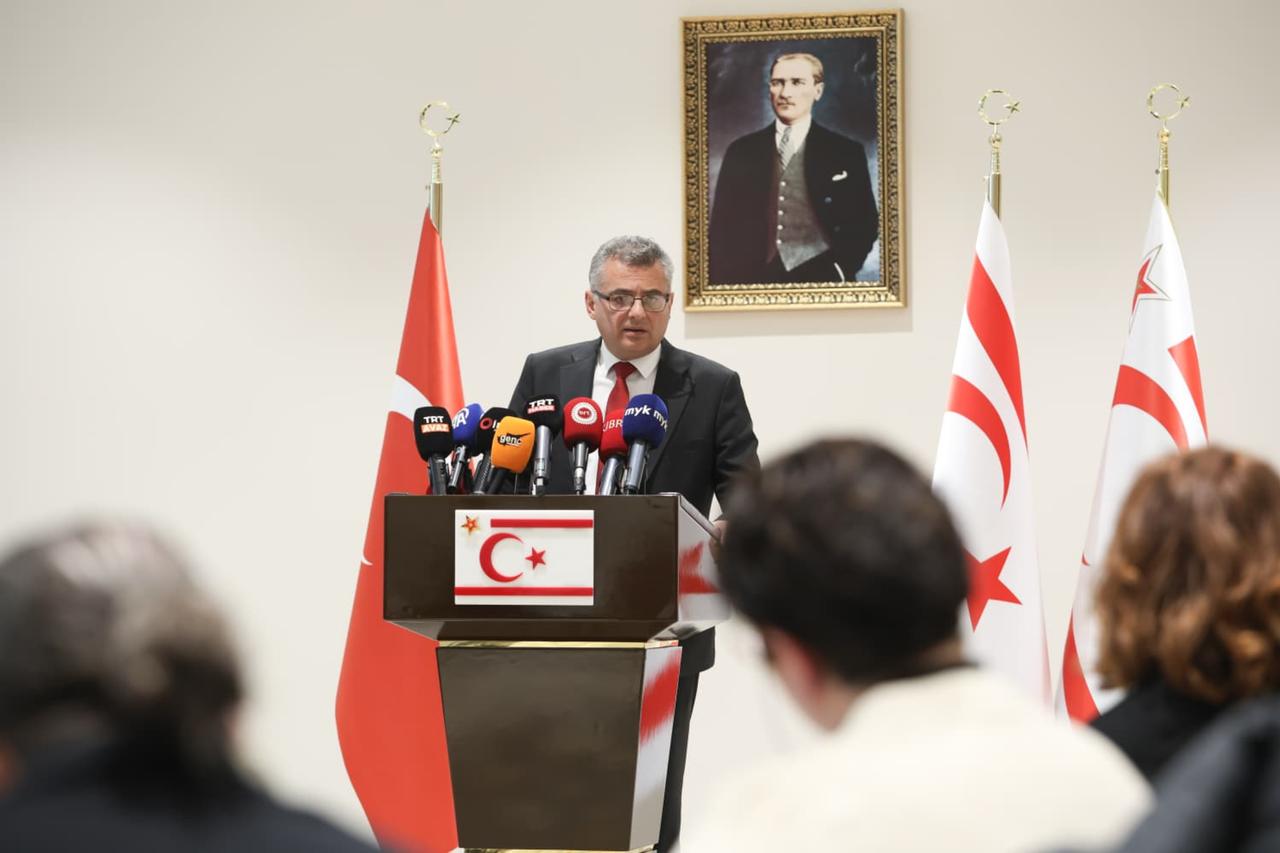


President of the Turkish Republic of Northern Cyprus Tufan Erhurman said no meaningful negotiation process on the Cyprus issue has taken place since talks collapsed in Crans-Montana, Switzerland, in 2017, reiterating that resolving the decades-old dispute remains his ultimate goal.
“We always say this. Our ultimate goal is the resolution of the Cyprus issue,” Erhurman said at a press conference marking his first 100 days in office, according to Turkish Agency Cyprus.
Speaking at the “100 Days at the Presidency” event at the Presidential White Hall, Erhurman outlined diplomatic contacts, working units established under his administration and developments related to the Cyprus issue. The event opened with a video presentation summarizing the first 100 days of his presidency.
Erhurman said it would not be meaningful to discuss confidence-building measures agreed in Geneva at high-level five-plus-one meetings in Geneva or New York, arguing such venues are unsuitable for resolving practical CBMs.
Cyprus has remained divided for decades between Greek Cypriots and Turkish Cypriots despite repeated U.N.-led efforts to reach a comprehensive settlement.
Ethnic attacks in the early 1960s forced Turkish Cypriots into enclaves. In 1974, a Greek Cypriot coup aimed at Greece’s annexation of the island prompted Türkiye’s military intervention as a guarantor power. The TRNC was founded in 1983.
Peace efforts have stalled repeatedly, including the collapse of talks in Crans-Montana in 2017 under the auspices of guarantor countries Türkiye, Greece and the United Kingdom. The Greek Cypriot Administration joined the European Union in 2004, the same year Greek Cypriots rejected a U.N.-backed reunification plan.
Erhurman said the Turkish Cypriot side has consistently supported the five-plus-one format but believes progress on CBMs should first be achieved in Nicosia.
“Whatever the meeting is, we will attend,” he said. “But in our view, the right approach is to achieve certain results in Nicosia on the CBMs already on the table and then go to five plus one.”
He said three meetings were held under U.N. auspices over the past three months, during which the Turkish Cypriot side proposed a four-point methodology and a 10-point CBM package.
Within this framework, Erhurman said he and Greek Cypriot leader Nikos Christodoulides jointly visited the Committee on Missing Persons and discussed issues including a contract on the registration of halloumi, increasing the number of booths at the Metehan crossing to seven, and easing traffic flow at the Bostanci and Derinya crossings.
He said commitments were given to deliver results by the end of January, noting that while the number of booths at Metehan has been increased and road-widening work continues, traffic flow at Bostanci and Derinya has not begun and the halloumi contract has not been signed.
Calling this a “negative development,” Erhurman said a proposal to allow under-14 children from both communities to play friendly sports matches was also rejected.
“Our concern was to bring together children belonging to the two communities in a friendly sporting event,” he said. “We had no political aim with this.”

Erhurman stressed that no meaningful negotiations have taken place since 2017 and said creating an atmosphere conducive to a solution is essential.
He emphasized that political equality and a rotating presidency must be guaranteed under any future structure.
“If there is to be political equality, it must be guaranteed that Turkish Cypriots and Greek Cypriots can preside over the structure in certain periods,” he said.
Citing U.N. Secretary-General Antonio Guterres, Erhurman said the process “must be different this time,” adding that clear rules and procedures should be established before substantive negotiations begin.
He also said some progress has been achieved on only four items so far under the CBM framework.
Erhurman said none of his proposals involve one side “taking” and the other “giving,” but are intended as mutual confidence-building measures.
He said Christodoulides presented a five-point proposal at the latest meeting, including new crossings, but raised Erenkoy, which Erhurman said complicated the compromise.
Acknowledging ongoing disagreements, Erhurman said, “It has only been three months. Certain points of disagreement will emerge. These issues are resolved gradually.”
He also noted that the Greek Cypriot Administration currently holds the EU rotating presidency and that elections are scheduled for May, potentially slowing progress.
On relations with Türkiye, Erhurman said the Cyprus process is conducted in consultation with Turkish officials.
“If you truly want a solution, you know this,” he said. “There are two leaders, but there are also three guarantor countries. You have to produce a solution that all three guarantor countries will say ‘yes’ to.”
Erhurman said he and Presidential Undersecretary Mehmet Dana met ambassadors from countries including the United States, France and the United Kingdom, discussing the Cyprus issue, CBMs and citizenship rights for children of mixed marriages, which he described as a human rights concern.
He cited U.N. reports noting that some cooperation is blocked by fears of TRNC recognition, calling such concerns unfounded. He also referred to U.N. Security Council warnings that the socioeconomic gap between the two communities is widening, risking further division.
“Mr. Guterres is also calling for engagement with us to raise our socioeconomic level and close this gap,” Erhurman said.
 1 min read
Erhurman said 18 working units are active under the presidency, including a public administration monitoring unit that has handled 119 citizen complaints in its first 100 days.
He said the presidency aims to function as a problem-solving mechanism and address long-neglected areas such as relations with Europe, property issues and public diplomacy.
Calling the next five years a “rebirth period” for Turkish Cypriots, Erhurman said efforts would continue to increase international visibility and strengthen institutional and cultural identity.
He said he will hold press conferences every 100 days for transparency and noted that the English version of the presidential website is now live, with a Greek version to follow.
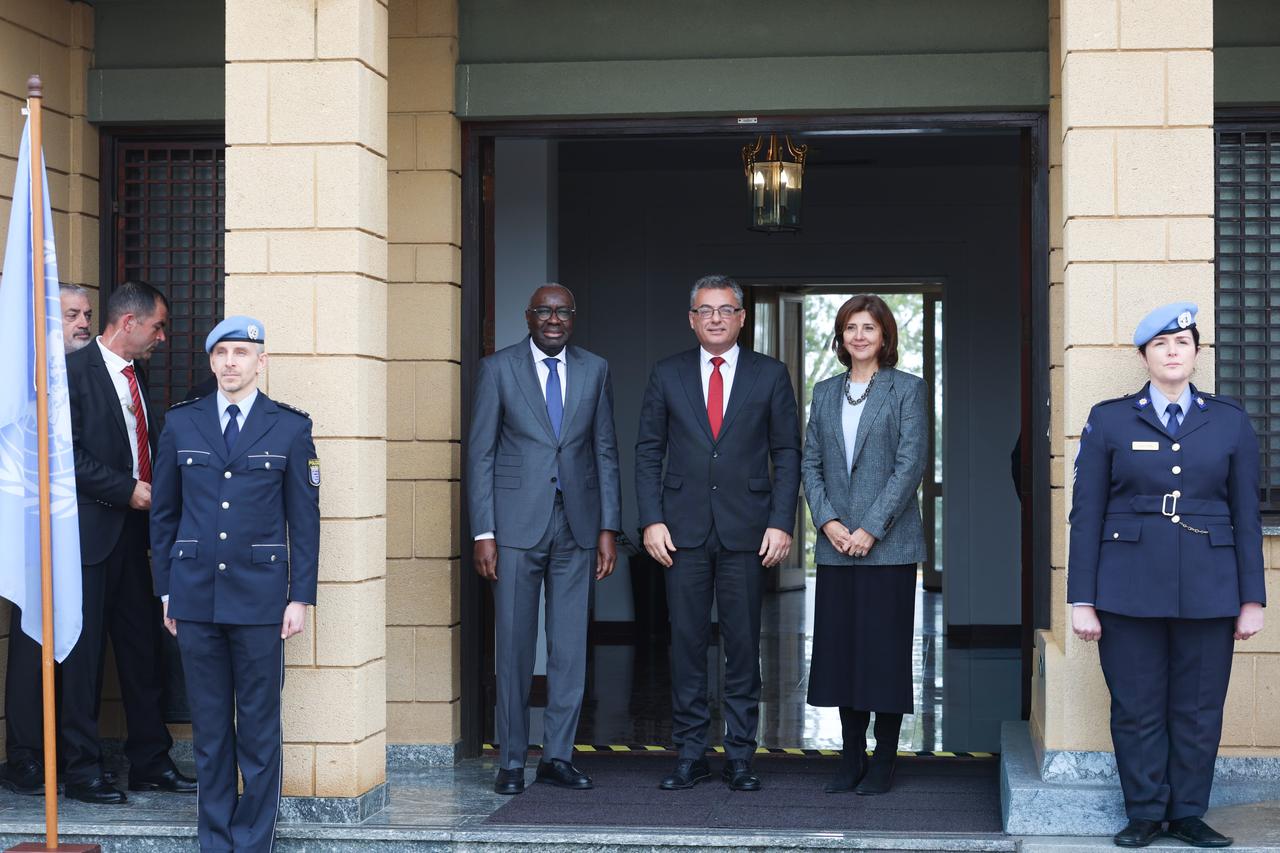
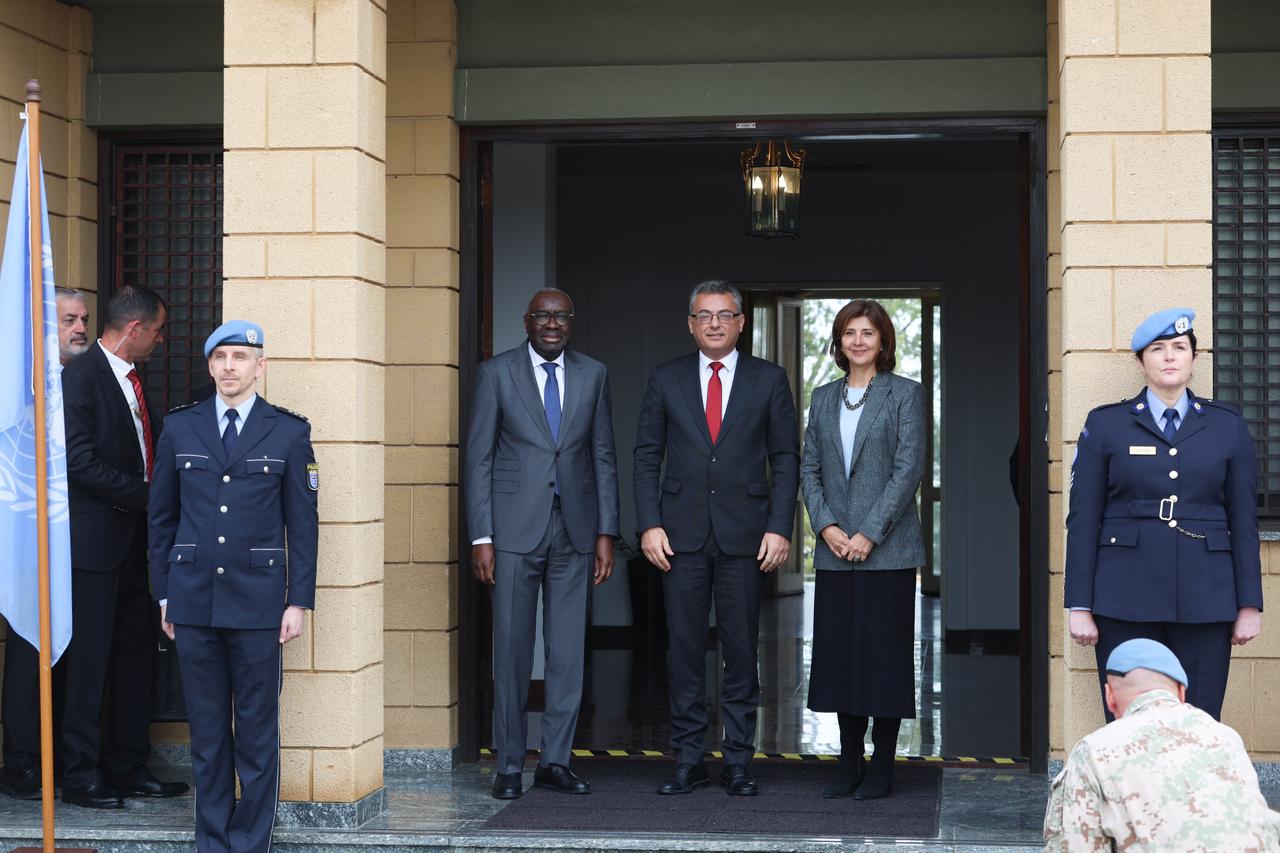
His remarks came after a meeting this week in the U.N.-controlled buffer zone between Erhurman, Christodoulides and U.N. envoy Maria Angela Holguin.
The leaders said they exchanged proposals to pave the way for substantive negotiations and reaffirmed their commitment to advancing CBMs.
“I cannot say that we had a very productive meeting, but I can say it was beneficial,” Erhurman said, stressing the value of dialogue.
Holguin said direct dialogue remains essential and described the process as slow but ongoing, adding that the five-plus-one format would not be abandoned for now.
The five-plus-one model includes the two Cypriot leaders, guarantor powers Türkiye, Greece and the U.K., and the United Nations.


 Set as preferred source
 Set as preferred source


 1 min read