Newsletters


U.S. President Donald Trump gave Saudi Crown Prince Mohammed bin Salman (MBS) his backing for a highly unusual military strike against the Iran-backed Houthis in Yemen, Axios reported, citing two U.S. officials. The confrontation marks the most serious cross-border escalation between Saudi Arabia and the Houthis since 2022.
According to Axios, Saudi Arabia told the U.S. last week it was concerned about the situation with the Houthis and asked for support for possible strikes.
Axios reported that the Saudi ambassador to Washington met with Secretary of State Marco Rubio on Thursday, and that Rubio spoke the following day with Saudi Foreign Minister Prince Faisal bin Farhan. Shortly afterward, on Friday, Trump spoke by phone with the crown prince, according to a U.S. official cited by Axios.
"MBS asked Trump for his backing for military action against the Houthis and received it," the official said.
According to the report, the fact that MBS notified Trump in advance and sought his backing signals Saudi concern about a broader conflict with the Houthis requiring U.S. military and diplomatic support.
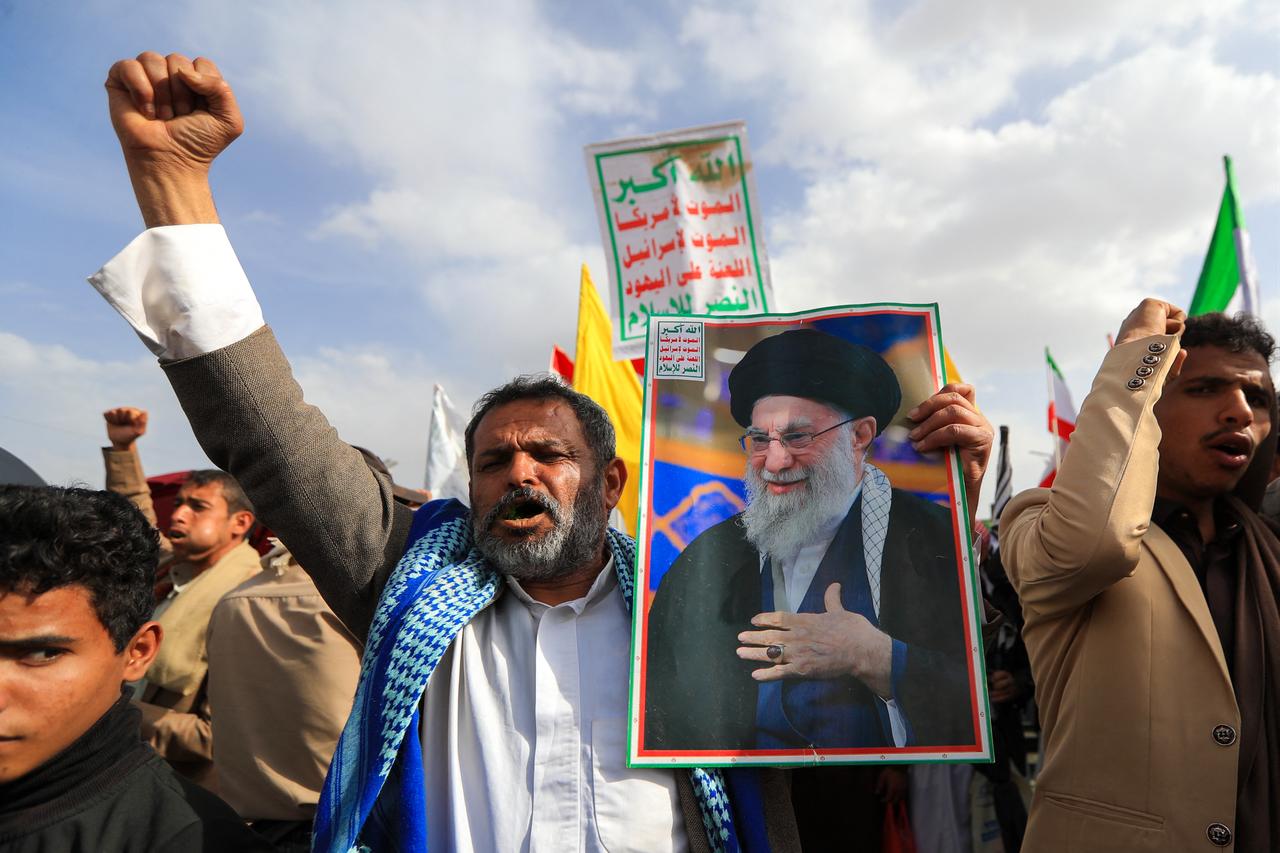
The clash began 10 days earlier when a plane belonging to Iran's Mahan Air landed in Houthi-controlled Sanaa to pick up a delegation of Houthi leaders traveling to the funeral of former Iranian Supreme Leader Ali Khamenei.
Axios described this as a rare occurrence, noting that flights from Iran to Sanaa had not taken place in more than a decade, after Saudi Arabia blocked such flights out of concern that they could be used to transfer weapons or Iranian military advisers to the Houthis.
A U.S. official told Axios: "Mahan Air is the IRGC (Islamic Revolutionary Guard Corps) airline. It was designated and sanctioned by the U.S. government."
The Houthis claimed Saudi fighter jets unsuccessfully tried to prevent the plane from landing, prompting a Houthi threat to attack Saudi airports if it happened again.
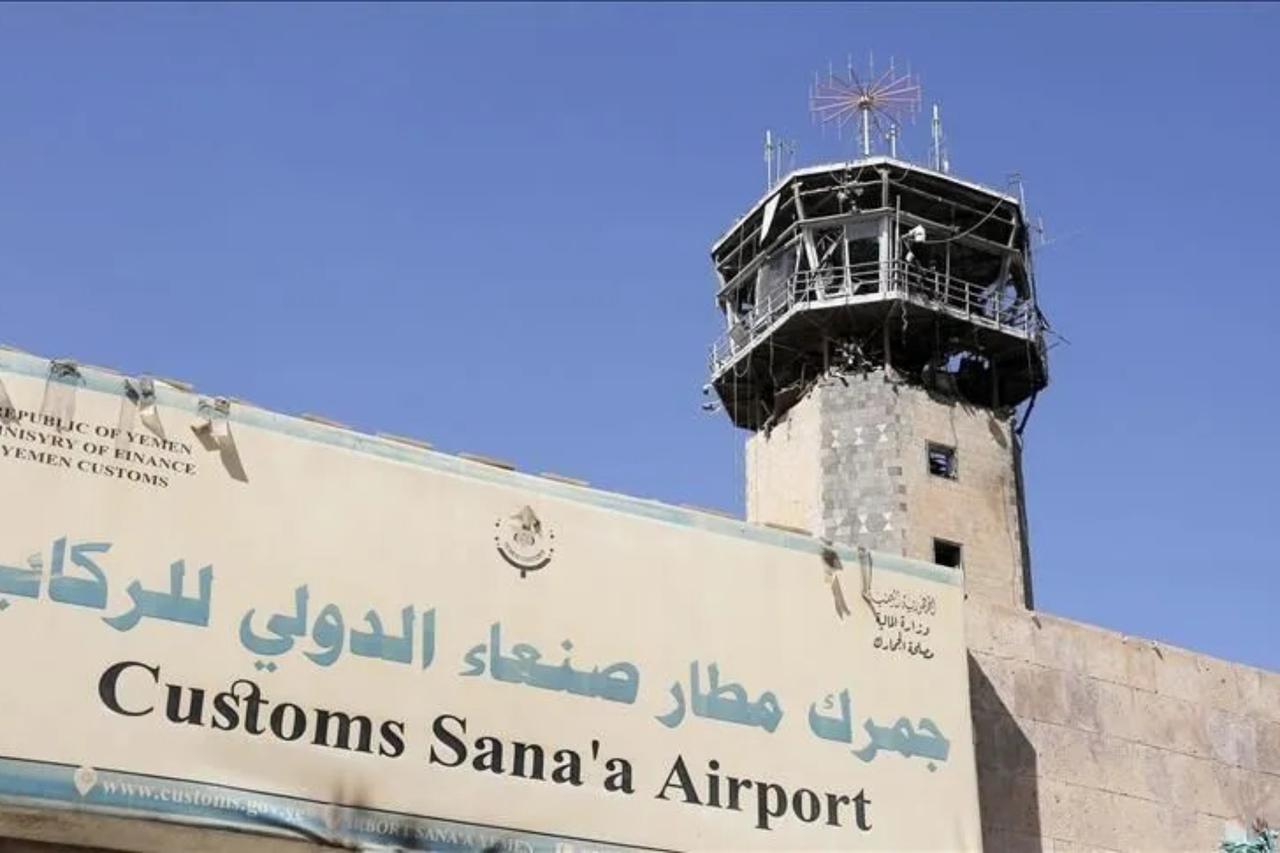
On Monday, as the Iranian plane returned from Iran with the Houthi delegation, Saudi forces bombed Sanaa airport, forcing the plane to divert and land in Al Hudaydah on Yemen's Red Sea coast.
A U.S. official told Axios the plane had been carrying weapons, missile parts, and military experts for the Houthis.
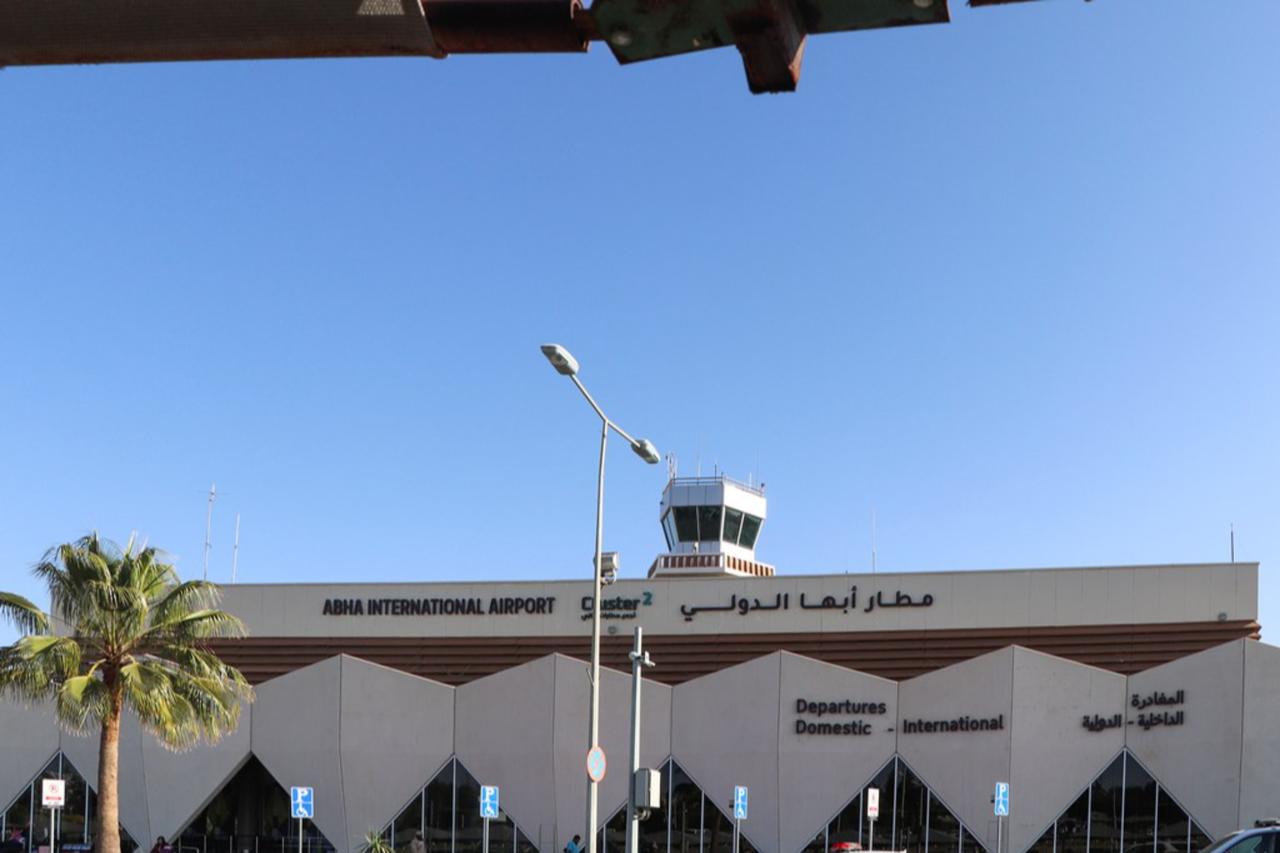
The Houthis subsequently launched ballistic missiles and drones at the Abha airport in southwestern Saudi Arabia, warning airlines to avoid Saudi airspace until the blockade on Sanaa airport was lifted.
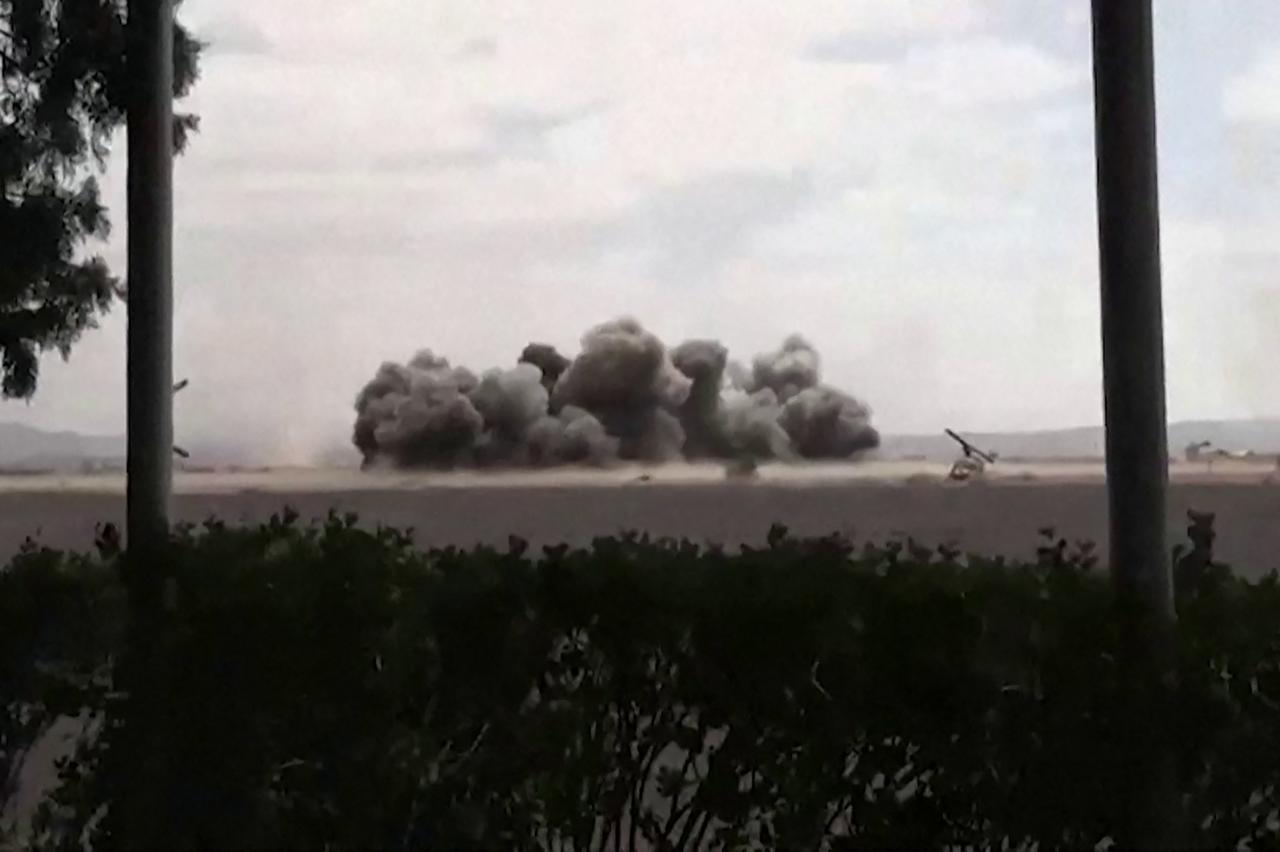

The Saudi-backed Yemeni government said it struck Sanaa airport to prevent an Iranian plane from landing, after failing to persuade the Houthi delegation to fly instead on domestic carrier Yemenia.
Yemen's Defense Ministry said its forces struck the airport runway after the Houthis blocked Yemeni flights from landing and allowed the Iranian plane to land "in violation of Yemeni territory."
Houthi military spokesman Yahya Saree said in a video statement: "In response to this criminal Saudi aggression, the Yemeni Armed Forces carried out a military operation targeting the Abha International Airport, using several ballistic missiles and unmanned aerial vehicles."
Saree accused Saudi Arabia of "ending the de-escalation phase" and warned the attack would not go "unanswered or unpunished." He separately warned airlines against flying into Saudi airspace "until the blockade on Sanaa International Airport is lifted."
Saudi-led coalition spokesman Turki al-Maliki said air defenses had "dealt with" the Houthi missiles.
Iran's mission to the United Nations rejected U.S. allegations that Tehran used the funeral flight to transfer military personnel and equipment to the Houthis, calling the claims "entirely baseless" and a "fabricated accusation" intended to mislead the Security Council.
The statement followed remarks by U.S. Deputy UN Representative Tammy Bruce, who told the council the Iranian flight had transported IRGC personnel, including drone and missile experts.
"The purpose of this flight was to ferry IRGC personnel, including drone and missile experts, in support of Houthi terrorism, under the guise of transporting Houthi officials to the late-Supreme Leader's funeral," Bruce said.
Iran's U.N. mission said Iran recognizes the Sanaa authorities as legitimate representatives of a significant segment of the Yemeni people and that its engagement with them is consistent with relevant Security Council resolutions.
Iran's Foreign Ministry separately condemned the strike on Sanaa airport, with spokesperson Esmaeil Baghaei calling it "a clear violation of international law and the United Nations Charter and a disrespect for Yemen's national sovereignty and territorial integrity."
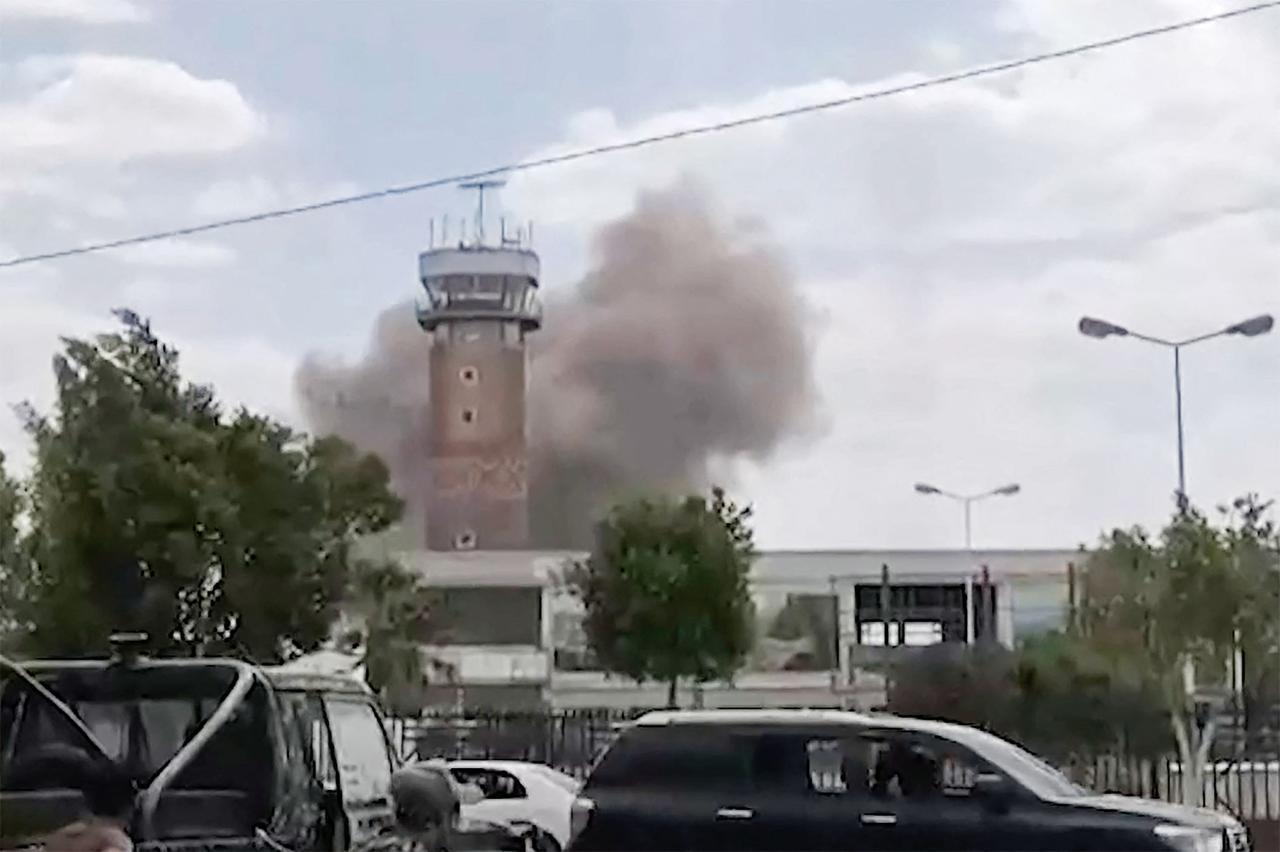
Yemen's Presidential Leadership Council chairman Rashad al-Alimi said authorities would not allow any aircraft to violate the country's airspace "whether it be Sanaa Airport or any other airport," and said he had "instructed that the confrontation not be expanded to avoid Tehran dragging Yemen and its people into wars that serve its interests in the regional conflict."
The Yemeni government declared itself in permanent session and formed a crisis team to coordinate military, political, diplomatic, legal and media efforts, instructing the defense and interior ministries to maintain the highest level of military readiness.
Yemen's Transport Ministry said late Monday that all airports had reopened after a brief suspension, saying operations were proceeding "as per the approved operational schedules."
 1 min read
Mohammed al-Basha of the U.S.-based risk advisory Basha Report told Agence France-Presse (AFP) there was a risk the 2022 ceasefire could fail.
"If this cycle of action and retaliation continues, it could effectively mark the collapse of the April 2022 ceasefire framework and signal a return to a much more intense phase of the conflict," he said.
Andreas Krieg, a security lecturer at King's College London, told AFP it was "technically possible" the Yemeni government carried out the strike using aircraft provided by the UAE, though he said Saudi involvement was more likely given the limited range of Yemen's own aging jets.
"It would be a risk as these are not jet aircraft. The jet aircraft they have from the 1980s are in a bad shape and probably won't fly far. This is why it is more likely that it was the Saudis," he said.
Khaled Khiari, U.N. assistant secretary-general for the Middle East, Asia and the Pacific, told an emergency Security Council session that "recent developments in Yemen are a stark reminder that there is no alternative to an inclusive, Yemeni-owned political process," warning that "Yemen and the wider region cannot afford another cycle of escalation."
Khiari also renewed calls for the release of 73 U.N. staff, who he said remain in arbitrary detention by the Houthis.
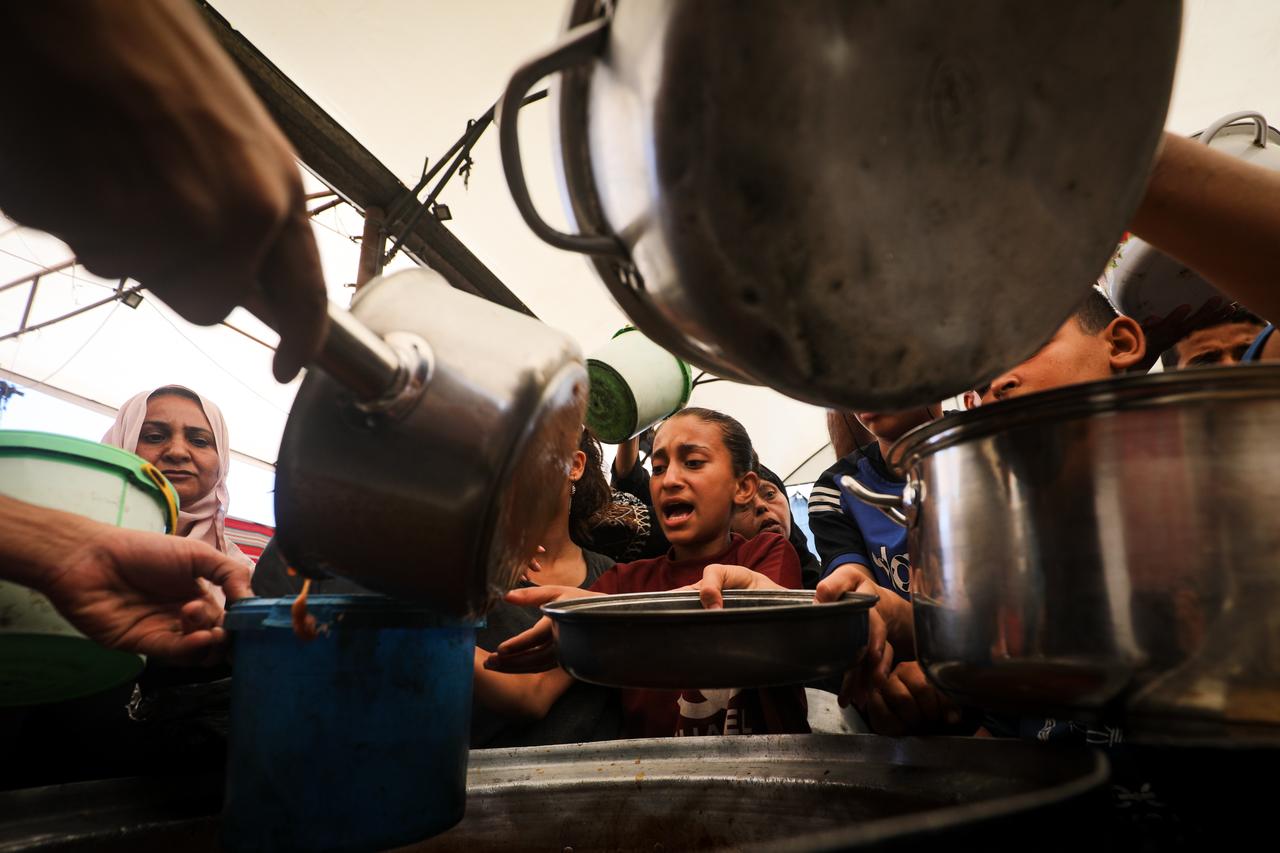
Indrika Ratwatte of the U.N. Office for the Coordination of Humanitarian Affairs told the council that "more than 18 million people across Yemen are hungry, many of them acutely so," and warned that further escalation "could mean more displacement, fewer and more expensive imports, and even tighter constraints on humanitarian access."
The International Committee of the Red Cross (ICRC) said its aircraft and crew, whom the Yemeni government had earlier accused Houthi forces of holding "hostage" at Sanaa airport, were "safe and accounted for," according to ICRC Middle East spokesperson Hachem Osseiran.
The Houthis have been at war with Yemen's internationally recognized government since 2014, in a conflict that has killed hundreds of thousands of people and triggered a major humanitarian crisis.
The rebels control Sanaa and much of northern Yemen, while the government holds much of the south.


 Set as preferred source
 Set as preferred source


 1 min read