Newsletters


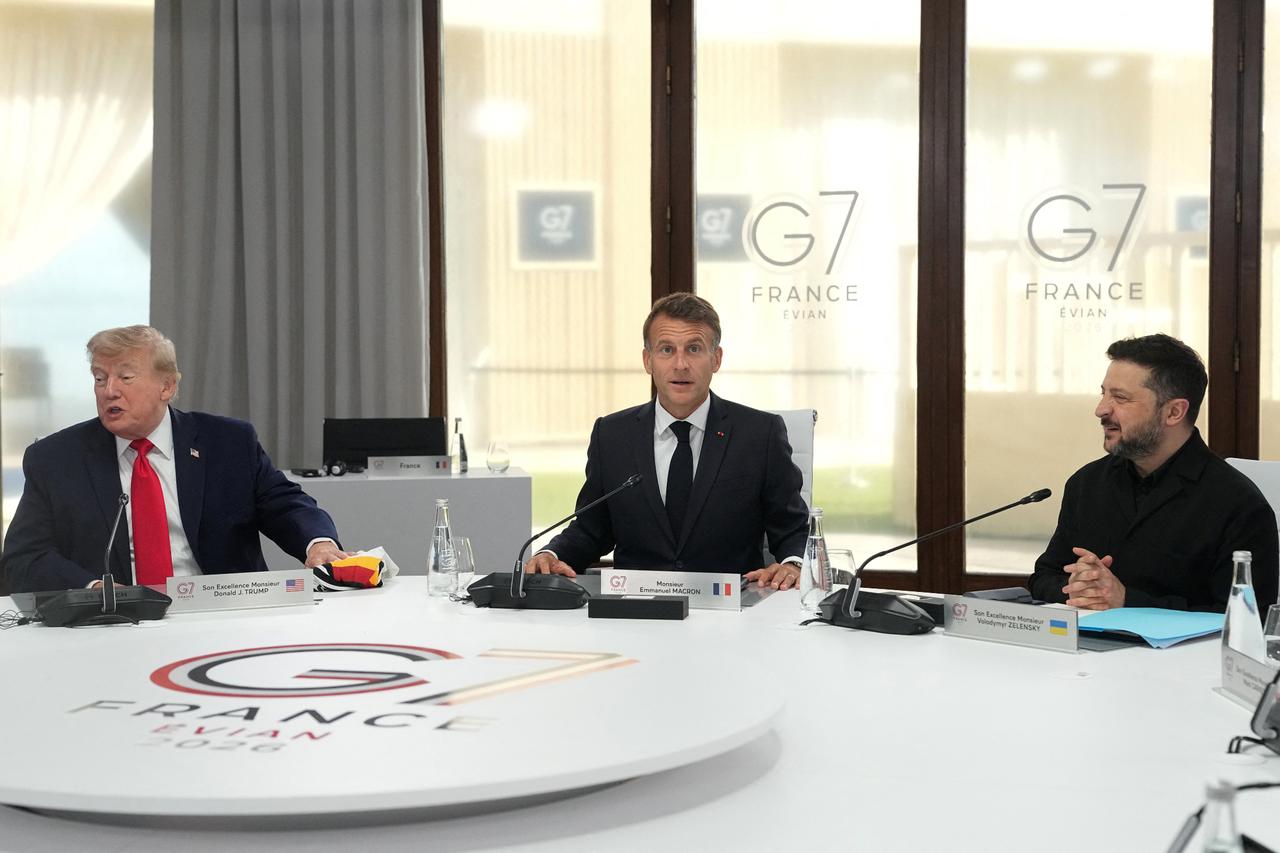


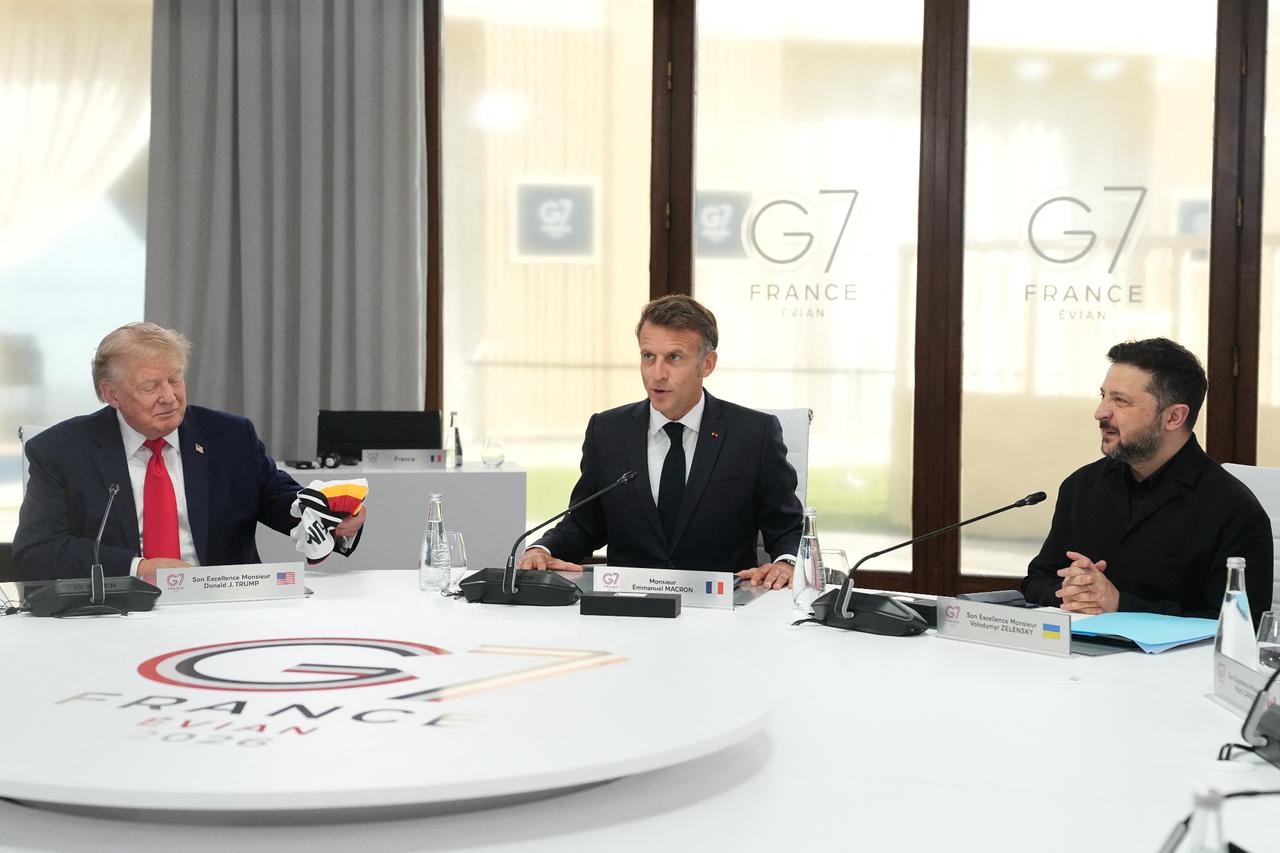
U.S. President Donald Trump called on Russia to reach a peace agreement with Ukraine after what he described as a “very good” meeting with Ukrainian President Volodymyr Zelenskyy at the G7 summit in Evian-les-Bains, France, on Tuesday.
Trump said he would do what he could to help end the war, prompting cautious optimism among European leaders that Washington and its allies could work together toward a settlement.
“Look, Russia should make a deal,” Trump told reporters, saying too many young people were dying on both sides of the conflict.
“I’m gonna do whatever I can,” he added.
The positive tone contrasted sharply with Zelenskyy’s meeting with Trump in the Oval Office last year, when the U.S. president told him that Ukraine lacked leverage in potential negotiations with Russia.
Zelenskyy and European leaders arrived at the G7 summit seeking to persuade Trump that Ukraine’s position had improved following drone operations deep inside Russian territory.

German Chancellor Friedrich Merz said Trump’s statement that Russia should end the war provided grounds for optimism.
“I found him to be very cooperative, and I also saw him listening very attentively,” Merz told reporters.
He said the meeting increased his confidence that European countries and the U.S. could work together to bring the war to an end.
Zelenskyy told Reuters after the group meeting that G7 leaders agreed Russia was not winning the war.
He said the leaders also discussed additional sanctions targeting Russian oil exports, the banking sector and military production to pressure Moscow into negotiations.
Zelenskyy said Ukrainian and U.S. teams would continue talks at several levels over the next 24 hours.
“I think that tomorrow we will also meet separately with the president,” Zelenskyy said, referring to Trump.
Zelenskyy said Monday that he had offered to meet Russian President Vladimir Putin during the G7 summit.
A Kremlin aide said the proposal was not discussed during a telephone call between Trump and Putin.
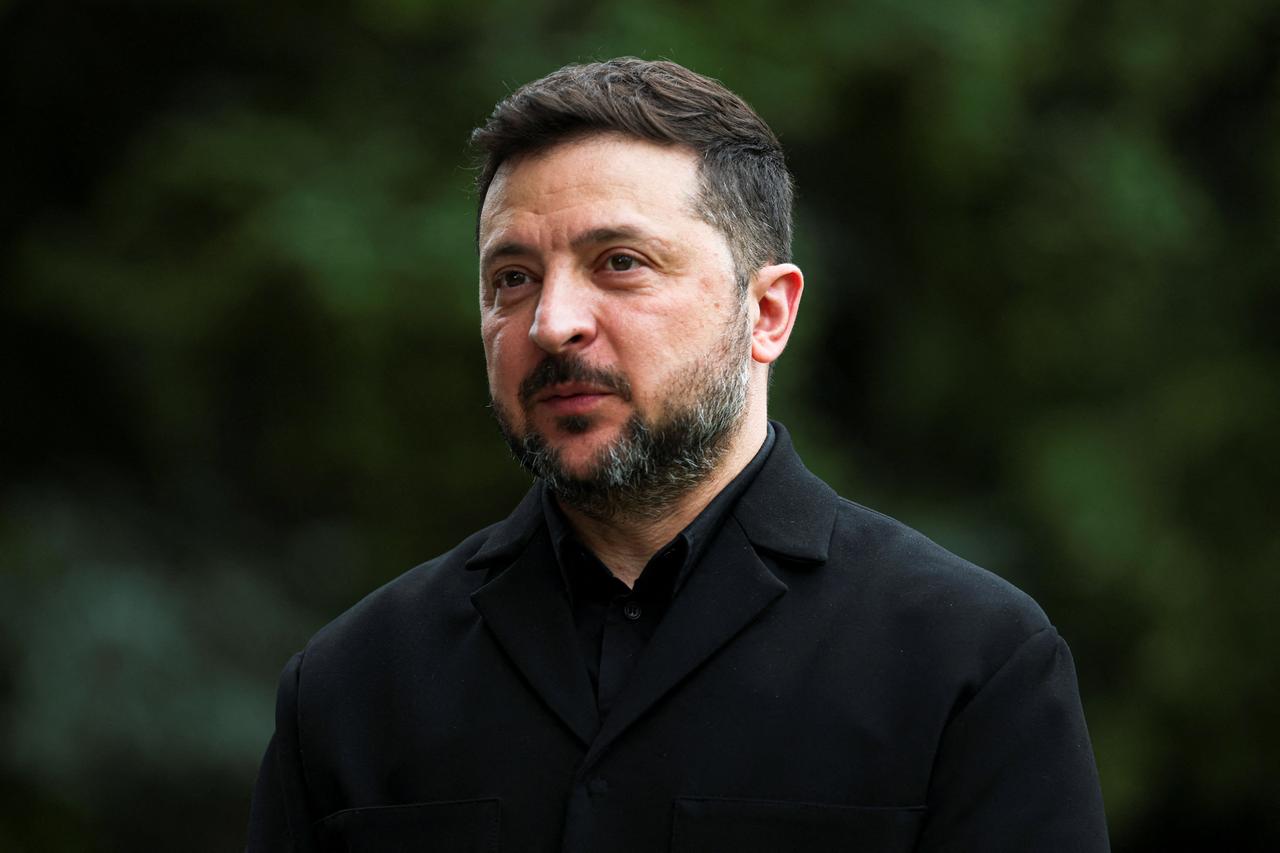
Two European diplomats said Zelenskyy showed Trump images of the damage caused by a Russian strike Monday on Kyiv’s Pechersk Lavra monastery.
Trump expressed disapproval of the attack, according to one diplomat.
Another diplomat described Zelenskyy’s decision to show the images as psychologically effective.
European officials said the tone of the broader meeting was constructive.
However, two diplomats said Trump did not commit to imposing additional U.S. sanctions against Moscow, despite calls from European leaders for stronger measures.
Trump told reporters that Washington could allow exemptions covering Russian oil to expire after the preliminary agreement ending the Iran war helped calm energy markets.
He did not directly address whether the U.S. would impose broader sanctions.
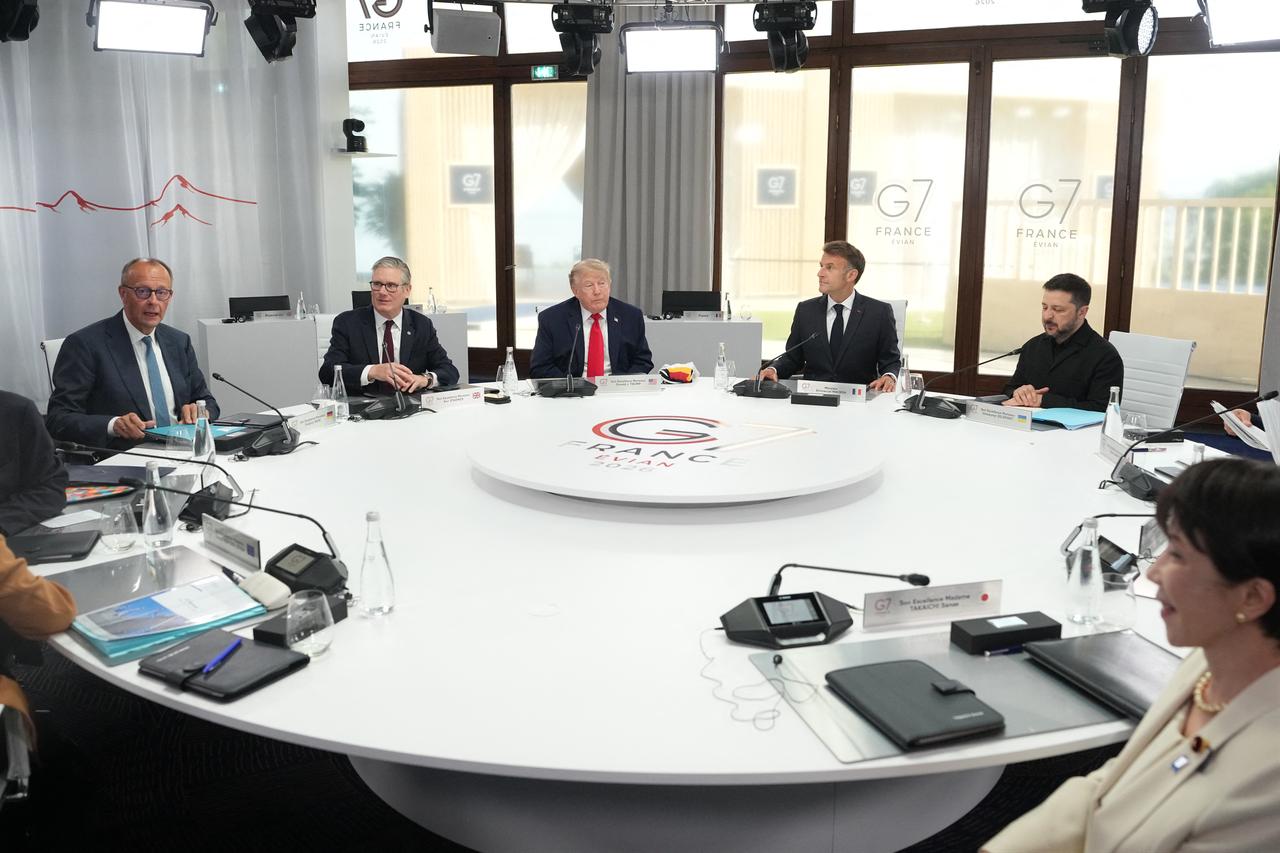
European leaders sought to convince Trump that earlier U.S. positions on a possible settlement had been too favorable to Moscow.
They argued that Ukrainian drone operations inside Russia had improved Kyiv’s position.
“The tide is turning for Ukraine,” European Commission President Ursula von der Leyen said on X.
“Russia’s fatigue is openly showing. That’s the time to double down on our support.”
A French diplomat said G7 leaders are committed to providing Ukraine with additional air defense capabilities.
Air defense remains a major priority for Zelenskyy as Russian attacks on Ukrainian cities and civilian targets continue.
The summit discussions included possible sanctions against Russian oil exports, banks and military production, although no new U.S. measures were announced.
G7 leaders also discussed the preliminary agreement between the U.S. and Iran and plans to reopen the Strait of Hormuz.
European leaders were expected to warn Trump that an interim agreement could leave Iran’s nuclear and ballistic missile programs in place.
French President Emmanuel Macron said the goal should be to secure a “solid, serious agreement that is finalized.”
A working lunch Tuesday focused on restoring safe navigation through the Strait of Hormuz, which Iran largely closed at the end of February.
The leaders also discussed alternative routes to reduce dependence on the waterway.
Trump said the strait would be “completely open” Friday.
The interim U.S.-Iran agreement is expected to create a 60-day period for negotiations addressing Iran’s stockpile of highly enriched uranium and the possible lifting of international sanctions.
European allies expressed concern that the next phase of negotiations might fail to produce a strong nuclear agreement or address Iran’s ballistic missile program.
Trump said the agreement made clear that Iran would not develop a nuclear weapon, something Tehran has repeatedly denied seeking.


 Set as preferred source
 Set as preferred source


 2 min read
 1 min read