Newsletters


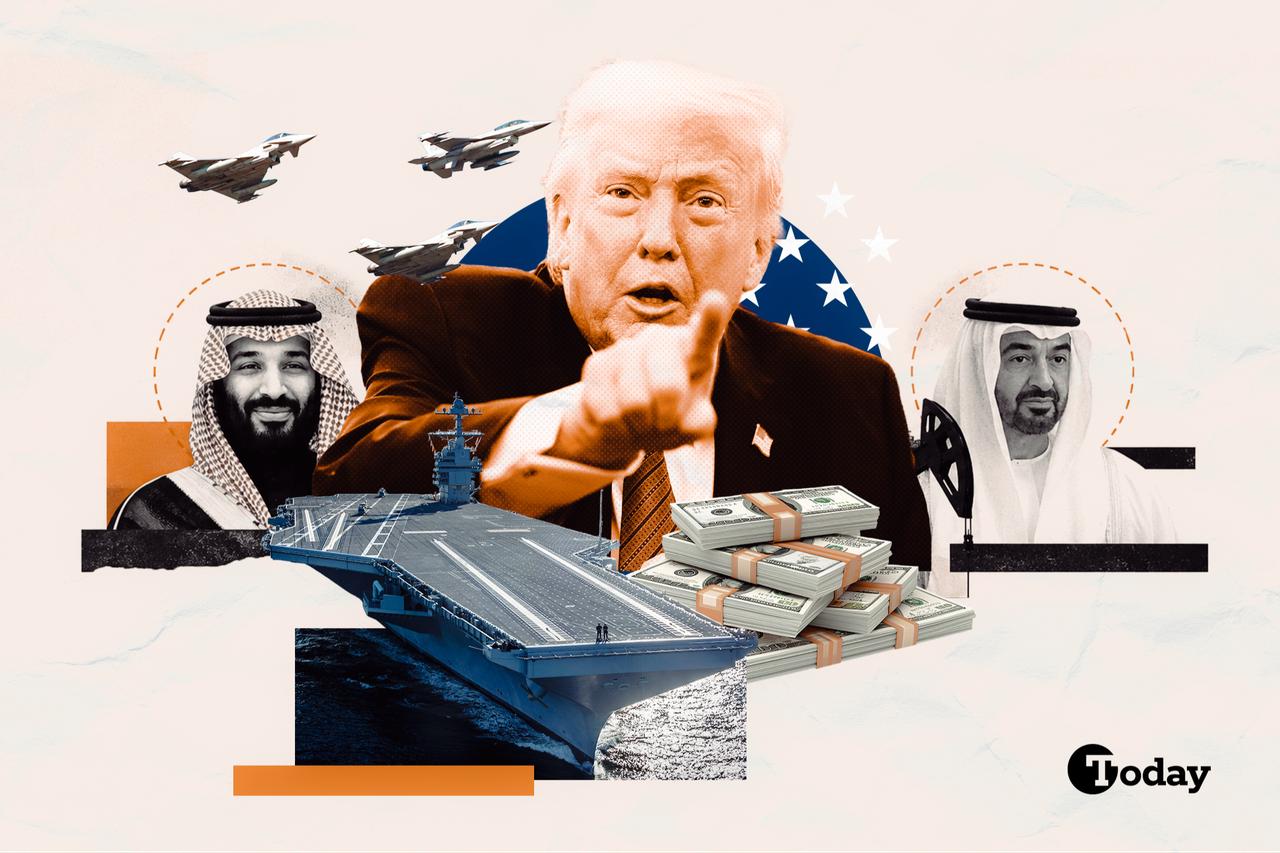


If you listen carefully to U.S. President Donald Trump, somewhere beneath the roar of turbines and the clink of champagne flutes at the G7 summit, you can almost hear the ghost machinery of empire grinding back to life.
The British East India Company is fashionable again. Oil has inherited the job once performed by opium. The flags are different. The accounting is digital. But the racket remains comfortingly familiar.
Not literally, of course.
Trump has not yet compelled Prime Minister Sir Keir Starmer and the assembled Group of Seven dignitaries in Évian-les-Bains to crouch behind the Eni petrol station on Avenue Anna de Noailles, passing a hookah hose and plotting the next century of extraction. But the mood is strangely adjacent. The language of partnership masks a harder creed: secure the supply lines, control the chokepoints, and let morality sort itself out downstream.
Heading into the G7 meeting, oil clearly occupies the same sacred corner of Trump’s imagination that opium once occupied in the age of empire—a commodity so profitable that governments lose their bearings around it and otherwise intelligent people begin speaking as if laws of history have been temporarily suspended.
And that’s why Trump's latest foreign-policy improvisation deserves more attention than it has received.
Every few years, American politics produces an idea so spectacularly goofy and reckless that it arrives less as a policy proposal than as a live electrical cable thrashing through a flooded basement.
Trump's recent suggestion that wealthy Gulf states might effectively pay the U.S. for military protection against Iran belongs in that category.
Analysts squinted. Diplomats coughed discreetly into their sleeves. France 24 star anchorman Francois Picard last night assembled an emergency panel to determine whether Trump was negotiating, joking, freelancing, or simply thinking out loud with the nuclear codes somewhere nearby.
The answer may be all four.
The problem with Trump has never been that he says bizarre things. American politics has always generated carnival barkers, confidence men, and self-appointed philosophers who sound like they were assembled from spare body parts found in a riverboat casino.
The drawback is that Trump's strangest statements often reveal exactly how he sees the world.
Everything is transactional. Everything has a price. Every alliance is a potential revenue stream waiting for proper management.
Asked whether Saudi Arabia, the United Arab Emirates, or anyone else had actually agreed to such an arrangement, Trump offered no especially clear answer. The details seemed to exist somewhere in the foggy territory between active negotiation and spontaneous inspiration.
Under this vision, the U.S. would not merely defend allies. It would become something closer to a heavily armed global security contractor that possesses 11 aircraft carriers, 130 strategic bombers and 3,748 nuclear warheads, according to the U.S. Department of Energy.
Pause for a moment and consider the scale of that shift.
For nearly 80 years, American presidents have argued—sometimes sincerely, sometimes with a straight face that deserved an Academy Award—that U.S. military alliances exist because they advance broader strategic interests and help maintain a stable international order.
Entire libraries exist to house the disasters, contradictions, and expensive mistakes accumulated under that doctrine.
But the official theory remained consistent. American power, however imperfectly exercised, was supposed to serve purposes larger than collecting a fee.
Trump is proposing that the most powerful military apparatus ever assembled might operate on a premium subscription model.
The wealthy customers receive the deluxe package. Aircraft carriers arrive on schedule. Missile defense comes standard. The nuclear umbrella includes customer support and perhaps an upgraded service tier for preferred clients.
It sounds absurd because it is absurd.
Yet it is also remarkably old.
History contains a long and dreadful record of governments discovering the intoxicating pleasures of blending military force with commercial incentives.
Few examples were more spectacular than the British East India Company.
What began as a trading enterprise eventually evolved into something resembling a corporate empire with its own armies.
It accumulated territory, influence, and political authority until it became difficult to identify where commerce ended and imperial policy began.
That confusion reached one of its darkest moments during the Opium Wars.
British commercial interests had become deeply invested in selling opium into China. When Chinese authorities attempted to halt a trade they viewed as socially destructive, economic interests suddenly acquired strategic importance.
Before long, military force entered the picture.
The public justifications arrived dressed in the respectable language of trade rights, diplomacy, and international norms. Such explanations are almost always available when powerful people require them.
Beneath the rhetoric sat a simpler reality. A great deal of money was being made, and the guns appeared to protect the arrangement, creating one of the most enduring historical grievances in modern geopolitics.
Victory postponed the reckoning. It did not eliminate it.
There is a legitimate debate about burden-sharing. There is a legitimate debate about whether wealthy allies should shoulder more responsibility for their own defense.
Those arguments are serious. Trump’s proposal is something else.
Why not sell protection everywhere? Why not auction security guarantees to the highest bidder? Why not place a price tag on every alliance, every deployment, every promise, and every strategic commitment?
Profit begins competing with principle.
Strategic judgment becomes entangled with financial incentives. Decisions once made according to national interests become vulnerable to commercial pressures.
Empires rarely recognize the transformation while it is happening. The historical record surrounding the sale of military influence is impressive if one's goals include corruption, strategic confusion, and eventual decline.
Just ask the British.
Trump may see a brilliant deal waiting to be closed.
But history knows it better as the perennial temptation to monetize muscle, package it as wisdom, and flog it back to the public as realism.
The costume changes. The century changes. The sales pitch changes. The temptation remains exactly the same. And it never ends well.


 Set as preferred source
 Set as preferred source



 4 min read