Newsletters


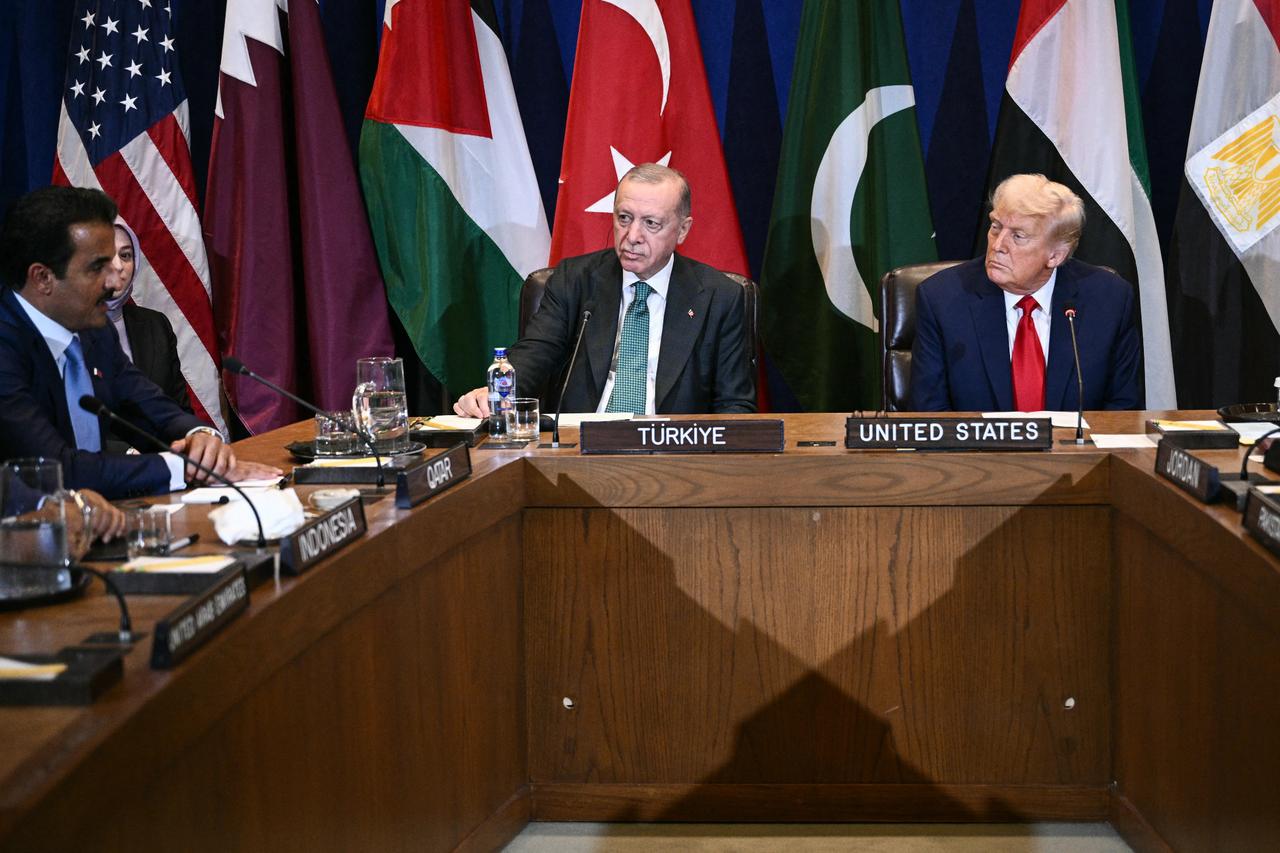


During the Gaza ceasefire negotiations, a number of regional powers like Qatar, Egypt, and Türkiye were brought to the table alongside the U.S. and Israel, effectively positioned as co-guarantors of any eventual arrangement. The intended result was that the costs and responsibilities of managing the Palestinian situation were distributed across the region rather than borne by Washington alone. Iran, by this logic, is now undergoing the same treatment.
Last Saturday, President Donald Trump was on a teleconference with the leaders of Saudi Arabia, the UAE, Qatar, Pakistan, Türkiye, Egypt, Jordan, and Bahrain. The topic was ostensibly the framework of a U.S.-Iran peace deal, which involves ceasefire extensions, the Strait of Hormuz, frozen assets, uranium stockpiles. High-stakes stuff.
Then the U.S. president, in his true style, reportedly produced a "silence on the line," casually informing the assembled heads of state that they should all—simultaneously, as a condition of the Iran agreement—sign onto the Abraham Accords and formally recognize Israel. He, afterwards, joked that he wondered if they were still there.
They were still there. They just didn't have much to say. By Sunday, Trump had turned the moment into a Truth Social post. "After all the work done by the United States to try and pull this very complex puzzle together," he wrote, "it should be mandatory that all of these Countries, at a minimum, simultaneously sign onto the Abraham Accords." He added, apparently in good faith, that "maybe even Iran" might want to join eventually.
The reaction from the region ranged from diplomatic silence to something closer to open hilarity. A Gulf Arab diplomat, speaking anonymously, called it "a smart tactic to calm down the angry base" and predicted it would never form part of an actual deal. Another former U.S. official described the response from their Middle East contacts as "disbelief and frustration." One described Trump's demand as a "poison pill"—new conditions for peace that neither Iran nor the countries in question would accept.
Let alone Türkiye, which has no military heavy burden or threat stemming from the war, unlike the Gulf countries, the region doesn't seem to take this demand seriously on par with the current political atmosphere. But the more interesting question is what Trump actually thinks he is doing. And, in the specific case of Türkiye, why would he bother naming a country whose inclusion is, by most measures, a geopolitical impossibility?
The region isn't taking the demand seriously, and Türkiye, which has no military exposure from the Iran war to speak of—and, therefore, no particular need of whatever security umbrella Trump is dangling—has less reason than most to pretend otherwise. Which raises the important question of what Trump actually thinks he is doing—and, in the specific case of Türkiye, why he would bother naming a country whose inclusion is, by most measures, a geopolitical impossibility.
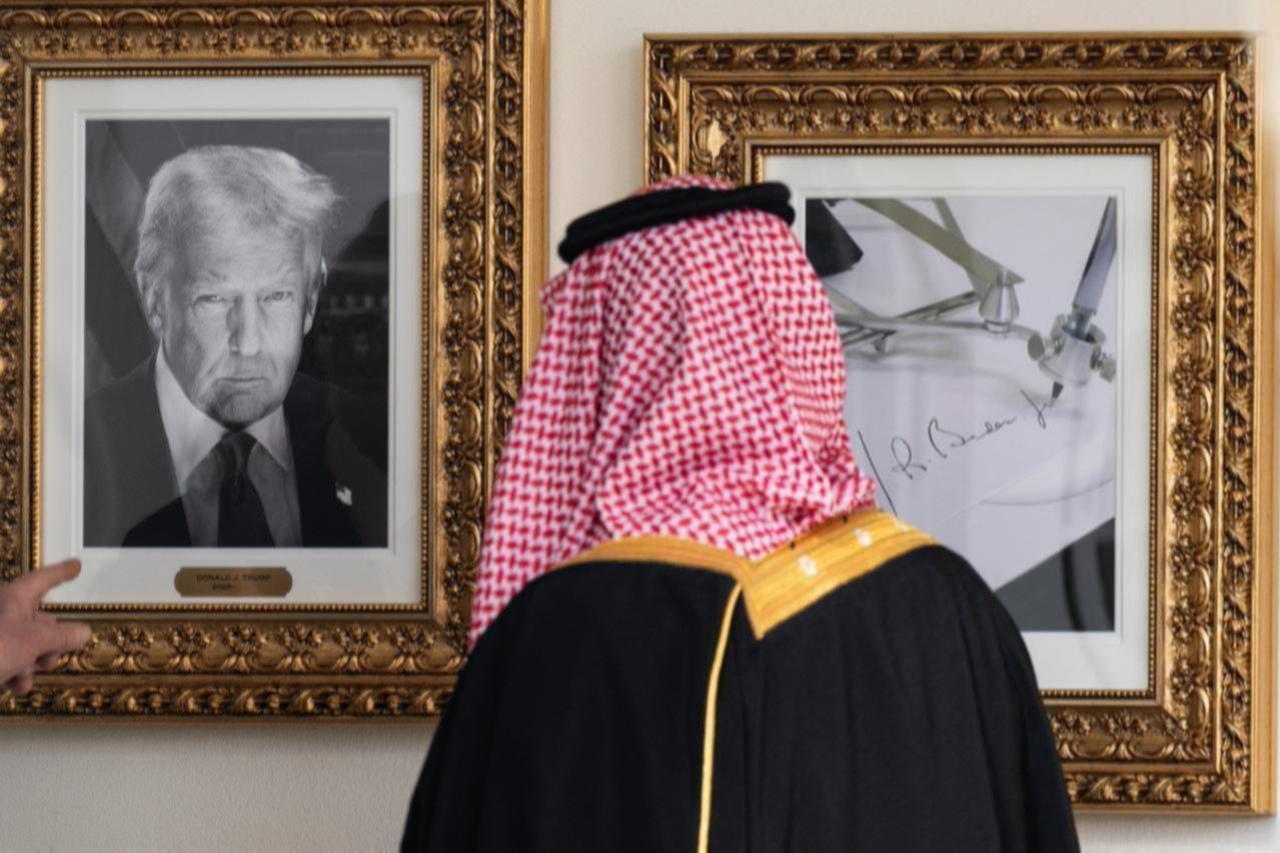

Trump is, whatever else one might say about him, a reasonably attentive student of personal relationships and leverage. He recently has expressed admiration for Erdogan in a repetitive manner. He almost certainly understands that Ankara's inclusion in any Abraham Accords expansion is not going to happen while Israeli jets are active over Gaza and Lebanon. He even provided himself a quiet exit ramp in the same Truth Social post, noting that "one or two" countries might have valid reasons not to sign, a caveat that Turkish commentators immediately recognized as directed at Ankara.
There is also a more cynical read, which Politico captures well: some Middle Eastern officials do not believe Trump's demand is meant to be taken literally. They view it, rather, as domestic political theater—a performance for hawkish Republicans who fear he is giving away too much in the Iran negotiations. "He will keep bringing it up again and again," the Gulf Arab diplomat said. "But it will not be part of the deal."
That may be correct. But it is worth noting that Trump's language in the post was not soft. He said the countries "should not be part of this Deal" if they refuse, because refusal "shows bad intention." That is not the language of a man who considers his demand optional.
Before getting to the strategy, it is worth pausing on the mechanics because there is a basic factual awkwardness buried inside President Trump's demand. The Abraham Accords, as designed, are instruments of diplomatic recognition: countries that have no formal ties with Israel sign on and establish them. That is the point.
But several nations on Trump's list do not fit that description. Türkiye recognized Israel in 1949. Egypt has had a peace treaty with Israel since 1979, and Jordan formalized diplomatic ties in 1994. The UAE and Bahrain, meanwhile, are already members of the Accords. What, precisely, are these countries being asked to sign?
The honest answer is that Trump appears to be using "Abraham Accords" as shorthand for something broader—a formal alignment with an Israel-centered security architecture, a public statement of regional solidarity that goes beyond whatever bilateral agreements already exist.
Retired Turkish ambassador Uluc Ozulker describes Trump's proposal, in the current context, as a fool's errand. According to him, while crimes against humanity are being committed in Gaza, while the Israeli government remains what Turkish political discourse has taken to calling a cabinet of "human butchers," the conversation about Abraham Accords membership is, in any serious sense, pointless. A possible rapprochement, the seasoned diplomat says, can be discussed only after a structural change in Israeli government.
The core tension here is between Trump's "mandatory" framing and the reality of what Saudi Arabia, Pakistan, and Türkiye will actually accept.
Saudi Arabia has stated, repeatedly and clearly, that it will not normalize relations with Israel absent a credible, irreversible path toward Palestinian statehood. Crown Prince Mohammed bin Salman said as much to Trump directly when they met in Washington in November—and the kingdom's position has not moved since.
A Gulf Arab official confirmed to Politico that Saudi Arabia's stance "has not changed" on either the Iran crisis or the Israeli-Palestinian conflict, regardless of Trump's entreaties. Israel's far-right government, meanwhile, has consistently opposed a two-state solution, which means the gap between what Riyadh requires and what Jerusalem will offer remains unbridgeable in any near-term timeframe.
Pakistan was even more direct. Defense Minister Khawaja Asif told Samaa TV that joining the accords "clashes with our fundamental ideologies"—and given that Pakistan is also one of the lead mediators in the U.S.-Iran talks, that position carries particular diplomatic weight.
Geopolitical strategist Taufiq Rahim, in an interview with Türkiye Today, offers an argument for why Trump's demand is not entirely divorced from reality—if it is read correctly. "It is not unrealistic," Rahim argues, "if it is presented to Türkiye and Saudi Arabia as an eventual commitment rather than a definitive outcome, which is likely what both countries could agree to in the interim."
The broader strategic logic, as Rahim, a senior fellow at New America, frames it, is coherent enough: the Trump administration's ultimate aim is a unified security architecture in the Middle East that encompasses all of its regional allies. The Abraham Accords expansion is the instrument. But inserting that instrument into active Iran negotiations, he notes, "is likely to be seen as an unnecessary complication that would derail short-term prospects for peace."
The commanding language Trump uses—"mandatory," "bad intention," back to the "Battlefront" if no deal—has prompted some in the region to reach for a starker vocabulary.
What Trump is actually deploying, beneath the bluster, is a familiar architecture of carrots and sticks. The carrots are real: security guarantees, weapons transfers as the F-35 remains a perennial bargaining chip with partners, and economic investment flows that the Abraham Accords were specifically designed to catalyze.
The White House pointed to the "massive economic benefits" the existing accords have generated as evidence of what expanded membership could offer. The stick is the threat of exclusion—from the deal, from the security umbrella, from the post-war order that Trump is trying to design.
The kingdom, for example, faces real security threats. Houthi missile strikes demonstrated that its economic wealth does not translate automatically into military invulnerability. Therefore, the prospect of a formalized U.S. security architecture is not unattractive, yet not as shiny as it was before the last round of the war.
But its domestic political constraints and security calculations are also real, and MBS has shown no inclination to absorb that cost without something substantive in return. While Israeli and American officials reportedly believe Riyadh will not move before the Israeli elections planned for September, the U.S. has its midterms getting closer day by day in November.
Türkiye, for its part, operates under fewer of the political vulnerabilities that make Gulf states susceptible to this kind of pressure. Trump knows this, and named Türkiye anyway. That is either the act of a dealmaker keeping every variable in play, or evidence that the complexity of his "very complex puzzle" has already gotten away from him.
Probably some of both.


 Set as preferred source
 Set as preferred source


 1 min read
 1 min read