Newsletters


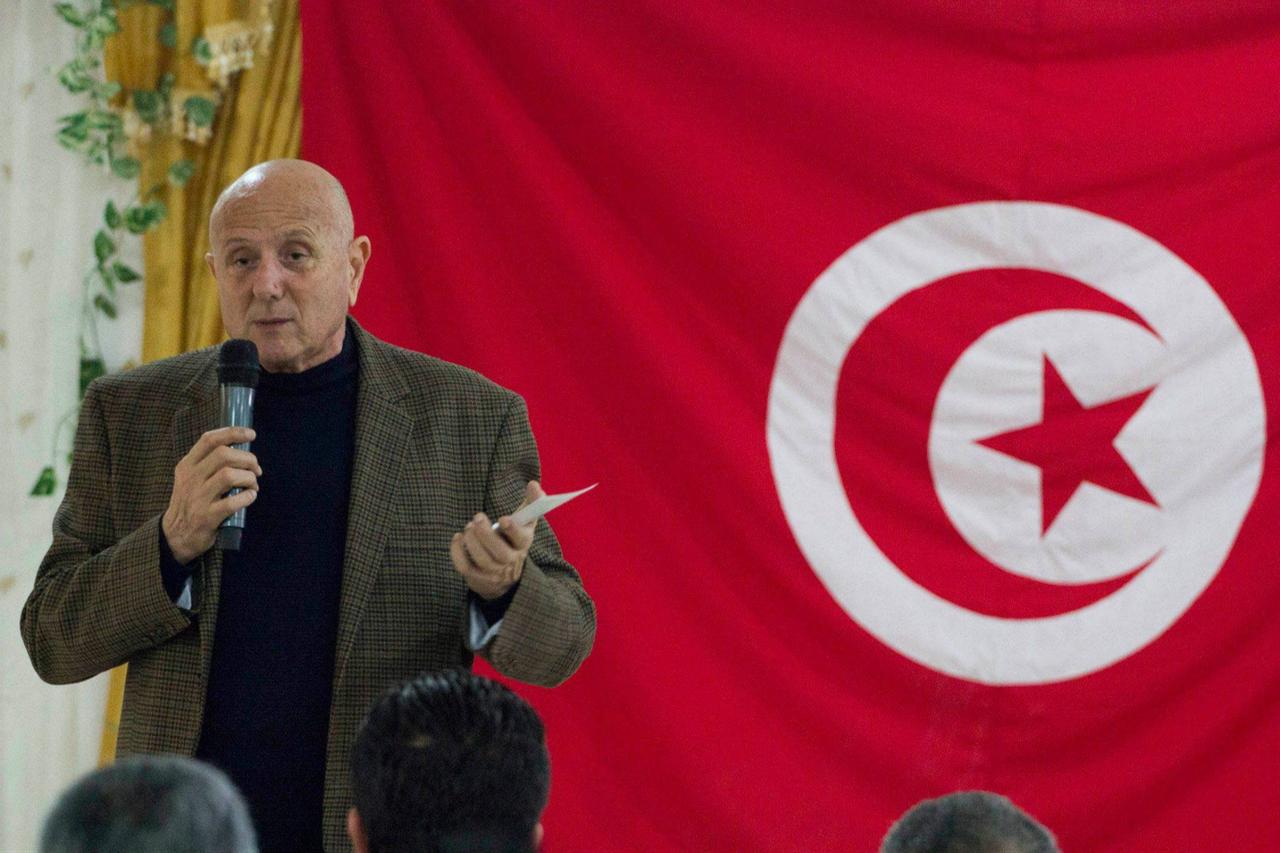


Tunisian opposition leader Ahmed Najib Chebbi said security forces surrounded his home on Tuesday as authorities moved to detain him, following a series of severe prison sentences issued against political figures in a long-running “conspiracy against state security” case.
Chebbi, speaking to Al Jazeera, said that he could be taken to one of Tunisia’s prisons at any moment to serve a 12-year sentence,” referring to the verdict issued against him in the “conspiracy against state security” case.
Last week, a Tunisian appeals court handed down prison sentences of up to 45 years against opposition figures, businessmen and lawyers, after convicting them of conspiring to overthrow Tunisian President Kais Saied, rulings that sparked a wave of domestic and international criticism.
The court reduced Chebbi’s sentence from 18 years to 12, while raising the sentences of Jawhar Ben Mubarak, Issam Chebbi and Ghazi Chaouachi from 18 to 20 years.
Ahmed Najib Chebbi said about 40 figures have received what he called unjust sentences, some reaching 45 years.
He said those detained in recent weeks or over the past two and a half years “went to prison with clear consciences” for simply exercising their rights as citizens. He added that they had only held consultations aimed at restoring balance in favor of democracy in Tunisia.
Chebbi accused the Tunisian judiciary of submitting to the ruling authorities, saying he refused to file a cassation appeal because “we no longer have judges, we have employees under the command of the political authority.”
He said the judiciary’s role in the “conspiracy” case has ended and that the file is now driven by political power dynamics.
Chebbi noted that he is being accused of terrorism at age 82 despite five decades of peaceful political work, adding that the case’s future will depend on the balance of power between society and the authorities.
The case dates back to February 2023, when politicians, lawyers and civil society activists were arrested.
Despite the current situation, Chebbi expressed optimism about Tunisia’s future, saying he would enter prison “with a clear conscience and great optimism.”
He said this optimism came after observing during recent demonstrations “a renewed spirit and high morale among the entire civil and political spectrum, without exception, and a sense of solidarity not seen before.”
He noted that Tunisia is experiencing social unrest, including ongoing protests for weeks in Gabes in the southeast.
He argued that the government is “struggling in its management of domestic affairs and its foreign relations, and is engaged in an open and official confrontation with the European Union.”
Chebbi added that democracy and freedoms will return to Tunisia, pointing to a broad wave of social mobilization and the Tunisian General Labour Union’s readiness to announce sectoral and regional strikes, and possibly a general strike. He also highlighted significant tensions among young people.
In a related development, the family of prominent Tunisian lawyer and opposition figure Al Iyashi Al Hammami said police arrested him at his home on Tuesday to enforce a final five-year prison sentence issued against him in the same case.


 Set as preferred source
 Set as preferred source


 2 min read