Newsletters


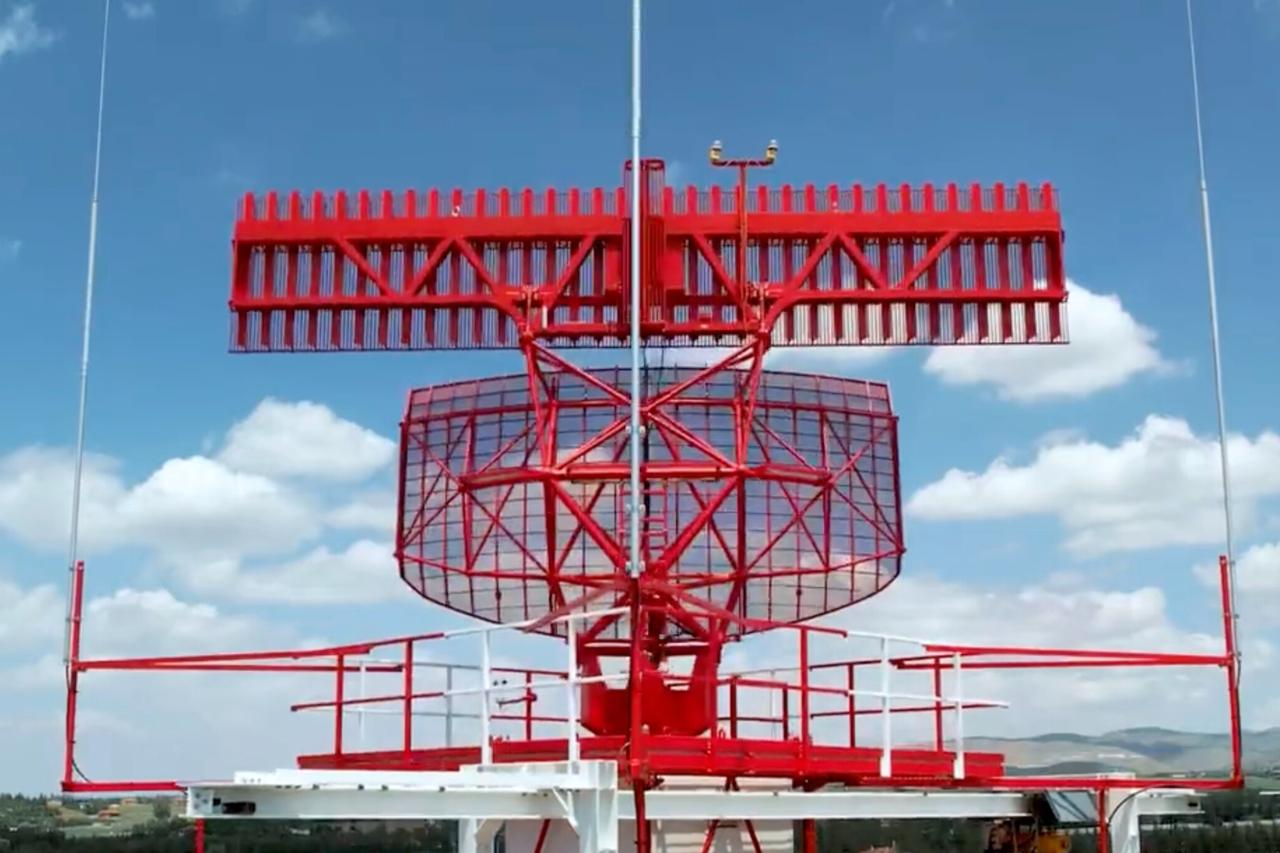


ASELSAN's HTRS-100 Air Traffic Control Radar System is being installed at Damascus International Airport to enhance flight safety, Türkiye's embassy in Damascus announced this week.
Turkish Ambassador to Syria Nuh Yilmaz shared updates on social media about the field visit to Damascus International Airport and the installation progress of the Turkish-supplied system. The deployment represents a significant infrastructure upgrade for the Syrian capital's primary aviation hub.
The HTRS-100 system provides precise detection and tracking of all airborne targets around airports, integrating the latest technologies to guarantee maximum reliability and performance.


The system comprises two complementary components. The Primary Surveillance Radar operates in S-Band and employs advanced clutter suppression algorithms and target tracking algorithms to provide clear and reliable target detection and tracking even in the most challenging environments. The Secondary Surveillance Radar enhances aircraft tracking capabilities with Identification Friend or Foe (IFF) interrogation and offers multi-mode interrogation support for versatile operations.
The defining feature that distinguishes the HTRS-100 from competitors stems from its distributed active hot standby architecture, found in only a handful of systems worldwide. Unlike conventional radars, this system continues operating even if any component fails, thanks to its matrix structure. This capability ensures the system never shuts down completely and maintains uninterrupted flight traffic management even during critical moments measured in seconds.
 1 min read

The system employs intelligent algorithms to handle adverse weather conditions and interference, aviation's greatest adversaries. Through advanced noise suppression techniques, it clearly tracks targets even during storms or heavy precipitation.
For flight safety, the radar features a dedicated weather channel that monitors atmospheric events in the sky in real time. Special algorithms distinguish between aircraft, wind turbines and bird flocks, maximizing operational security.
The system demonstrates its durability with a mean time before critical failure exceeding 40,000 hours, while preventing time loss with repair times under 30 minutes for any maintenance needs.
The radar's range can be configured to either 80 or 100 nautical miles (approximately 185 kilometers).


 Set as preferred source
 Set as preferred source




 1 min read