Newsletters


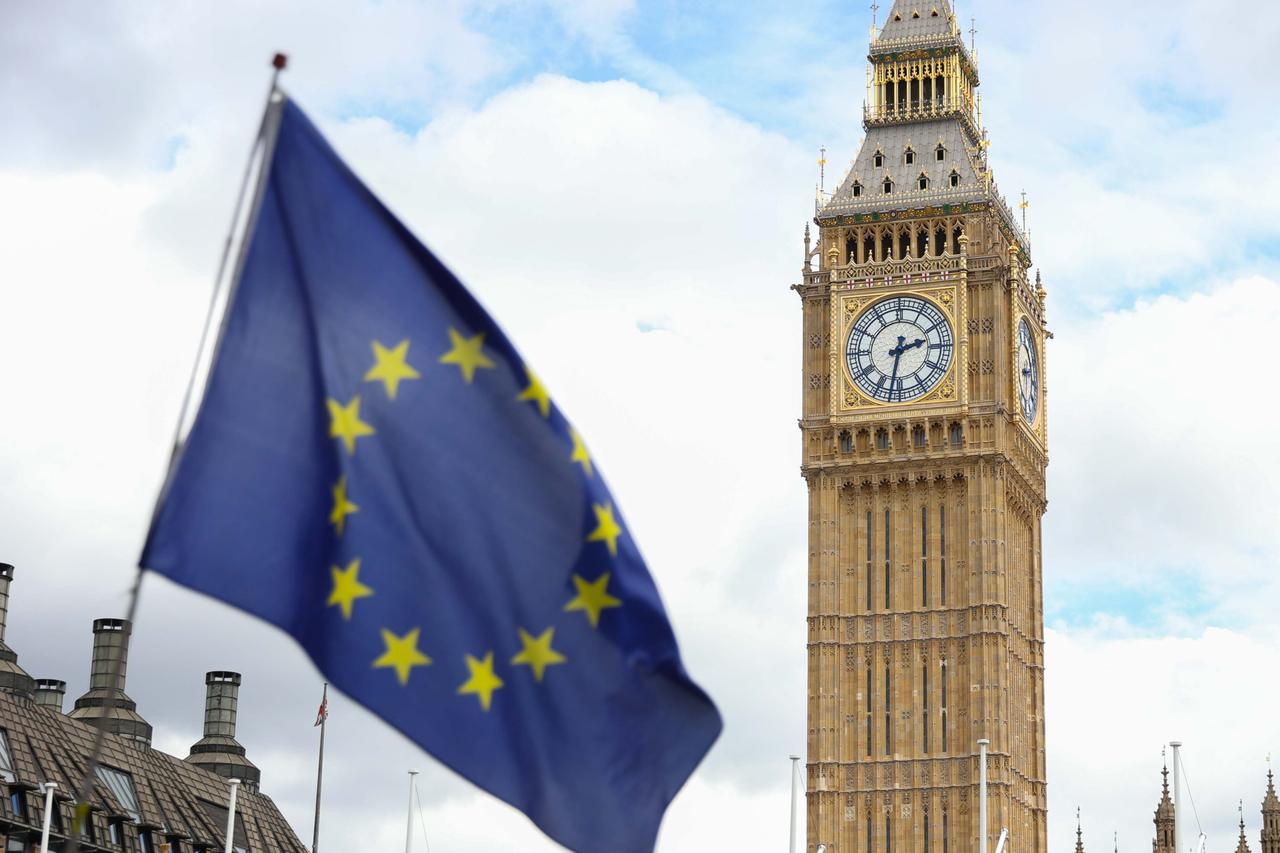


Two-thirds of EU citizens would support the United Kingdom rejoining the European Union, while most UK voters say Brexit has harmed the issues they care about most and want closer ties with the bloc, a new survey found.
The polling by the European Council on Foreign Relations, or ECFR, found that 66% of respondents across 15 countries said U.K. membership would be a very good, good or “neither a good nor a bad” idea.
The survey was carried out 10 years after the Brexit referendum and found that support for the U.K. rejoining the bloc was higher than support for either a closer relationship or the status quo.
Across the surveyed countries, 59% of respondents favored a closer relationship between the EU and the UK, while 46% backed the current status quo.
Support for the U.K. rejoining ranged from 56% in Bulgaria and 59% in France and Italy to 75% in the Netherlands and Denmark.
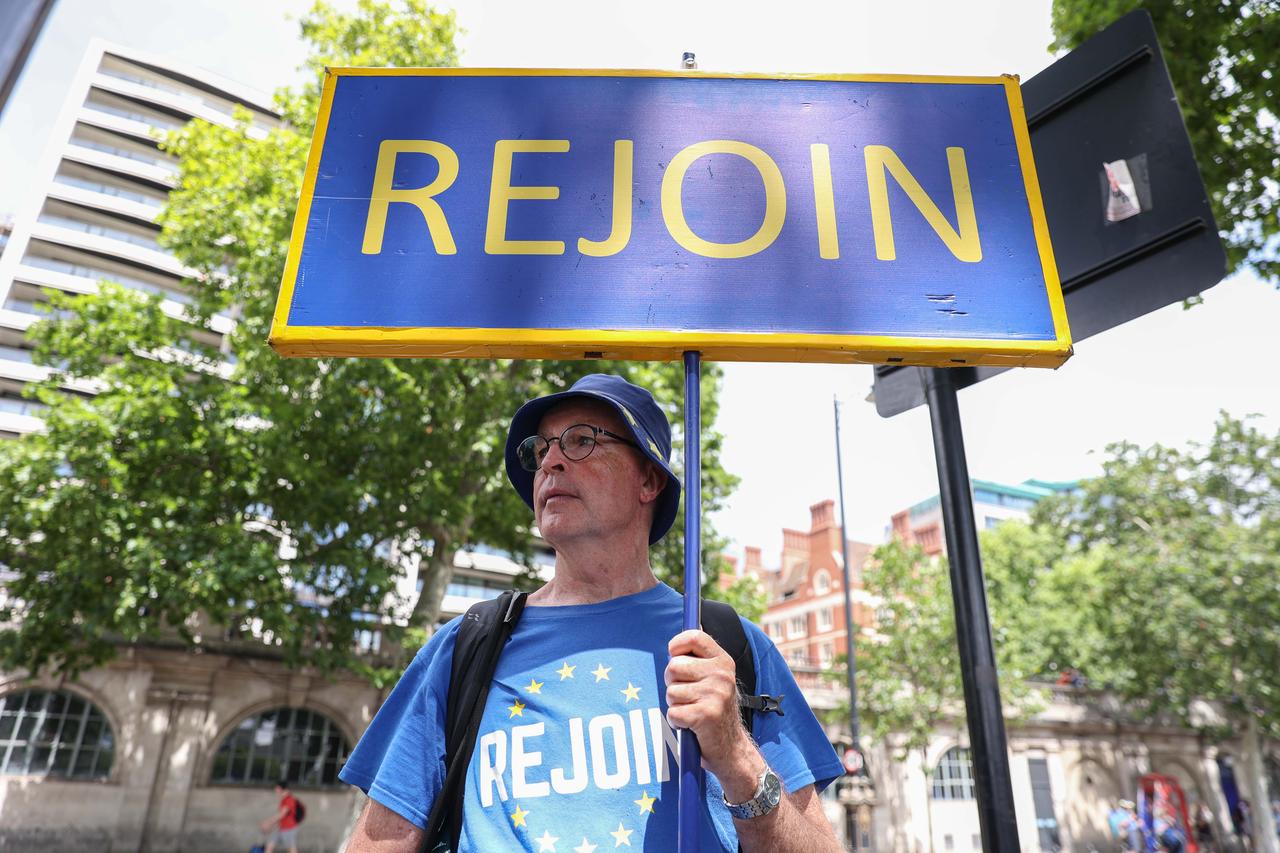

The survey found that even voters for far-right and EU-critical parties supported closer relations between the bloc and the U.K.
A majority of supporters of Poland’s Confederation backed closer ties, with support at 71%.
The same view was shared by 58% of voters backing Germany’s AfD and 58% of supporters of France’s National Rally.
Several European leaders have also reflected support for a future U.K. return.
French President Emmanuel Macron has said the door is “always open,” while Spanish Prime Minister Pedro Sanchez has said Spain would “absolutely” support British membership.
Finnish President Alexander Stubb has explicitly named the UK as a candidate for membership.
“We need a UK voice in Europe. We really miss you guys,” Stubb said.
In May, the European Green Party formally invited the UK to rejoin.

In the UK, the survey, carried out in May, found voters across party lines, including Reform UK supporters, believed Brexit had negatively affected the country and many issues central to the debate a decade ago.
British respondents said leaving the EU had hurt their main priorities, including the cost of living, the economy, youth opportunity, illegal immigration, and trade.
The survey found 66% said Brexit had worsened the cost of living, while 65% said it had hurt the economy.
A further 57% said it had harmed youth opportunities, 56% said it had made illegal immigration worse and 56% said it had damaged trade.
Even among those who voted leave in 2016, 58% said Brexit had made illegal immigration worse.
Asked to identify the main benefits of Brexit, the most common answer by a wide margin was “don’t know,” followed closely by “none of the above.”
The report said this suggested that most British voters now feel Brexit caused real damage for no clear upside.
That negative view of Brexit has translated into strong support for a closer relationship with the EU, with 75% of UK respondents in favor.
On trade and economic ties, 66% said relations should be very or slightly closer.
The survey also found broad support in the UK for levels of integration that had long been considered politically sensitive.
A large majority of respondents, 63%, said they would now accept freedom of movement in exchange for closer trading ties with the EU.
That included 57% of those who voted leave in 2016.
Only 18% of respondents rejected the idea.
Even among voters who said immigration was their top concern, 44% said they would support freedom of movement as part of a closer economic relationship.
The report’s author, Mark Leonard, director of the ECFR, said the polling showed the EU was open to the UK’s return and that the British public had moved on from 2016.
“Brexit was the insurgent vehicle for a nation rejecting the status quo,” Leonard said.
“A decade on, Brits realize their hopes for a better life outside the EU are unfulfilled, and Brexit is undermining the UK’s ability to manage the issues they care about most,” he added.
Leonard said the data showed the “vast majority of citizens are open to a closer relationship,” revealing what he described as a “very broad permissive consensus for going far beyond the government’s current reset.”
The report identified three main voter groups in the U.K.
It described “optimists,” who make up 28%, as voters who view European alignment as a geopolitical necessity.
“Realists,” at 35%, support closer ties but still value relations with the U.S.
“Loners,” at 27%, continue to prioritize national sovereignty.

The survey also found that British voters favored Europe over the U.S. as their preferred security partner.
Only 18% now view the U.S. as an ally, while 58% favor closer defense relations with Europe, compared with 19% for the U.S.
A majority of British voters do not want to buy more weapons from the U.S.
More than 60% said they would prefer to follow a “buy European” policy.
Almost two-thirds, 63%, also said they wanted the U.K. to participate in developing an alternative European nuclear deterrent.


 Set as preferred source
 Set as preferred source


 2 min read
 1 min read