Newsletters


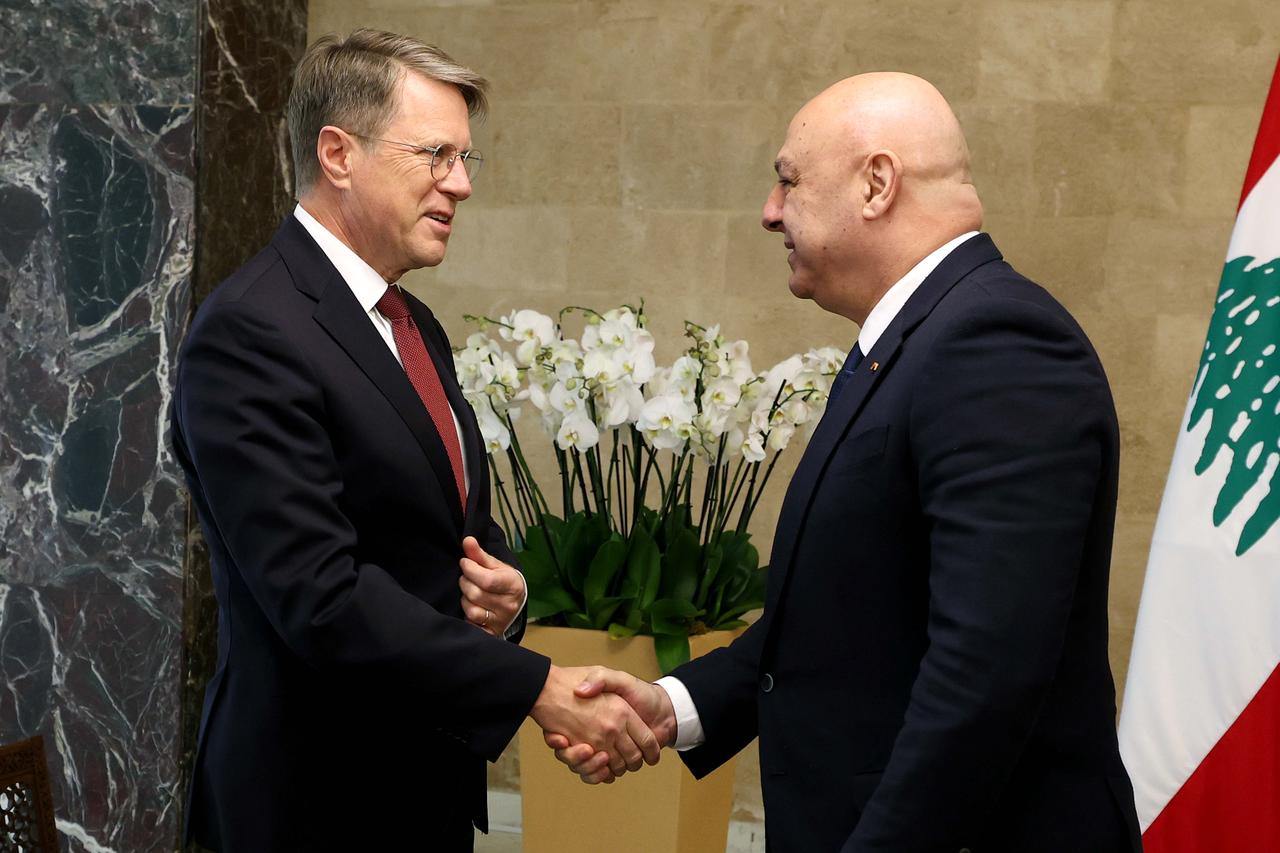


United Nations Security Council President Samuel Zbogar on Saturday reaffirmed the Council’s support for Lebanon’s territorial integrity and sovereignty, urging all parties to adhere to the ceasefire agreement signed on Nov. 27, 2024.
Speaking at a press conference in Beirut following a visit by a Security Council delegation, Zbogar said the Council “renews its commitment to the stability of Lebanon and the region” and continues to hold regular consultations on the situation along the Blue Line, the border demarcation marking Israel’s 2000 withdrawal from Lebanon.
“We came to Beirut at a pivotal time for the implementation of the cessation of hostilities agreement of November of last year,” Zbogar said, adding that maintaining calm along the border is essential for regional stability.
The visit came amid reports by Israel’s public broadcaster that Tel Aviv is “preparing for a military escalation” in response to what it described as the “growing capabilities of Hezbollah.”
“We reaffirm the Council’s support for Lebanon’s territorial integrity, sovereignty, and political independence,” Zbogar said. He also stressed that “the safety of peacekeepers must be respected and that they must never be targeted.”
He voiced support for the Lebanese government’s decision to ensure “the state’s monopoly of arms.”

Under U.S. and Israeli pressure, Lebanon’s government decided last August to disarm Hezbollah, tasking the army with implementing a five-phase plan to bring all weapons under state control by the end of 2025. Hezbollah quickly rejected the plan, calling it a “sin” and insisting that Israel first withdraw from all Lebanese territory.
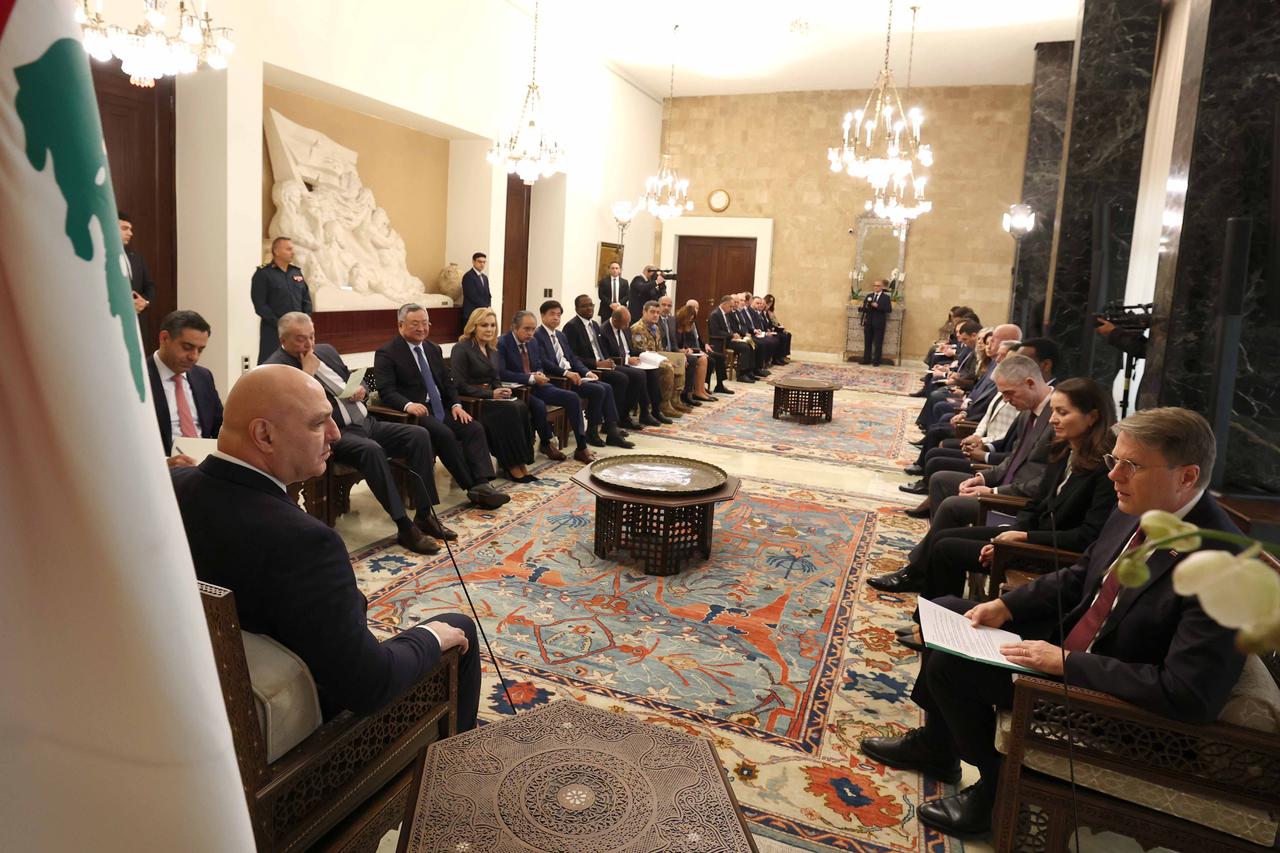
Lebanese President Joseph Aoun, who met with the UN delegation on Friday, urged the ambassadors to press Israel to enforce the ceasefire and comply with international resolutions. He thanked the envoys for their continued support and reaffirmed Lebanon’s commitment to implementing U.N. resolutions.
Aoun also called for increased international assistance to help the Lebanese army fully deploy in the country’s south and maintain stability alongside the U.N. peacekeeping force (UNIFIL).
Prime Minister Nawaf Salam told the delegation that Lebanon needs a “supportive international force” to prevent a security vacuum after UNIFIL’s mandate ends.
He suggested that such a force could operate under the U.N. Truce Supervision Organization or function similarly to the U.N. Disengagement Observer Force in the Golan Heights.
The delegation welcomed Lebanon’s decision to include a civilian representative in the Mechanism Committee, established under the November 2024 ceasefire, which includes Lebanon, France, Israel, the United States, and UNIFIL.
Former Lebanese Ambassador to Washington Simon Karam and Israeli National Security Council official Uri Resnick attended a rare civilian-led meeting under the mechanism in Naqoura on Wednesday, chaired by U.S. Special Envoy to Lebanon Morgan Ortagus.
Aoun confirmed that additional civilian-led talks with Israel are scheduled for Dec. 19 to further implement the ceasefire.
Parliament Speaker Nabih Berri warned the delegation that continued Israeli attacks risked reigniting the war that devastated southern Lebanon for nearly two years. “It is unacceptable to negotiate under fire,” Berri said, calling on Israel to honor U.N. Resolution 1701 and halt its “daily violations.”
Foreign Minister Youssef Raggi thanked the U.N. and Security Council for their “lasting support” and praised UNIFIL’s contributions. He said discussions were underway to determine “a formula for the post-UNIFIL phase.”
Raggi reiterated that Lebanon’s decision to assert control over all weapons was made in the national interest. “This is not aimed at pleasing any external party,” he said, “but is a Lebanese necessity to build the state and ensure it exercises full authority.”
The Lebanese Health Ministry said at least 335 people have been killed and 973 others wounded in 1,038 Israeli attacks since the ceasefire took effect in November 2024.
Israel was expected to complete its withdrawal from southern Lebanon in January but has only partially pulled back, maintaining positions at five border outposts.
The 33-day war between Hezbollah and Israel in 2006 prompted the U.N. Security Council to adopt Resolution 1701, which called for a full cessation of hostilities. The latest ceasefire agreement was reached in November 2024 following more than a year of cross-border attacks linked to the Gaza war, which killed over 4,000 people and wounded 17,000 others.


 Set as preferred source
 Set as preferred source


 1 min read
 1 min read