Newsletters




There is a particular kind of statement that does not merely comment on policy, but quietly rearranges its underlying logic.
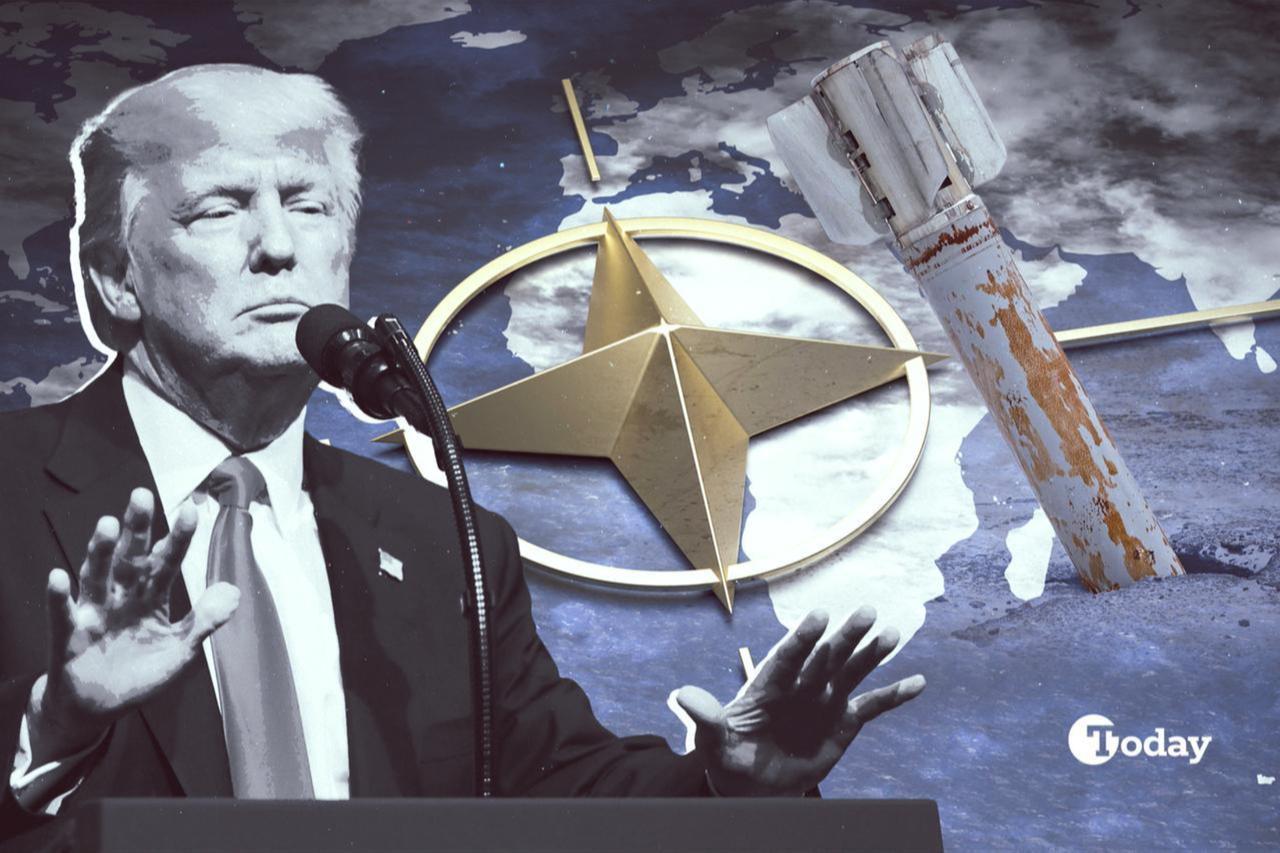
Joe Kent, former director of the U.S. National Counterterrorism Center, offered precisely that when he suggested that a potential U.S. withdrawal from NATO would not be driven by isolationism, but by strategic alignment.
“Unfortunately,” he noted, “leaving NATO won’t be to avoid foreign entanglements, we’ll be leaving NATO so we can side with Israel when Türkiye and Israel eventually clash in Syria.”
As a veteran who served on the ground in Syria, Kent’s formulation suggests that President Trump’s recent threats to move away from the alliance are less a reaction to Western European allies than a long-term strategy influenced by influential interest groups.


What makes the remark consequential is not its official status, but its timing and resonance. It arrives amid renewed debates over NATO’s utility in Washington, where questions of burden-sharing in a potential conflict with Iran and strategic relevance have resurfaced, particularly at the urging of Donald Trump.
Trump’s critique of the alliance has been blunt and repetitive, framing NATO as an uneven arrangement in which the United States carries disproportionate costs. Allies who declined to support U.S. initiatives, including plans tied to the Strait of Hormuz during recent tensions, have been singled out as evidence of the alliance’s fragility. At one point, NATO itself was reduced to a “paper tiger.”
Yet Kent’s intervention shifts the argument. It suggests that the issue is not simply whether NATO constrains the United States, but how those constraints might interfere with a future alignment Washington might prefer, specifically, siding with Israel in a potential confrontation with Türkiye. Kent posits that the push for war with Iran was a policy imposed on Washington by Israeli interests.
The scenario Kent outlines is anchored in Syria, where overlapping strategies are beginning to produce structural friction.
Türkiye has pursued a vision centered on consolidation: a stronger, centralized Syrian state capable of asserting control over its territory, managing borders, and enabling refugee returns. This approach prioritizes coherence, even if it requires sustained political backing.
Israel’s posture is more layered. While it has engaged in U.S.-mediated discussions with Damascus and agreed to mechanisms such as a dedicated communication channel, it has simultaneously maintained operational flexibility.
Since late 2024, this has included repeated strikes, an expanded forward presence, and calls for a demilitarized zone south of Damascus. Outreach to the military groups that are against the new administration in Syria further indicates an effort to shape the internal balance of power.
These approaches are not immediately incompatible. But they are not naturally aligned either. One seeks consolidation; the other preserves optionality. Over time, such differences tend to accumulate rather than dissipate.
While Israel, much like Iran, has armed Druze militants in Syria to serve as proxies, it has taken steps to de-escalate tensions where diplomacy with Ankara is required later on.
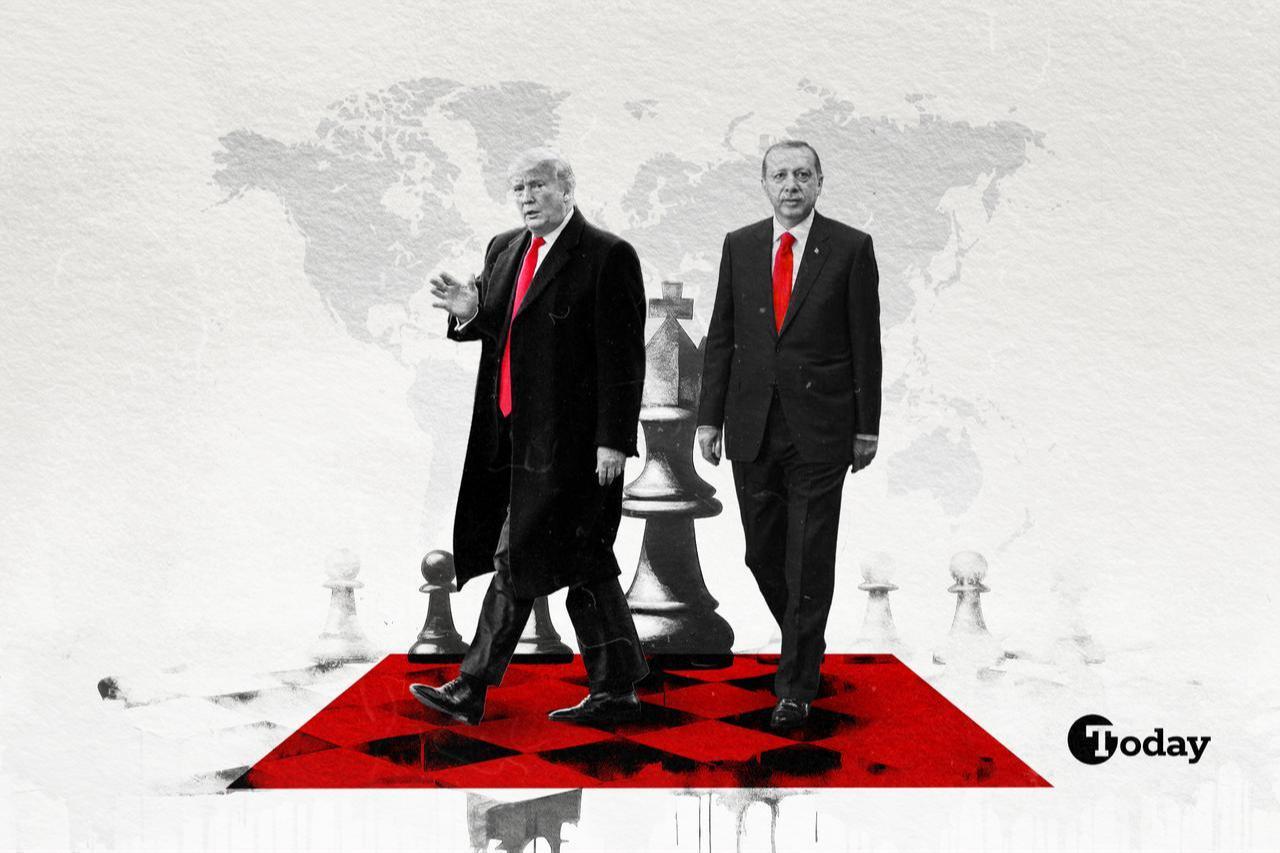
Kent’s statement also intersects with a broader shift in how Türkiye is being discussed in certain strategic circles. On Feb. 17, former Israeli Prime Minister Naftali Bennett declared that “Türkiye is the new Iran,” signaling a reframing of threat perception.
This narrative, once peripheral, has gained traction across parts of Washington’s think-tank and lobbying environment. Particularly after direct U.S. and Israeli strikes on Iran, the longstanding focal point of regional threat assessments has begun to evolve.
While Israel-linked organizations such as the FDD channeled their resources into anti-Türkiye propaganda at an unprecedented pace, other pro-Israel American conservatives have also launched efforts to spread these claims.
What Kent ultimately surfaces is not a policy, but a tension. NATO’s core principle, collective defense, assumes clarity in identifying adversaries. It was not designed to adjudicate conflicts between partners.
In such a scenario, alliance commitments become less automatic and more interpretative. Would the United States prioritize its treaty obligations to Türkiye, its strategic partnership with Israel, or the specific contours of the conflict itself?
For now, these questions remain hypothetical. But Kent’s framing suggests that, in some circles, the answers are already being considered, and that NATO, rather than serving as a guide, may be seen as an obstacle.
There is an irony embedded in the argument. NATO was created to prevent precisely the kind of uncertainty that Kent describes, to eliminate ambiguity about where the United States stands in moments of crisis.
Yet here, the alliance is recast as a constraint on strategic freedom, something to be exited, not to disengage from conflict, but to participate in it on more selective terms.
This is less a rejection of entanglement than a redefinition of it.
If Kent’s scenario remains speculative, its logic is not. It reflects a broader shift in which alliances are no longer treated as fixed commitments, but as instruments, useful when aligned with immediate interests, negotiable when they are not.
And in that shift, the question is no longer whether alliances endure, but what, exactly, they are meant to guarantee.


 Set as preferred source
 Set as preferred source


 2 min read

 1 min read