

 Newsletters


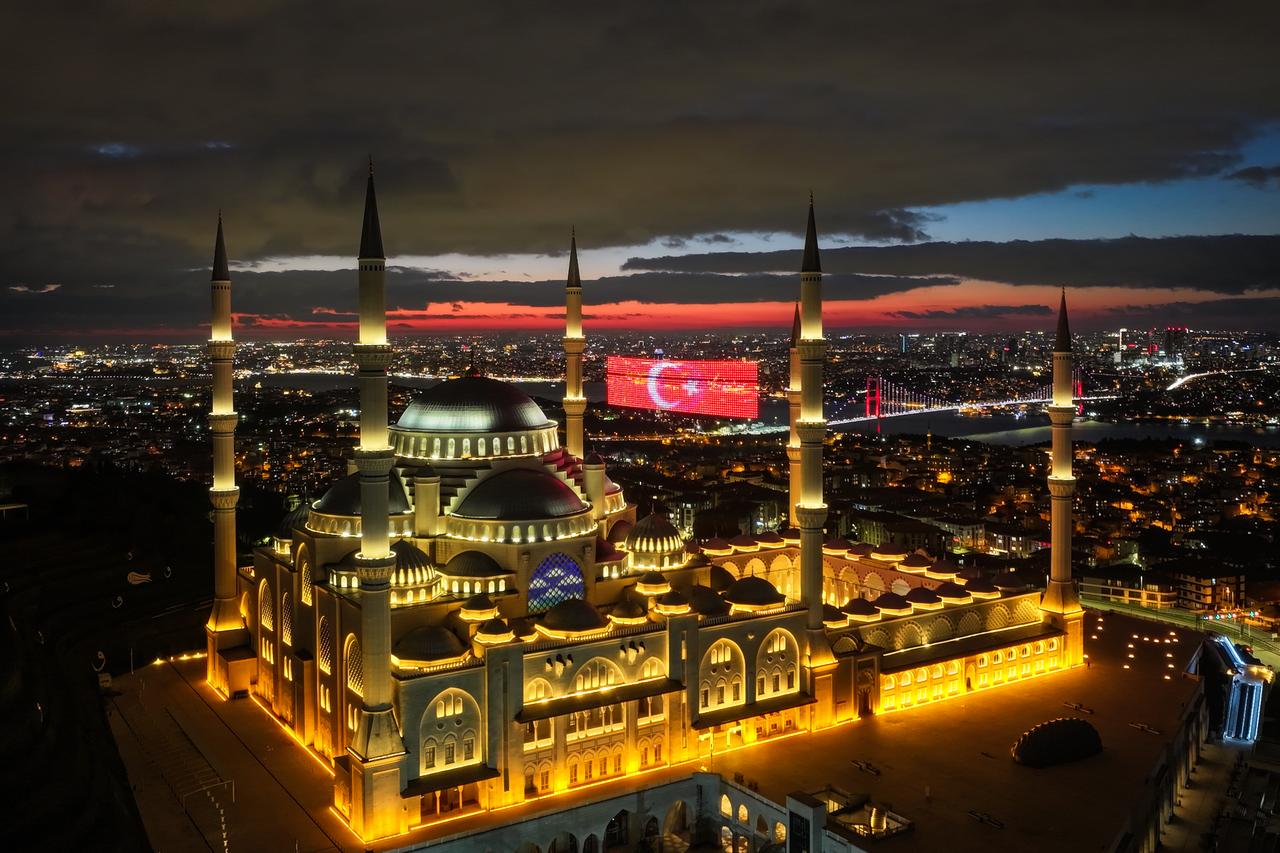


The idea that "Türkiye is the next Iran" is gaining traction in the West, yet the phrase "Türkiye is next" has long circulated among the Turkish public.
For decades, a common narrative in Türkiye has held that the country would become the next target of “global powers” after the wars and internal upheaval in Syria, Iraq, and other neighboring countries. The U.S.-Israeli war on Iran has only emboldened these decadeslong anxieties in the public. The Turkish state apparatus, however, does not act based on anxieties or narratives that might drive rivalries into conflict.
A different argument is spreading in Israel and in parts of Western commentary. Iran, the line goes, is weakening. Türkiye is rising. Therefore, Türkiye is “the new Iran,” the next main threat to be contained because it has the military power and population depth that Israel lacks. That label may sound tidy, but it points policy in the wrong direction. It also pushes the region toward harder lines and fewer guardrails.
The great power vacuum that is likely to open if the Iranian regime falls does not point to an aggressive Türkiye poised to carry out land grabs.
There is no need to pretend that relations between Israel and Türkiye are healthy. They are not. Gaza has driven a political rupture, and it has spilled into trade. Syria has become a steady source of friction, with Israeli strikes and Turkish military plans often brushing close to each other.
In the Eastern Mediterranean, Israel’s security and energy ties with Greece and the Greek administration of southern Cyprus sit uneasily alongside Türkiye’s maritime claims and its demand not to be boxed out. These disputes are real, and they can get worse. There is a real risk of military tension, as was the case in the last decade.
Still, it is one thing to describe a tense rivalry. It is another to treat Türkiye as a replacement for Iran.
Iran is an isolated, sanctions-hit state that has built much of its regional reach through armed networks. Its security system has long relied on proxy warfare, missile pressure, and a nuclear file that sits at the center of global nonproliferation politics. Türkiye is a very different case. It is a NATO member and a G20 country with deep commercial links to Europe and broad ties to Western institutions.
Ankara uses hard power in its neighborhood, but it does so as a state actor, not as the patron of a transnational militia ecosystem aimed at Israel. Its leverage is often economic, diplomatic, and geographic as much as military. Lumping these two countries into one box blurs what matters in each case and invites blunt policy tools.
The “new Iran” slogan also misreads the paths by which Türkiye could be pulled deeper into this war. The likelier route is not ideology. It is the Kurdish file.
Türkiye has long treated armed Kurdish movements across Türkiye, Syria, Iraq, and Iran as a single security continuum. If the war in Iran opens space for Iranian Kurdish groups to mobilize, or if outside powers flirt with using Kurdish forces to pressure Tehran on the ground, Ankara will not see this as a distant tactic. It will see a spillover threat.
That can produce quiet Turkish-Iranian intelligence coordination, even as Türkiye remains bound to NATO and maintains working relations with Washington. It can also raise tensions along the Iraq-Syria-Iran triangle, where armed groups, smuggling routes, and refugee flows do not respect borders.
This is where loose talk becomes costly. If the American debate begins treating Türkiye as an enemy to be boxed in, Ankara’s incentives will shift. It will look for more ways to hedge. It will also tighten its posture on the Kurdish question, and that posture could collide with U.S. habits in the region.
A slogan meant to sound tough can end up widening the war by turning a spillover problem into an alliance problem.
Syria is the second flashpoint. After Assad’s fall, Türkiye has backed a stronger, centralized Syrian state that can police borders and make refugee returns possible. Israel, for its part, has entered U.S.-mediated talks with Damascus and agreed to a dedicated communication cell, which suggests it wants guardrails, not perpetual escalation.
Yet Israel has also kept wide latitude since December 2024: repeated strikes, a forward posture beyond prior lines, calls for a demilitarized belt south of Damascus, and outreach to local minorities as a source of influence.
The late-January deal to fold the Kurdish-led SDF into state structures strengthens Damascus’s hand, but its implementation will be contested and uneven. As Ankara presses for re-centralization and Israel insists on freedom of action near its border while watching Turkish influence, the room for misread signals remains.
Both sides know this, which is why they have relied on technical deconfliction to prevent accidents. That is not a sign of friendship. It is a sign that neither wants a shootout triggered by a bad night in Syrian airspace.
The “Türkiye is the new Iran” label cuts against this logic. It feeds domestic politics in Israel and Türkiye in ways that make deconfliction harder to defend. It can also encourage preemptive moves that treat every Turkish action as a step in a larger hostile plan rather than a bounded move in a messy theater.
A third arena, often ignored in the “new Iran” narrative, is the Red Sea and the Horn of Africa. Israel’s decision to recognize Somaliland and its growing interest in port access and maritime monitoring are part of a wider struggle over the Bab el-Mandeb corridor.
Türkiye, for its part, has invested heavily in Somalia’s state security institutions through training, basing, and defense cooperation. This competition is not simply a clash of religious blocs. It is about maritime access, surveillance, and who shapes security arrangements along one of the world’s most sensitive shipping routes.
Here again, labeling Türkiye as Iran does not help. It makes every move in a port dispute look like a chapter in a civilizational struggle. It turns a contest over access and sovereignty into a moralized fight, raising the cost of compromise and increasing the odds that smaller actors will seek patrons in larger wars.
 1 min read
For Washington, the practical lesson is not that Türkiye is harmless. It is that slogans are not policy. The United States can protect its interests by separating files, keeping communication channels open, and reducing the risk of accidents while being firm where necessary.
That means maintaining clear lines on allied security and air defense, supporting deconfliction in Syria, and refusing to turn Kurdish groups into tools for regime-change fantasies that would destabilize four countries at once.
It also means working with Ankara, where interests overlap, such as keeping sea lanes open and supporting reconstruction in ways that do not create new blocs.
The Middle East already has enough engines of escalation. The United States should not add another by turning a difficult partner into a branded enemy.
Türkiye is not Iran. Treating it as such will not make the region safer.


 Set as preferred source
 Set as preferred source


 1 min read


