Newsletters


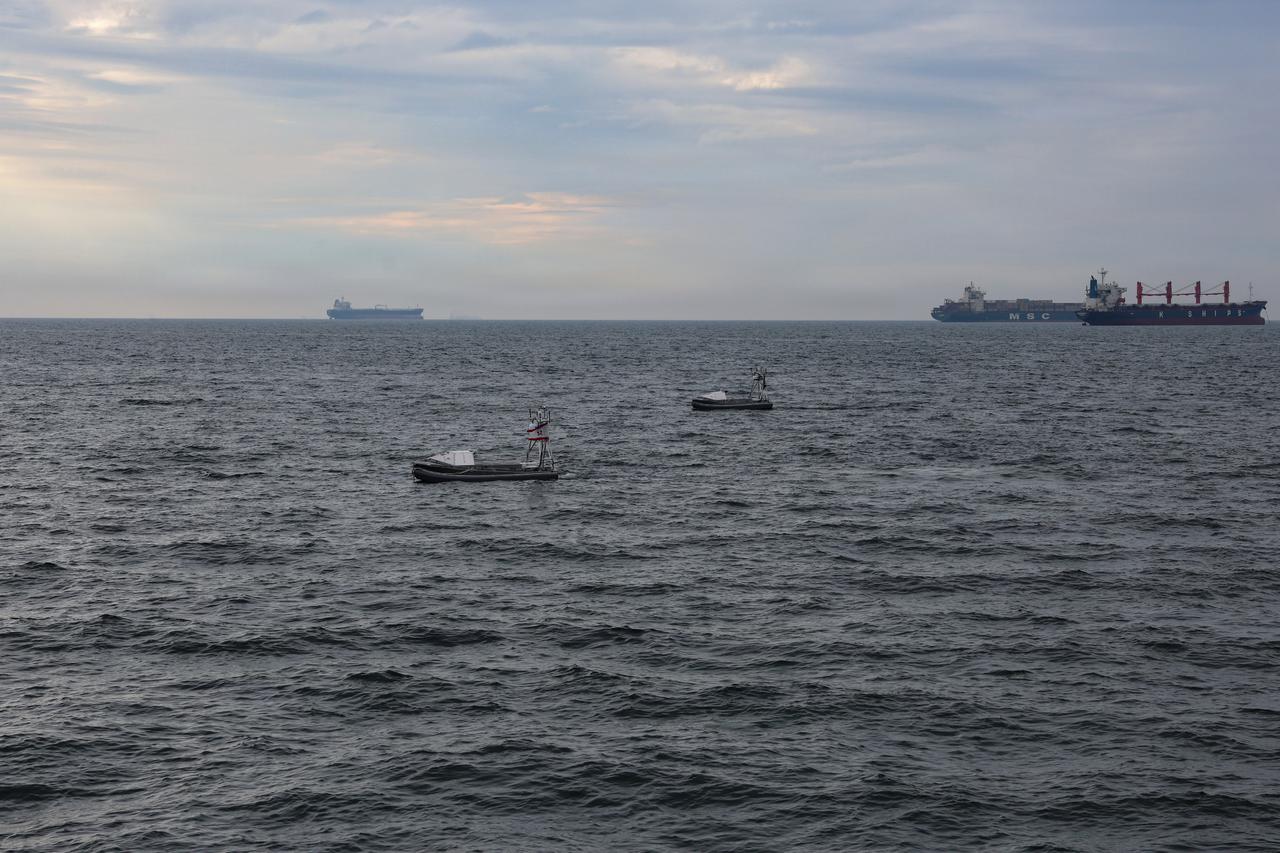


The United States deployed one-way attack sea drones for the first time in its latest wave of strikes against Iran, U.S. Central Command (CENTCOM) said, as Washington and Tehran issued directly contradictory claims over whether the Strait of Hormuz remains open to shipping.
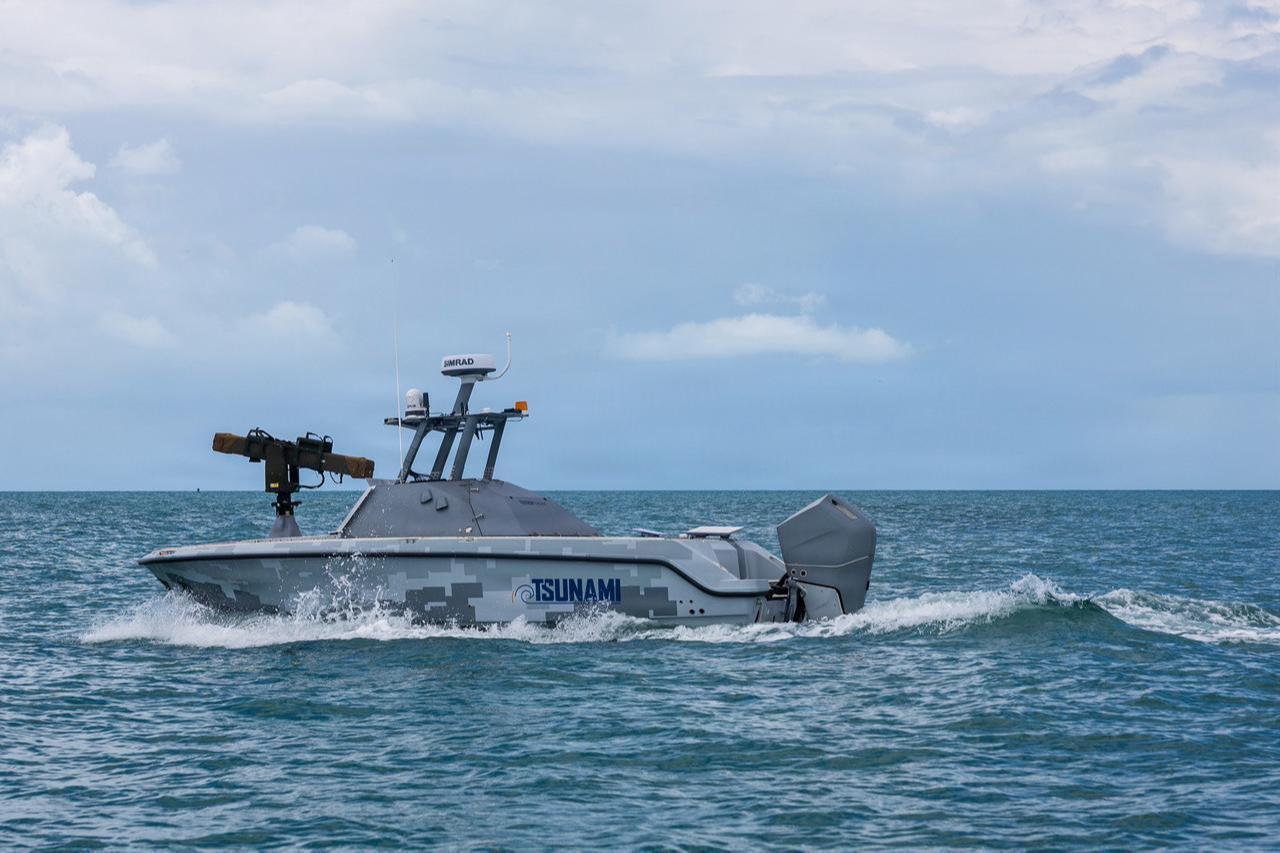
CENTCOM said it used "one-way attack aerial drones, and one-way attack sea drones for the first time" in strikes against Iran on Sunday, deployed alongside fighter aircraft and naval vessels.
The exact type and number of drones used was not specified in the command's statement.
U.S. attack aerial drones were first used earlier in the conflict, when CENTCOM deployed the Low-cost Unmanned Combat Attack System (LUCAS), a design based on Iran's own Shahed 136 drones, which Russia has used extensively in its war on Ukraine.
"These low-cost drones, modeled after Iran's Shahed drones, are now delivering American-made retribution," CENTCOM said in a social media post at the time.
Regarding sea drones, Carl Schuster, a former director of the U.S. Pacific Command's Joint Intelligence Center, told CNN the U.S. has been experimenting with several types, with the Fleet-class unmanned surface vessel (USV) best suited to one-way strikes.
Schuster said the craft, originally designed for mine-countermeasures or anti-submarine missions, has a top speed exceeding 40 mph and could be adapted for one-way "suicide strikes."
He said the vessels cost more than $2 million each but "would be hard to stop," and that both the USV and the LUCAS aerial drones are designed to be deployed from U.S. Navy littoral combat ships (LCSs).

CENTCOM said the strikes were directed by U.S. President Donald Trump "to hold Iranian forces accountable" and were intended to further degrade Iran's ability to attack commercial shipping in the Strait of Hormuz.
The latest round began at 5 p.m. ET Sunday and was completed by around 10:30 p.m., according to CENTCOM's statement on X.
CENTCOM said Sunday's strikes were retaliation for an Iranian attack on a Greek Cyprus-flagged container ship in the strait.
The command said a crew member from that vessel, the M/V GFS Galaxy, was missing and that the ship could not continue its voyage after a fire and engine room damage.
CENTCOM said U.S. forces hit 140 military targets in the Saturday strikes, including Iranian missile and drone sites, naval capabilities and coastal surveillance locations, with dozens more targets struck Sunday.
Iran's Islamic Revolutionary Guard Corps (IRGC) said it retaliated by hitting U.S. bases in Bahrain and Kuwait, with retaliatory operations described as "ongoing."
In statements following the weekend strikes, the IRGC said it had hit military targets in Jordan, Kuwait, Qatar, Oman and Bahrain, including bases.
The IRGC declared the Strait of Hormuz closed Sunday, blaming what it called "insecurity created by the unlawful interference of foreign actors" and warning that any military strikes over the matter would be met with "a forceful response."
"Additional enemy bases in the region will be targeted," the IRGC said via Iran's IRIB on Telegram.
The IRGC said it fired warning shots at a vessel that had switched off its tracking and identification systems while attempting to use an unauthorized route, calling this action a threat to maritime security, and said the vessel was struck and stopped.
"The Strait of Hormuz is closed until further notice and will remain closed until the end of U.S. interference in the region," the IRGC said, adding, "No vessel will be permitted to transit the strait."
Iran's strait authority separately said passage of vessels was "not possible" and that permits would be reviewed once "stability and calm are restored."
CENTCOM rejected Iran's claim. "Iran does not control the strait. Traffic is flowing," the command said in a post on X, adding in a separate statement: "It remains an international waterway. U.S. forces are positioned and prepared to keep it that way."
CENTCOM also said in a statement that its forces "are postured and prepared to ensure that freedom of navigation remains available to commercial shipping despite Iran's continued unwarranted aggression, harassment, threats, and arbitrary declarations."
The U.S. Navy-overseen Joint Maritime Information Center said the strait's "southern route," which hugs the Omani coastline, remained open for two-way traffic.
Trump told reporters in an interview on NBC's "Meet the Press" that the strait was open to commercial traffic, saying, "It's open as far as we're concerned," and he told CNN the same.
Despite the competing claims, tracking data showed shipping traffic through the strait had been reduced to a trickle on Sunday.
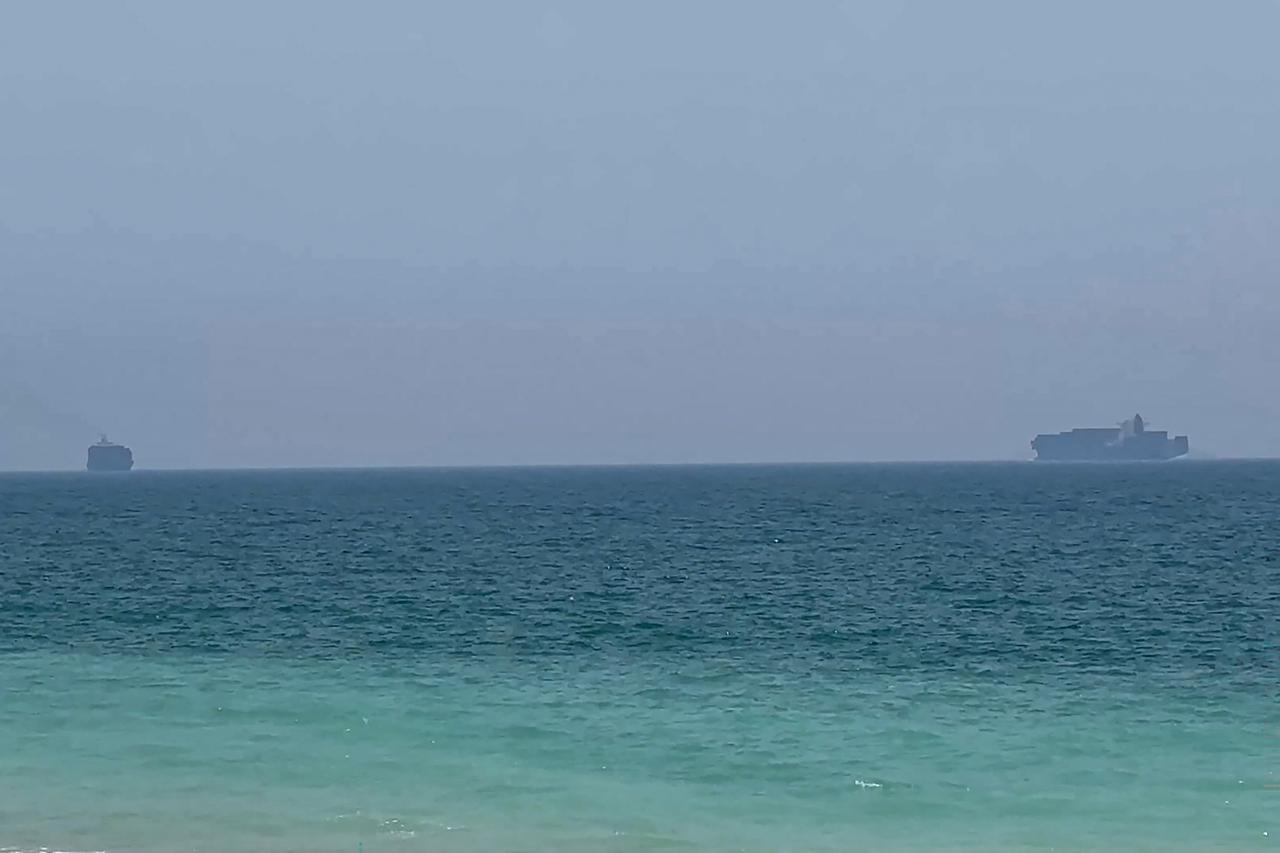
Mehran Kamrava, a professor of government at Georgetown University in Qatar, told CNN's Will Ripley the conflict had devolved into "a very determined fight over who controls the Strait of Hormuz."
He said Iran, unable to match the U.S. and Israel militarily, was trying to shift the conflict "from a military one into an economic one," and had "in some ways succeeded in doing so."
"Iran is determined to hold onto the Strait of Hormuz as a source of leverage," Kamrava said.
"Iran wants to establish some sort of administrative influence, and the Americans are determined to undermine that influence. It's all about the Strait of Hormuz right now," he concluded.


 Set as preferred source
 Set as preferred source


 3 min read