Newsletters


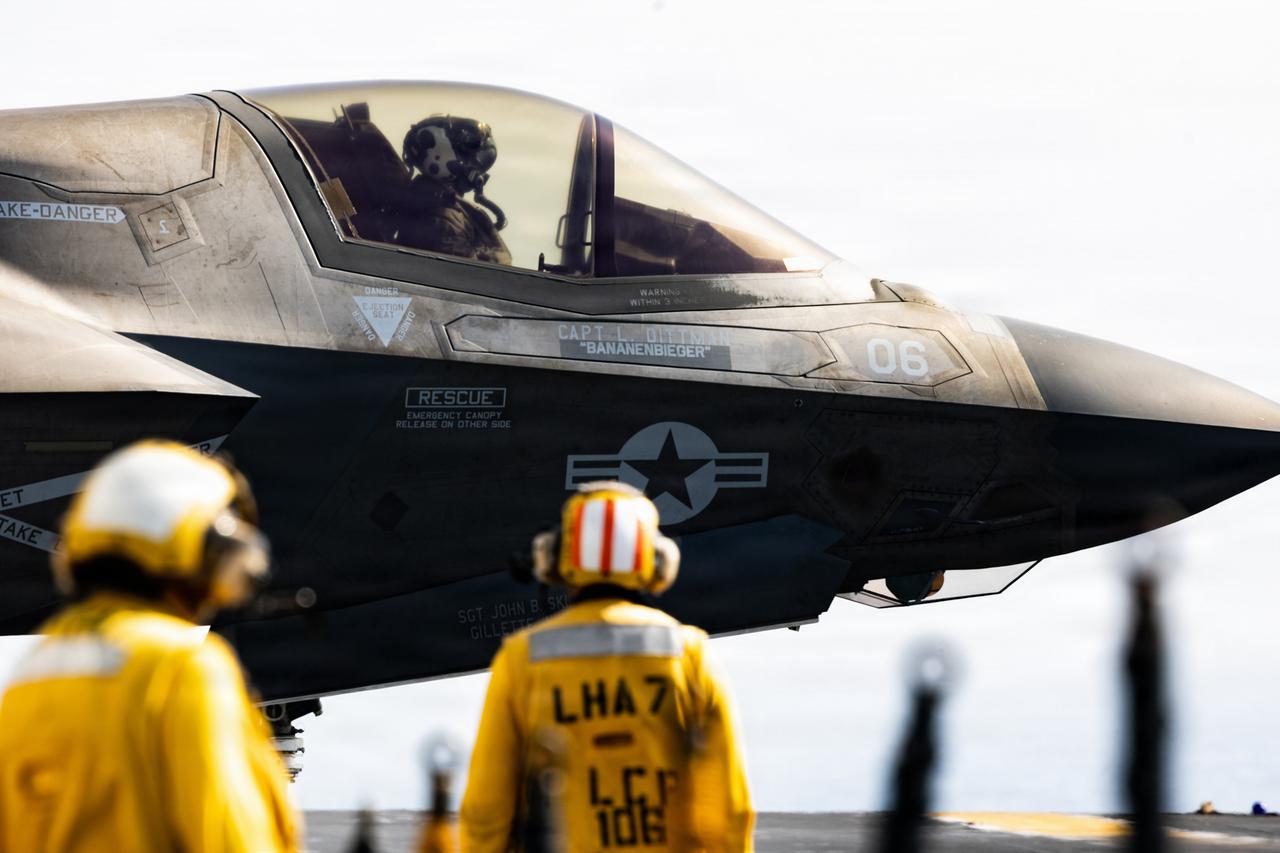


The United States is in discussions about expanding the deployment of nuclear-capable aircraft to additional NATO members in Europe, the Financial Times (FT) reported Tuesday. The move, officials say, is designed to reassure allies that American reductions in conventional military presence will not leave the continent's security guarantees hollow.
Three people briefed on the talks told the FT that U.S. officials have signaled openness to extending nuclear hosting beyond the six countries that currently participate in NATO's nuclear-sharing arrangement, though one of those sources said any agreement was "not imminent."
The existing NATO nuclear-sharing program involves Belgium, Germany, Italy, the Netherlands, Türkiye and the United Kingdom hosting U.S. dual-capable aircraft, fighter jets equipped and trained to deliver American nuclear bombs.
The weapons remain under U.S. control, with Washington holding sole authorization for any use. Allied pilots flying F-35, F-15, and Tornado jets train for nuclear missions as part of demonstrating a force posture.
Drawn up during the Cold War, the arrangement allows non-nuclear NATO allies to participate in nuclear planning without acquiring weapons of their own.
Any expansion would extend that arrangement to new host nations, almost certainly adding new U.S. military infrastructure and personnel to countries that currently have no formal nuclear role.
The talks are described as highly confidential and may not lead to changes, the FT cautioned. But two of the people familiar with the discussions said the openness itself was a deliberate signal, evidence that Washington remained committed to the nuclear umbrella even as it pushed European allies to shoulder more of the conventional defense burden.

"Countries on NATO's eastern flank, including Poland and Baltic states, are among those interested in hosting dual-capable aircraft bases," the sources said.
The pattern was consistent: allies closest to Russia's border have shown the most enthusiasm.
Poland has been the most vocal. Former president Andrzej Duda publicly called for the U.S. to extend the dual-capable aircraft initiative to Polish soil. This year, Warsaw joined a French-led initiative exploring the possibility of temporarily moving parts of France's nuclear deterrent to allied European territory.
"Russia's full-scale invasion of Ukraine and President Vladimir Putin's repeated references to Russian nuclear capabilities have accelerated interest among eastern members," the sources told the FT.
The discussions emerge from a specific tension within the alliance. The Trump administration has angered European capitals by canceling planned deployments of key conventional weapons systems, announcing troop withdrawals, and signaling that military assets will increasingly flow toward Asia and other theaters. Allies fear those decisions will create gaps that cannot be quickly filled.
But while European allies have committed to substantial increases in defense spending and conventional military investment, the nuclear umbrella occupies a different category. It is considered irreplaceable and not something European rearmament can substitute.
Pentagon policy chief Elbridge Colby has said publicly that the U.S. will continue to use nuclear weapons to protect NATO members even as the alliance's European members take the lead on conventional forces.
NATO Secretary-General Mark Rutte, speaking after a foreign ministers' meeting last month, sought to project continuity.
"There was a common understanding that whilst the U.S. will pivot more towards other theaters ... the overall deterrence and defense in Europe has to stay the same," he said.
He offered a more pointed reassurance to any potential adversary. "Let me be crystal clear... Were anyone to be foolish as to attack us, the response would be devastating."


 Set as preferred source
 Set as preferred source



 3 min read