Newsletters


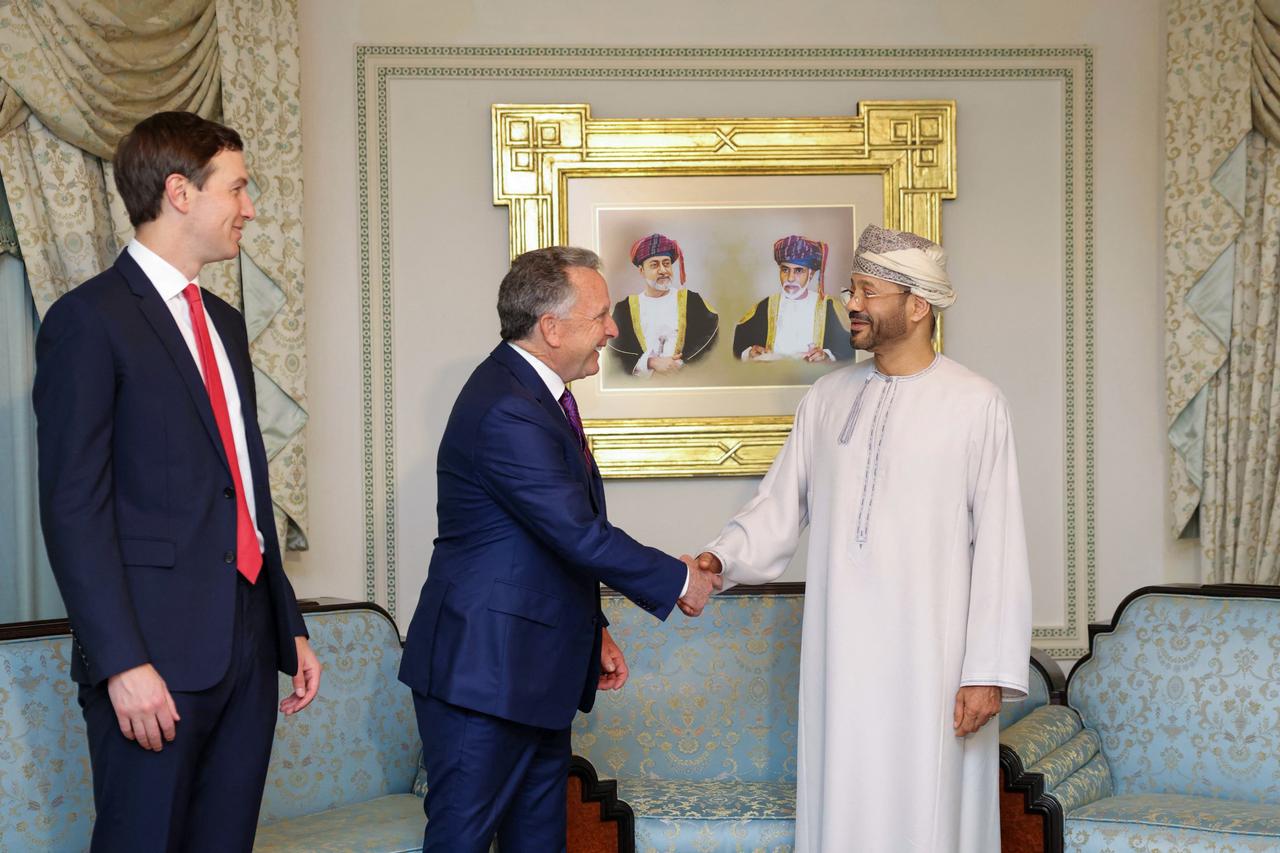


The United States and Iran began direct nuclear negotiations Friday in Oman’s capital Muscat, resuming a diplomatic process that was halted by the June 2025 war, as regional countries, including Türkiye, work to prevent further military escalation.
Iranian Foreign Minister Abbas Araghchi is leading Tehran’s delegation, while U.S. President Donald Trump’s Middle East special envoy Steve Witkoff represents Washington. Trump’s son-in-law and adviser Jared Kushner is accompanying Witkoff.
The talks are being held under the auspices of Omani Foreign Minister Sayyid Badr Hamad Al Busaidi, Oman’s Foreign Ministry said.
In a statement, the ministry said the Muscat talks are focused on laying the groundwork for restarting diplomatic and technical negotiations related to Iran’s nuclear issues.
It said Al Busaidi met separately with the Iranian delegation led by Araghchi and the US delegation headed by Witkoff to manage the process and discuss creating appropriate conditions for relaunching negotiations and ensuring their success.
The statement added that Oman reaffirmed its commitment to facilitating dialogue and rapprochement between the parties and said it would continue working with international partners to reach political solutions that support regional security and stability.
Busaidi expressed regional countries' commitment to preventing any escalation of tensions and hopes that this round of talks would pave the way for a lasting understanding between the U.S. and Iran.
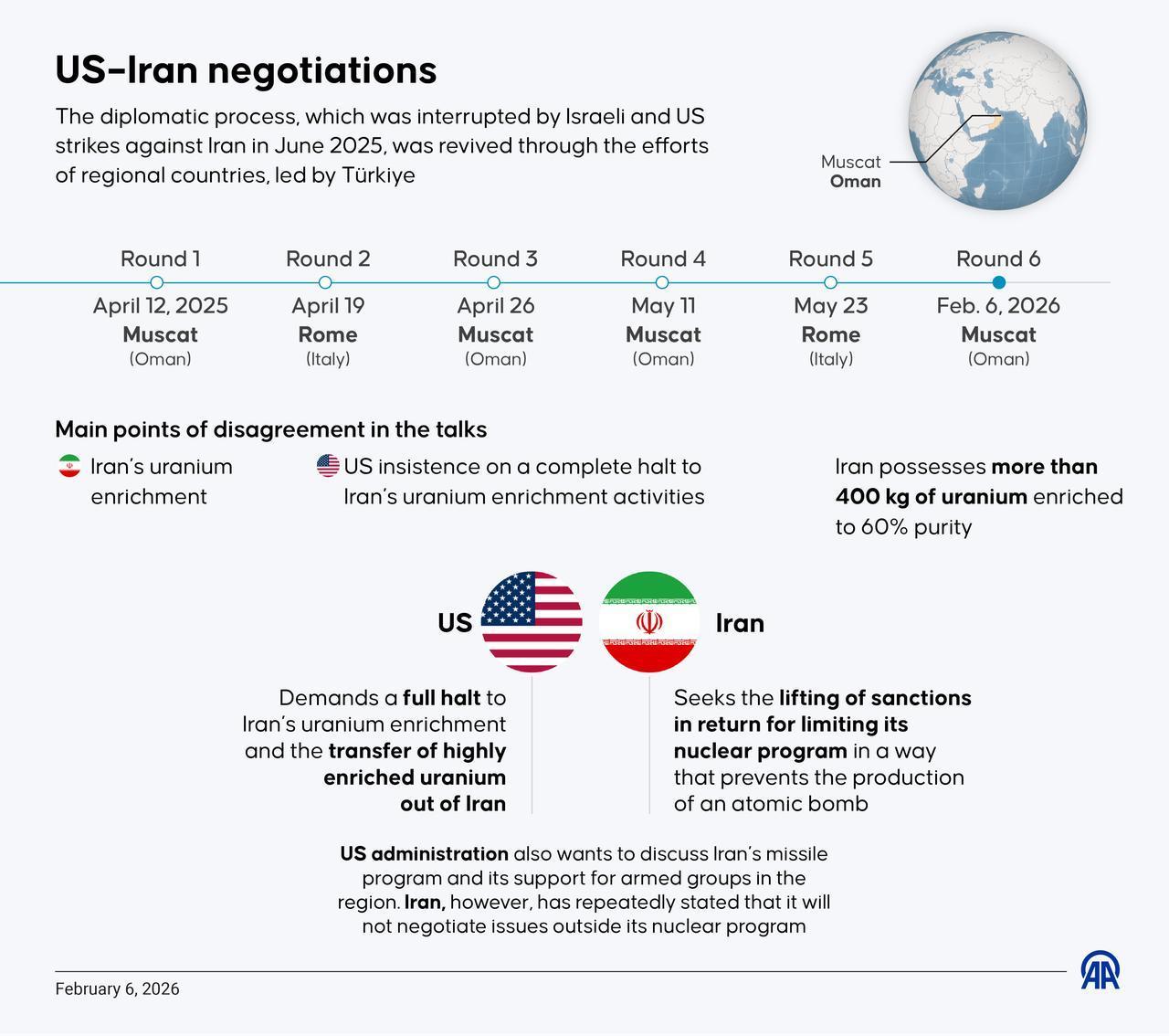

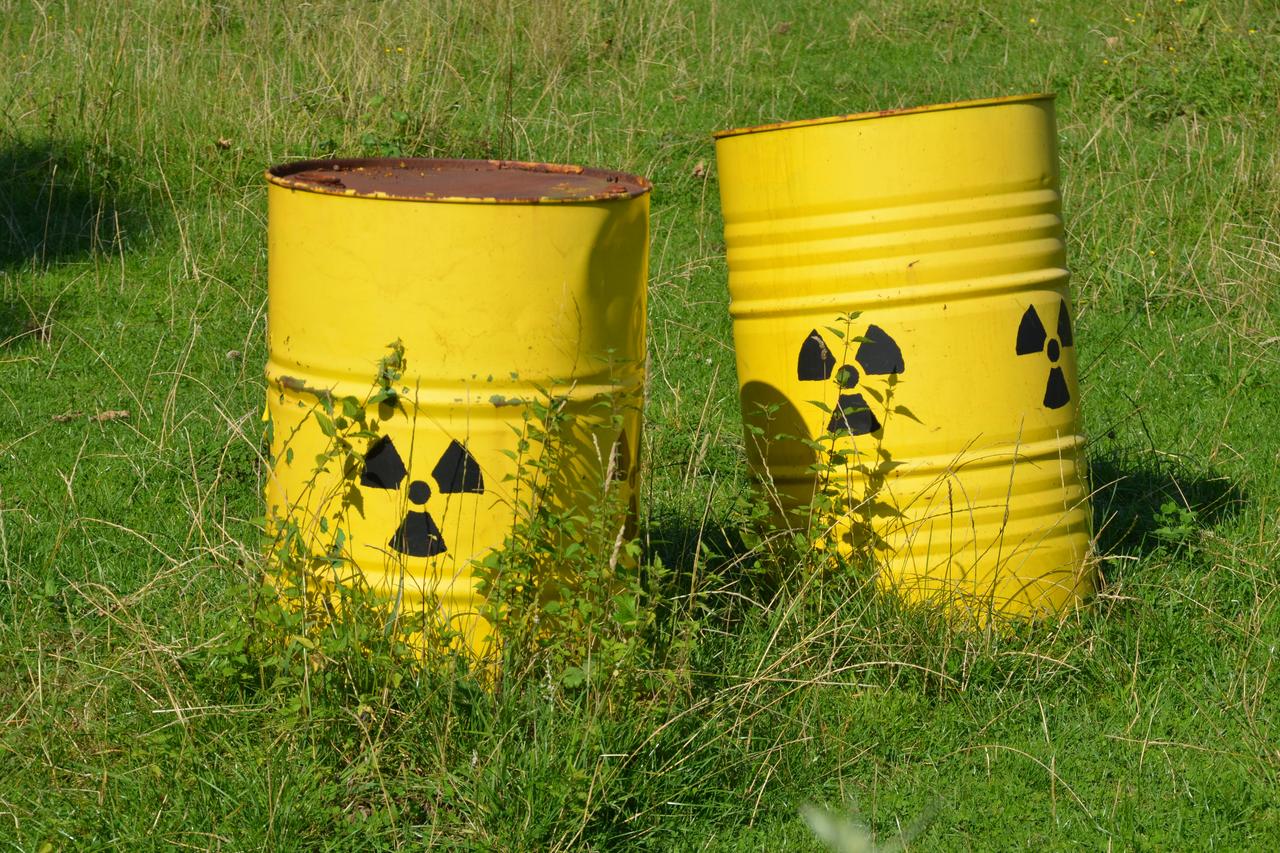
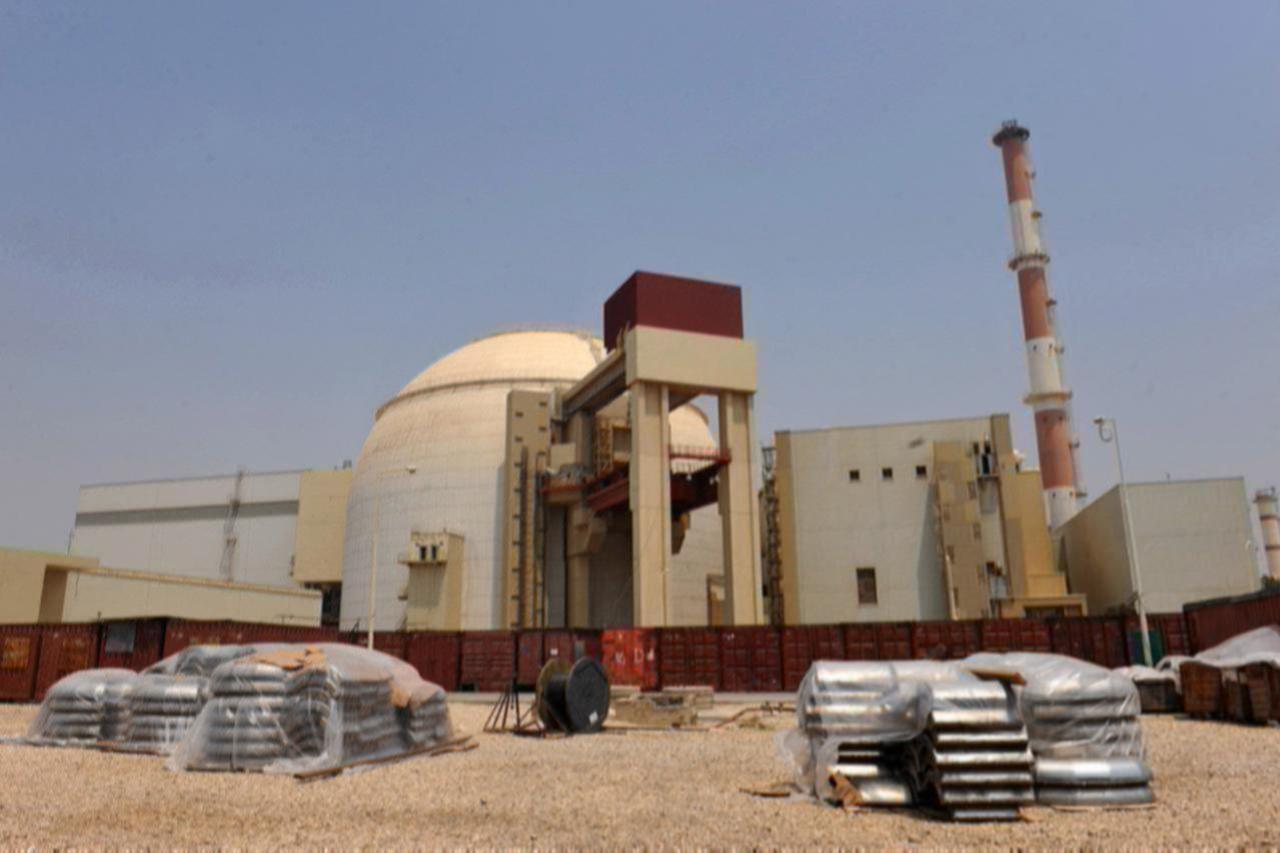
The negotiations resume amid fundamental disagreements over uranium enrichment and the removal of highly enriched uranium from Iran.
Iran seeks the lifting of sanctions in exchange for keeping its nuclear program within limitations that would prevent atomic bomb production.
The U.S. demands that Iran completely halt uranium enrichment activities and remove highly enriched uranium from the country.
Tehran maintains its nuclear program is designed for peaceful purposes, including supplying electricity. Washington, along with ally Israel, accuses Iran of seeking to produce nuclear weapons.
The Trump administration wants to bring Iran's missile program and support for regional armed groups to the negotiating table. Iran has repeatedly stated it will not negotiate on issues outside the nuclear program.
U.S. Secretary of State Marco Rubio said any negotiations with Iran must address more than just its nuclear program while expressing skepticism about the talks' chances of success.
"I think in order for talks to actually lead to something meaningful, they will have to include certain things," Rubio stated, citing Iran's ballistic missile program, support for regional armed groups and treatment of its own citizens.
Iran's semiofficial Mehr News Agency cited a source saying Washington wants to "raise issues outside the nuclear framework, including defense matters."
"These demands are not only unrelated to the nuclear issue but are directly tied to national security and the country's deterrent capability and are fundamentally non-negotiable," the unnamed source said.
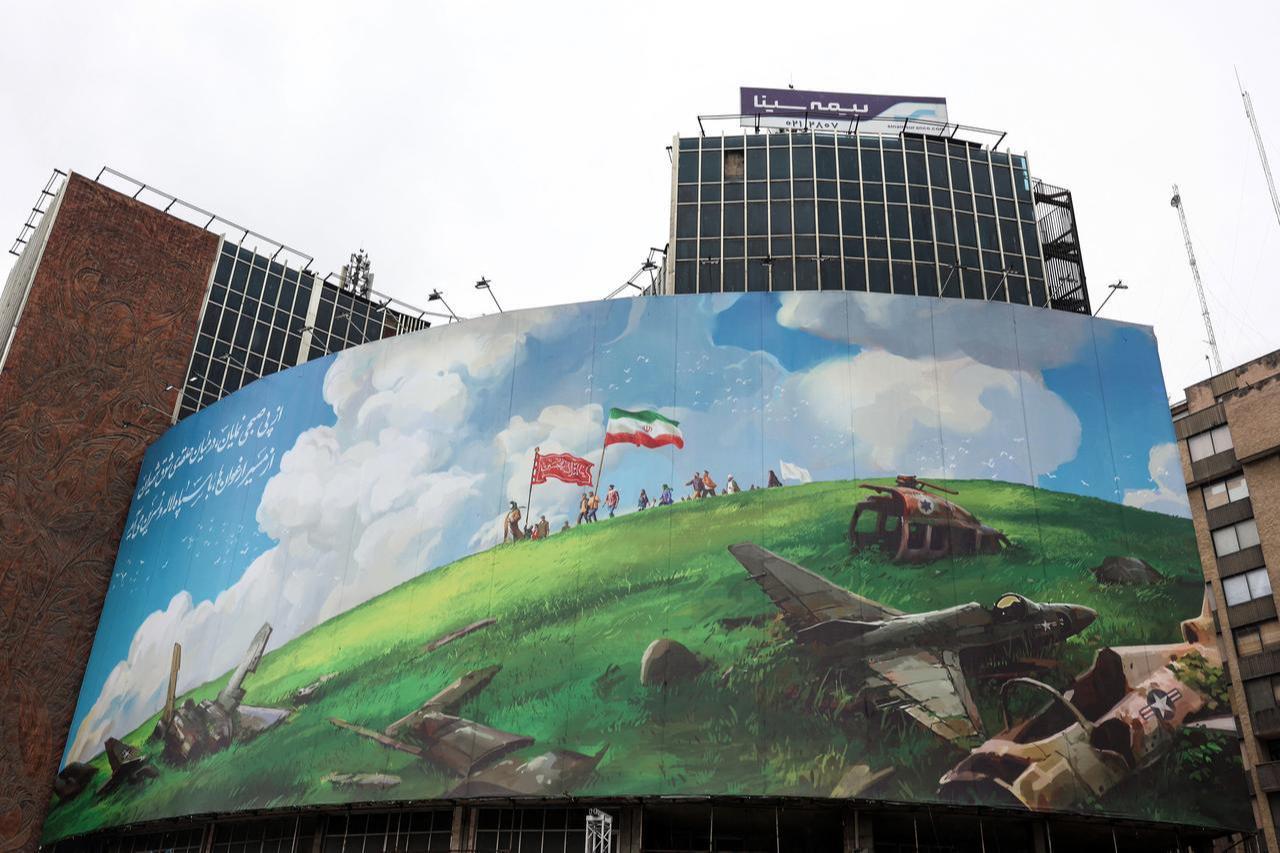
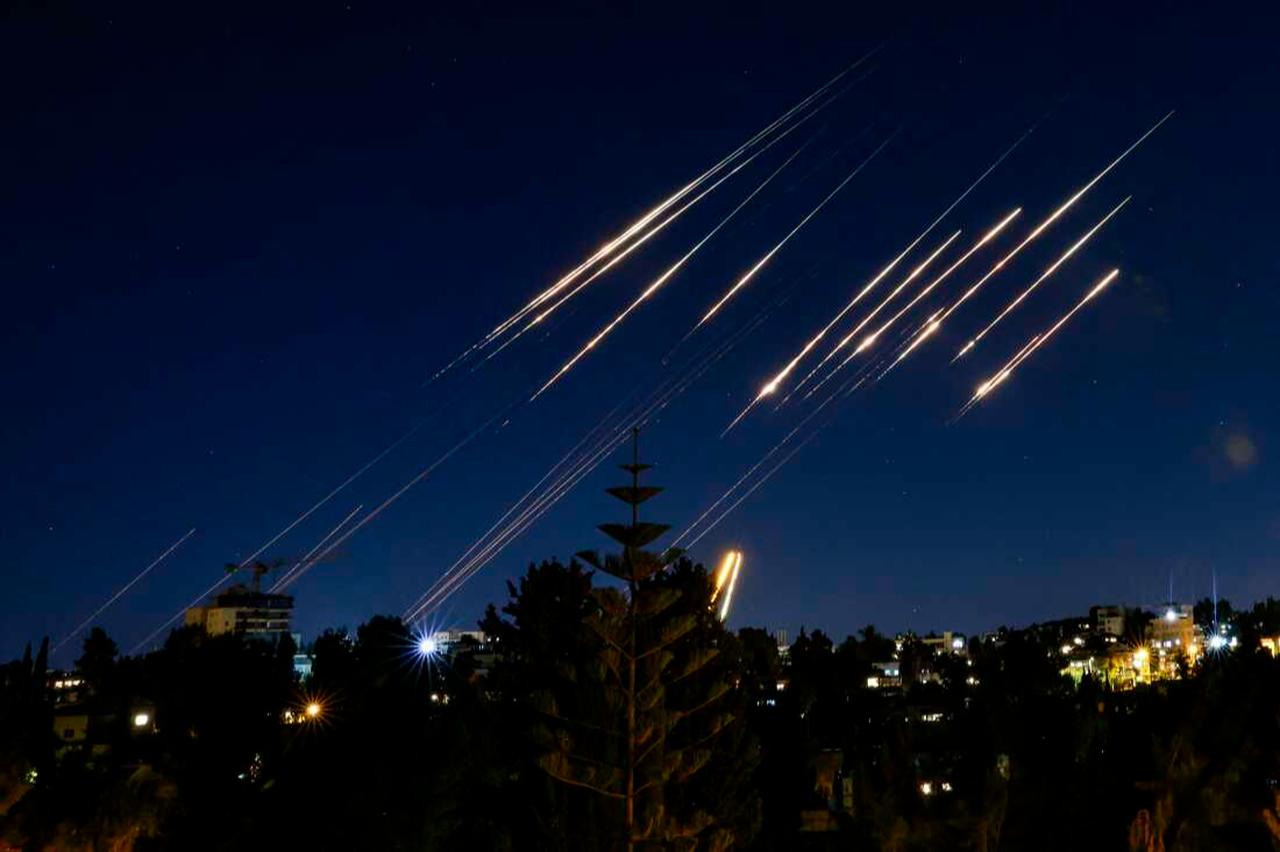
The diplomatic process was interrupted by Israeli and U.S. attacks on Iran in June 2025 during a 12-day war fought mainly between Iran and Israel. Israel carried out strikes on Iranian nuclear and military sites, while the U.S. struck key Iranian nuclear facilities, including those at Natanz, Fordow and Isfahan.
Prior to the war, Washington and Tehran held five rounds of indirect talks, primarily in Muscat and Rome. The conflict halted the negotiations.
Regional countries, including Türkiye, Saudi Arabia, Qatar and Egypt, have made efforts to push for negotiations between Washington and Tehran to prevent wider regional confrontation. Their diplomatic efforts helped revive the process.
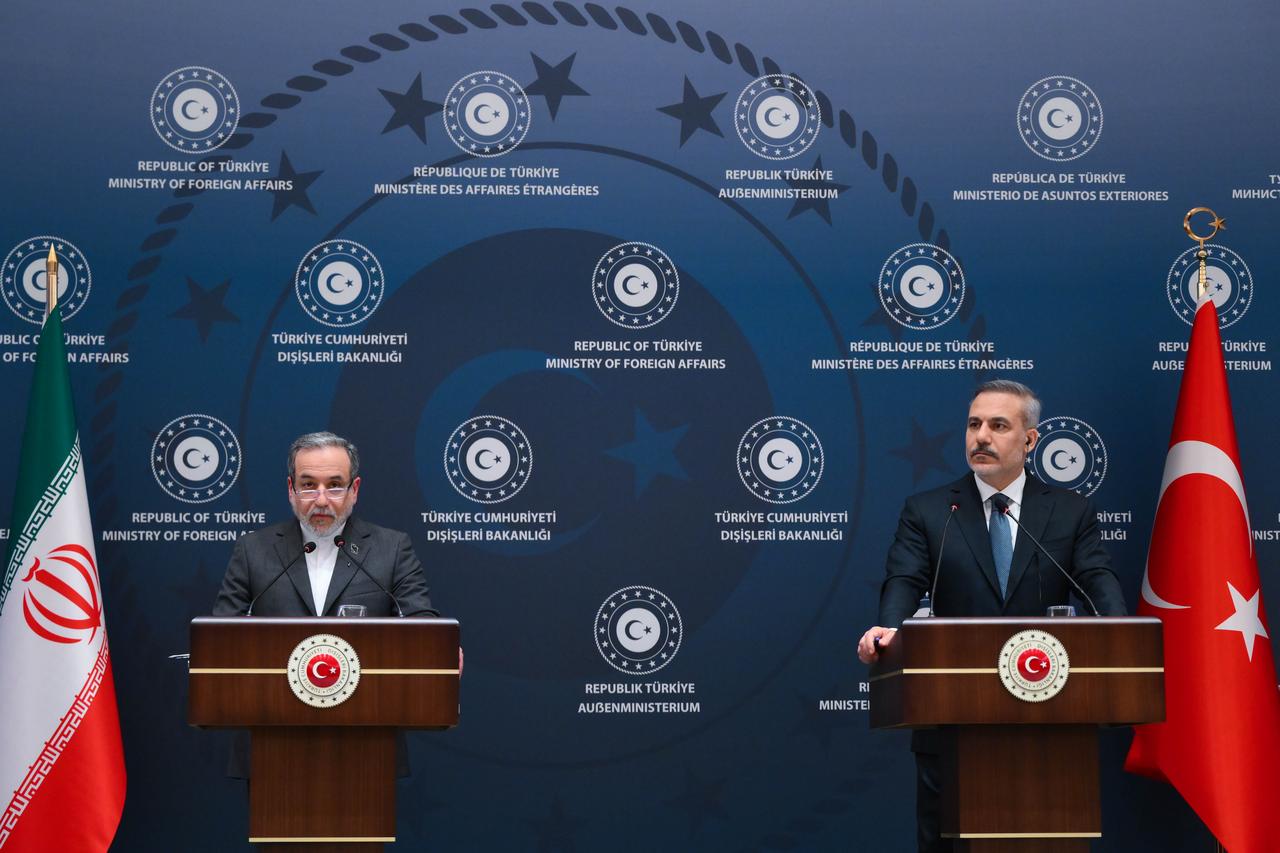
During a visit to Türkiye by Araghchi, Turkish Foreign Minister Hakan Fidan said Ankara opposes any military intervention against Iran and supports the peaceful, internal resolution of the country's issues by its own people.
"We have told our counterparts at every opportunity that we are against a military intervention targeting Iran," Fidan said, noting that, "We hope that Iran's internal issues will be resolved peacefully by the Iranian people without any external intervention."
Israel wants U.S.-Iran talks to include Iran's missile program and support for regional groups, not only its nuclear program.
A senior Israeli military official said Sunday that Iran's ballistic missile capabilities constitute an "existential threat" to Israel, telling Israeli state broadcaster KAN that the country "cannot coexist with Iran's ballistic missiles."
According to Israel's Channel 12, Tel Aviv has warned Washington against what it described as Iranian "deception."
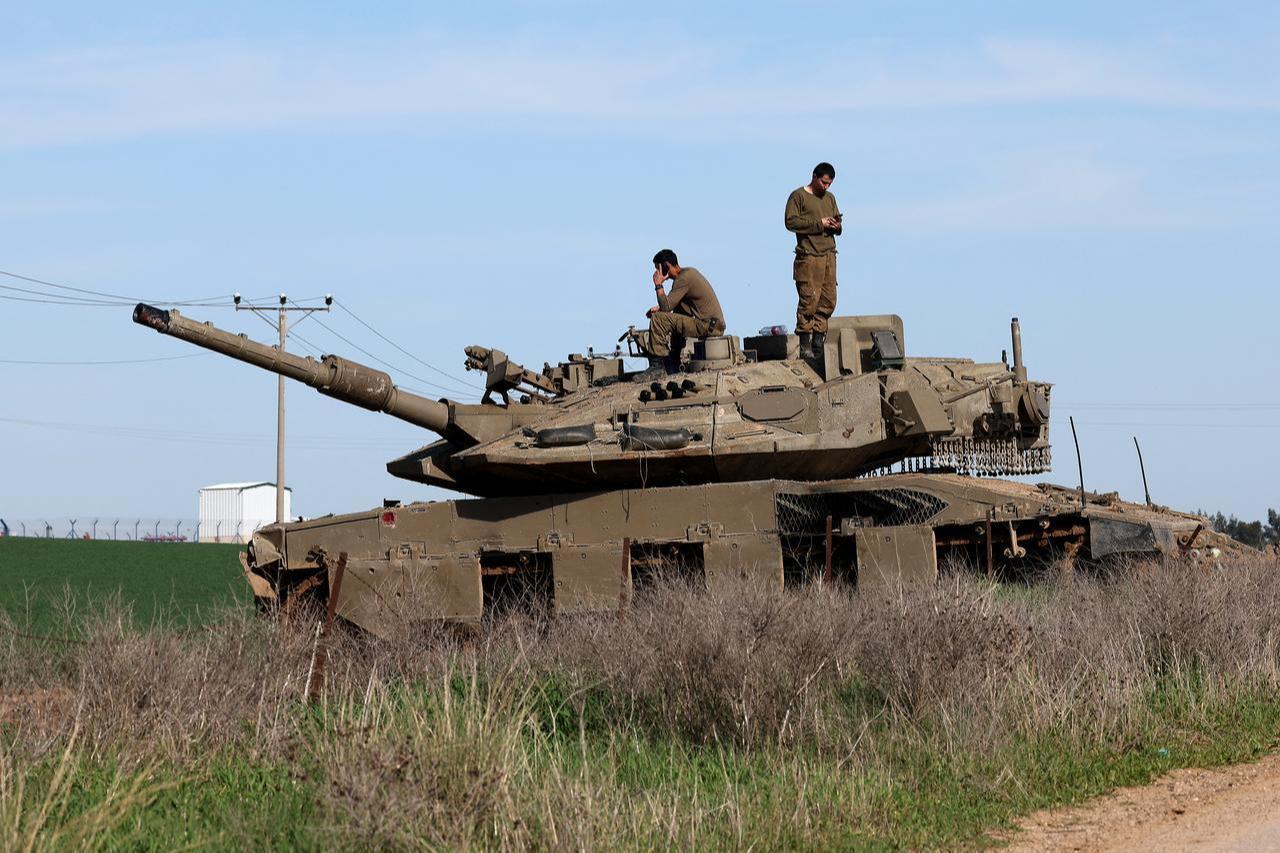
The Israeli and U.S. navies carried out a joint military exercise in the Red Sea last Sunday as tensions with Iran continued to grow.
U.S. Vice President JD Vance said Trump's core position is that Iran must be prevented from acquiring a nuclear weapon, because if it succeeds, other countries in the region would rapidly do the same.
Vance said he expects Trump to pursue non-military solutions whenever possible, adding that if the president deems recourse to military action necessary, "then he's ultimately going to choose that option."
Iranian officials have warned that any U.S. attack would draw a "swift and comprehensive" response.
The outcome of the meeting remains uncertain. While both sides have signaled willingness to engage, it is unclear whether negotiations will produce concrete results or give way once again to escalation.


 Set as preferred source
 Set as preferred source


 1 min read
 1 min read