Newsletters


The U.S. military has asked tankers transiting the Strait of Hormuz to sail only during specific time windows to guarantee military protection, the Financial Times (FT) reported, as a broader squeeze on Gulf oil exports pushed global prices above $108 a barrel and left shipping companies with dwindling options to move crude out of the region.
Since May, Washington has offered air-based defense to ships willing to use a route hugging the Omani coast on the strait's southern side, away from Iran, in an effort to keep oil flowing out of the Gulf despite Iran's blockade.
But at the start of September, that protection was narrowed to two specific time slots per day, according to emails from the U.S. Naval Cooperation and Guidance for Shipping center (NCAGS) seen by the Financial Times, following a ramp-up in Iranian attacks.
Shipowners had applied to NCAGS, which provided mariners with coordinates and permission to sail during broad overnight windows while protected by U.S. aircraft.
That arrangement was cut to two specific daily time slots around the start of September, with vessels told to begin their journey at set times, such as 9 a.m.
"We are now providing recommended transit times that vary by day. Your vessel is not required to go during these times, but it is encouraged to receive the best support," one NCAGS email said.
Another noted: "Transiting during a period of darkness has not proven to be the most secure time of day," citing threats to merchant shipping.
U.S. Central Command (CENTCOM) said the NCAGS messages "speak for themselves." Iranian forces have attacked dozens of vessels attempting to pass through the strait since the US and Israel struck Iran in February.
The narrowing of protection windows came just as both sides escalated attacks on commercial shipping. Iran said early this week that it had targeted two U.S. vessels and eight oil tankers in response to American strikes on five Iranian tankers, themselves a response to an Iranian Revolutionary Guard Corps attack on a U.S. warship days earlier.
CENTCOM recently announced that as of Sept. 10, U.S. forces have redirected 96 commercial vessels to ensure total compliance.
More than 50 vessels supporting humanitarian aid have been allowed to pass.
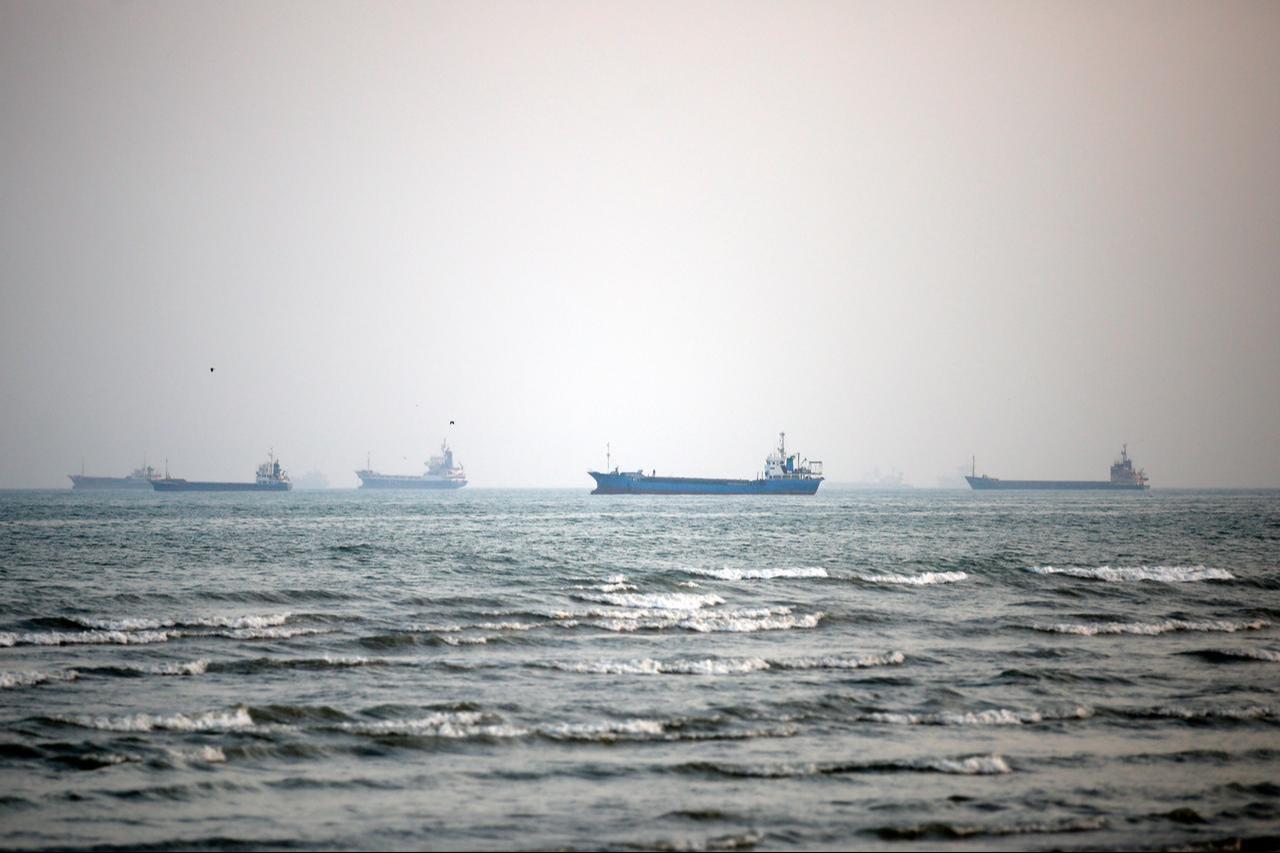

An Anadolu Agency (AA) team observed commercial cargo ships anchored between Iran's Qeshm Island, the country's largest island in the region and a frequent target of U.S. strikes, and Larak Island, unable to pass through the strait because of the threat of attack from both the U.S. and Iran.
Food supplies were being delivered to some of the anchored vessels from the Iranian coast, while small boats used for smuggling continued operating despite the risk.
Iran and Oman, both littoral states of the strait, are continuing talks on establishing a safe route for ships to transit, with negotiations reportedly in their final stage.
The two countries are expected to soon notify regional states of the newly agreed route, after which vessels currently waiting could enter and exit the Gulf without threat of attack.
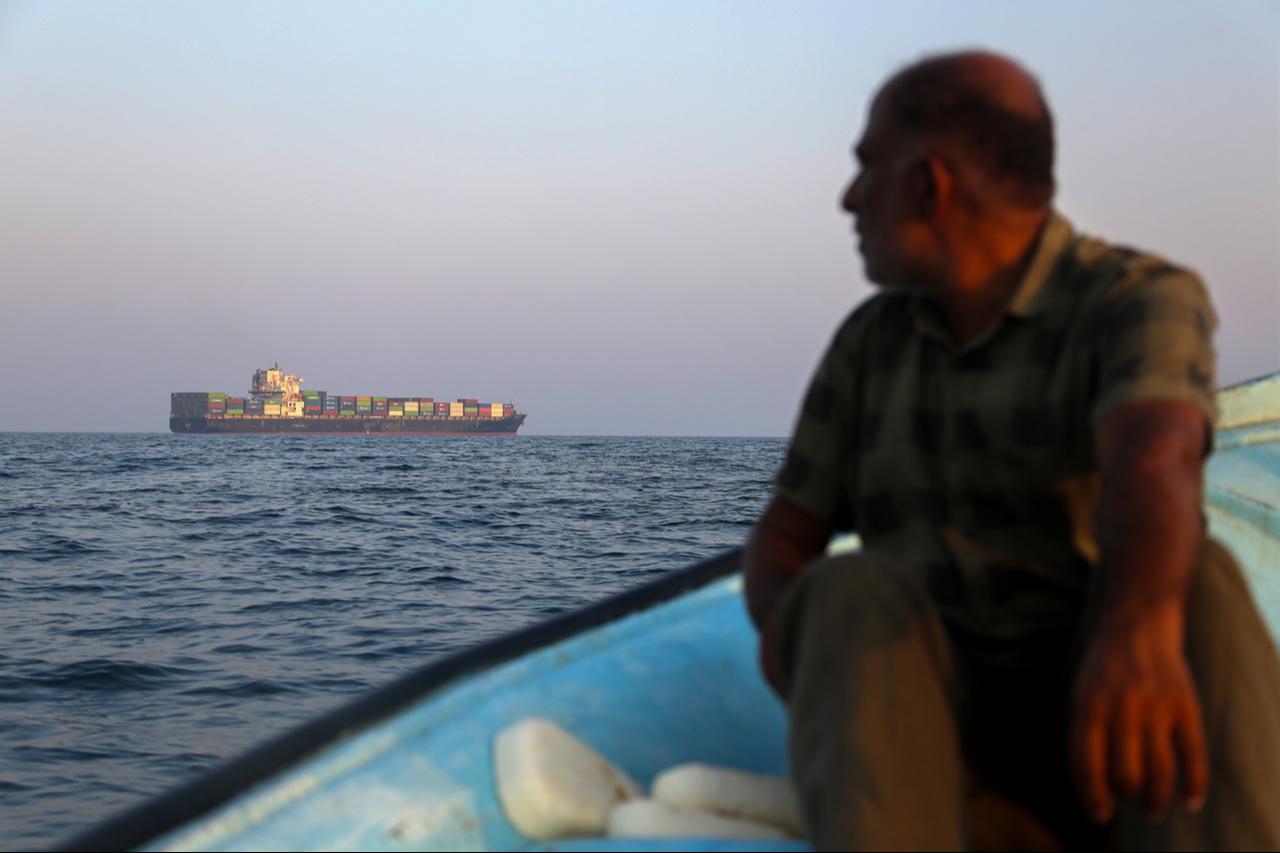
The New York Times (NYT) reported that shipping traffic through Hormuz remains far below prewar levels even with the U.S. escort system, averaging just 19 ships per day in September, down from 20 in August and a June peak of 34 when a U.S.-Iran Memorandum of Understanding (MoU) was briefly in effect, according to ship-tracking data cited by the Times.
Data firm Kpler recorded just nine ships passing through the strait on Thursday.
At least 23 ships were hit in the waterway near Oman in July and August alone, and at least 22 sailors have been killed in the region since the war began in late February.
"These waters aren't safe," said Michelle Wiese Bockmann, an analyst at maritime intelligence firm Windward, who estimated that crude exports from Gulf countries other than Iran in August stood at about two-thirds of prewar levels.
The squeeze has intensified as Houthis expanded control over the Red Sea on Friday, threatening the Bab al-Mandeb Strait, which had become a critical alternative route for Saudi crude after Iran restricted access through Hormuz.
In the past week, only two Saudi cargoes passed through Bab al-Mandeb, according to Kpler.
Saudi Arabia's alternative Red Sea pipeline, the East-West line, was shut down Friday as a "precautionary measure" after being "targeted multiple times" the day before, the Saudi Energy Ministry said.
Saudi oil exports fell last month to their lowest level in at least 13 years.
Fawaz Gerges, a London School of Economics professor focused on the Middle East, called Houthi control of the Red Sea port city of Mocha "a game changer" for the group and for Iran.
"This new development gives the Houthis important leverage with Saudi Arabia, their staunch enemy, and also the global trade system," Gerges said, adding, "As a result, Iran is in a stronger position now to increase the pain to the U.S. economy and the world."
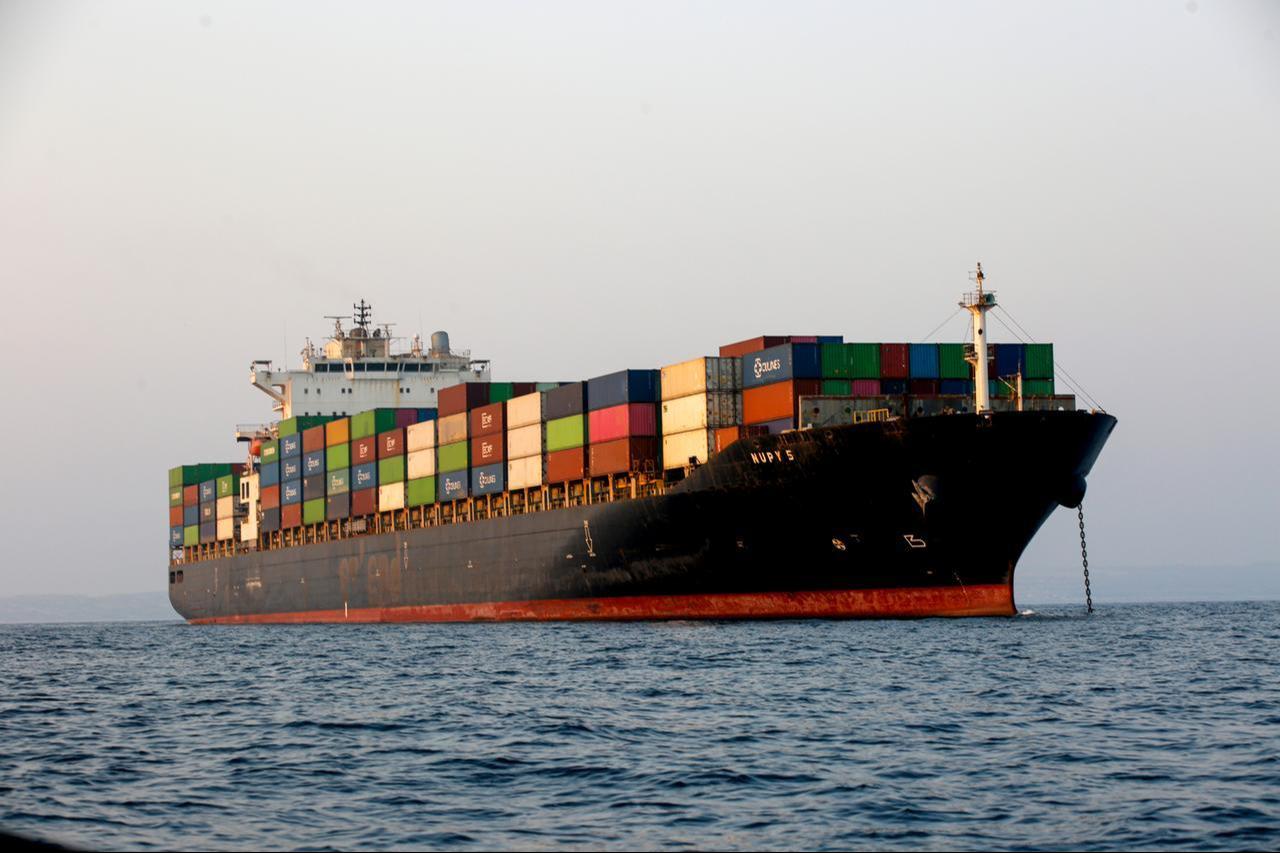
Oil prices briefly topped $108 a barrel Friday, roughly 50% above prewar levels.
U.S. gasoline prices have climbed above $4 a gallon, more than $1 higher than a year ago, while diesel topped $6 a gallon for the first time.
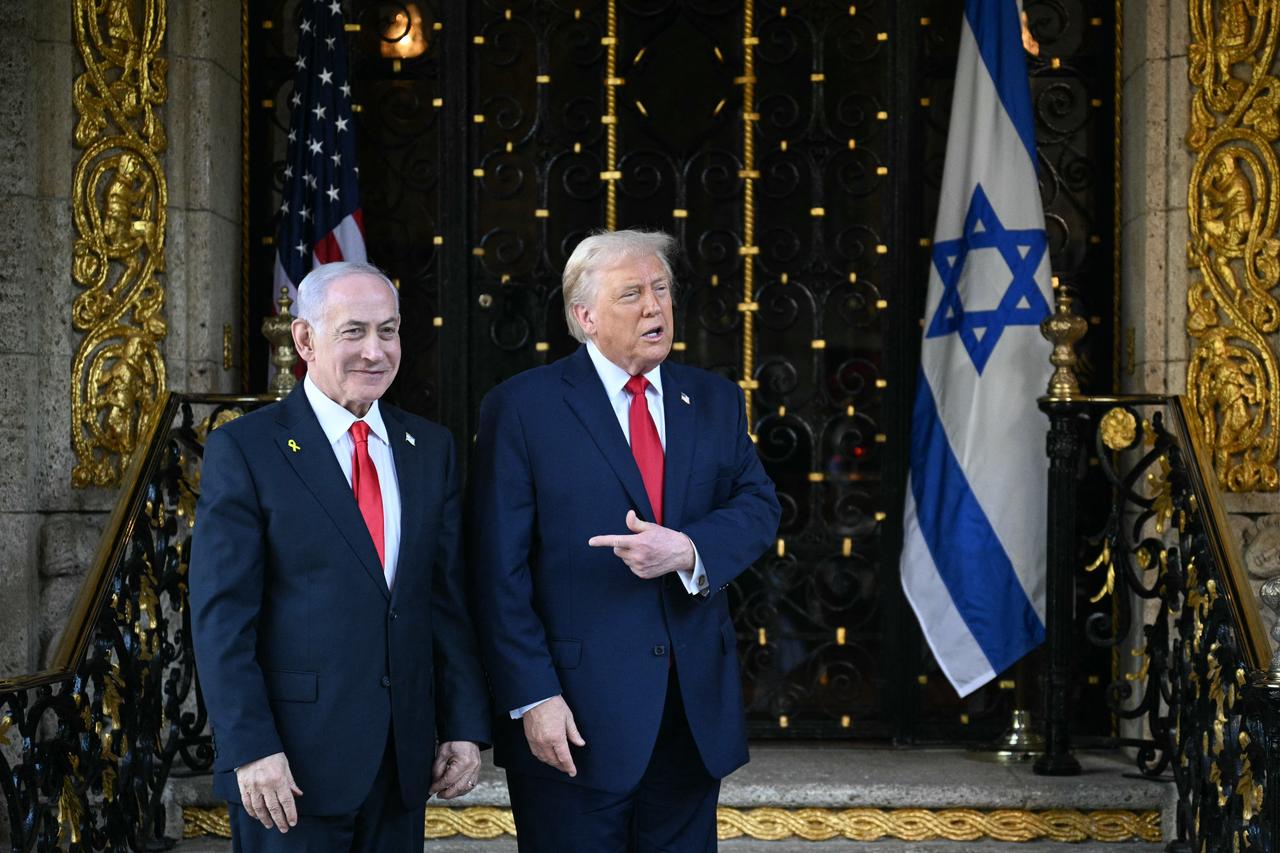
U.S. President Donald Trump said this week he expects the war to end after November's midterm elections, predicting gas prices would come "tumbling down" afterward, though analysts said the administration has few remaining tools to end the conflict or lower prices after last month's expanded sanctions on Tehran failed to change Iran's position.
"They could bomb, or they could talk," said Gregory Brew, an analyst at Eurasia Group.
Iran has demanded an end to the U.S. naval blockade of its ports and the release of frozen assets abroad, while insisting it will maintain control over the Strait of Hormuz.
Elliott Abrams, a senior fellow at the Council on Foreign Relations who served as a special Iran and Venezuela envoy during Trump's first administration, said the "clear way out" would effectively mean concessions to Iran, adding: "The question to the president would be: Are you willing to grant that to get past the election?"
Amos Hochstein, a former Biden administration energy adviser, said the Trump administration "has been using a variety of tools very effectively to keep the oil price and the gasoline price at bay" but now has fewer options. "They're stuck," he said.


 Set as preferred source
 Set as preferred source


 3 min read