Newsletters


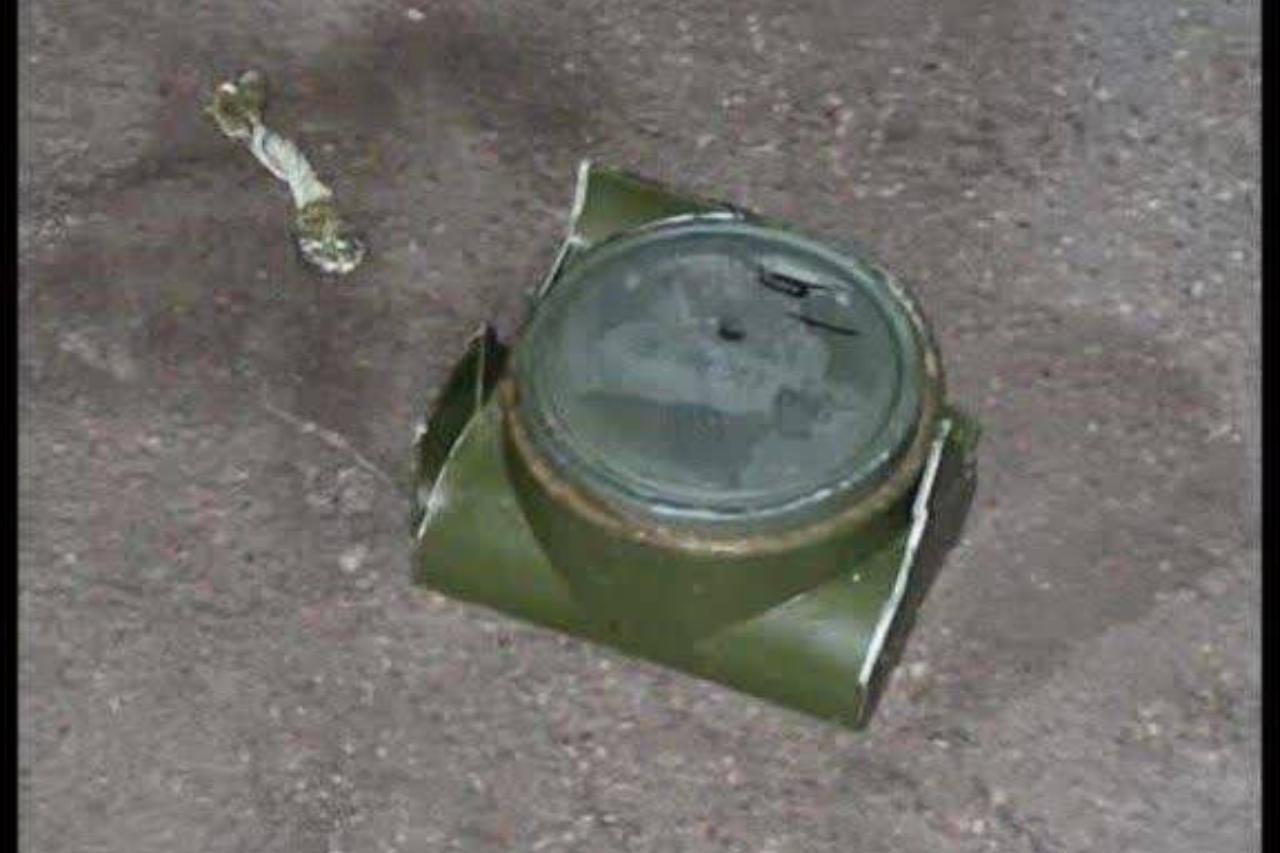


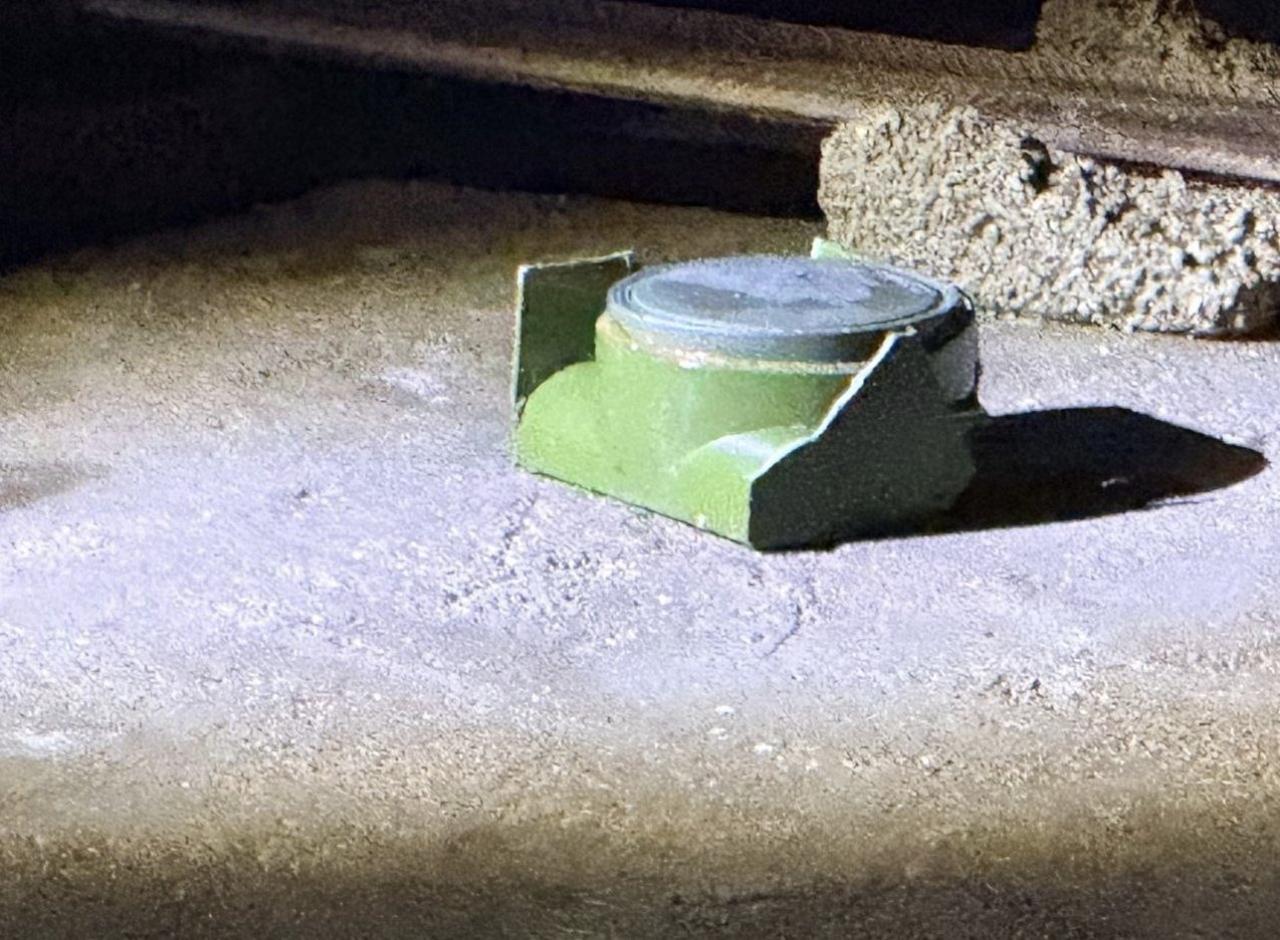
The United States appears to have deployed the Gator Scatterable Mine system over Kafari, a village near Shiraz in southern Iran, close to what is reported to be Shiraz South Missile Base, with three weapons experts independently identifying the munitions as U.S.-made BLU-91/B anti-tank mines, Bellingcat reported.
Several people were killed, according to Iranian media.
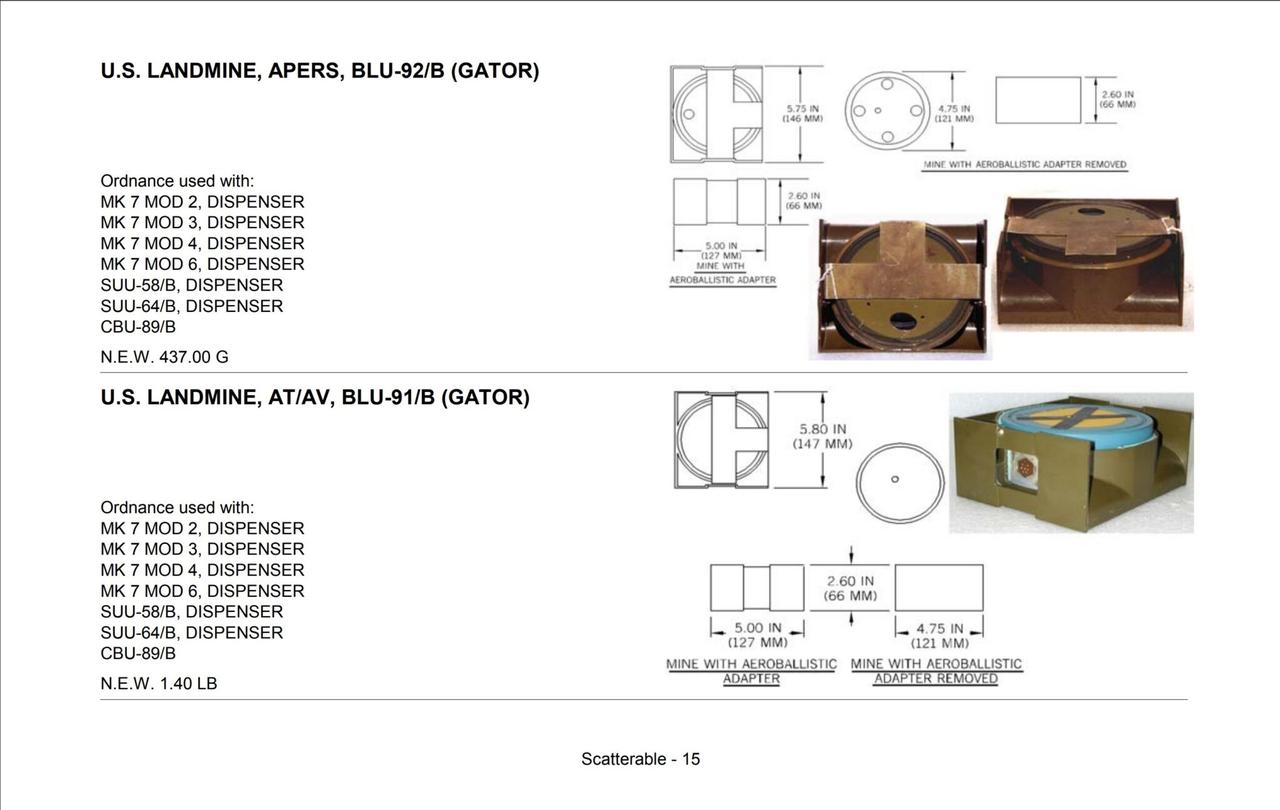
Dr. NR Jenzen-Jones, Director of Armament Research Services, told Bellingcat: "These images show what appear to be American BLU-91/B scatterable anti-tank landmines. The BLU-91/B is dispensed from the CBU-78/B or CBU-89/B air-delivered cargo bombs. The presence of square 'aeroballistic adaptors' indicates that the mines seen here were delivered by air."
Amael Kotlarski, Weapons Team leader at Janes, also identified the mines as BLU-91/B Gator anti-tank mines, noting the CBU-89/B carries 72 BLU-91/B and 22 BLU-92/B mines, while the CBU-78/B carries 45 BLU-91/B and 15 BLU-92/B mines.
He said no BLU-92/B anti-personnel mines were observable in the photographic evidence so far, noting that, "This could be that they have not been found, or that the dispensers were loaded solely with AT mines to help reduce the risk to civilians."
Andro Mathewson, an independent open source analyst and former staff of landmine-clearing NGO The HALO Trust, confirmed the images showed BLU-91/B mines and noted the presence of aeroballistic adaptors, found only on BLU-91/B and BLU-92/B mines and not on other mines in the U.S. Family of Scatterable Mines, confirming air delivery from a Gator system dispenser.
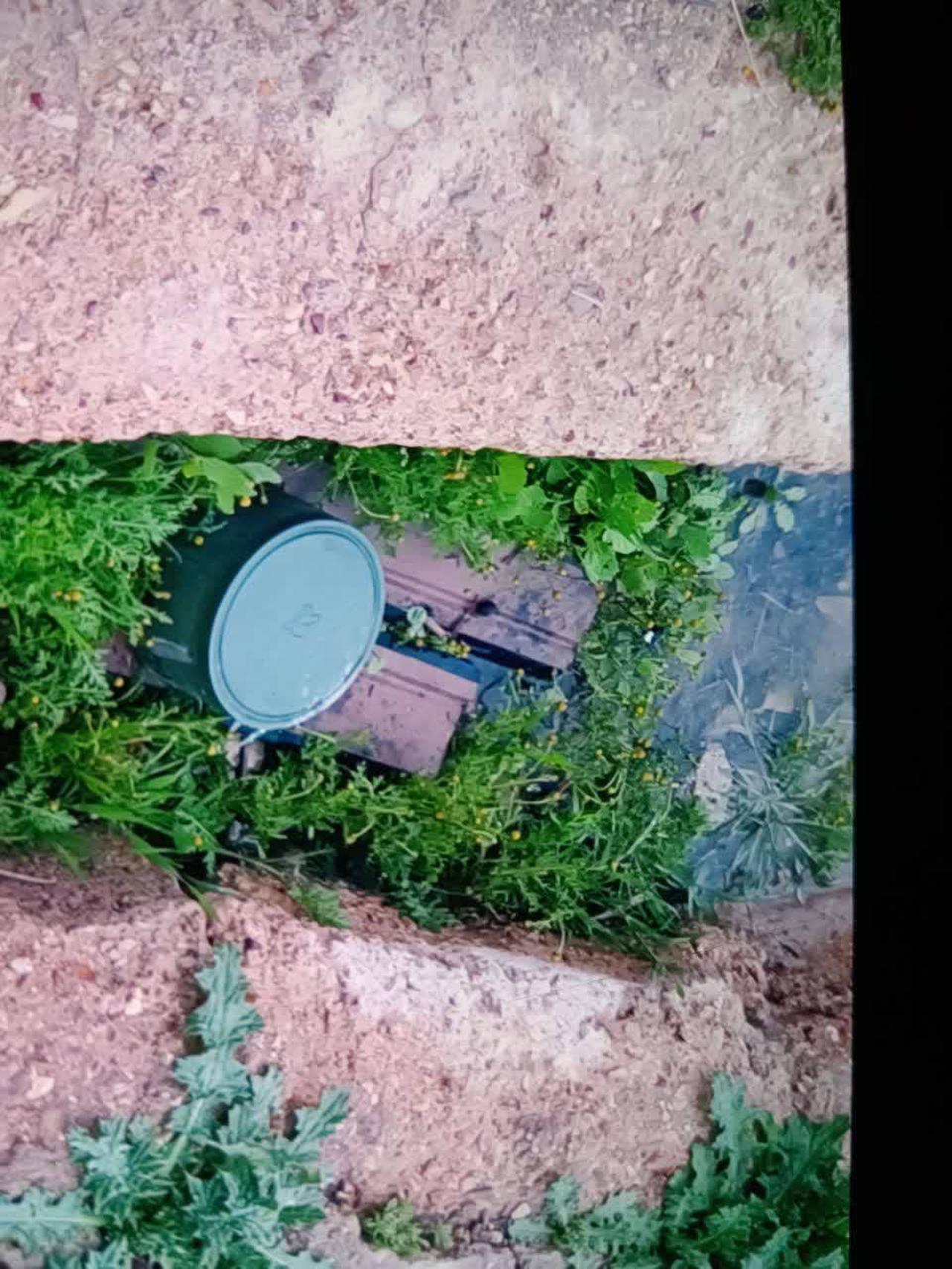
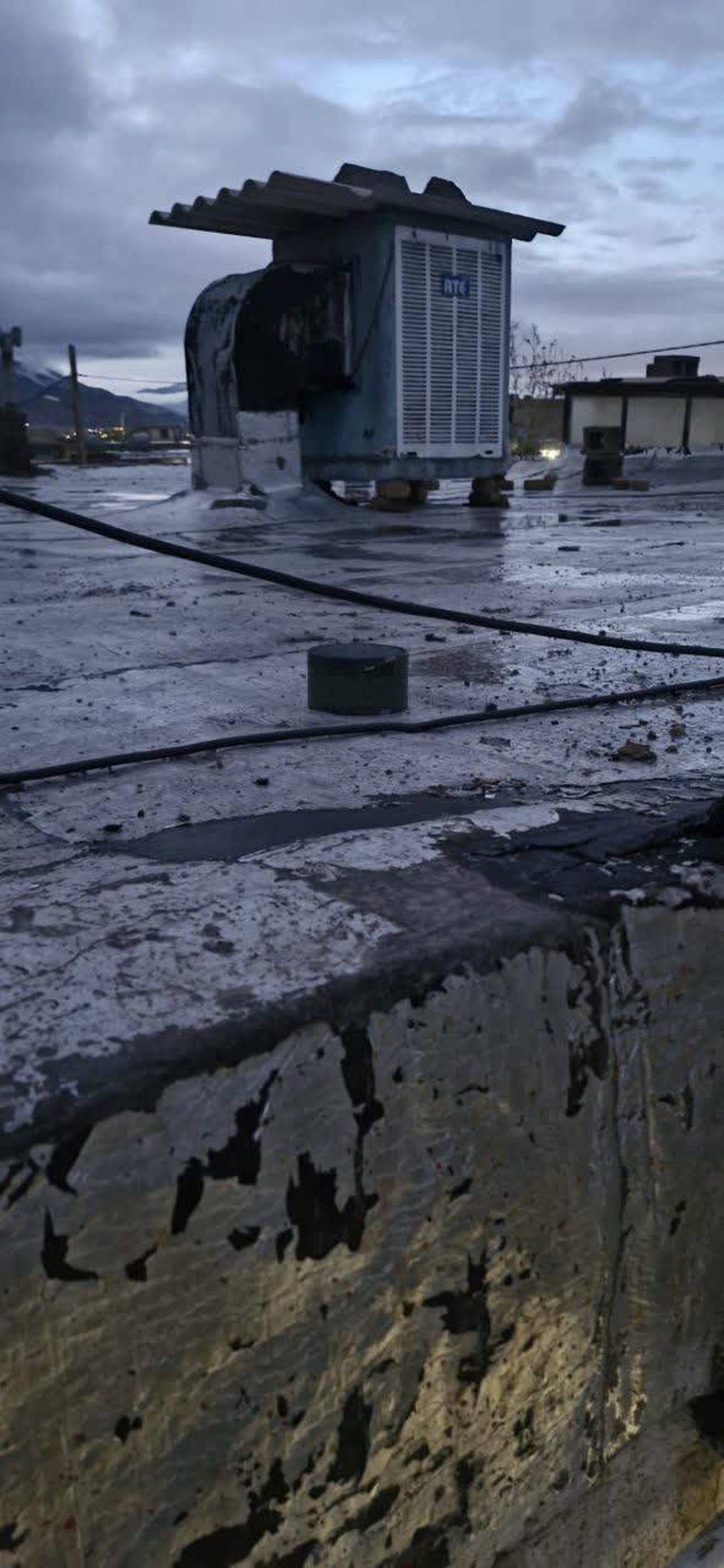
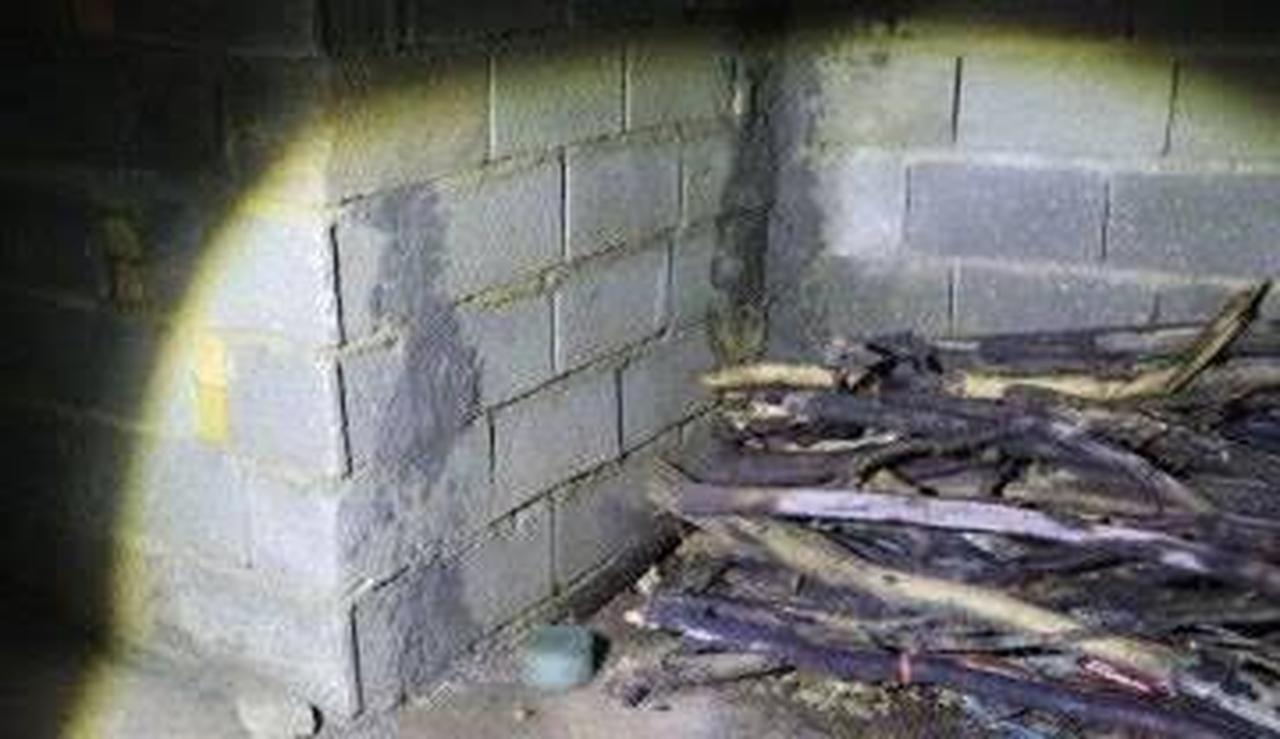
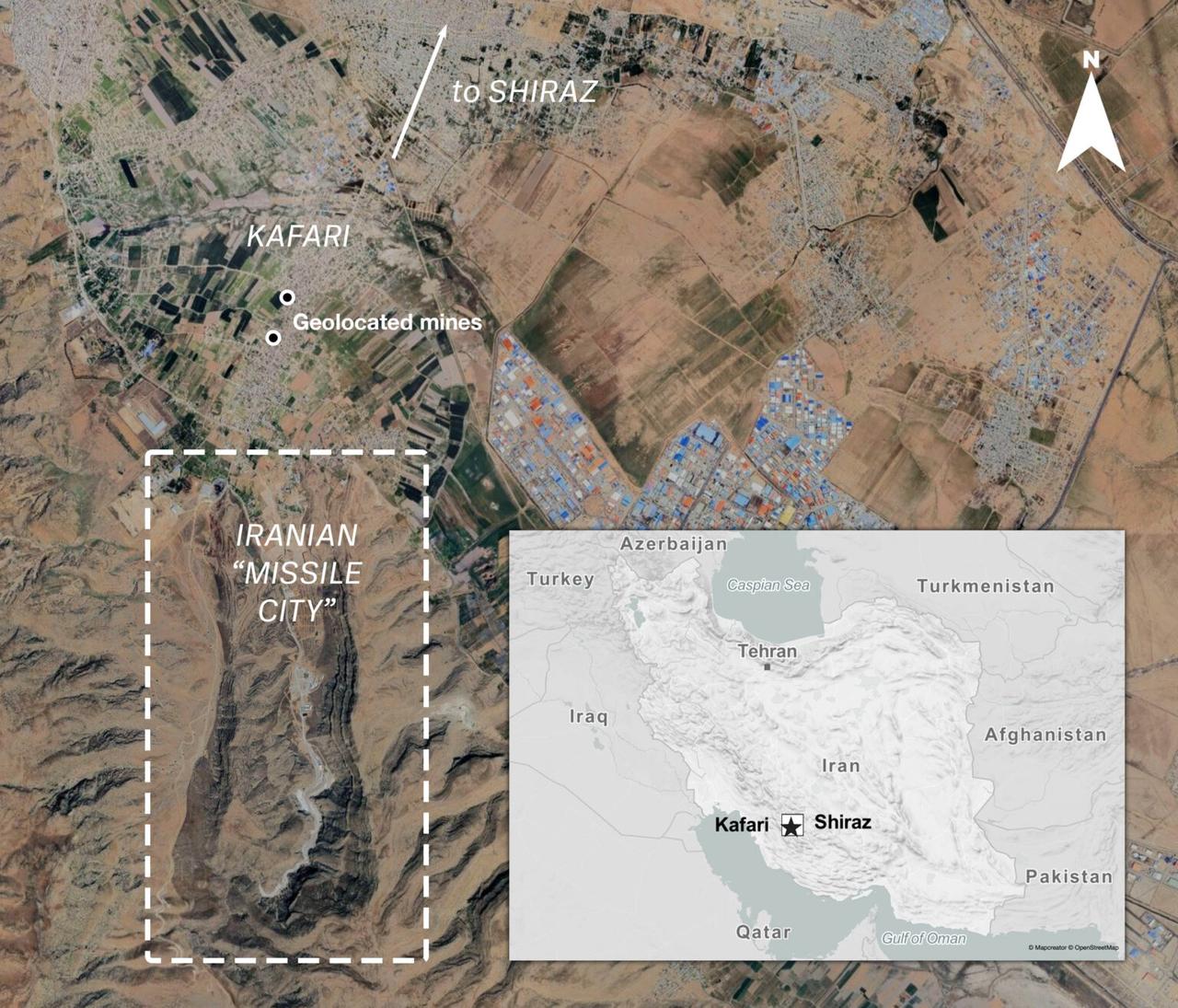
Bellingcat geolocated some of the mines to the village of Kafari. A video showed at least three mines approximately 2 kilometers from the entrance to what is reported to be Shiraz South Missile Base, described as an Iranian "missile city."
Jenzen-Jones stated that scatterable anti-tank mines may have been deployed "to deny vehicles access to or from 'missile cities,'" potentially preventing missile launch vehicles from leaving and limiting efforts to re-establish access to facilities, including preventing excavators from operating at collapsed entrances.
Images from Shiraz also appear to show multiple BLU-108 submunitions from a CBU-105 Sensor Fuzed Weapon scattered across the city.

Each 1,000-pound CBU-105 contains 10 BLU-108 anti-armor submunitions, each equipped with a radar altimeter, a small rocket motor and four shaped-charge projectiles known as "skeets," bringing the total to 40 skeets per bomb.
The skeets use passive thermal sensors to scan for armored vehicles and self-destruct after a preset interval if no target is detected.
The U.S. is the only participant in the war known to possess Gator scatterable mines. They were developed after the U.S. stopped supplying arms to Iran.
A review of the Stockholm International Peace Research Institute's arms transfer database and U.S. major arms sales records showed no transfers of these mines to Israel, Bellingcat reported.
Both BLU-91/B anti-tank and BLU-92/B anti-personnel mines activate two minutes after deployment. Self-destruct features with variable delays mean they may randomly explode hours or days after dispensing, and may also explode if disturbed. The self-destruct can be set for 4 hours, 48 hours or 15 days.
Kotlarski warned: "The mine will go off if subjected to significant movement." This may explain local reports that a man was killed when he picked one up near his car.
The BLU-91/B mines contain approximately 0.585 kilograms of explosive configured as an Explosively Formed Penetrator designed for maximum armor penetration, and detonate when triggered by a vehicle's magnetic field.
The BLU-92/B anti-personnel mines additionally deploy tripwires and carry an anti-handling device intended to detonate when disturbed.


 Set as preferred source
 Set as preferred source



 3 min read