Newsletters


U.S. Vice President JD Vance announced Sunday that 21 hours of direct negotiations with Iran in Islamabad ended without an agreement.
Vance said Tehran had "chosen not to accept our terms" and had failed to provide a long-term commitment to forgo developing nuclear weapons, leaving the fragile two-week ceasefire in limbo and the prospect of renewed war unresolved.
Vance made the statement to reporters following talks that reportedly spanned a total of 21 hours.

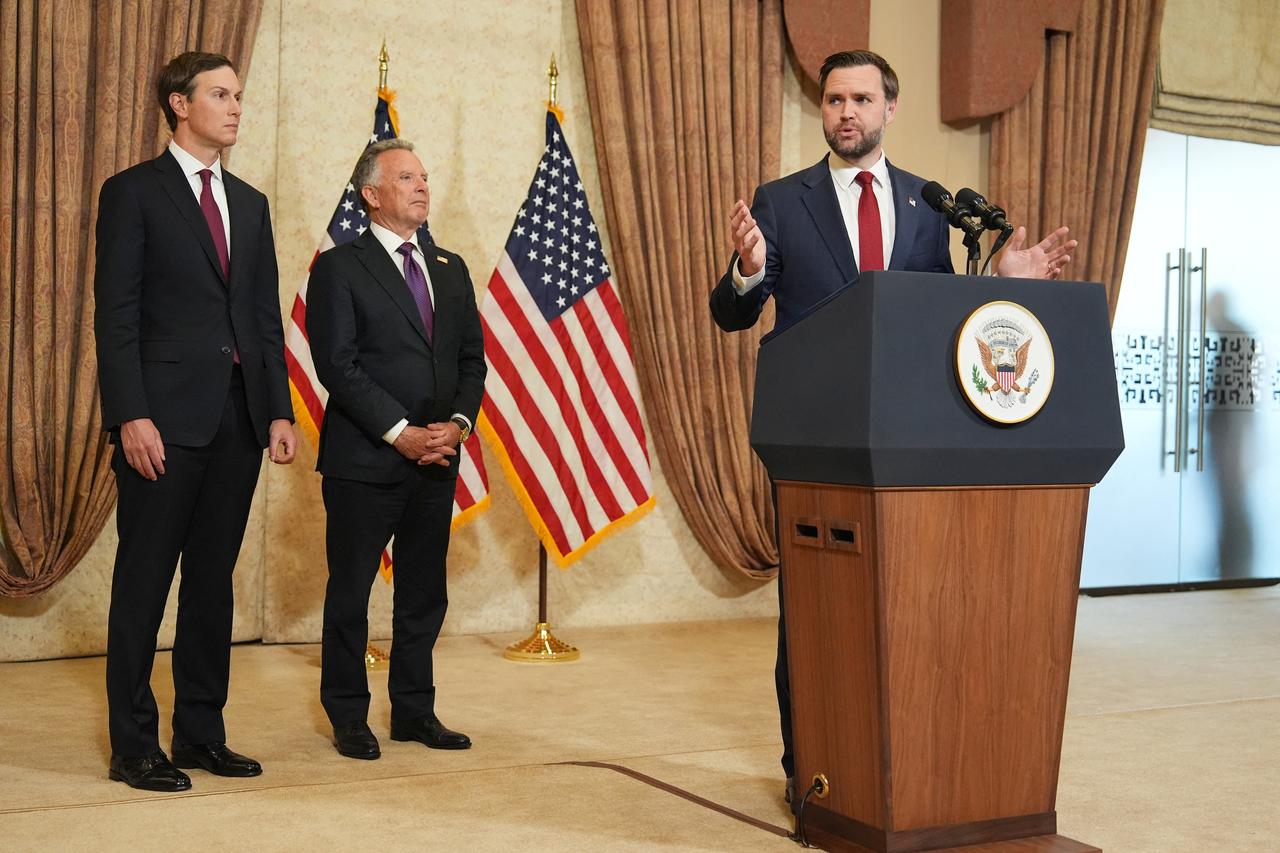
Vance addressed reporters at a hotel in Islamabad at approximately 6:30 a.m. local time Sunday, flanked by Special Envoys Steve Witkoff and Jared Kushner.
"We have been at it now for 21 hours, and we have had a number of substantive discussions — that's the good news. The bad news is that we have not reached an agreement, and I think that's bad news for Iran, much more than it's bad news for the United States of America," Vance said.
"They have chosen not to accept our terms," he added.
Vance made clear that the central unresolved issue was Iran's refusal to make a long-term commitment to abandon nuclear weapons development.
"The simple question is: do we see a fundamental commitment of will for the Iranians not to develop a nuclear weapon, not just now, not just two years from now, but for the long term? We haven't seen that yet. We hope that we will," he said.
He said the U.S. could not proceed without "an affirmative commitment that they will not seek a nuclear weapon and that they will not seek the tools that would enable them to quickly achieve a nuclear weapon."
Vance said the delegation was acting on direct instructions from Trump throughout the process.
"We leave here with a very simple proposal, a method of understanding that is our final and best offer. We'll see if the Iranians accept it," he said.
He said the delegation spoke with Trump "a half dozen times, a dozen times" during the 21 hours, as well as with Secretary of State Marco Rubio, Defense Secretary Pete Hegseth, Treasury Secretary Scott Bessent and CENTCOM commander Adm. Brad Cooper.
"We were constantly in communication with the team because we were negotiating in good faith," Vance said.
He described the U.S. side as "quite flexible and accommodating," saying Trump instructed the delegation to "come here in good faith and make your best effort to get a deal. We did that, and unfortunately, we weren't able to make any headway."
When asked what Iran rejected, Vance declined to elaborate. "I won't go into all the details because I don't want to negotiate in public after we have negotiated for 21 hours in private."
Asked about Iran's frozen assets, he said the issue came up but declined to go further, saying the two sides "just could not get to a situation where the Iranians were willing to accept our terms."
Vance abruptly ended the four-minute press conference and departed Islamabad immediately after.

The talks, which began Saturday with separate meetings between Pakistani Prime Minister Shehbaz Sharif and each delegation before moving to direct trilateral discussions, went through "mood swings" according to a Pakistani official briefed on the negotiations who spoke to The Washington Post (WP) on condition of anonymity.
The talks moved to a technical level after both parties took their first break, signaling initial progress, but the two sides struggled to bridge differences over the Strait of Hormuz and Iran's demand to unfreeze billions in assets.
The U.S. and Iranian delegations had originally planned proximity talks with delegations in separate rooms.
The format ultimately evolved into what a senior White House official described as "a trilateral face-to-face meeting."
A source briefed on the talks who spoke to Axios said key disagreements included Iran's demand to control the Strait of Hormuz and its refusal to give up its enriched uranium stockpile.
No one expected a final agreement on Saturday, but the U.S. side had hoped for sufficient momentum to continue negotiations and potentially extend the ceasefire.


 Set as preferred source
 Set as preferred source


 1 min read
 1 min read