Newsletters


The supply problems that have plagued the USS Abraham Lincoln during its nearly nine-month deployment trace back to the earliest days of the U.S.-Iran war, when Iranian missiles and attack drones struck a Navy base in Bahrain that had served as the fleet's main logistics hub for decades, according to The New York Times (NYT).
The Iranian attack, launched in retaliation for the U.S.-Israeli assault on Tehran, destroyed much of the Bahrain base.
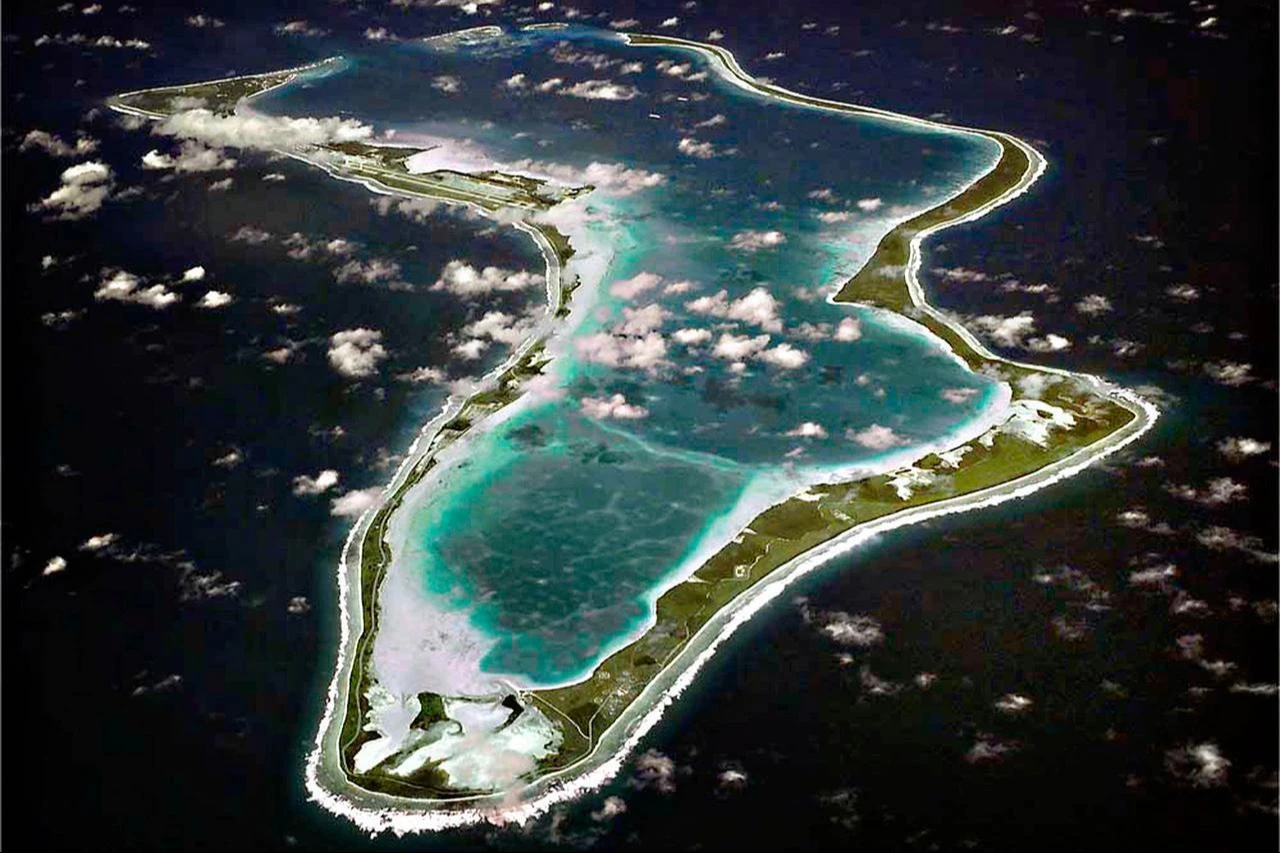
With that hub gone and the threat of Iranian strikes looming over other regional ports, the Pentagon turned to a British-administered base on Diego Garcia, a tiny island roughly 2,200 miles from where two carrier strike groups have been operating in the Gulf of Oman, as its new supply point.
The shift to Diego Garcia as the Navy's primary logistics hub may explain why Iran fired two medium-range ballistic missiles at the island on March 20.
One missile fell into the Indian Ocean short of its target as a Navy warship shot down the other.
At the war's outset, then-British Prime Minister Keir Starmer denied the Pentagon access to Diego Garcia for the operation against Iran, a decision that drew Trump's ire before Starmer relented on March 1, granting the U.S. military access for what he described as a "specific and limited defensive purpose."
A U.S. military official told the Times, speaking on condition of anonymity to discuss sensitive logistics, that the Navy began using Diego Garcia as its main shipment point shortly after the Bahrain base was heavily damaged.
Bahrain is one of two ports where U.S. aircraft carriers in the region have typically moored so crews can get downtime. The other, the Emirati port of Fujairah on the Gulf of Oman, is also well within range of Iranian missiles.
As a result, the San Diego-based Lincoln has gone nearly nine months without what the Navy calls a "liberty port," where sailors can get off the ship for a few days.

The Navy has acknowledged that the conflict created "a highly contested environment where traditional supply hubs in the Middle East were disrupted by combat actions," leading to shortages and lost mail aboard the carrier, according to The Associated Press (AP).
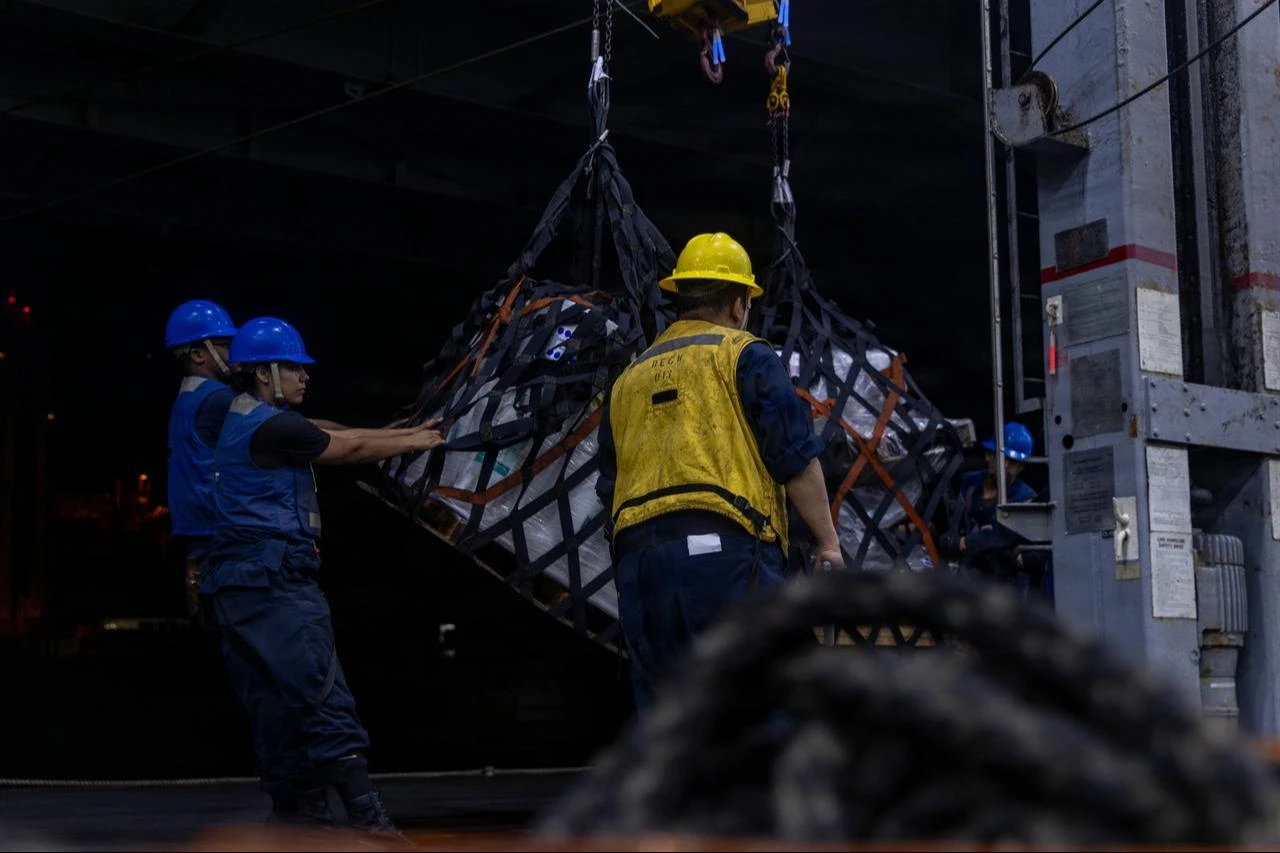
"Leadership prioritized mission-critical supplies: first food, then hygiene items, then mail," the Navy said in a statement, adding that sailors now have access to clean water and "healthy meal options."
Vice Adm. Douglas Verissimo said logistics difficulties involving Bahrain created major backlogs after fighting began, forcing the Navy to prioritize food deliveries, according to an MS NOW report.
"We're doing a better job with supplies and mail. It's getting better; it's still not good, and it was extremely bad for a little while," Verissimo said, adding, "But we are, we are as a nation doing the best we can."
A crew member serving on the Lincoln described morale on the ship as very low and said they had heard repeatedly about suicidal ideation among fellow crew members.
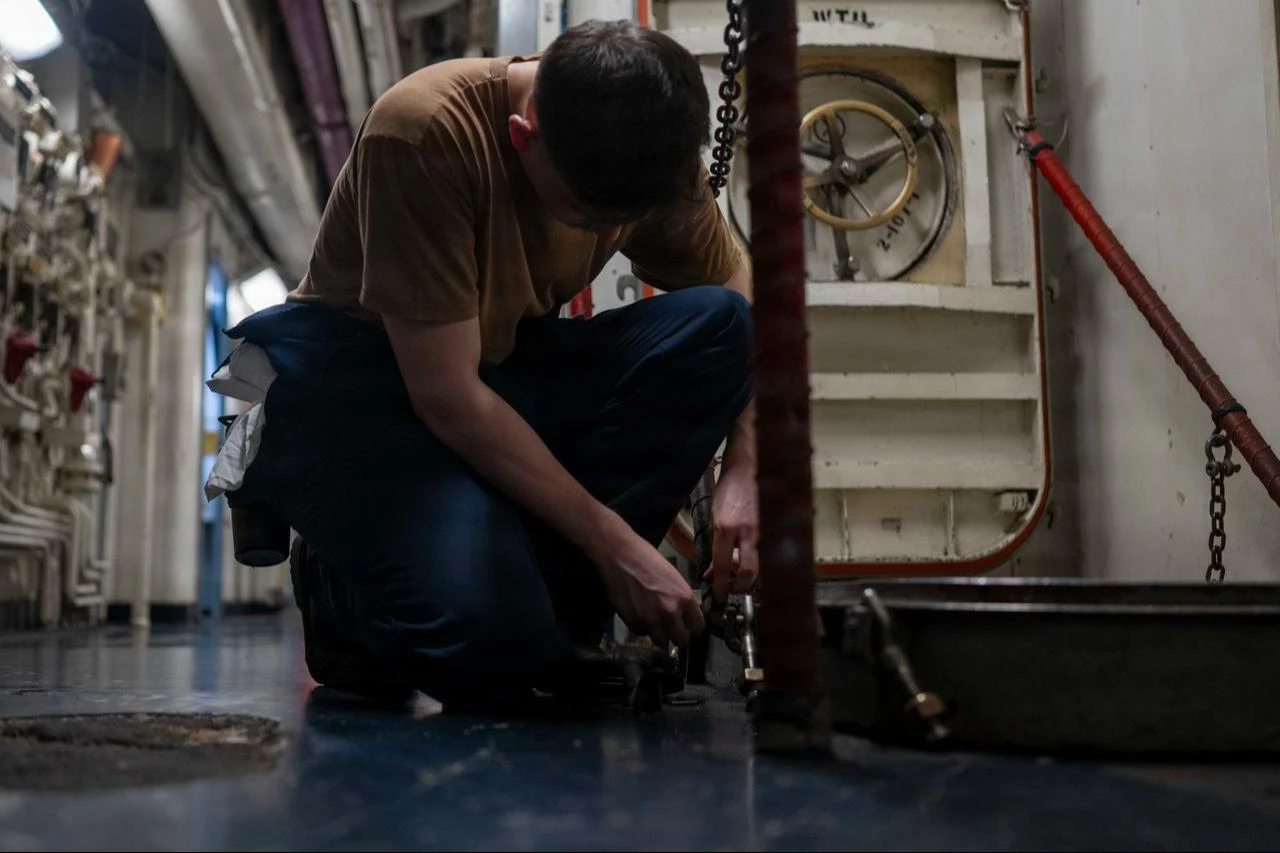
Toilets and water fountains around the ship frequently closed, and hot water was often unavailable, the crew member said.
"Every day we wake up and listen to our Captain speak, we are desperately hoping and anxious for updates on our return," the crew member told CNN.
Other sailors described conditions unlike prior deployments, largely due to combat that has kept the carrier from making port stops.
The ship has experienced intermittent food shortages, low supplies of hygiene items and problems with the water system, sailors and family members told CNN.
"You used to be able to go to the ship store and get as many items as you want, with every hygiene product consistently available," one sailor, who requested anonymity for fear of reprisal, told CNN. Now there are limits on purchases and "hardly any hygiene products are readily available."
Family members described care packages arriving months late or going missing entirely and shared photos of overflowing toilets in sewage-saturated restroom areas, an issue also experienced by the USS Gerald R. Ford during its own extended deployment.
One spouse told CNN's Jake Tapper her husband called it "the worst deployment that he's ever been on," adding: "He feels himself being angrier and more frustrated, and that's just very unlike him."
Navy leaders addressing families in San Diego said a "stubborn clog" had affected toilets in one area and that suspected mold could instead be mildew caused by ventilation problems, according to the MS NOW report.
Vice Adm. Joseph Cahill told the roughly 200 family members who attended the meeting: "We hear you loud and clear, the impact this has on families, on service members, and the long-term ability of us to stand, sustain our forces' health."
CNN previously reported that two sailors assigned to the Lincoln strike group jumped overboard in recent months. Both were rescued alive, according to U.S. officials.
Others were prevented from jumping, according to reports from Navy Times and Stars and Stripes.
A Navy official told AP that a sailor aboard the Lincoln went overboard in early August but was quickly recovered, treated by the ship's medical department and transferred off the ship for follow-on care.
The official would not say whether it was considered a suicide attempt.
The Navy said in a statement to CNN: "We have not observed an increase in suicidal ideation or attempts aboard the ship. We take every service member's well-being seriously and have religious, medical and mental health professionals available to assess and address concerns as they arise."
A U.S. official added that the Navy does not believe there is a correlation between deployment length and thoughts of self-harm and that man-overboard incidents are not unique to this fleet.
U.S. Central Command (CENTCOM) pushed back on reports of poor conditions, saying on social media: "The Sailors and Marines of the Abraham Lincoln Carrier Strike Group remain resilient and resolved after more than 260 days at sea, 10,000 aircraft flights, and 1.5 million pounds of ordnance expended."
Sen. Richard Blumenthal, D-Conn., a member of the Senate Armed Services Committee, demanded answers from Defense Secretary Pete Hegseth and acting Navy Secretary Hung Cao over conditions aboard the Lincoln.
"There have been widespread reports of shortages of basic supplies, water contamination, plumbing issues, deteriorating mental health, deck safety concerns, and disruptions in the mail system, which have caused many care packages in route to the ship to be lost in transit for months," Blumenthal wrote in a letter.
Blumenthal said the Lincoln departed Naval Base San Diego on Nov. 21, 2025, for what was initially planned as a seven-month deployment, with a scheduled end in May that has since been extended with no publicly announced return date.
He said the carrier had gone more than 200 days without a port call, setting a record for consecutive days at sea.
"These reports warrant immediate attention, but they also raise a broader question: whether the Navy can sustain the operational tempo now being demanded of its carrier force," Blumenthal wrote.
Blumenthal asked the Pentagon to explain how it intends to maintain carrier strike group operations in the Middle East over the next 12 to 24 months if current requirements continue and requested details about each extension of the Lincoln's deployment, including who authorized them.
He also asked for a list of significant habitability and quality-of-life problems identified aboard the carrier and information about metrics used to monitor fatigue, morale, mental health and crew readiness.
Sen. Ruben Gallego, D-Ariz., a Marine Corps veteran, said on social media he is seeking to lead a bipartisan delegation on an official oversight visit to the ship, calling the way sailors are being treated "not just disgusting; it's dangerous."
Senate Minority Leader Chuck Schumer called Thursday for Hegseth to be fired amid the reports.
"When Pete Hegseth was nominated, everyone knew he was completely incompetent," Schumer wrote on X. "Now our brave sailors are paying the price in a horrific and unfathomable way. Pete Hegseth must be fired immediately," he added.
Rep. Jason Crow, D-Colo., a veteran of the 82nd Airborne Division and 75th Ranger Regiment, wrote on social media that "President Trump does not care about our servicemembers or their families."
Top Democrats on the House Oversight Committee have requested a classified briefing on the ship's food inventory, sanitation issues, healthcare availability and how much longer it would remain deployed.
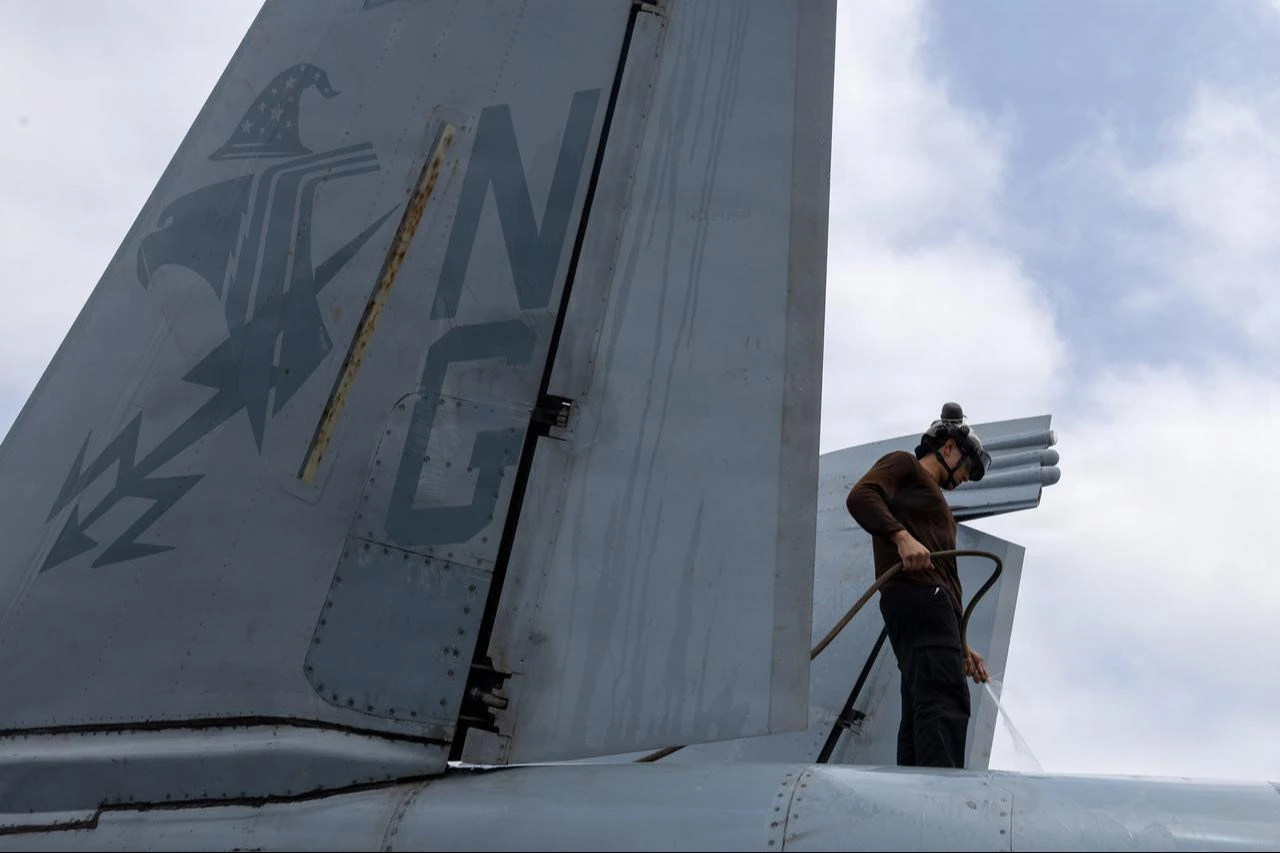
Hegseth has disputed the sailors' accounts, saying descriptions of conditions aboard the carrier have been "completely misrepresented."
Speaking to reporters during a visit to Panama, Hegseth said he wants the Lincoln's sailors home, and crews rotated as quickly as possible.
"We make sure that every ship, every crew, every captain has everything we can provide them at every single moment," he said.
"Some deployments are longer than others, and I have more respect and gratitude for those sailors than anybody. What they do in those high seas in those austere conditions with less port calls, it's incredible," he added.
When reports of food shortages first surfaced in April, the Navy called them "false."
Asked how long the U.S. could maintain the blockade of the Strait of Hormuz, Hegseth told reporters Thursday: "We can hold it as long as we need to, indefinitely."
Trump on Friday downplayed concerns about the toll on Lincoln sailors, telling reporters, "That ship is moving right now, or very shortly, and it's being replaced with another very similar ship."
Asked whether the deployment had gone on too long, Trump responded: "No. Not nearly long enough."
Trump acknowledged during a separate crime-focused address in Garden City, New York, that he had used the U.S. military "a little bit more than I wanted to," while maintaining the operation against Iran was going well.
He said, seemingly in jest, that "pretty soon I'll be declaring the Hormuz Strait a territory of the United States."
On the war's impact on oil prices, he added: "I'll never apologize. I did the right thing."
The wife of one Lincoln service member told CNN's Jake Tapper that the president doesn't think "before he talks" and urged both Trump and Hegseth to show "some empathy."
"Take some accountability for what's going on with your military, your ships, in your war. In your war. It's infuriating," she said.
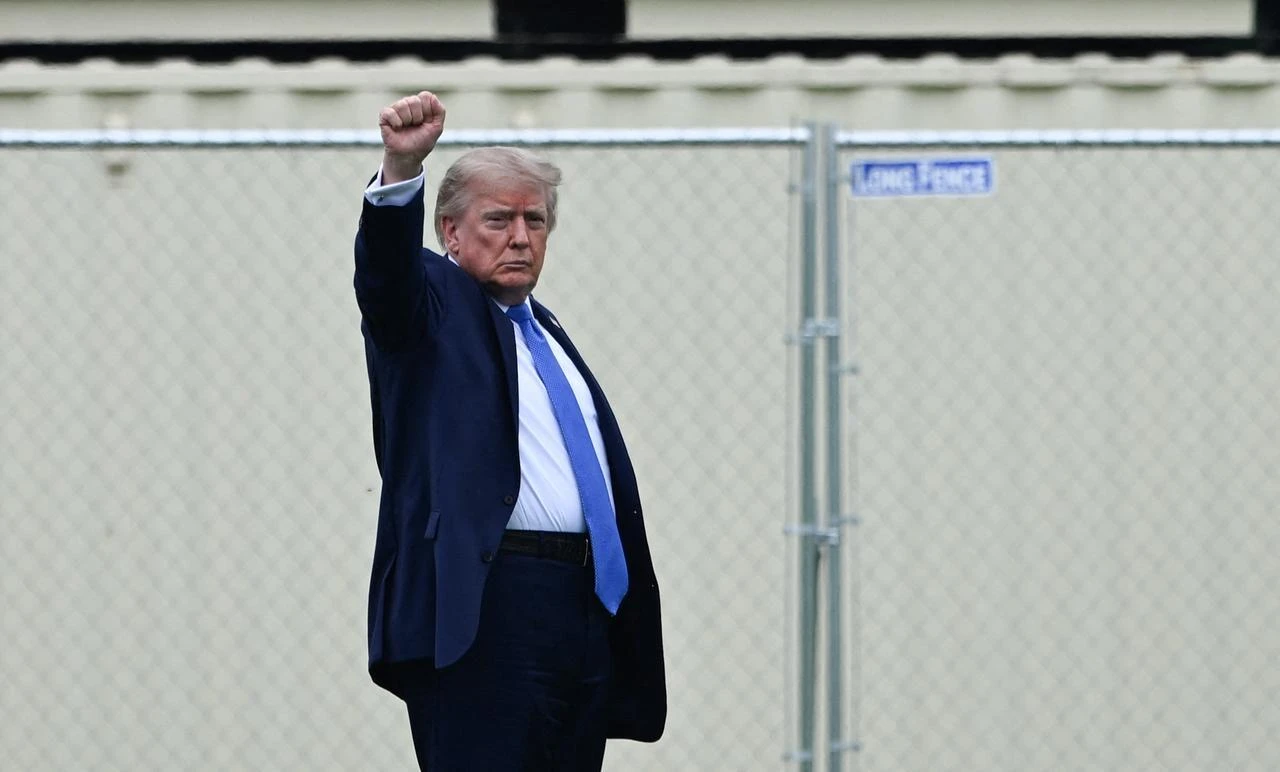
Acting Navy Secretary Hung Cao announced Friday that the Lincoln is returning to the U.S.
"The USS Abraham Lincoln crushed their deployment and will return home soon as part of a planned rotation. Details will come, but let me be clear: the safety and security of our Sailors and Marines always come first," Cao said in a statement.
"Mission accomplishment. Troop Welfare. This is how we lead," he added.
Cao said the deployment was extended "because the mission demanded it."
"Deployments are hard. Combat operations make them harder. War is hell and normal routines are disrupted," he said, adding, "One of the hardest aspects about warfighting beyond knowingly placing our service members in harm's way is that even with the best planning and communication, change and uncertainty will always be in play. Our success depends on how we adapt."
According to figures Cao released, the carrier spent 266 days deployed, including 200 days in a combat zone, with aircraft conducting more than 10,000 sorties and dropping more than 1.5 million pounds of ordnance.
Cao acknowledged that a small number of sailors and Marines received mental health treatment during the deployment, saying there were no deaths associated with those cases.
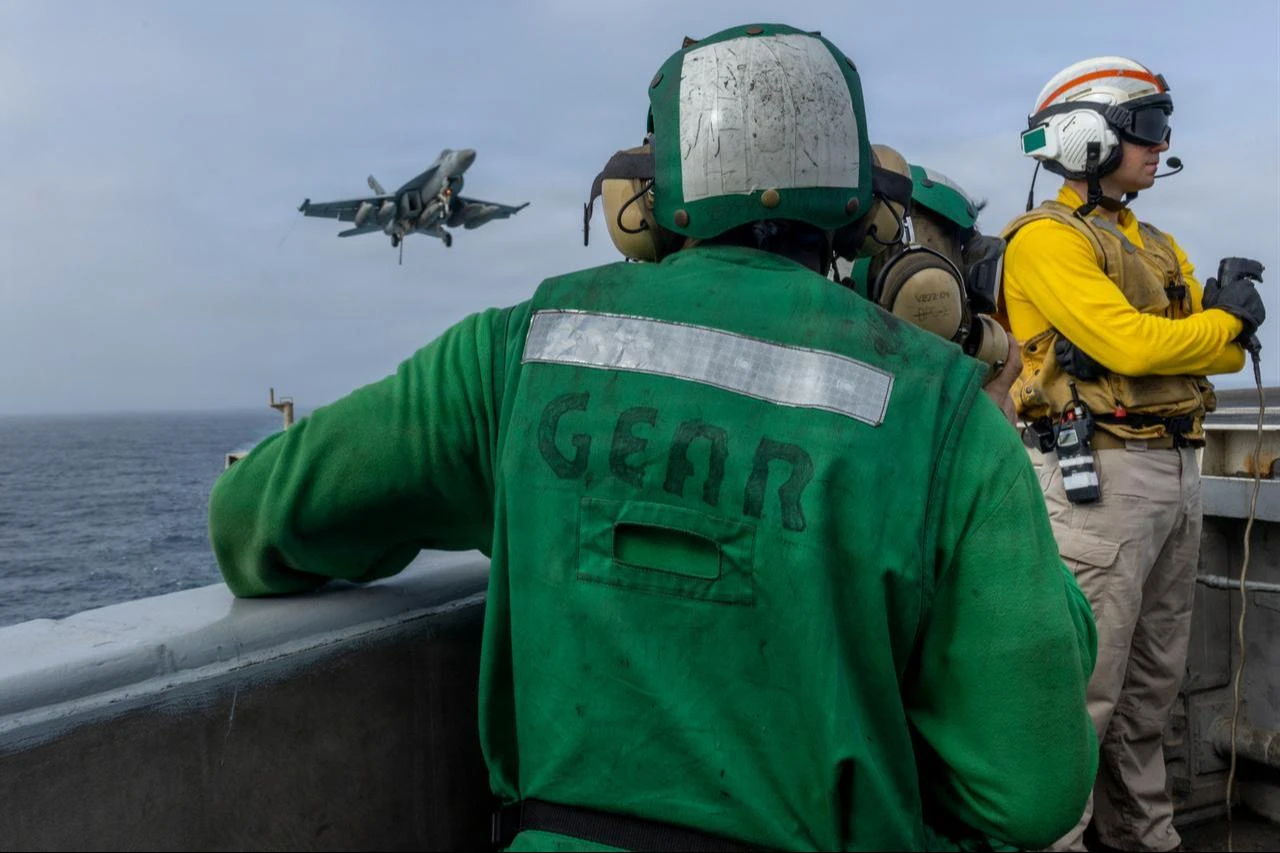
The Navy plans to send the Japan-based carrier USS George Washington to the Middle East to relieve the Lincoln as part of a previously scheduled rotation, the Wall Street Journal (WSJ) reported.
The George Washington left port in Da Nang, Vietnam, last week and has since been spotted crossing the Singapore Strait and heading into the Strait of Malacca, putting it on course for the Indian Ocean.
The move would leave the Pacific without a U.S. carrier presence for an unknown period, as the Trump administration now regards China as "a settled force" to be deterred rather than the top global adversary it was considered under the Biden administration.
A separate carrier, the USS George H.W. Bush, has been operating in the Middle East for months after deploying from Norfolk on March 31.
The Lincoln's deployment is part of a broader pattern of the Navy asking carrier strike groups to exceed the service's recommended seven-month deployment duration, according to a CNN analysis of deployment announcements and the USNI News fleet tracker.
The median length of U.S.-based carrier deployments has steadily increased since 2020, with the Navy routinely missing its target length since the October 2023 Hamas attack on Israel sparked a spate of extended deployments.
The USS Gerald R. Ford's 326-day deployment, which included operations against Iran and Venezuela, broke the record for the longest carrier deployment since the Vietnam War.
During that deployment, the Ford experienced a fire in a laundry space that forced it to return to the Mediterranean for repairs, leaving hundreds of sailors without places to sleep.
Part of the strain stems from aircraft carriers being a finite resource; the U.S. has 11 such ships, some aging and awaiting replacement, not all simultaneously available due to maintenance and reactor refueling schedules.
The new Ford-class carriers have faced repeated delays: the USS John F. Kennedy, which began its final sea trials this week, is now scheduled for delivery in March 2027, nearly two years later than originally projected.
Rep. Mike Levin, D-Calif., whose constituents include Lincoln sailors, said family members had reached out with concerns. "It gets back to that big picture, which is, what is the mission here?" Levin told the Times. "That's what the families want to know."


 Set as preferred source
 Set as preferred source



 1 min read