Newsletters




"The U.S. and Israel are saving us," said Zahra, a young Iranian woman whose name I’ve changed for her safety. Her words felt jarring, coming five weeks into a war launched by those very nations against her own country.
I knew the opposition to the regime ran deep—and that the diaspora had cheered for regime change—but hearing such resolute support for a foreign invasion was still startling, especially while the streets themselves remained silent.
A teacher from Tehran, Zahra had been vacationing in Türkiye when the first strikes hit. She chose not to return, deciding to stay in a hotel alone until conditions stabilized.
She thinks that those who witnessed the January protests and the regime’s response have completely lost hope that the regime will soften. For some, even a war against their own country now feels justified if it brings an end to the regime.
Zahra wants to stay here for a while and remain away from Iran as she continues to deal with the psychological trauma she experienced during the January protests.
Zahra was one of many who saw the movement reach its breaking point. That month, the combination of a failing currency and rising inflation triggered a massive wave of unrest. What began as a protest against economic misery transformed into one of the largest anti-regime movements in recent decades.
The government’s response to peaceful protests was swift and brutal. Security forces opened fire on demonstrators. Members of the U.N. Human Rights Council condemned the crackdown as the deadliest since the 1979 revolution, and as the “vast mass murder in Iran’s history,” citing evidence of mass killings, sexual violence, and widespread abuse in detention.
While Iranian authorities acknowledged more than 3,000 deaths, many human rights groups, local health authorities, and several media outlets estimate the toll to be far higher, possibly exceeding 30,000, as also claimed by President Trump.
“I participated in the protests and saw dead bodies lined up along the streets,” Zahra told me, recalling images she cannot erase. She believes the true number of victims is even higher and says thousands were blinded.
The repression did not end with the protests. Executions related to the January protests have recently increased and many families are left without information about detained relatives. Prisoners have reportedly been transferred to unofficial detention sites, where risks of torture, disappearances and covert executions grow.
Zahra has lost contact with five friends who were arrested; they appear in no official records, and she fears they are dead. She also recounts the story of a woman she knows—arrested in a previous wave of protests—who was raped by guards in front of other detainees.
Even outside prison walls, fear persists. Zahra said that she was stopped in the street by a Revolutionary Guard shortly after the protests while walking with her mother. The guard claimed they had evidence of her participation in the protests and demanded her phone.
Though she had attended the protests fully covered—even her eyes—Zahra denied involvement and said she did not have her phone, even as it sat in her pocket filled with protest footage. She was released only because her mother defended her. “Pray that a female guard is not with me today,” the officer warned. She had narrowly escaped arrest.
Today, that fear has turned into silence. Authorities continue arrest campaigns under the guise of espionage charges, while sharing any information about war and strikes is treated as a criminal act. Confession videos of detainees are broadcast on state media. The message is unmistakable: dissent will not be tolerated.
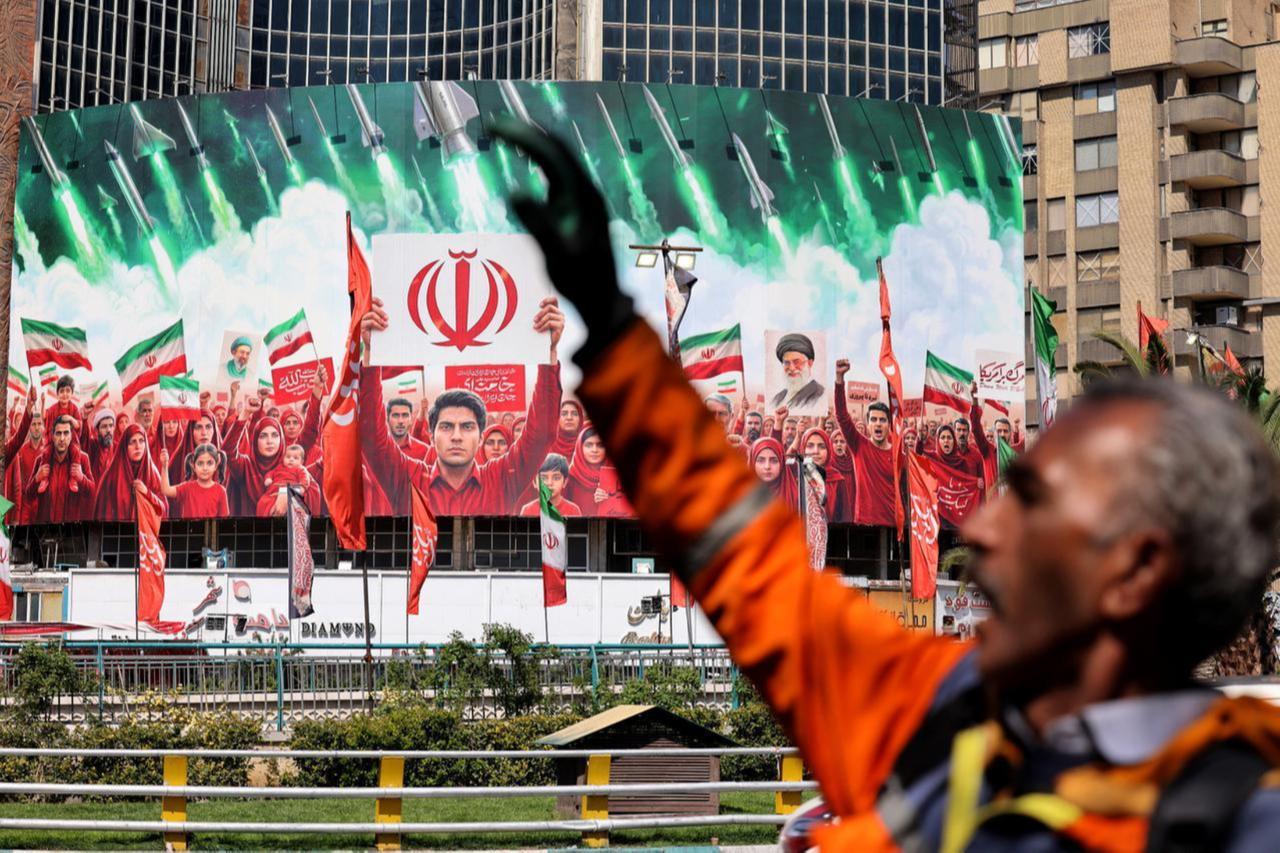
I reminded Zahra of President Trump’s calls for the Iranian people to take to the streets and overthrow the regime. Currently, however, only pro-regime demonstrations are visible. Zahra insists that the empty streets are not a sign of support, but of intimidation. She believes the brutality of the January crackdown was a calculated move—designed to silence dissent before the war even began.
Iranians are afraid to speak for fear of arrest, a fear that has followed Zahra across the border. She repeatedly asked me to protect her identity, and though we planned to meet again, she later called to cancel. Following a conversation with her mother in Tehran, she concluded that speaking out had become too dangerous.
Meanwhile, economic life in Iran is deteriorating. Zahra says that since January, most people have stopped working and are living off savings. While state officials continue to receive salaries, ordinary citizens face growing hardship. Early estimates by the United Nations Development Programme warn that escalating conflict could erase significant human development progress and push large portions of the population into poverty.
At the same time, the war itself is increasingly affecting civilians. Strikes have begun hitting residential areas, even where no military targets are nearby. Homes and workplaces are no longer safe.
Despite the danger, Zahra plans to return to Iran within weeks, even if the war continues.
Her words echo in my ears: “We do not run from war. We do not leave our land. We are fearless. We are proud Iranians.”
As the debate continues over who is winning the war, one reality remains unchanged: the real losers are Iran’s civilians, caught between repression at home and violence from above.


 Set as preferred source
 Set as preferred source



 3 min read