Newsletters


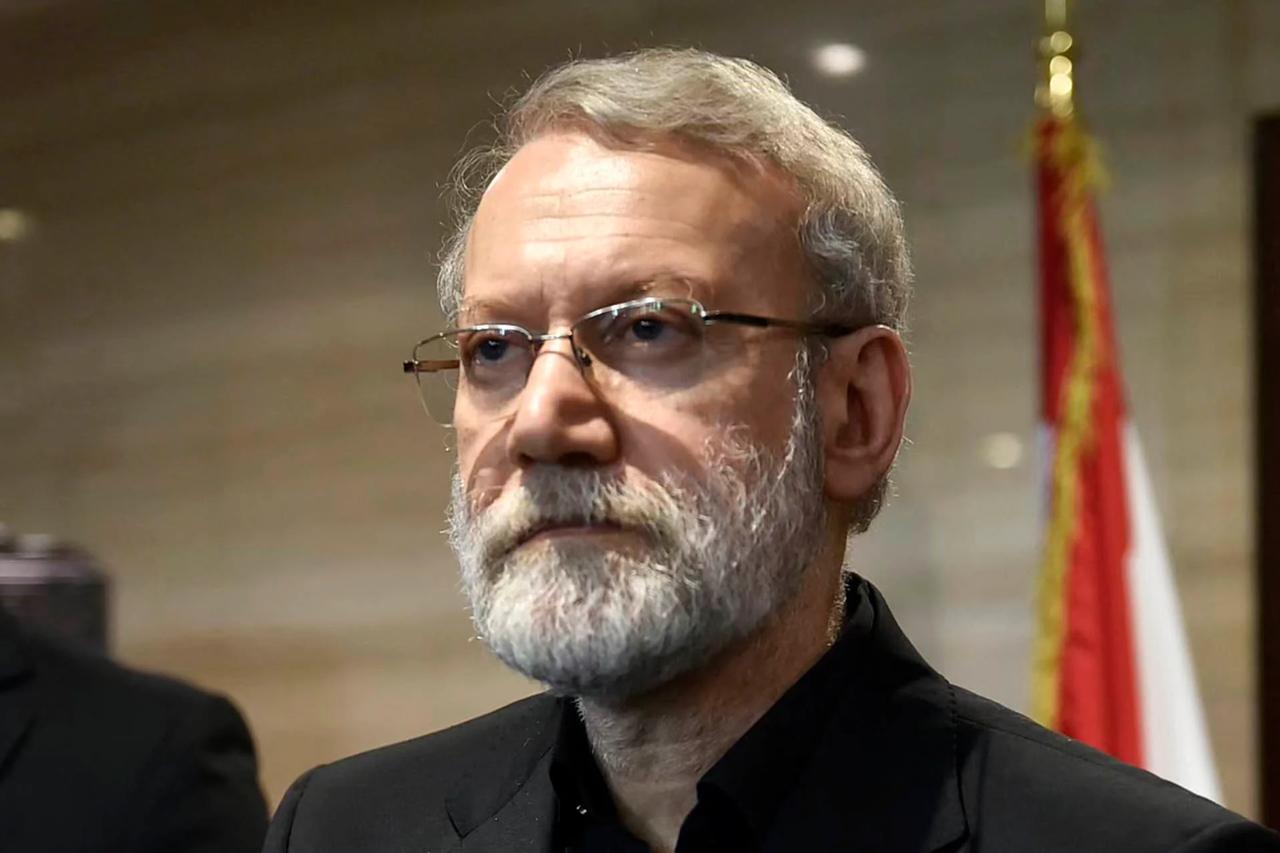


Ali Larijani has long stood out as one of the most influential figures inside Iran’s political system, combining deep family ties, military experience and decades of high-level governance.
Following Iranian state media’s confirmation that he was killed in an airstrike on Tehran, attention has once again turned to a man widely described as one of the regime’s most trusted and capable insiders.
Larijani emerged as a central figure at a time when Iran faced a major leadership vacuum after the reported killing of Supreme Leader Ali Khamenei and several senior commanders during U.S. and Israeli strikes that began on Feb. 28. In the reshaped hierarchy, Larijani held one of the highest-ranking positions as secretary of Iran’s Supreme National Security Council, the body responsible for coordinating defense and strategic policy.
Shortly after the attacks, he appeared on state television and delivered a forceful message, accusing the U.S. and Israel of setting Iran’s “heart on fire” and warning that Tehran would retaliate in kind. While known for such hardline rhetoric, he has also built a reputation internationally as a pragmatic negotiator capable of dealing with major powers.
Larijani’s influence is closely tied to his family, often described as “Iran’s Kennedys,” a comparison that reflects their long-standing presence across the country’s political and religious institutions.
Born in Iraq in 1958, he did not follow the clerical path required to become the supreme leader, yet his family connections anchored him firmly within the system. His father, Mirza Hashem Amoli, was an ayatollah, a senior rank in Shia Islam. His brother Sadeq Larijani served as head of Iran’s judiciary for a decade, while another brother, Mohammad Javad Larijani, became a senior foreign policy adviser. His father-in-law, Murtaza Mutahhari, was among the key figures of the 1979 Islamic Revolution.
These ties allowed Larijani to consolidate his position while navigating both political and religious power structures.
Larijani began his career in 1981 by joining the Islamic Revolutionary Guard Corps, a powerful military organization tasked with protecting the regime. He served as a commander during the early years of the Iran-Iraq War before shifting toward academia, where he studied mathematics, computer science and later Western philosophy, focusing on Immanuel Kant.
He moved into politics in the early 1990s, first as culture minister and later as head of Iran’s state broadcasting authority. Over a decade in that role, he turned the organization into a key pro-government platform, using it to shape public narratives and target critics of the regime.
Larijani ran for president in 2005 but secured only a small share of the vote, with Mahmoud Ahmadinejad eventually winning. He then took on a more strategic role as secretary of the Supreme National Security Council and Iran’s chief nuclear negotiator.
Although he stepped down in 2007 after disagreements with Ahmadinejad, he remained politically relevant. In 2008, he became the speaker of parliament, a position he held for 12 years. During this period, he played a key role in securing legislative backing for the 2015 nuclear agreement, formally known as the Joint Comprehensive Plan of Action (JCPOA), which aimed to limit Iran’s nuclear program in exchange for sanctions relief.
Despite his experience, Larijani’s attempts to return to the presidency were repeatedly blocked. In 2021, the Guardian Council—an oversight body that vets candidates—disqualified him without providing a clear explanation. Analysts suggested the move may have been linked either to internal political rivalries or to concerns about his family’s ties abroad.
He was again excluded from later elections, even as political tensions continued within the conservative camp. Critics within the system reportedly took issue with his willingness to challenge hardline figures and his relatively moderate stance toward certain opposition figures.
Larijani regained prominence when he was reappointed as head of the Supreme National Security Council, effectively placing him at the center of Iran’s security and foreign policy decision-making. His access to the supreme leadership and his role in guiding renewed nuclear talks positioned him as a key “behind-the-scenes” actor.
He also acted as a diplomatic envoy, traveling to Moscow to meet Russian President Vladimir Putin, reinforcing his role in shaping Iran’s external alliances.
In one of his final public remarks before the reported strike, he said Iran had been preparing for war in recent months, stressing that while Tehran did not seek conflict, it would respond if one was imposed on it.


 Set as preferred source
 Set as preferred source


 1 min read
 1 min read